Artwork
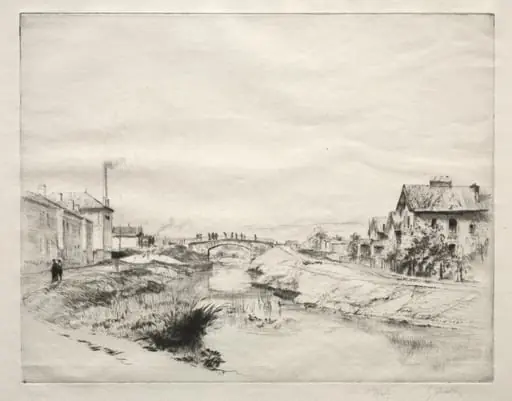
La grève désertée
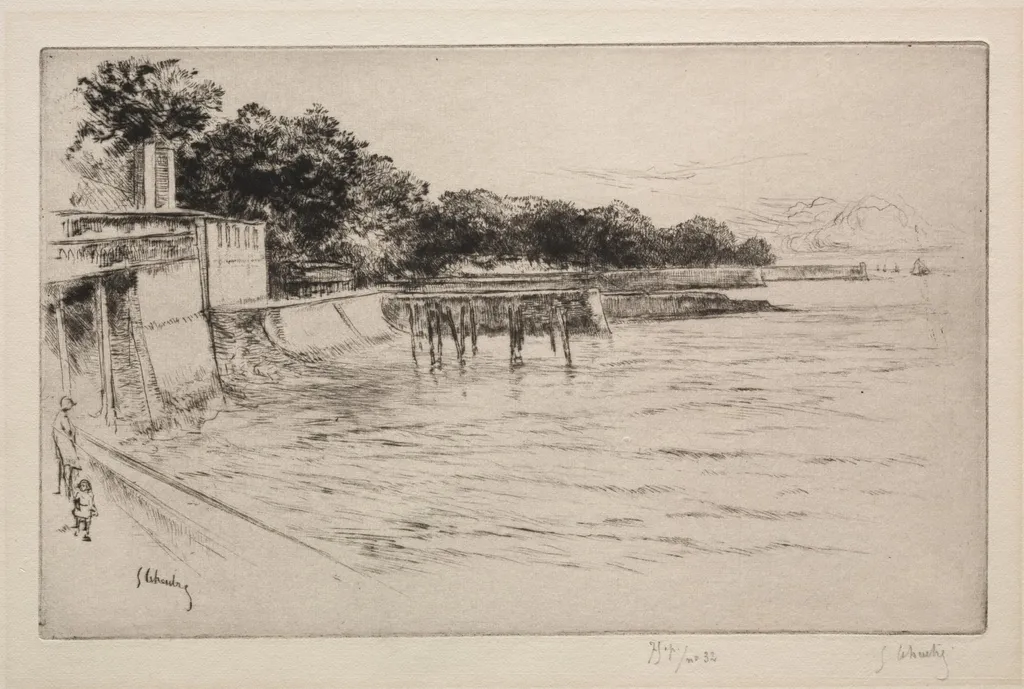
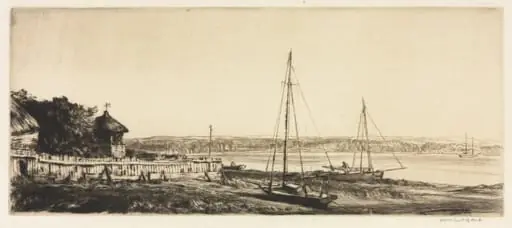
La grève désertée is a print by the Impressionist artist Gustave Leheutre. It dates from 1926 and is held in the collection of the Cleveland Museum of Art.
About this work
Overview
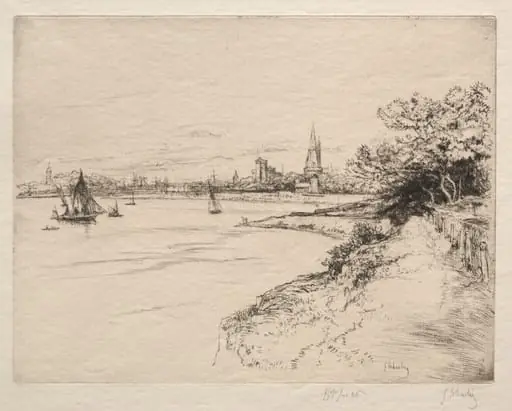
La grève désertée is a landscape print by French artist Gustave Leheutre, dated around 1926. It is part of the collection at The Cleveland Museum of Art. The work presents a quiet, unpopulated scene of natural terrain, emphasizing stillness and spatial depth through subtle tonal shifts and restrained composition. Unlike narrative-driven imagery, it focuses on atmosphere rather than action.
Subject & Meaning
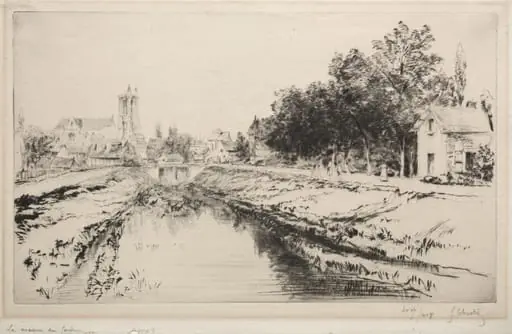
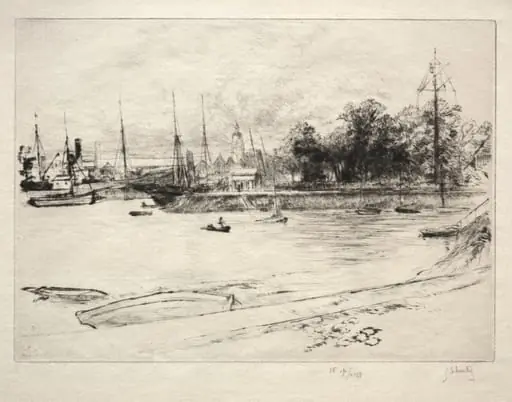
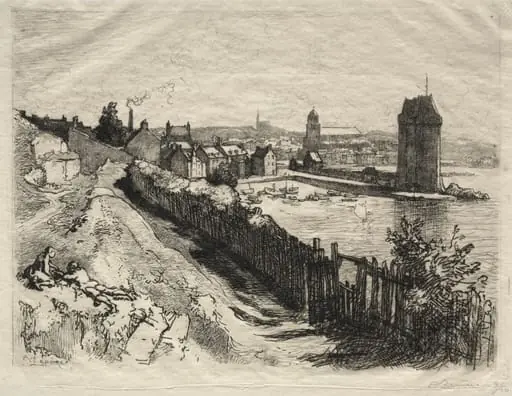
The scene depicts an abandoned riverside or lakeshore, with a low stone barrier lining the water’s edge and sparse trees receding into the distance.
The scene depicts an abandoned riverside or lakeshore, with a low stone barrier lining the water’s edge and sparse trees receding into the distance. The title, meaning 'The Abandoned Strike,' suggests a historical or social reference, yet the image contains no human figures or signs of conflict. The disconnect between title and visual content invites contemplation of absence, memory, or the quiet reclamation of land.
Technique & Style
Leheutre employs a muted palette and soft gradations of light to model the landscape, creating a sense of volume without sharp definition. The print’s texture is achieved through delicate line work and tonal layering, typical of early 20th-century graphic techniques. The composition avoids dramatic contrast, favoring a meditative balance between water, earth, and sky.
History & Provenance
The work entered The Cleveland Museum of Art’s collection as part of its broader acquisition of French graphic art from the interwar period. Its provenance prior to the museum is not publicly documented. As a print, it likely existed in a small edition, consistent with Leheutre’s practice of producing limited graphic works rather than singular paintings.
Context
Created in the aftermath of World War I and during a period of labor unrest in France, the title may allude to failed or dissolving social movements. Yet the image’s serenity contrasts with such political undertones, reflecting a broader trend among artists of the time who turned to landscape as a refuge from societal turmoil, emphasizing nature’s endurance over human conflict.
Legacy
Leheutre’s work remains relatively obscure outside specialized circles, with few public exhibitions or scholarly studies devoted to his graphic output. La grève désertée stands as a quiet example of interwar French printmaking that prioritizes mood over message, offering a subtle counterpoint to the more overtly political art of its era.
Artist & collection