Artwork
Sunset on the Thames
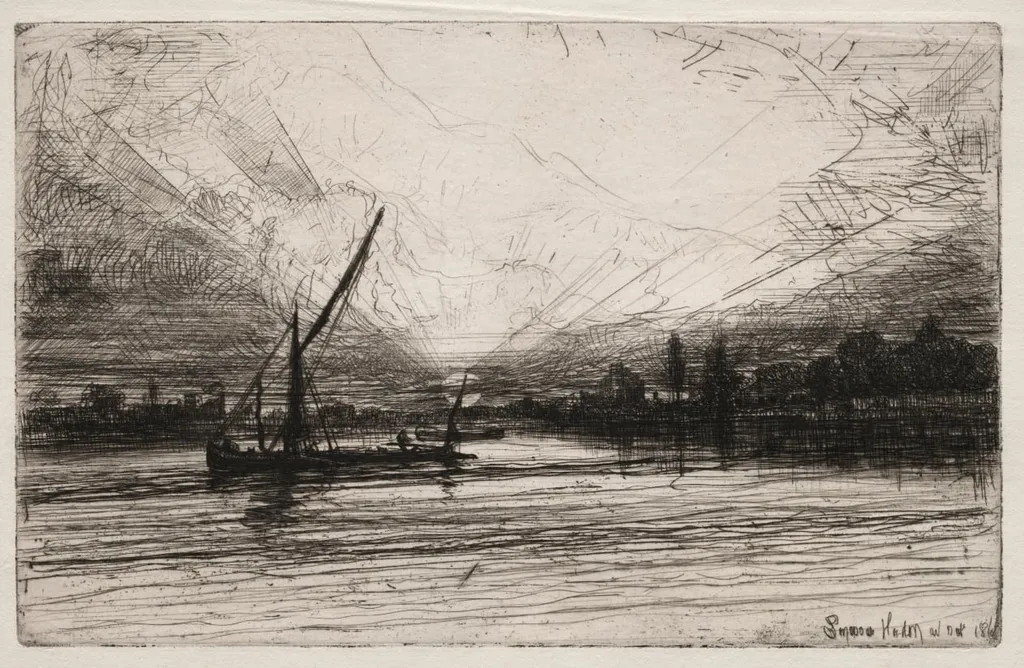
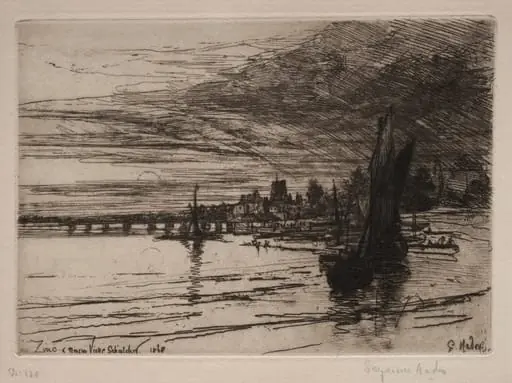
Sunset on the Thames is a print by the Impressionist artist Francis Seymour Haden. It dates from 1862 and is held in the collection of the Cleveland Museum of Art.
About this work
Overview
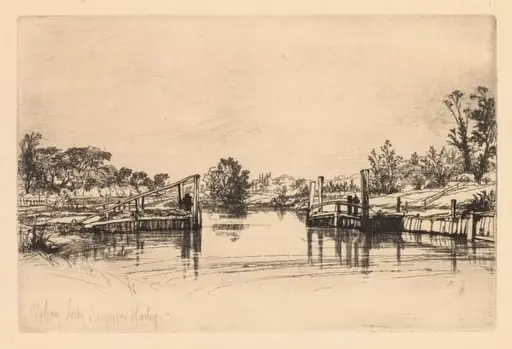
Created in 1862 by Francis Seymour Haden, Sunset on the Thames is a drypoint print capturing a quiet moment on the river at dusk.
Created in 1862 by Francis Seymour Haden, Sunset on the Thames is a drypoint print capturing a quiet moment on the river at dusk. The work is part of the collection at The Cleveland Museum of Art. Its loose, energetic lines and emphasis on atmospheric effect reflect Haden’s interest in capturing transient light and movement, aligning with emerging trends in printmaking that valued immediacy over polished finish.
Subject & Meaning
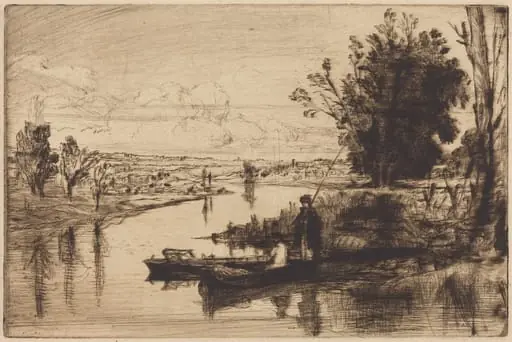
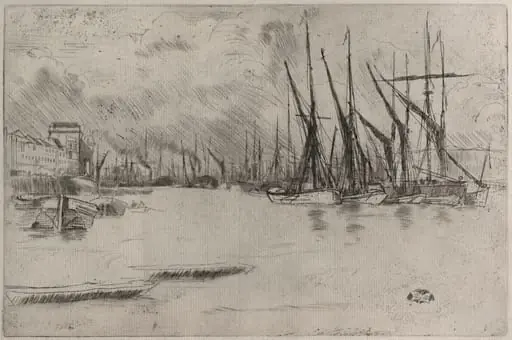
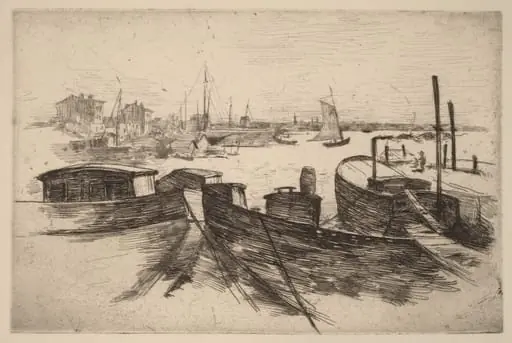
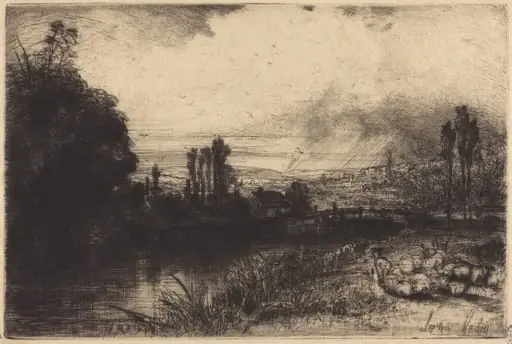
The scene depicts a vessel with two tall masts gliding along the Thames, surrounded by the dense, shadowed outlines of riverside structures. The composition suggests the daily rhythm of urban water traffic, framed by the fading daylight. Haden avoids narrative detail, instead evoking a sense of quiet transition between day and night, inviting contemplation rather than storytelling.
Technique & Style
Haden employed drypoint, using fine scratching and dense hatching to model form and texture. The water is rendered with rapid, undulating lines, while the shore buildings appear as dark, overlapping masses. Light is suggested through areas left bare or lightly worked, particularly where sky meets water. The technique conveys spontaneity, prioritizing the impression of motion and light over precise definition.
History & Provenance
The print was made in 1862 during a period when Haden was actively exploring the expressive potential of etching and drypoint. It entered the Cleveland Museum of Art’s collection through established acquisition channels, likely as part of broader efforts in the early 20th century to build a significant holdings of British graphic art. Its preservation reflects its recognition as a representative work of Victorian printmaking.
Context
In the 1860s, British artists began turning away from highly finished engravings toward more personal, sketch-like prints. Haden, a physician turned artist, was instrumental in this shift, championing the print as an independent art form. Sunset on the Thames reflects this movement, paralleling contemporary interests in landscape and light that would later influence French Impressionists, though Haden’s approach remained rooted in tonal subtlety rather than color.
Legacy
Haden’s work, including this print, helped redefine printmaking in Britain as a medium for artistic expression rather than mere reproduction. His emphasis on direct observation and expressive line influenced a generation of printmakers. While not widely known today, his contributions are acknowledged in scholarly circles as foundational to the revival of original etching in the late 19th century.
Artist & collection