Artwork
Battersea Bridge
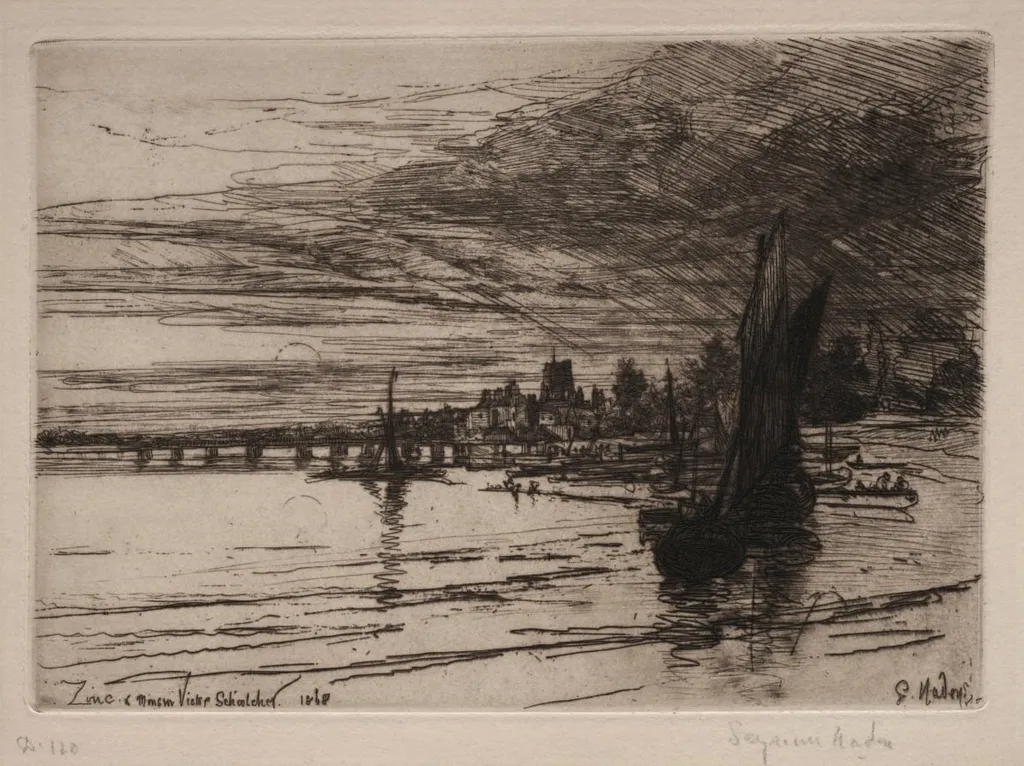
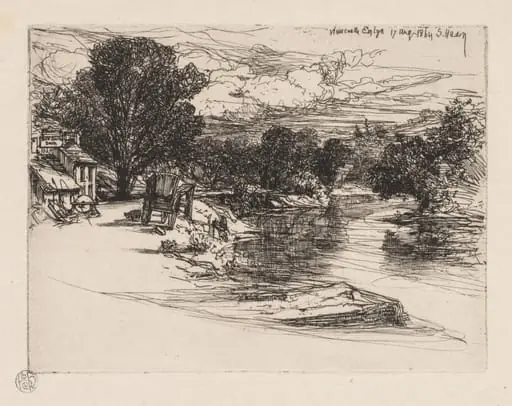
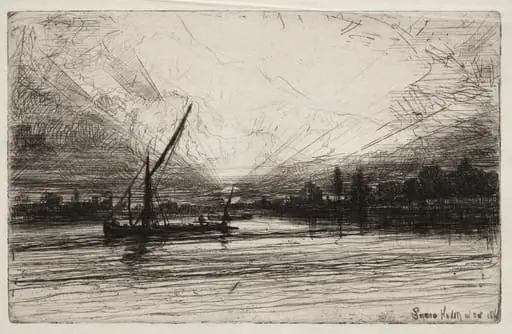
Battersea Bridge is a print by the Impressionist artist Francis Seymour Haden. It dates from 1868 and is held in the collection of the Cleveland Museum of Art.
About this work
Overview
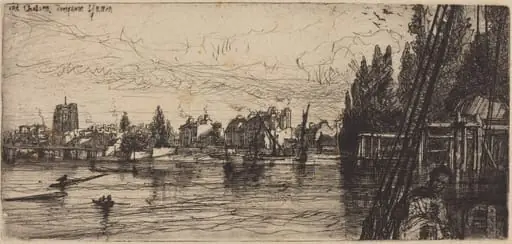
Created in 1868 by Francis Seymour Haden, this ink print depicts a tranquil stretch of the River Thames near Battersea Bridge. Rendered in monochrome, the work captures a fleeting moment with minimal detail, emphasizing atmosphere over precision. It resides in The Cleveland Museum of Art’s collection as an example of Haden’s experimental approach to printmaking during the late 19th century.
Subject & Meaning
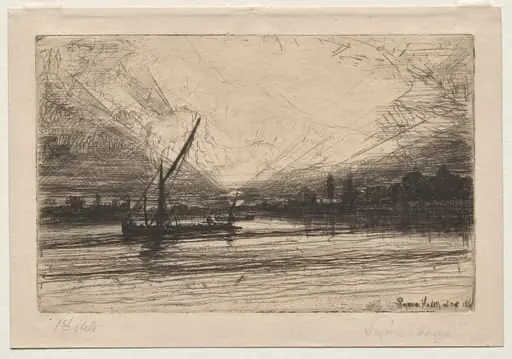
The scene centers on a solitary sailboat moving gently downstream, its motion suggested by diagonal strokes in the water. Behind it, the bridge and distant shoreline frame the composition without dominating it. The quietude of the image reflects a contemplative engagement with everyday urban landscapes, avoiding narrative or symbolism in favor of sensory observation.
Technique & Style
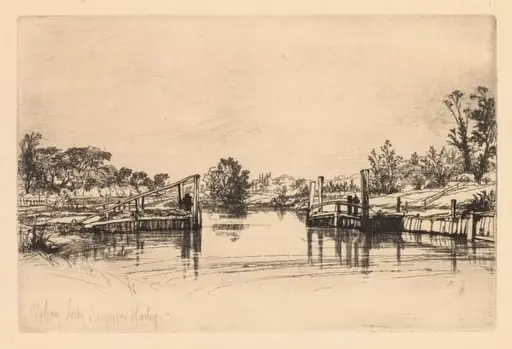
Haden employed drypoint etching to produce a richly textured surface using fine, irregular lines that mimic the spontaneity of sketching. The ink’s grainy quality and uneven pressure create a sense of movement and light variation. The loose, rapid strokes align with emerging Impressionist sensibilities, prioritizing immediacy and visual sensation over polished finish.
History & Provenance
Haden, a physician turned artist, was among the first British practitioners to embrace etching as a fine art medium. This print was made during a period of renewed interest in direct, personal printmaking. It entered The Cleveland Museum of Art’s collection in the 20th century, part of a broader acquisition of 19th-century British graphic works.
Context
In the 1860s, British artists began moving away from highly finished engravings toward more expressive, hand-drawn prints. Haden’s work responded to this shift, influenced by French etchers and the growing appreciation for sketches as finished art. Battersea Bridge reflects a broader cultural turn toward capturing transient moments in urban and natural settings.
Legacy
Haden’s approach helped legitimize etching as a medium for personal expression in Britain. His emphasis on spontaneity and tonal nuance influenced later generations of printmakers, including members of the Etching Revival. Battersea Bridge remains a quiet but significant example of how traditional print techniques were reimagined to convey modern perception.
Artist & collection

![Antwerp: Sunset [Anversa: Tramonto], by Vittore Grubicy](https://artifactworldgallery.com/img/vittore-grubicy--antwerp-sunset-anversa-tramonto--1a80a00e4543adeb-w320.webp)