Artwork
Jan van Eyck (c.1385–1441) (design for a mosaic in the Victoria and Albert Museum) (formerly attributed to Agnes Sutherland)
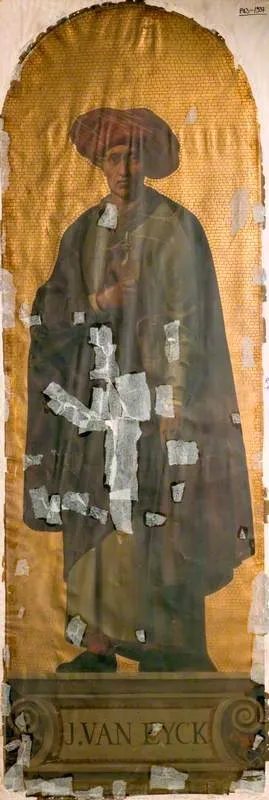
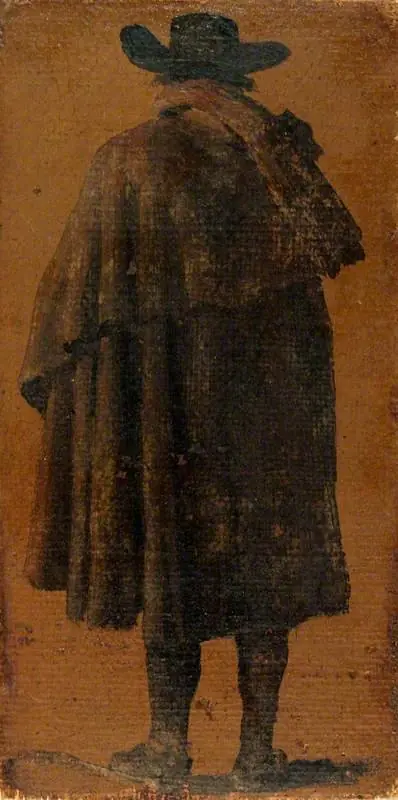
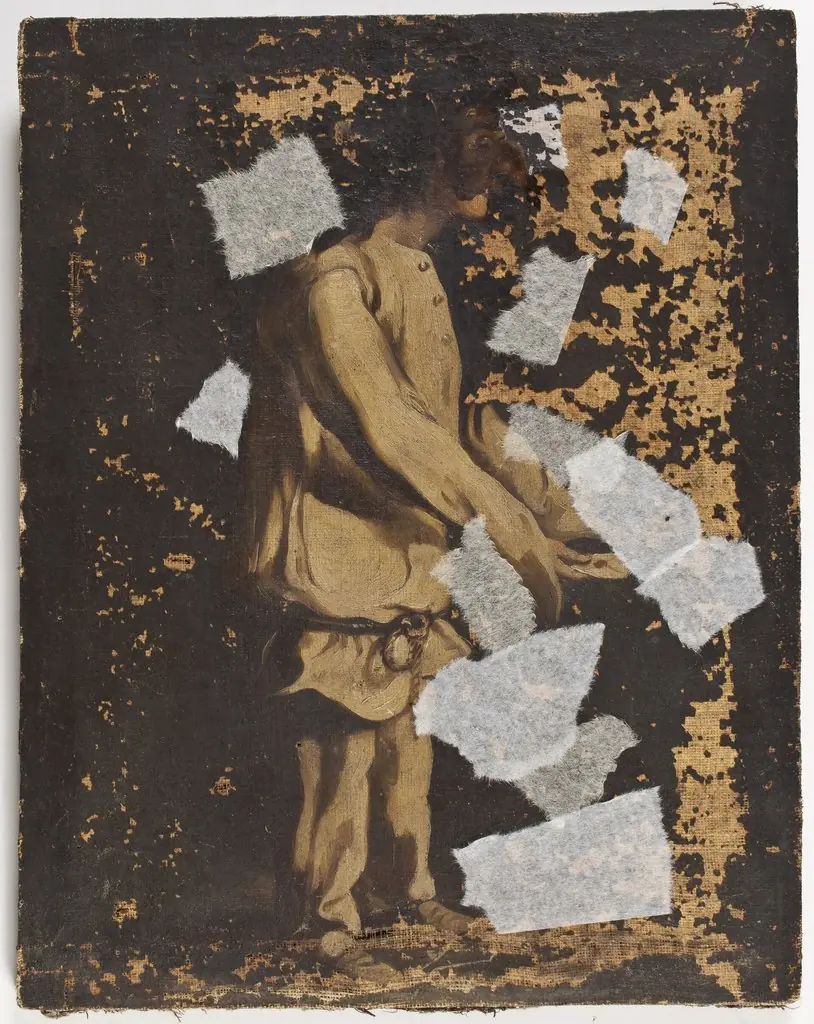
Jan van Eyck (c.1385–1441) (design for a mosaic in the Victoria and Albert Museum) (formerly attributed to Agnes Sutherland) is an oil painting by Francis Wollaston Moody. It dates from 1865 and is held in the collection of the Victoria and Albert Museum. This oil painting, dated around 1865, portrays a male figure in formal attire, standing on a pedestal.
About this work
Overview
The painting resides in the Victoria and Albert Museum and was never intended as a mosaic design, despite earlier documentation suggesting otherwise.
This oil painting, dated around 1865, portrays a male figure in formal attire, standing on a pedestal. Though once misattributed to Agnes Sutherland, it is now recognized as the work of Francis Wollaston Moody. The painting resides in the Victoria and Albert Museum and was never intended as a mosaic design, despite earlier documentation suggesting otherwise. Its surface shows signs of age, including tears and restoration patches.
Subject & Meaning
The figure is dressed in a long dark robe and a red hat, elements commonly associated with ecclesiastical or scholarly authority in the 19th century. His face is deliberately softened, obscuring individual identity, which may reflect a symbolic representation rather than a portrait of a specific person. The pedestal elevates the figure, reinforcing a sense of reverence, though the intended subject remains unidentified.
Technique & Style
Moody employed traditional oil painting methods to render texture and light with subtle gradations. The blurred facial features contrast with the sharper definition of the robe and hat, suggesting a focus on symbolic presence over individual likeness. The composition is restrained, with minimal background detail, directing attention to the figure’s posture and attire. Surface damage has altered the original tonal balance.
History & Provenance
The painting entered the Victoria and Albert Museum’s collection in the 19th century under a mistaken attribution to Agnes Sutherland. Later research corrected the authorship to Francis Wollaston Moody, a lesser-known Victorian artist. Its original purpose remains unclear—whether commissioned for a specific individual or as a conceptual study. The work’s condition indicates it has undergone multiple restorations over time.
Context
Created during a period when historical figures were frequently idealized in art, this painting reflects Victorian tastes for dignified, anonymous representations of authority. The confusion with mosaic design may stem from the museum’s broader collection of decorative arts, where such imagery was common. Moody’s work aligns with contemporaneous efforts to visually encode respect through formal dress and posture.
Legacy
Though not widely exhibited, the painting serves as an example of 19th-century misattributions in museum collections and the evolving understanding of artistic authorship. Its preservation highlights the importance of material analysis in correcting historical records. It remains a quiet testament to the Victorian impulse to memorialize authority through stylized portraiture.
Artist & collection

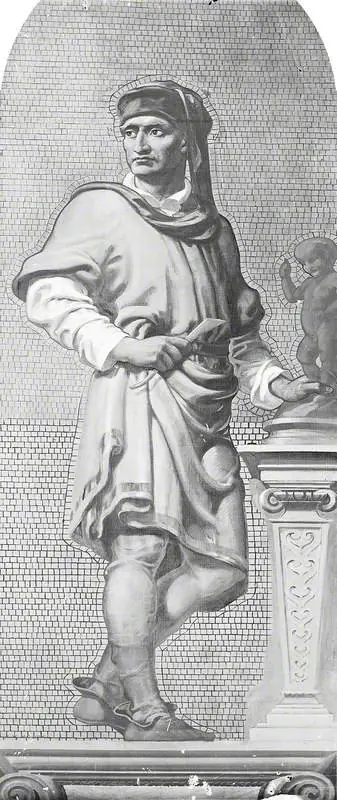 Luca della Robbia (1400–1481) (design for a mosaic in the Victoria and Albert Museum) (detail)
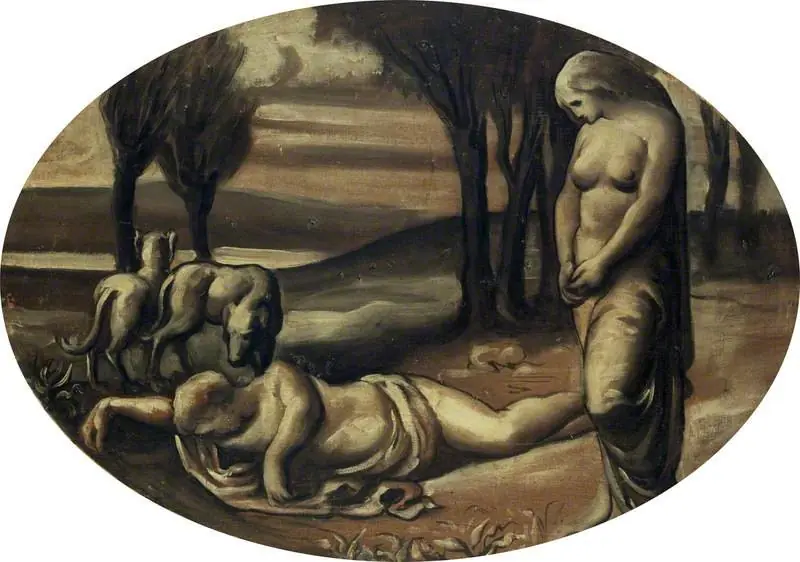 Pyramus and Thisbe (decorative panel)
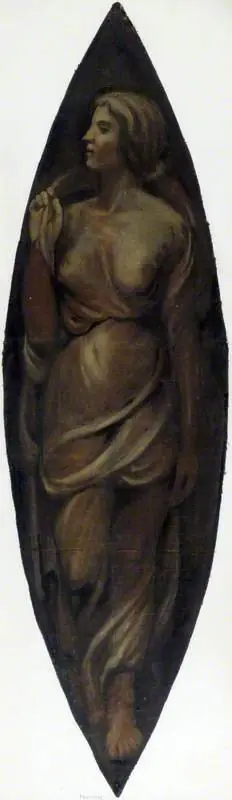 Standing Female Figure (decorative panel)
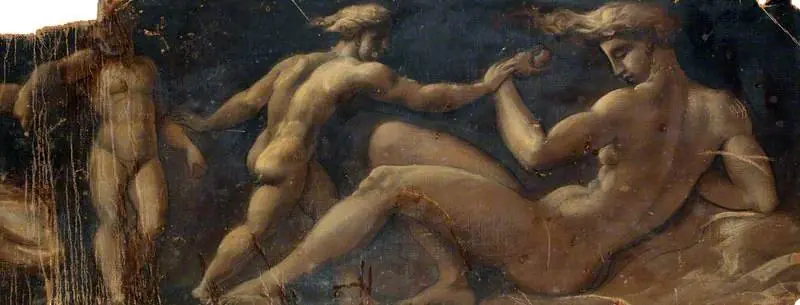 Reclining Figure (decorative panel)
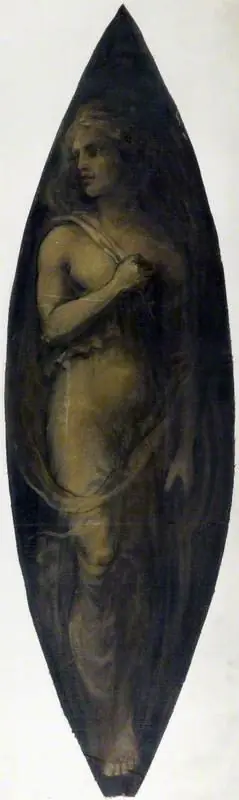 Standing Female Figure (decorative panel)
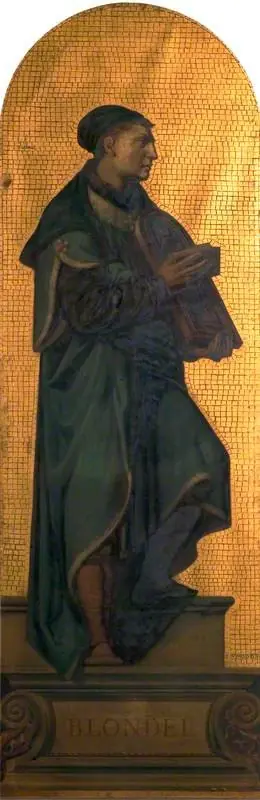 Lancelot Blondeel (1498–1561) (design for a mosaic in the Victoria and Albert Museum)
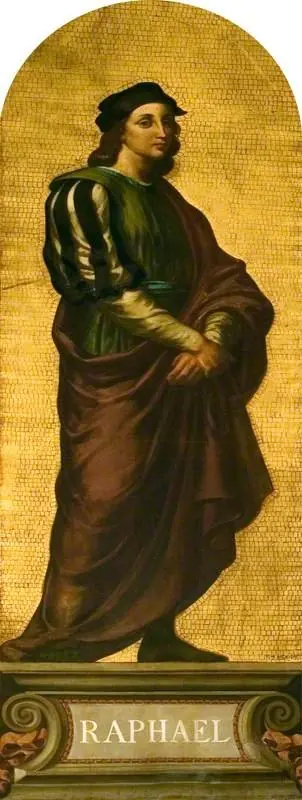 Raphael (1483–1520) (design for a mosaic in the Victoria and Albert Museum)
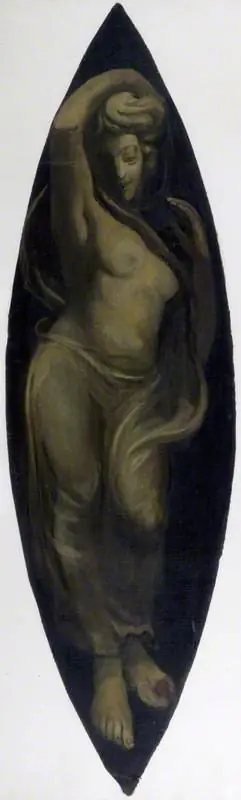 Standing Female Figure (decorative panel)