Artwork
Reclining Figure (decorative panel)
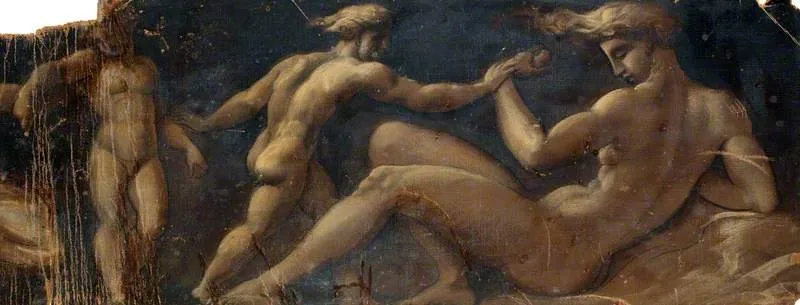
Reclining Figure (decorative panel) is an oil painting by Francis Wollaston Moody. It dates from 1865 and is held in the collection of the Victoria and Albert Museum.
About this work
Overview
Reclining Figure (decorative panel) is an oil painting executed around 1865 by the British artist Francis Wollaston Moody. The work measures roughly a panel-sized composition and is part of the collection of the Victoria and Albert Museum in London. It presents a nocturnal interior scene populated by three male nudes, arranged in a tightly choreographed grouping.
Subject & Meaning
A third, partially visible figure occupies the far left edge of the canvas.
The central figure lies on his side, his right arm lifted and his left leg folded, while a standing companion on his left reaches to grasp the reclined man's hand. A third, partially visible figure occupies the far left edge of the canvas. The arrangement of bodies, their gestures and the somber atmosphere suggest a narrative drawn from classical or mythological sources, though the precise story remains ambiguous.
Technique & Style
Moody employs a restrained palette of deep browns and muted tones, allowing the limited light to carve the forms with strong chiaroscuro. The dramatic contrast between illuminated flesh and surrounding shadow creates a sense of tension and three-dimensionality. Brushwork is smooth in the flesh areas, while the background is rendered with looser, atmospheric strokes that enhance the overall mood.
History & Provenance
Created in the mid‑1860s, the painting entered the Victoria and Albert Museum’s holdings during the early 20th century, though the exact acquisition details are not widely recorded. Its presence in the museum’s decorative arts department reflects the period’s interest in narrative panel paintings that could serve both aesthetic and educational purposes.
Context
During the Victorian era, artists often revisited classical themes, using the nude male form to explore ideas of heroism, morality, and the human condition. Moody’s work aligns with this tradition, integrating academic drawing techniques with a Romantic sensibility toward light and shadow, situating the piece within the broader 19th‑century British engagement with antiquity.
Artist & collection

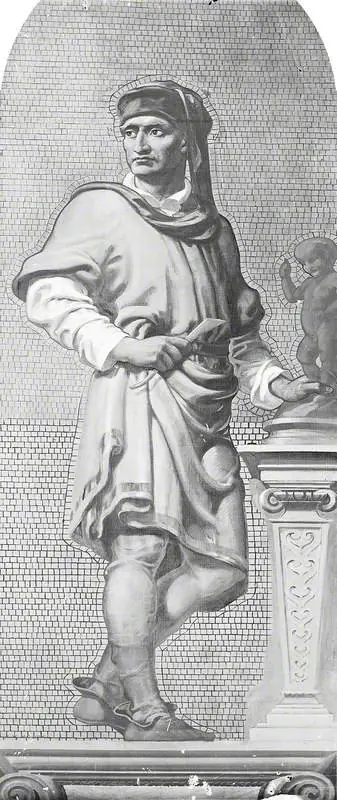 Luca della Robbia (1400–1481) (design for a mosaic in the Victoria and Albert Museum) (detail)
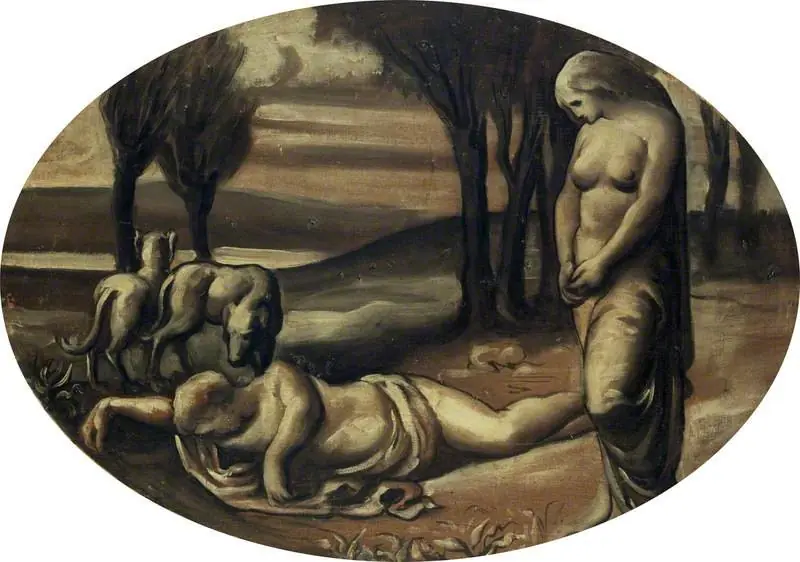 Pyramus and Thisbe (decorative panel)
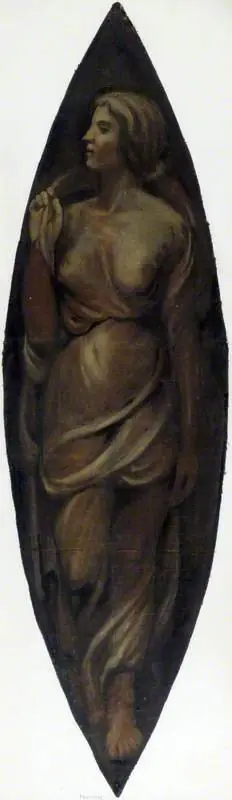 Standing Female Figure (decorative panel)
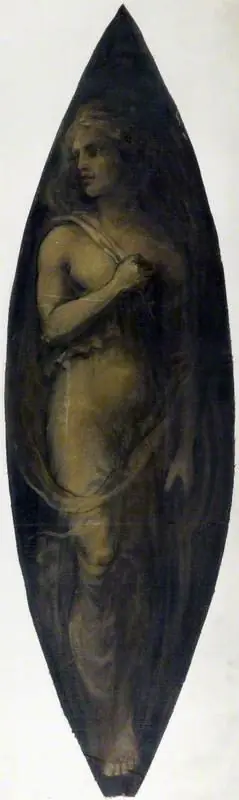 Standing Female Figure (decorative panel)
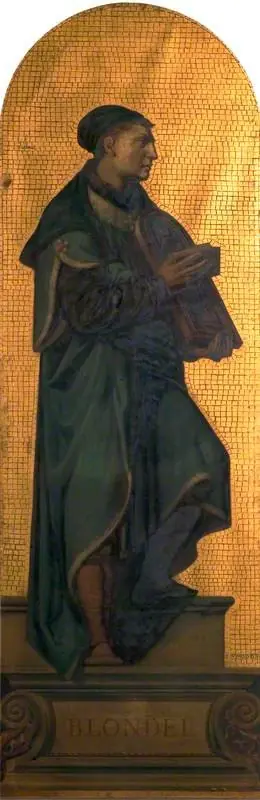 Lancelot Blondeel (1498–1561) (design for a mosaic in the Victoria and Albert Museum)
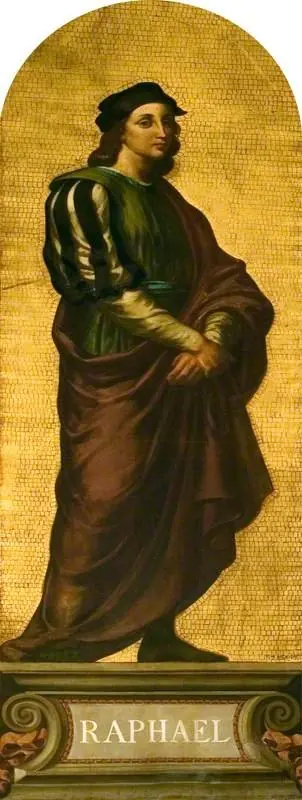 Raphael (1483–1520) (design for a mosaic in the Victoria and Albert Museum)
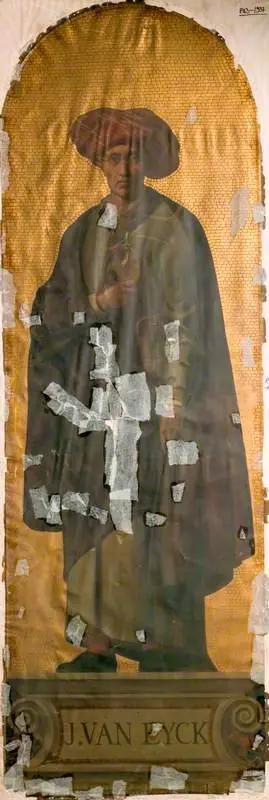 Jan van Eyck (c.1385–1441) (design for a mosaic in the Victoria and Albert Museum) (formerly attributed to Agnes Sutherland)
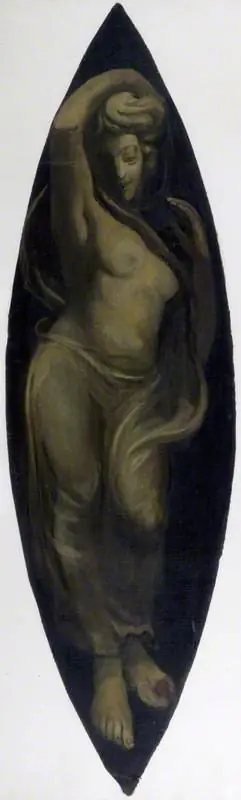 Standing Female Figure (decorative panel)
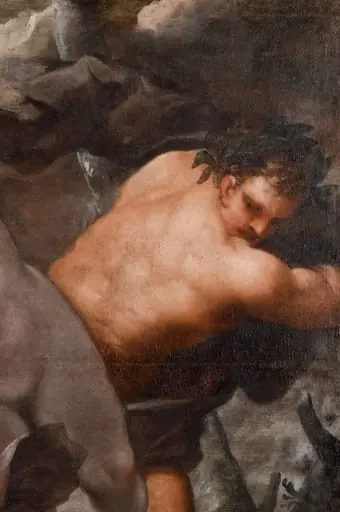 Apolo și Daphne
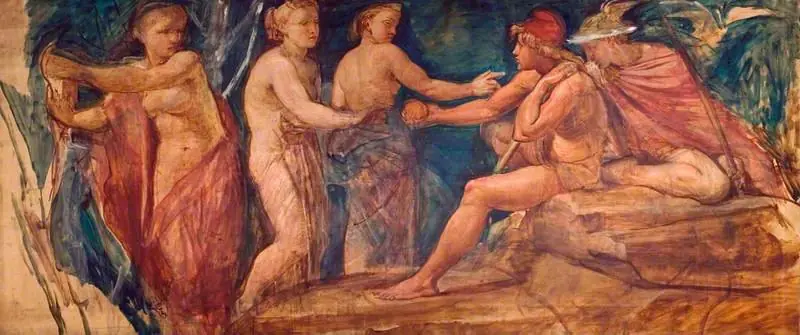 The Judgement of Paris (cartoon for the south panel of the ceiling, dining room, Dorchester House)
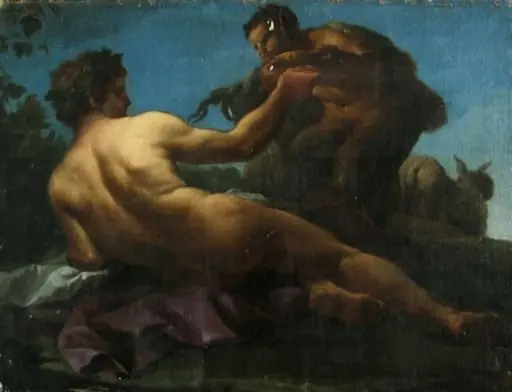 Satir oferind o cană de must lui Bacchus
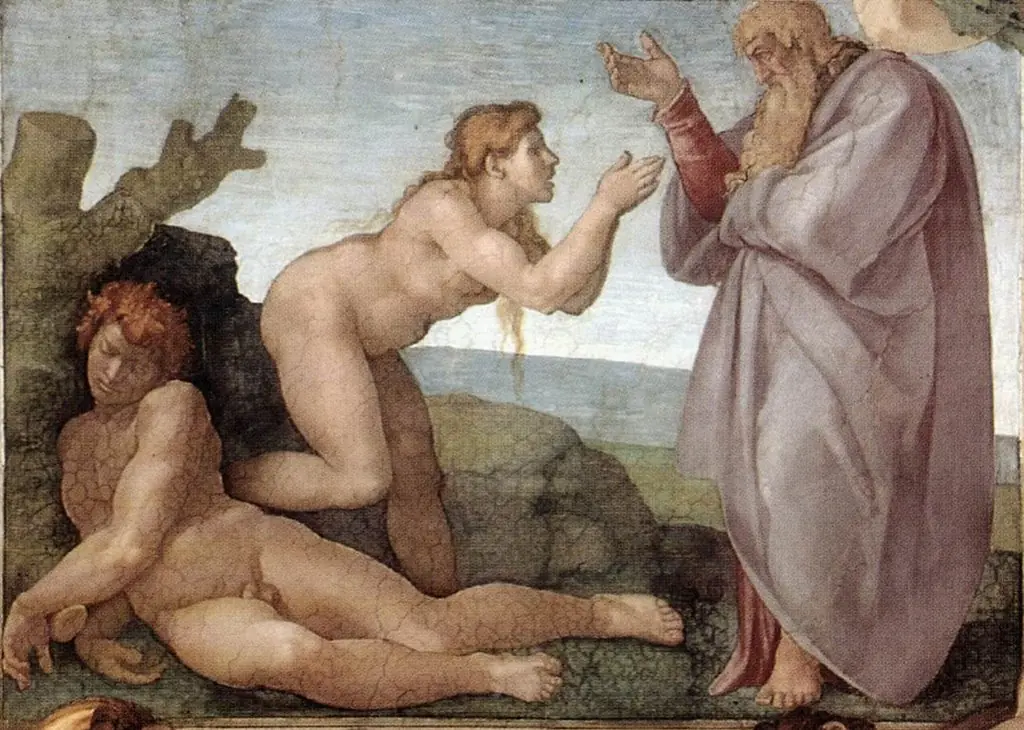 The Creation of Eve
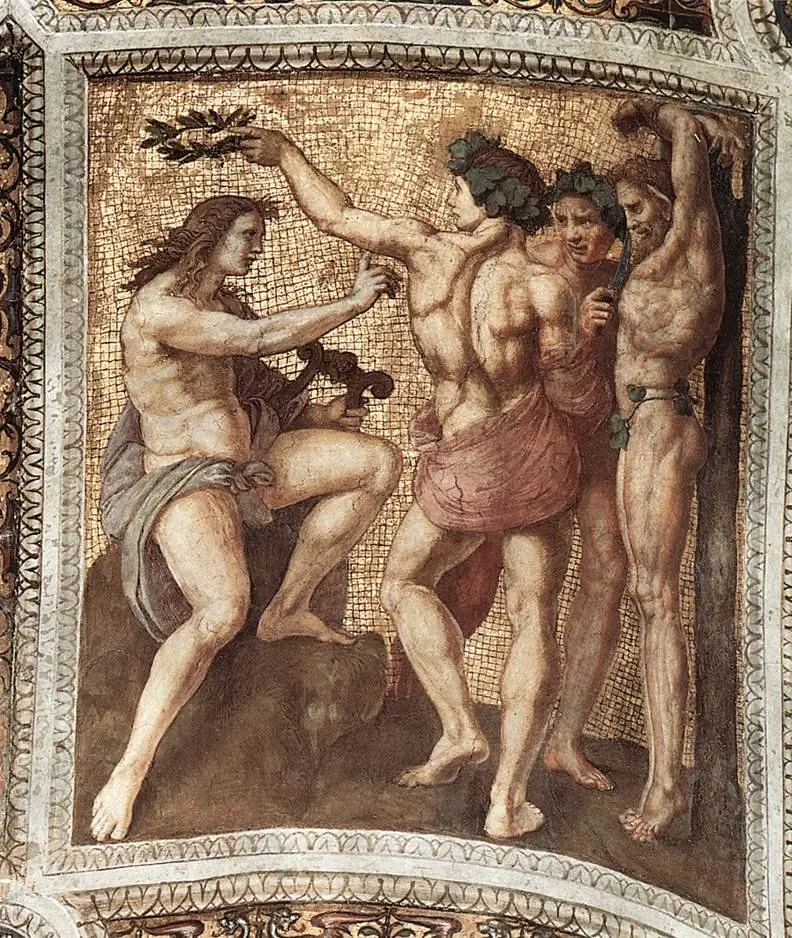 Apollo and Marsyas
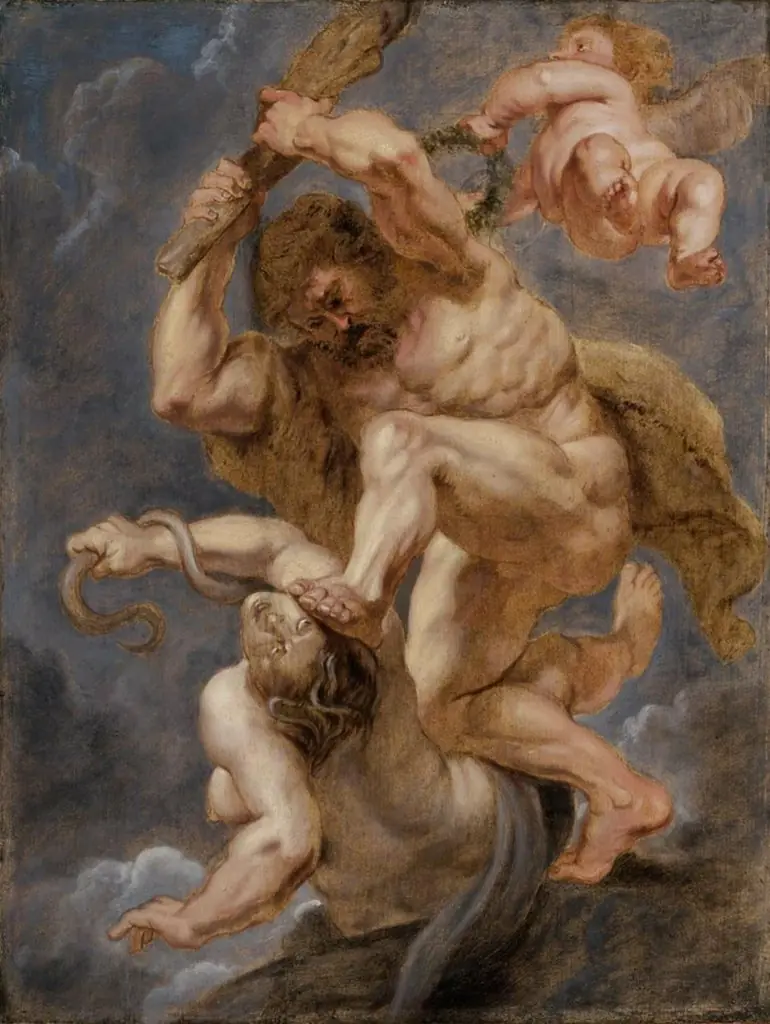 Hercules as Heroic Virtue Overcoming Discord
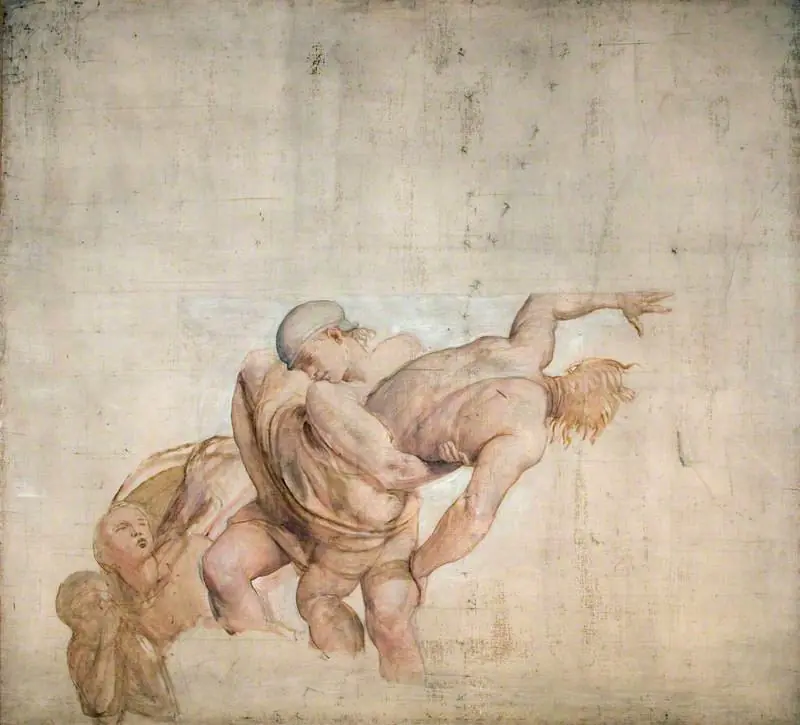 Magog Thrown into the Sea (cartoon for the south wall, centre, of the ceiling cove, dining room, Dorchester House)
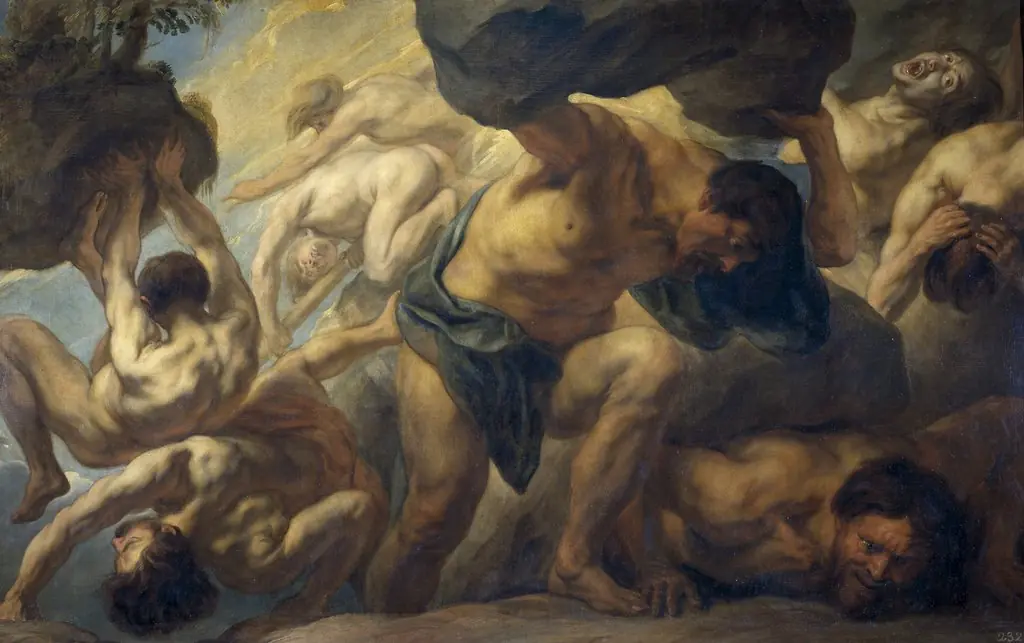 The Fall of the Giants
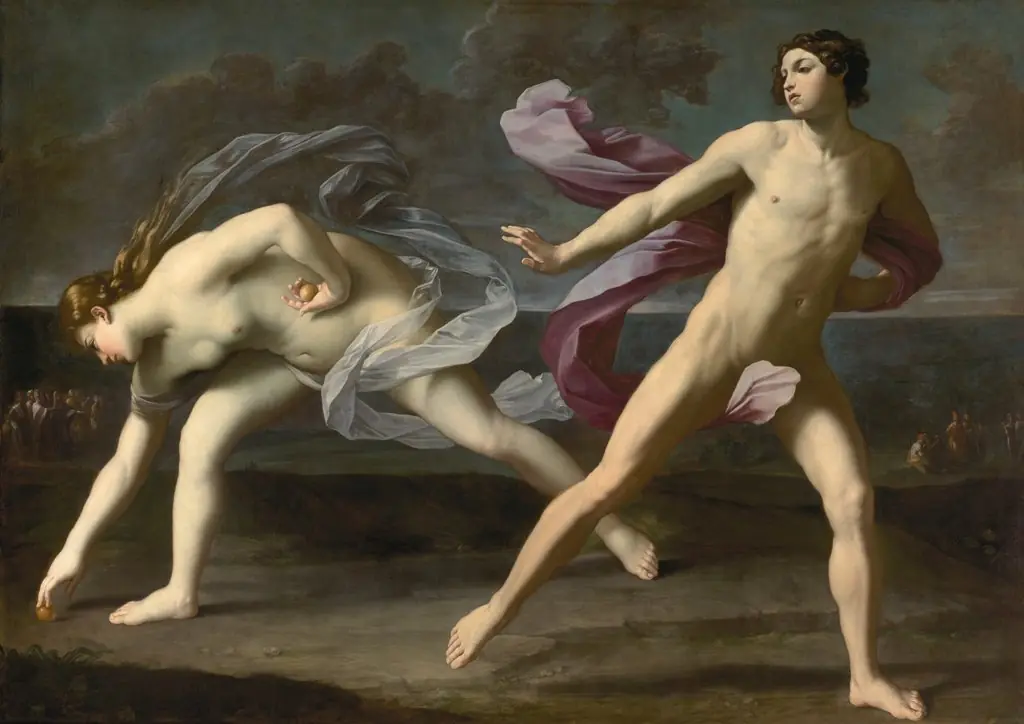 Hippomenes and Atalanta
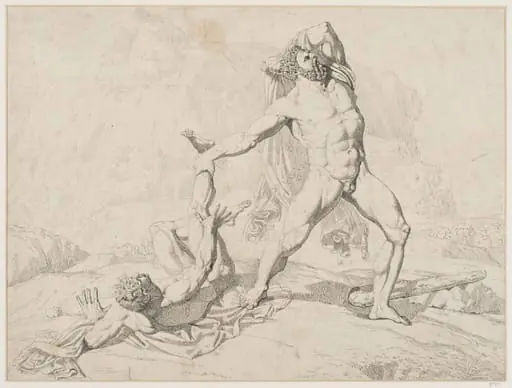 Hercules, in his death throes, hurling Lichas into the sea
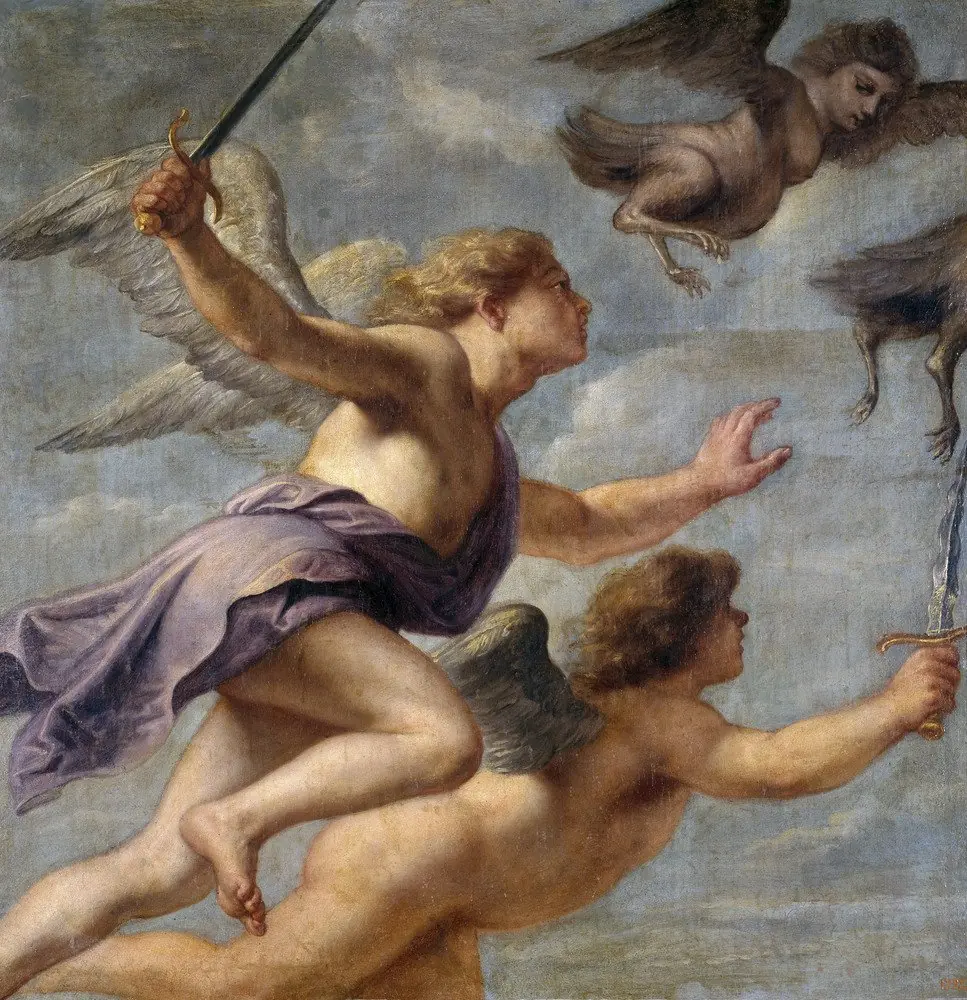 The Persecution of the Harpies
 Frieze with Dancing Figures (decorative panel)