Artwork
Procesión del Viernes Santo en el Coliseo de Roma
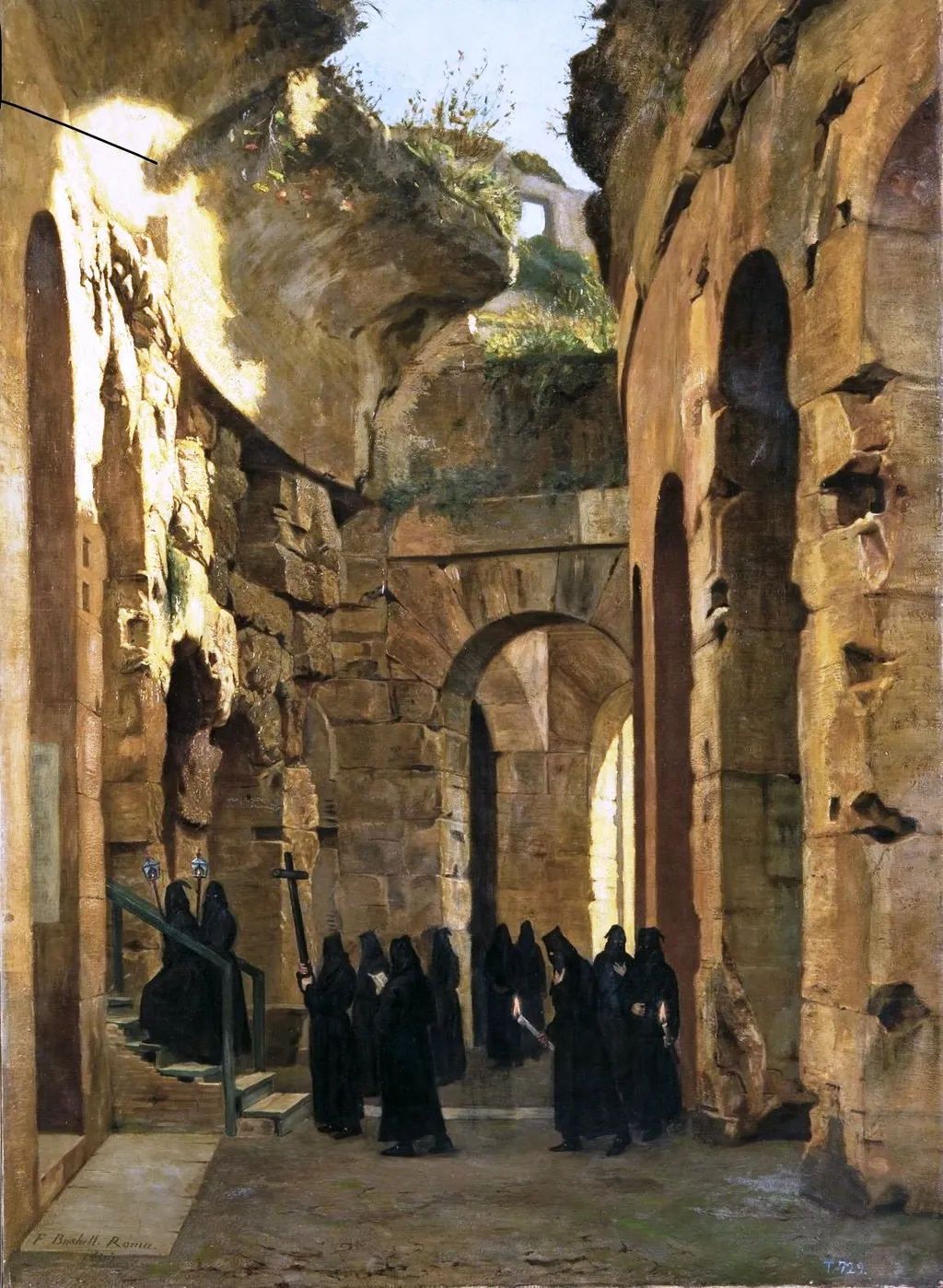
Procesión del Viernes Santo en el Coliseo de Roma is an oil painting by Francisco Bushell Laussat. It dates from 1864 and is held in the collection of the Museo del Prado.
About this work
Overview
Though modest in scale, the painting conveys a contemplative mood through its restrained palette and careful handling of illumination.
Painted in 1864 by Francisco Bushell Laussat, this oil work captures a solemn procession in a Roman architectural setting. The scene unfolds in a narrow, vaulted corridor with uneven stone walls and intermittent shafts of light. Though modest in scale, the painting conveys a contemplative mood through its restrained palette and careful handling of illumination. It resides in the collection of the Museo del Prado.
Subject & Meaning
The painting portrays participants in a Good Friday observance, moving through a dim passageway with candles and a wooden cross. Figures are grouped in quiet formation—some bearing sacred objects, others standing in stillness. The absence of overt drama suggests a private, inward devotion rather than public spectacle. The ritual’s gravity is implied through posture and atmosphere, not narrative detail.
Technique & Style
Bushell Laussat employs chiaroscuro to model form and suggest spatial depth. Light falls selectively across rough stone surfaces and dark robes, creating sharp contrasts that define volume without sharp outlines. The brushwork is subdued, favoring atmospheric effect over fine detail. Sunlight pierces the scene in narrow beams, enhancing the sense of enclosure and quiet reverence.
History & Provenance
Completed in 1864, the painting entered the Museo del Prado’s collection shortly after its creation. Little is documented about its early exhibition history or reception. Its acquisition by the museum reflects a 19th-century interest in religious subjects rendered with naturalistic precision, even when lacking grandeur or spectacle.
Context
The work emerges from a period when Spanish artists increasingly turned to intimate religious scenes, influenced by both academic training and European realism. Unlike large-scale altarpieces, this painting focuses on the mundane physicality of ritual—stone, shadow, fabric—grounding faith in tangible, sensory experience rather than divine spectacle.
Legacy
Though not widely reproduced or studied, the painting remains a quiet example of 19th-century Spanish religious genre painting. Its value lies in its restraint: it avoids sentimentality, instead offering a measured observation of ritual space and human presence. It contributes to a lesser-known strand of Spanish art that prioritizes atmosphere over narrative.
Artist & collection
Artist
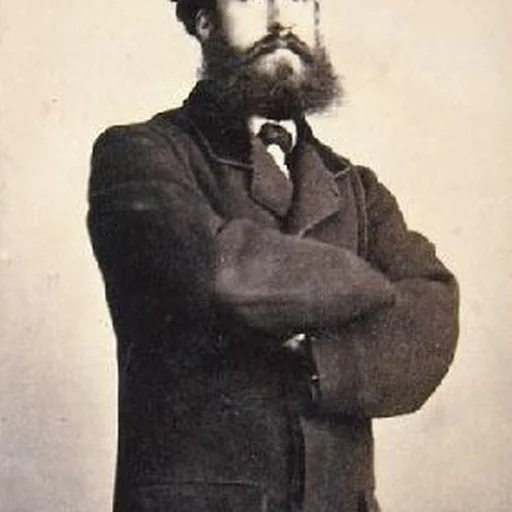
Francisco Bushell Laussat (1836–1901) was an artist, born in Alicante.

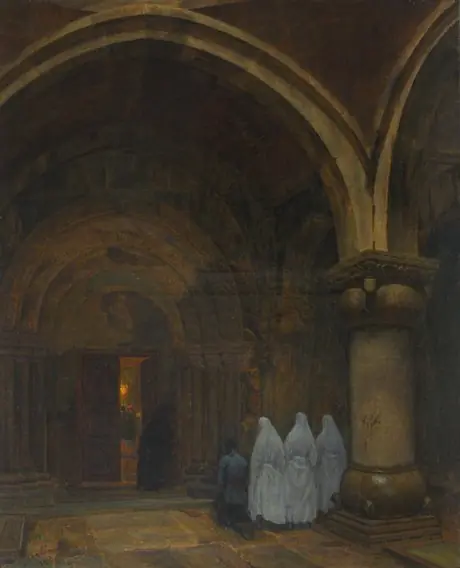 Sanahin monastery courtyard
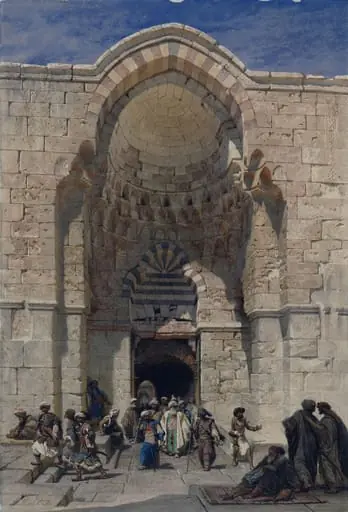 The Gate called Bab-el-Khataneen, at Jerusalem
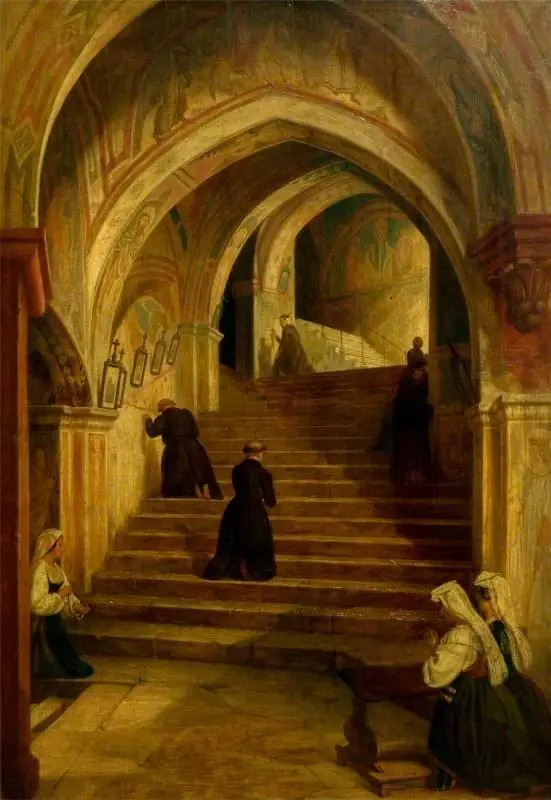 The Scala Santa at the Benedictine Monastery of Subiaco, near Rome
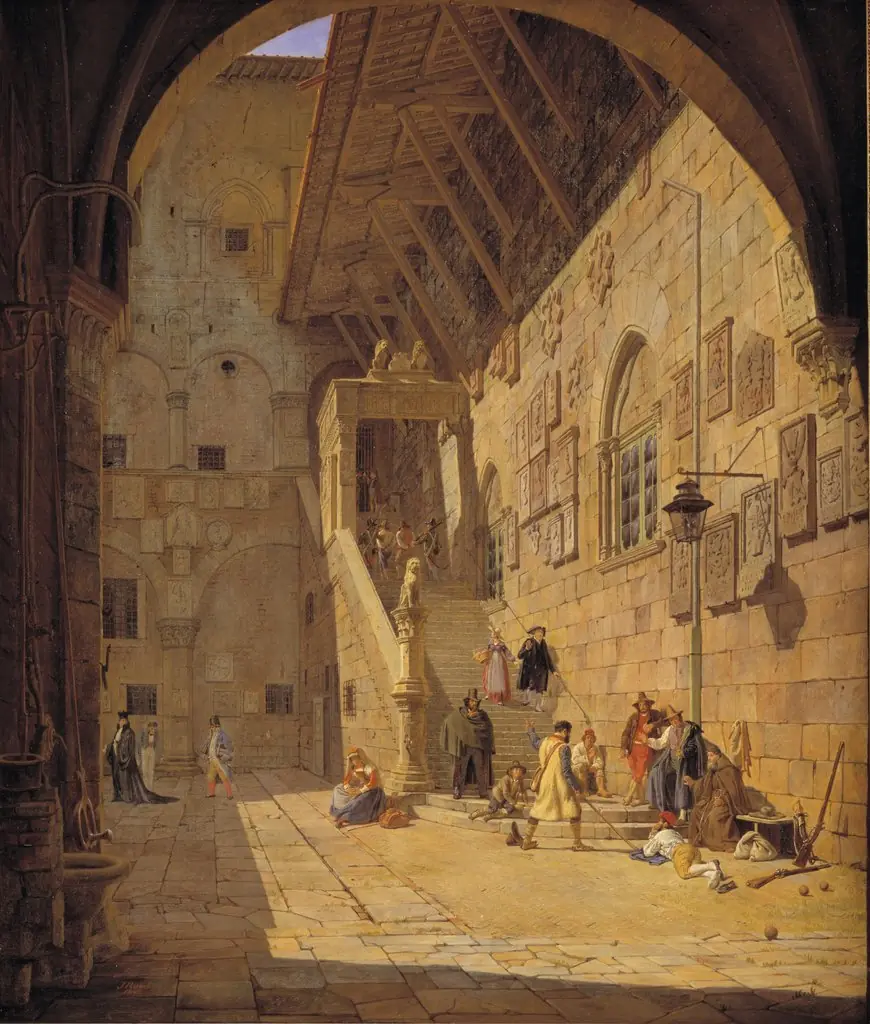 The Courtyard of the Palazzo del Bargello. Florence
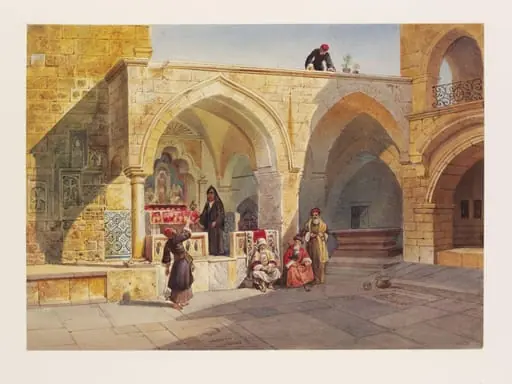 Court of the House of Caiaphus
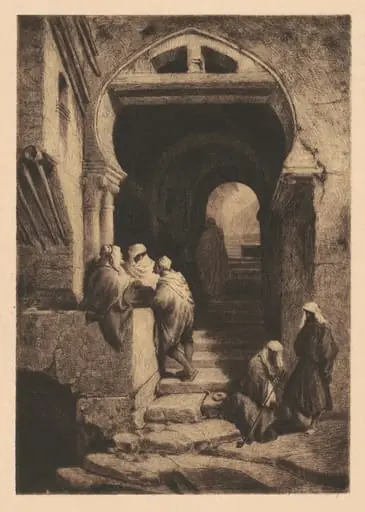 Devils Way, Algiers
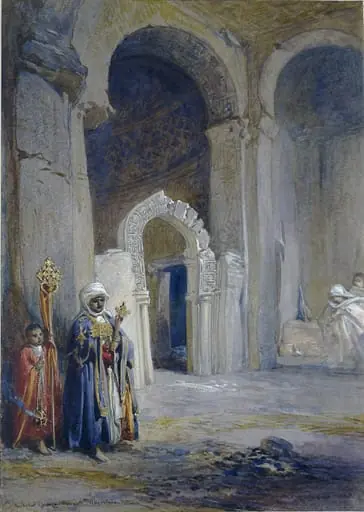 The Rock-Cut Church of Kados Kirkos at Dongola, Abyssinia
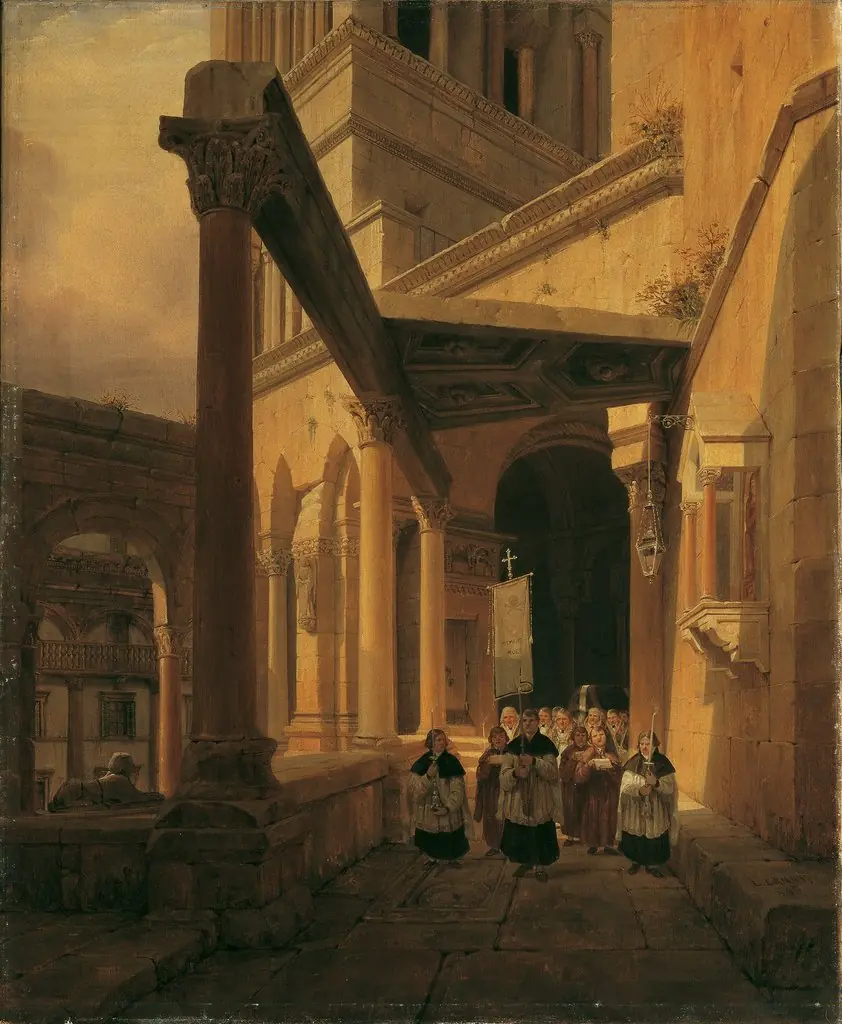 Ansicht eines Säulenganges im Tempel der Diana zu Spalato
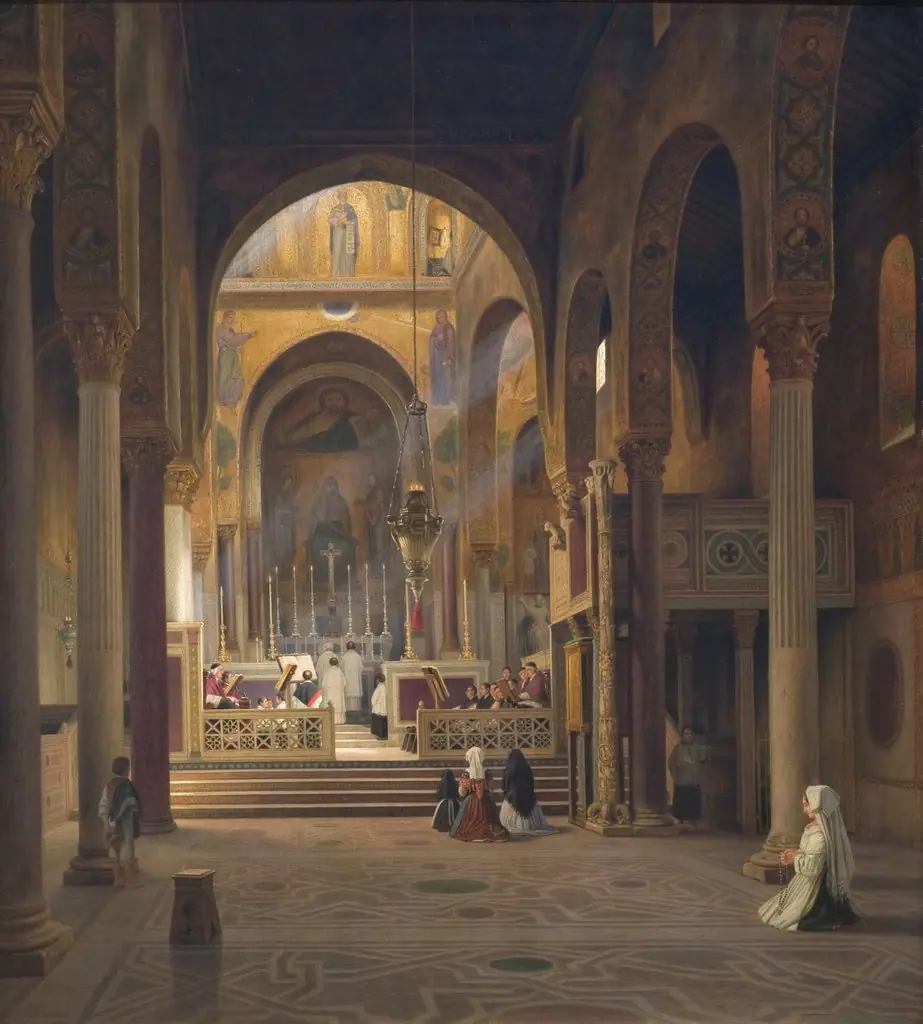 Interior of the Capella Palatina in Palermo, Italy
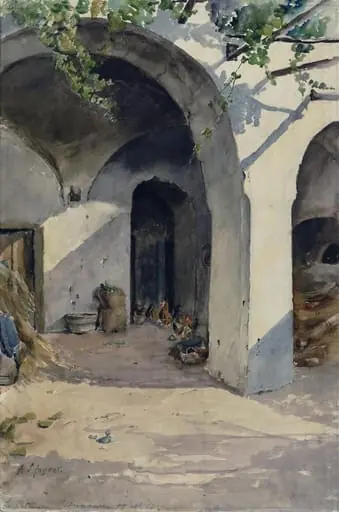 A Courtyard at Anacapri
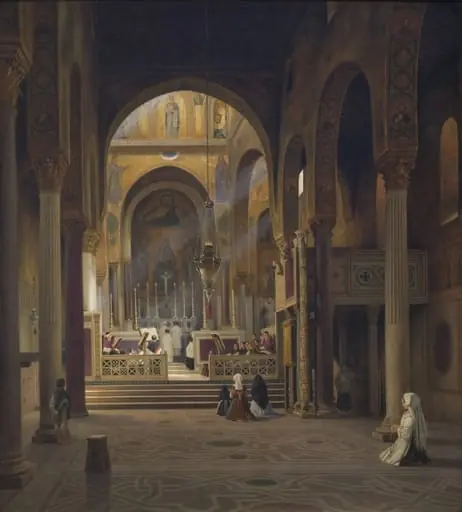 Interior of the Capella Palatina in Palermo, Italy
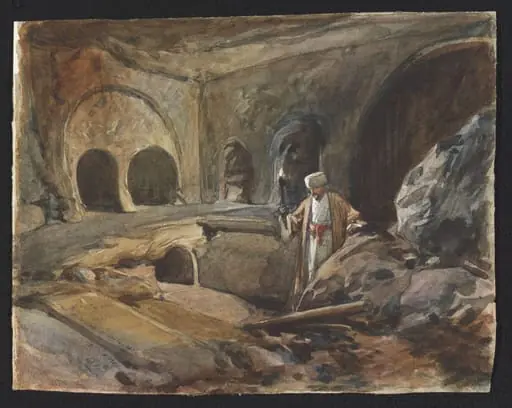 Tomb of Joseph of Arimathea. Jerusalem.