Artwork
The Horrors of War: An Heroic Feat! With Dead Men!
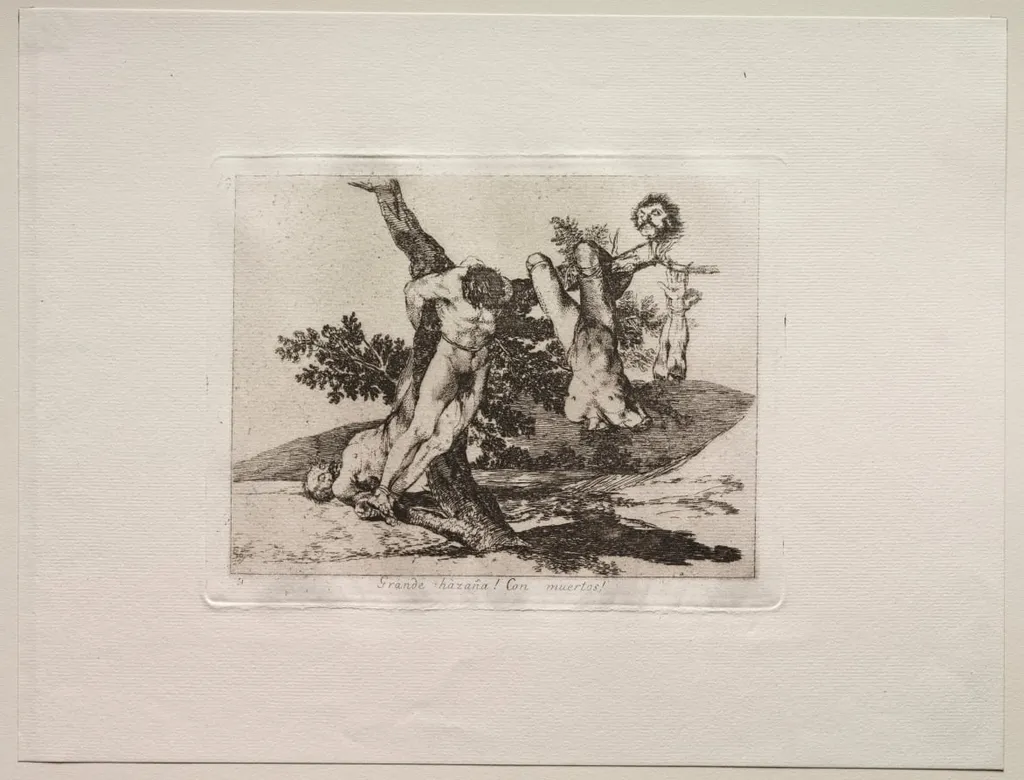
The Horrors of War: An Heroic Feat! With Dead Men! is a print by the Romanticist artist Francisco Goya. It dates from 1815 and is held in the collection of the Cleveland Museum of Art. Created around 1815, this etching by Francisco de Goya is part of a series reflecting the brutality of the Peninsular War.
About this work
Overview
Its title, inscribed beneath the image, carries a tone of bitter irony, contrasting the language of heroism with the grim reality of death.
Created around 1815, this etching by Francisco de Goya is part of a series reflecting the brutality of the Peninsular War. It is held in the collection of The Cleveland Museum of Art. The work presents a grim, unidealized moment of wartime labor, rendered in stark monochrome with minimal detail. Its title, inscribed beneath the image, carries a tone of bitter irony, contrasting the language of heroism with the grim reality of death.
Subject & Meaning
The scene depicts three soldiers in a desolate landscape, one bearing the body of a fallen comrade over his shoulders while another holds a branch, possibly a makeshift stretcher or weapon. The figures are engaged in a quiet, exhausting act of retrieval rather than triumph. The inscription 'Grande hazaña! Con muertos!' mocks military glorification, suggesting that the only 'feat' in war is the burden of carrying the dead.
Technique & Style
Goya employed etching with aquatint to achieve a range of tonal depths, using rough, expressive lines to convey urgency and emotional weight. The composition lacks clear perspective, drawing attention to the figures’ physical strain. The dark, uneven textures and sparse background amplify the sense of isolation and despair, aligning with Goya’s shift toward a more personal, visceral mode of expression in his later works.
History & Provenance
The print was produced during Goya’s post-war years, as he processed the trauma of conflict and political upheaval in Spain. It was likely part of a private portfolio, not intended for public sale, and remained in limited circulation until acquired by the Cleveland Museum of Art in the 20th century. Its survival reflects its status as a personal, critical response rather than a commissioned work.
Context
Created amid the collapse of Enlightenment ideals and the rise of Romanticism, the work rejects classical heroism in favor of raw human suffering. Goya’s imagery diverges from official narratives of glory, instead documenting the quiet, undignified labor of war’s aftermath. This aligns with broader European disillusionment following the Napoleonic Wars and the failure of revolutionary promises.
Legacy
The print stands as an early example of art confronting war’s psychological toll without embellishment. Its unflinching portrayal influenced later generations of artists who sought to depict conflict truthfully, from Géricault to 20th-century war photographers. Goya’s refusal to aestheticize death helped redefine the role of the artist as witness rather than celebrant.
Artist & collection
Artist
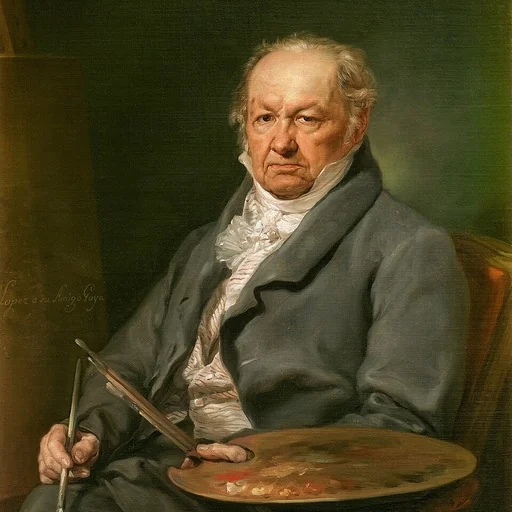
Francisco José de Goya y Lucientes (; Spanish: ; 30 March 1746 – 16 April 1828) was a Spanish romantic painter and printmaker.

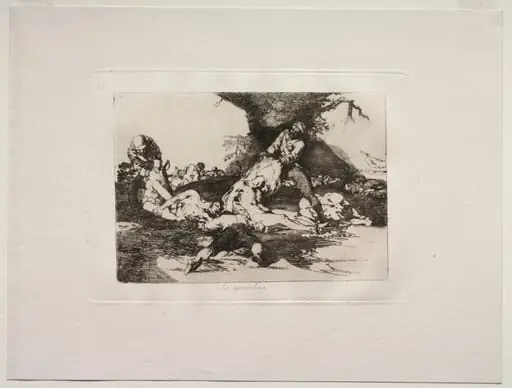 The Horrors of War: They Make Use of Them
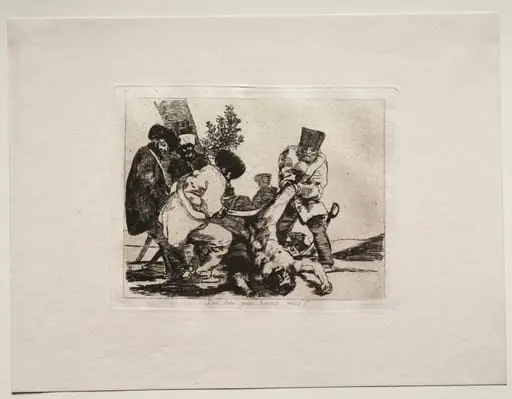 The Horrors of War: What More Can Be Done?
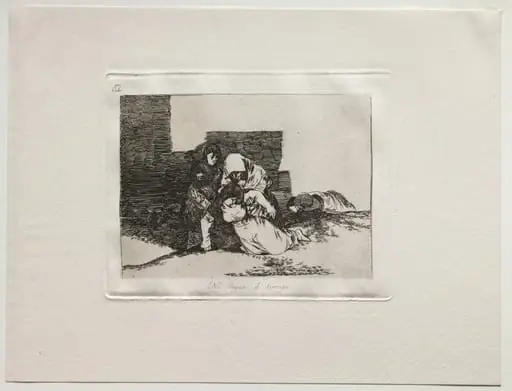 The Horrors of War: They Do Not Arrive In Time
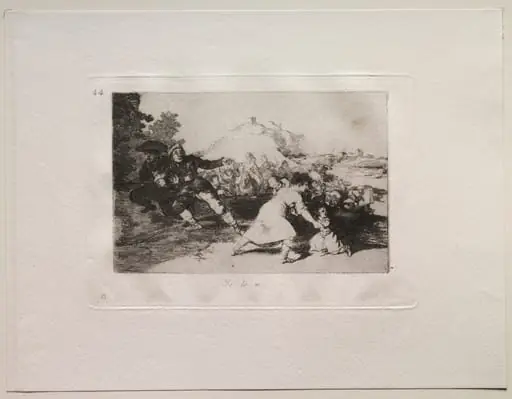 The Horrors of War: I Saw It
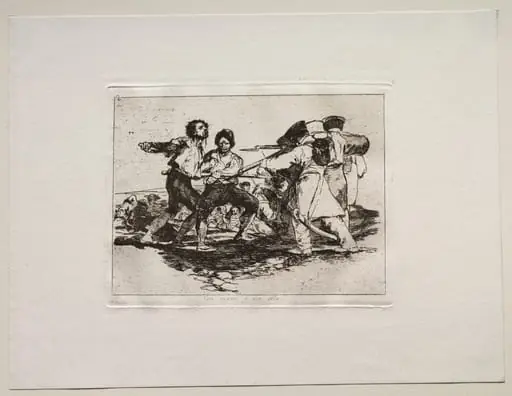 The Horrors of War: Rightly or Wrongly
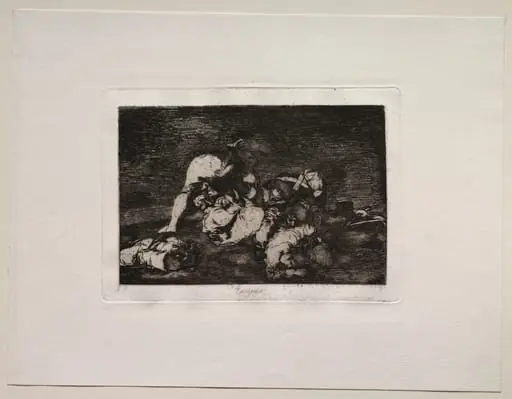 The Horrors of War: Nor (Do These) Either
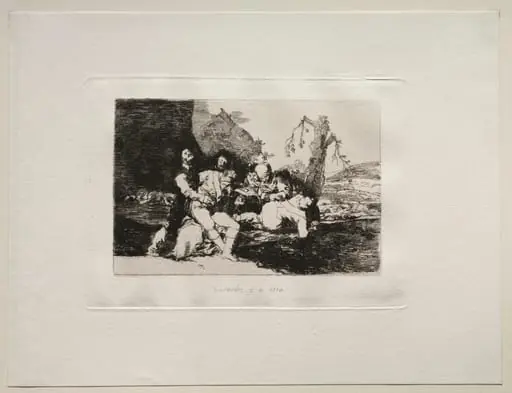 The Horrors of War: Get them Well and On to the Next
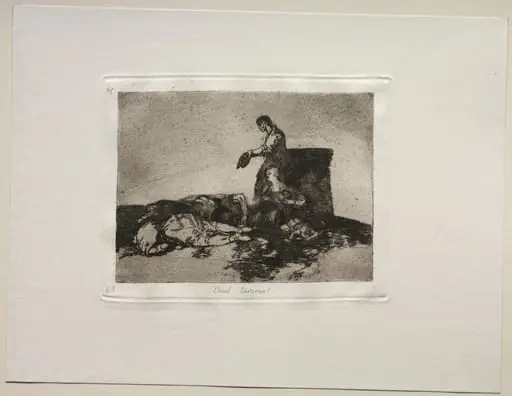 The Horrors of War: Cruel Tale of Woe
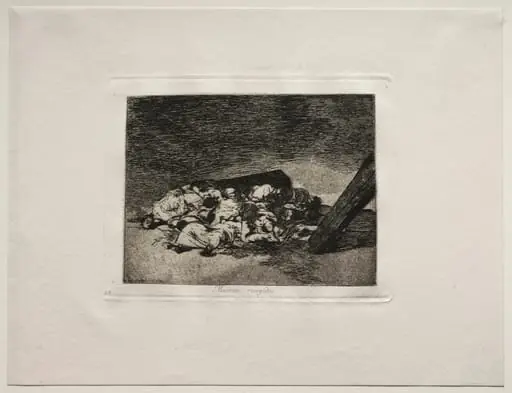 The Horrors of War: Harvest of the Dead