Artwork
They Spin Finely, Plate 44
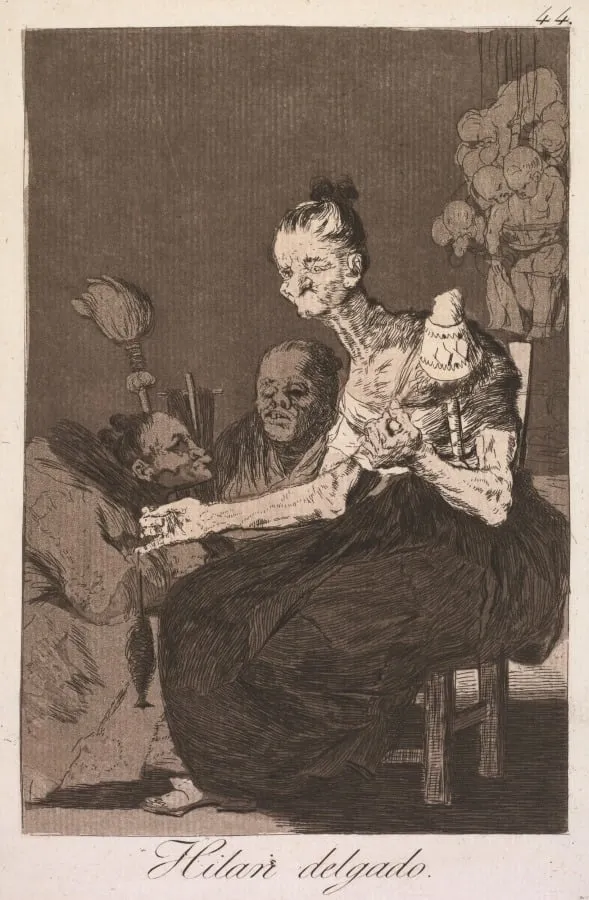
They Spin Finely, Plate 44 is a print by the Romanticist artist Francisco Goya. It dates from 1799 and is held in the collection of the Cleveland Museum of Art.
About this work
Overview
Unlike later editions, it preserves the nuanced tonal gradations Goya achieved through aquatint, offering a rare glimpse into his preparatory process.
This trial proof, Plate 44 from Goya’s Los Caprichos series, is one of the earliest impressions made from the original plate, printed in sepia ink before the series was publicly released. Unlike later editions, it preserves the nuanced tonal gradations Goya achieved through aquatint, offering a rare glimpse into his preparatory process. The soft, muted palette distinguishes it from the sharper contrasts of subsequent prints.
Subject & Meaning
The image depicts a woman bent over a spinning wheel, her face obscured in shadow, her clothing rendered in near-monochrome tones. The act of spinning, a common metaphor for prostitution in 18th-century Spain, frames the scene as a quiet indictment of societal hypocrisy. Goya isolates the figure in a dim interior, suggesting concealment and moral ambiguity, inviting scrutiny of hidden labor and gendered exploitation.
Technique & Style
Goya employed aquatint to build subtle gradations of tone, avoiding hard outlines in favor of atmospheric transitions. The sepia ink enhances the delicacy of light and shadow, particularly in the blending of the woman’s skin and white blouse—a visual echo of sfumato. This technique softens edges and dissolves form, emphasizing mood over detail, and reflects Goya’s mastery of printmaking as a medium for psychological depth.
History & Provenance
As a trial proof, this impression predates the official 1799 publication of Los Caprichos and was likely used by Goya to assess the plate’s tonal balance. Few such early impressions survive, making this one a valuable record of the artist’s working method. Its sepia ink and delicate rendering distinguish it from the more widely circulated black-ink editions, which lost some of the original’s tonal subtlety.
Context
Created during a period of social and political tension in Spain, Los Caprichos critiques superstition, corruption, and moral decay. Plate 44 fits within this broader satire, using domestic imagery to expose the commodification of women’s labor. The dim interior and obscured face reflect Goya’s interest in the unseen forces shaping private life, aligning with Enlightenment-era questioning of social norms.
Legacy
This trial proof exemplifies Goya’s pioneering use of printmaking to convey complex social commentary. Its tonal richness and psychological nuance influenced later artists who sought to merge technical innovation with critical narrative. As a rare early state, it remains a key document in understanding how Goya refined his visual language before public dissemination.
Artist & collection
Artist
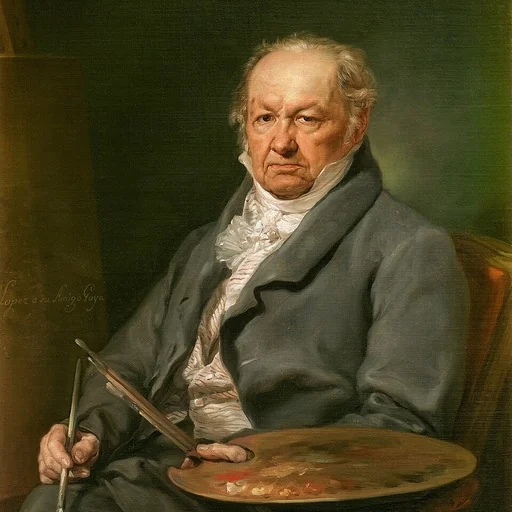
Francisco José de Goya y Lucientes (; Spanish: ; 30 March 1746 – 16 April 1828) was a Spanish romantic painter and printmaker.

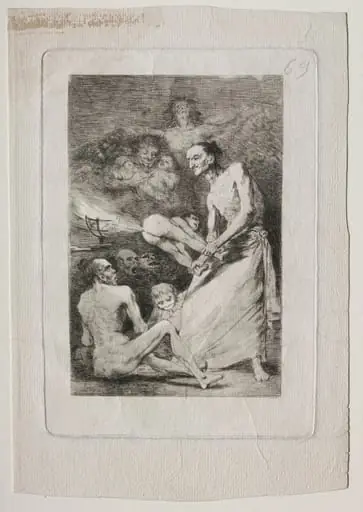 Blow, Plate 69
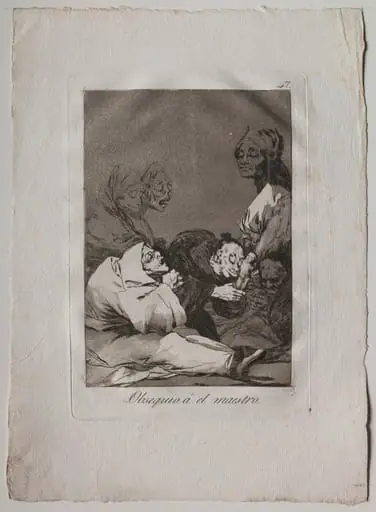 A Gift for the Master, Plate 47
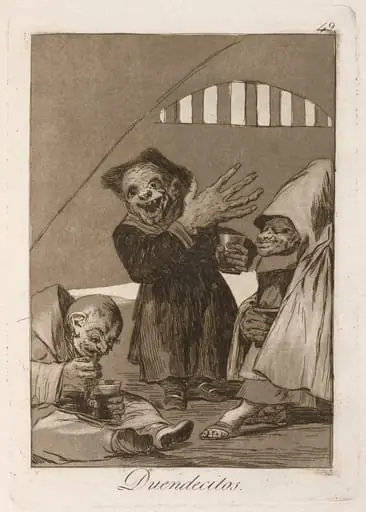 Duendecitos (Hobgoblins)
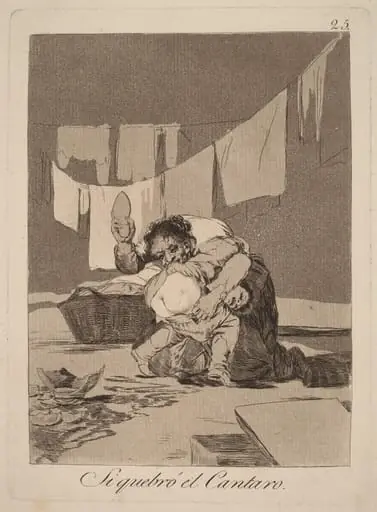 Si quebro el cantaro (Yes He Broke the Pot)
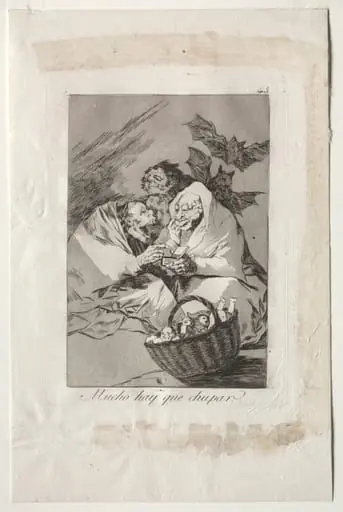 There is Plenty to Suck, Plate 45
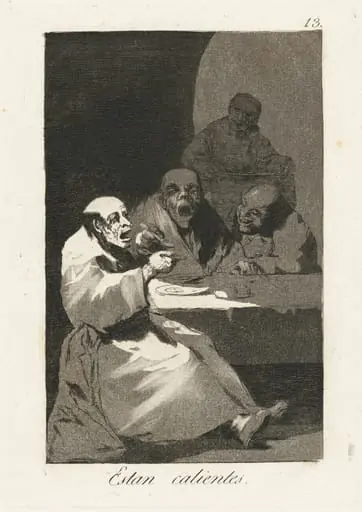 Estan Calientes (They Are Hot)
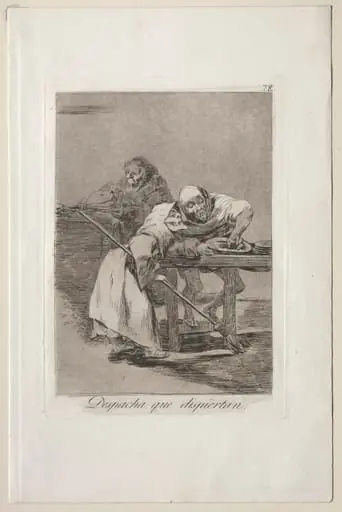 Be Quick, They are Waking Up, Plate 78
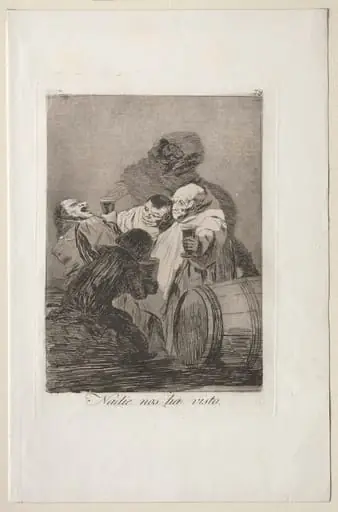 No One has Seen Us, Plate 79
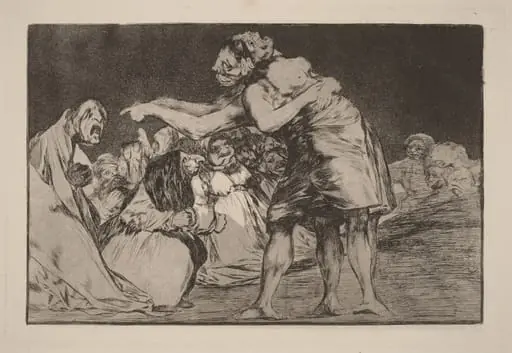 Disparate desordenado (Disorderly Folly)
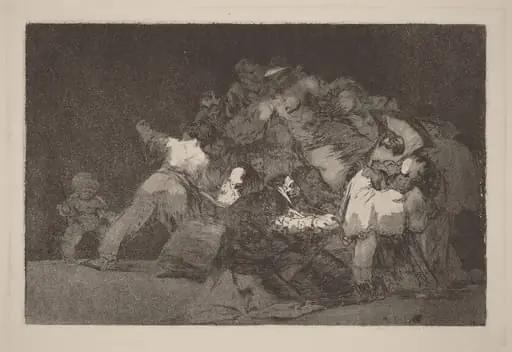 Disparate general (General Folly)
 Disparate pobre (Poor Folly)
 A Bad Night, Plate 36