Artwork
Be Quick, They are Waking Up, Plate 78
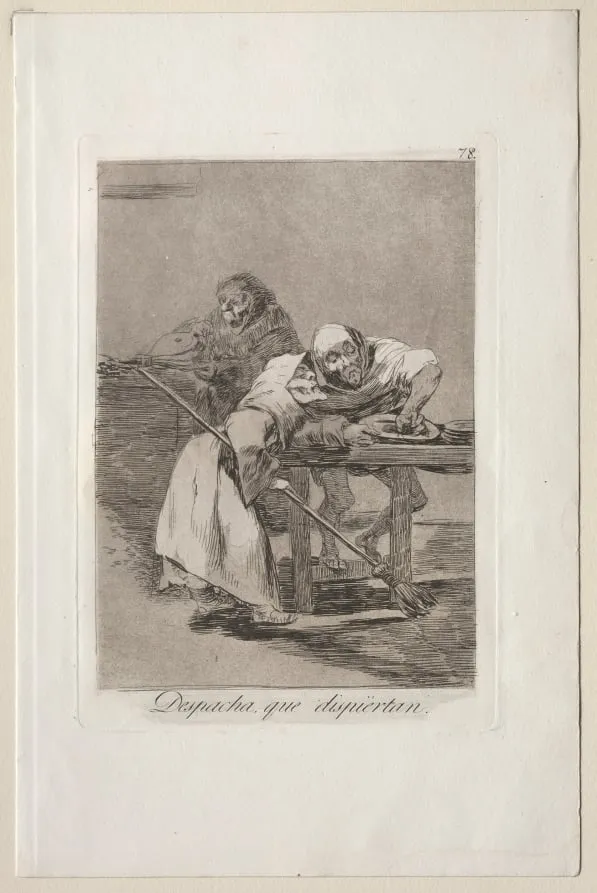
Be Quick, They are Waking Up, Plate 78 is a print by the Romanticist artist Francisco Goya. It dates from 1799 and is held in the collection of the Cleveland Museum of Art. Created around 1799, this print is the seventy-eighth plate in Francisco de Goya’s series Los Caprichos.
About this work
Overview
Created around 1799, this print is the seventy-eighth plate in Francisco de Goya’s series Los Caprichos. Executed in etching and aquatint, it captures a moment of hurried secrecy under dim light. The work is part of a larger collection critiquing superstition and social folly, and it resides today in The Cleveland Museum of Art’s collection.
Subject & Meaning
Two figures, one in a loose robe and the other wrapped in a shawl and apron, scramble to conceal or sort objects on a cloth-covered table. A broom and dustpan nearby suggest a domestic space recently disturbed. The urgent title implies intrusion or forbidden activity, hinting at nocturnal rituals or hidden labor, possibly alluding to the fear of discovery during clandestine acts.
Technique & Style
Goya employed rapid, incised lines and deep chiaroscuro to convey tension and motion. The rough texture of the etching enhances the sense of urgency, while the stark contrast between shadow and faint illumination isolates the figures and their actions. The loose, sketch-like quality suggests spontaneity, as if the scene was captured mid-movement.
History & Provenance
The print was originally published in 1799 as part of Goya’s privately circulated series Los Caprichos, which he later withdrew from public sale due to political pressure. It entered The Cleveland Museum of Art’s collection in the 20th century, having passed through several private holdings after its initial release.
Context
This plate belongs to a series that satirizes Spanish society’s superstitions, ignorance, and moral decay during the late Enlightenment. Goya’s nighttime scenes often depict hidden behaviors—witchcraft, deception, or secrecy—reflecting anxieties about authority, religion, and the unseen forces shaping daily life.
Legacy
Goya’s use of dark, expressive imagery in this print influenced later generations of artists exploring psychological depth and social critique. The work’s raw technique and thematic ambiguity helped redefine printmaking as a vehicle for personal and political commentary beyond mere illustration.
Artist & collection
Artist
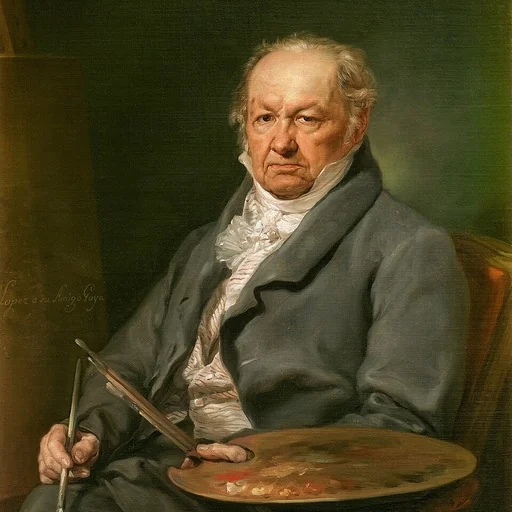
Francisco José de Goya y Lucientes (; Spanish: ; 30 March 1746 – 16 April 1828) was a Spanish romantic painter and printmaker.

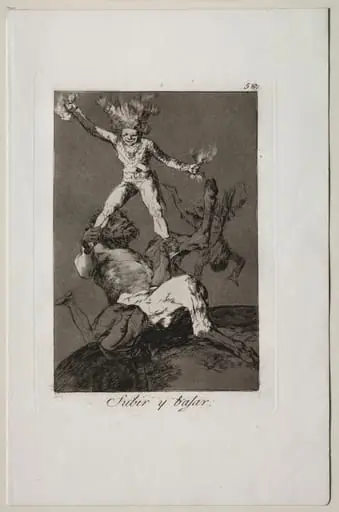 To Rise and to Fall, Plate 56
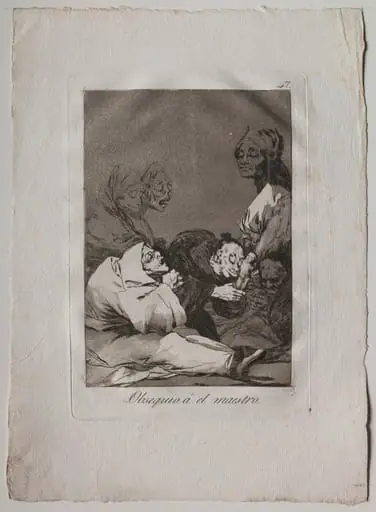 A Gift for the Master, Plate 47
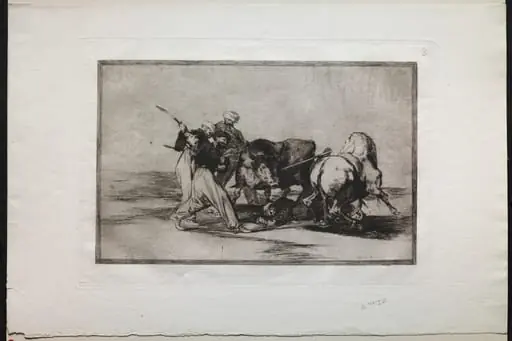 Bullfights: The Moors Settled in Spain, Giving Up the Superstitions of the Qur’an, Adopted this Art of Hunting, and Spear a Bull in the Open
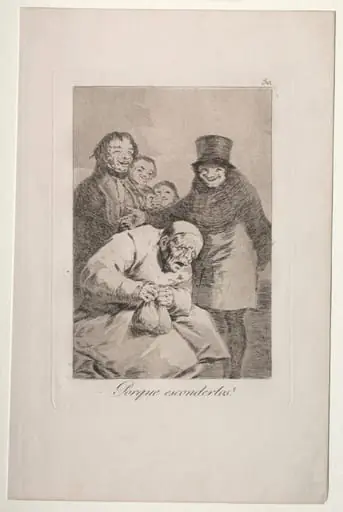 Why Hide Them?, Plate 30
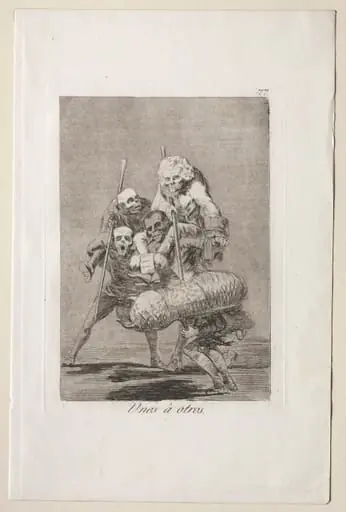 What One Does to Another, Plate 77
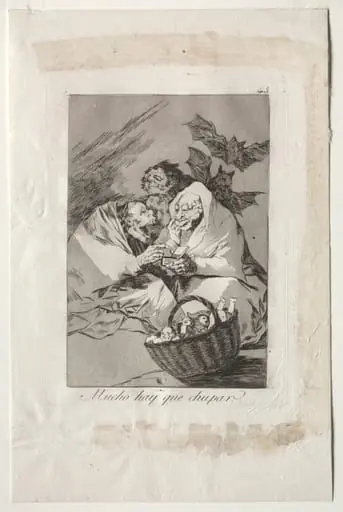 There is Plenty to Suck, Plate 45
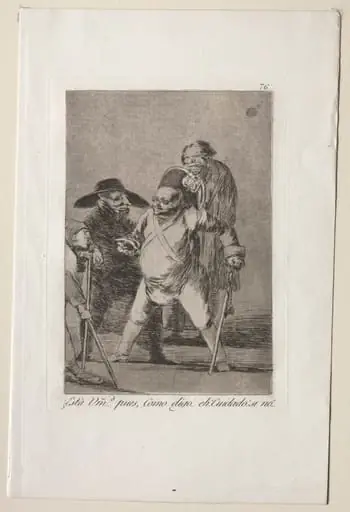 You understand?...Well, as I say...eh! Look out! Otherwise..., Plate 76
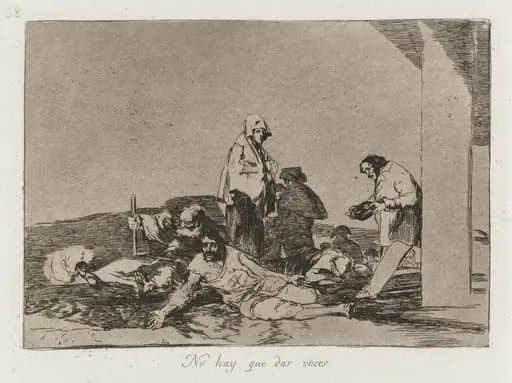 Disasters of War: Pl. 58, It is no use shouting
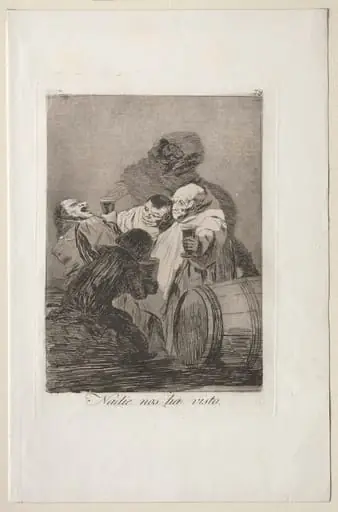 No One has Seen Us, Plate 79