Artwork
James the Great
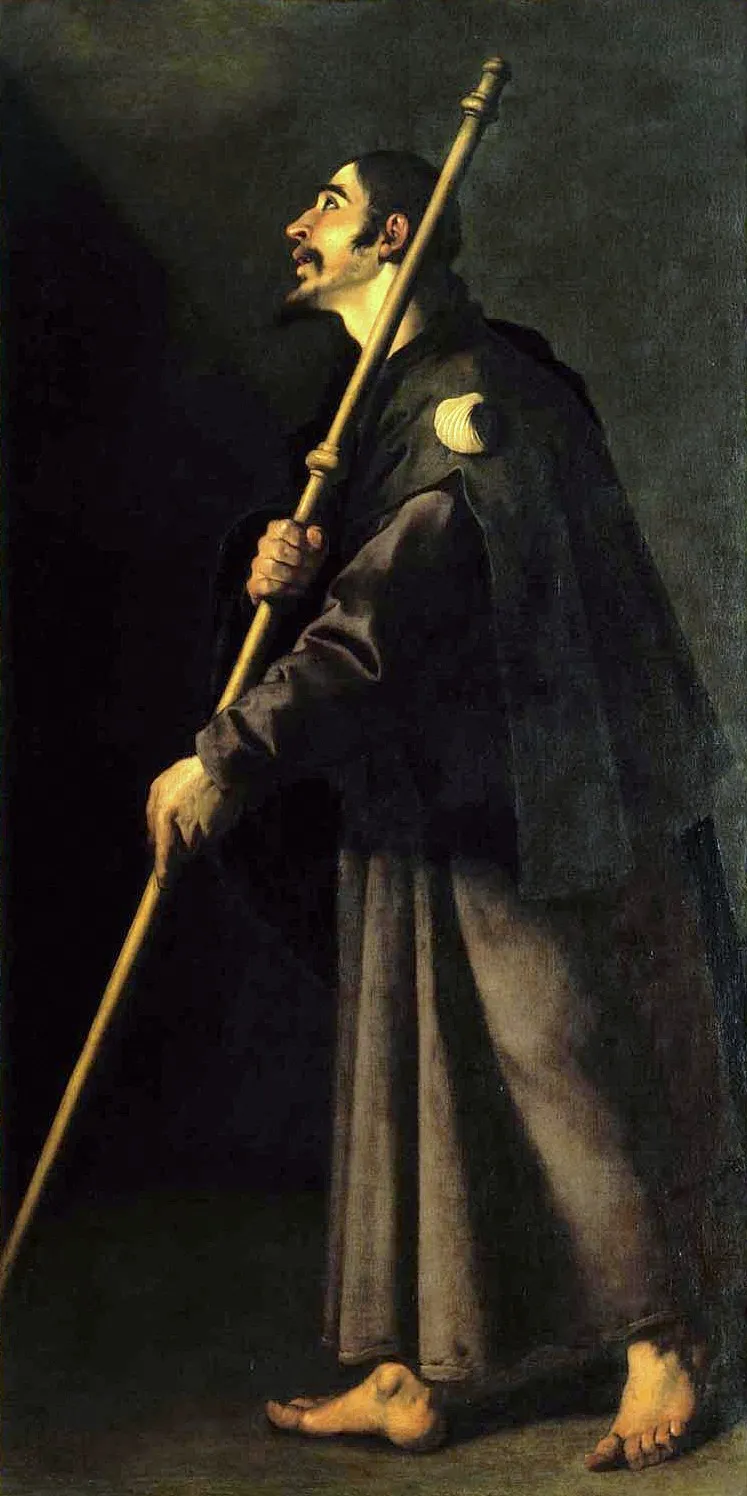
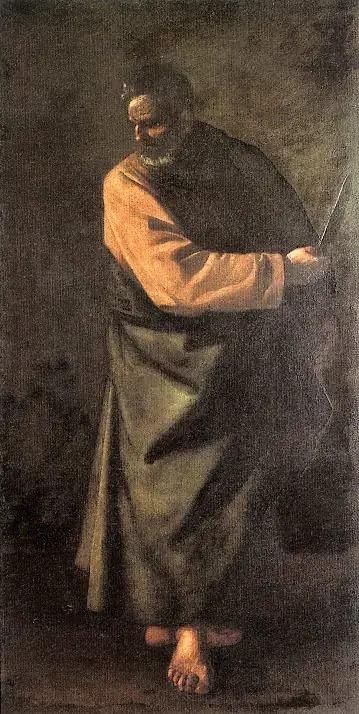
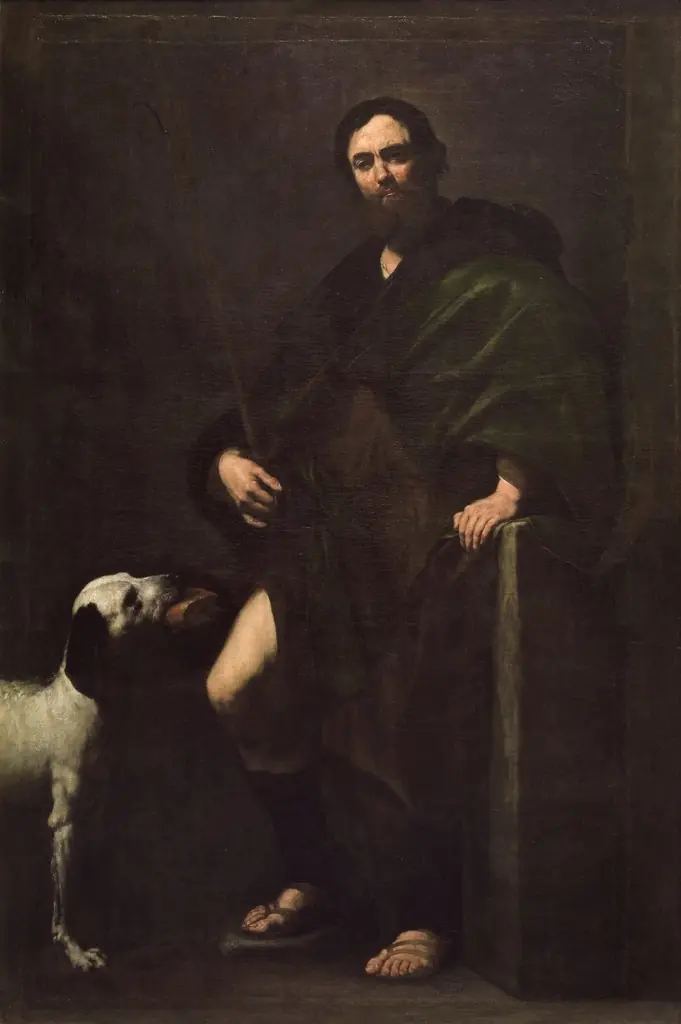
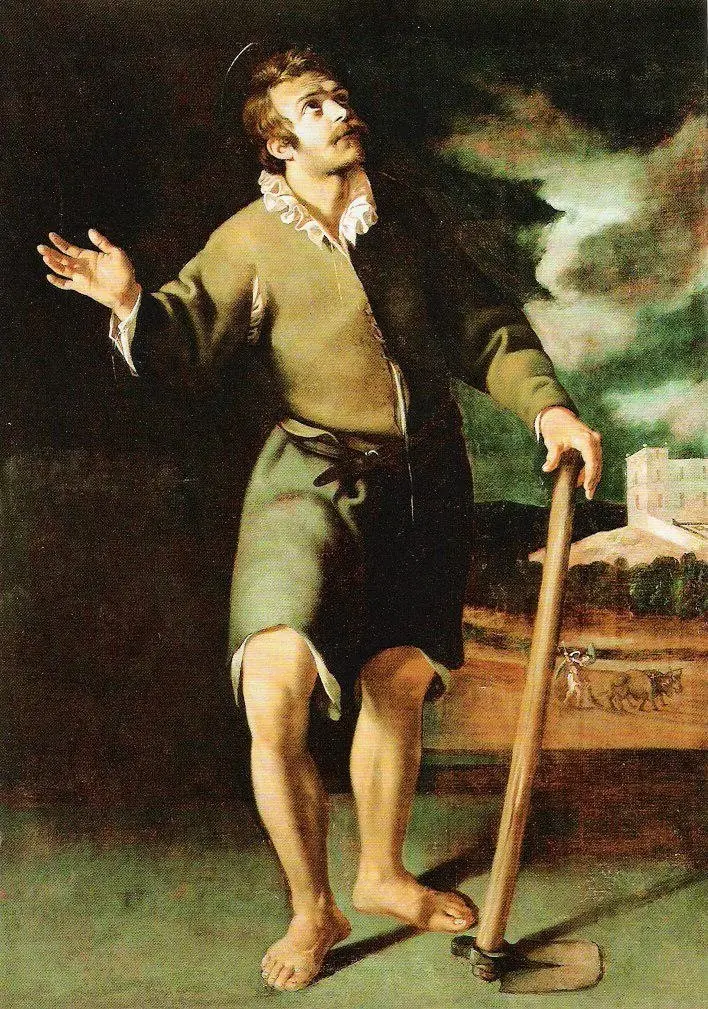
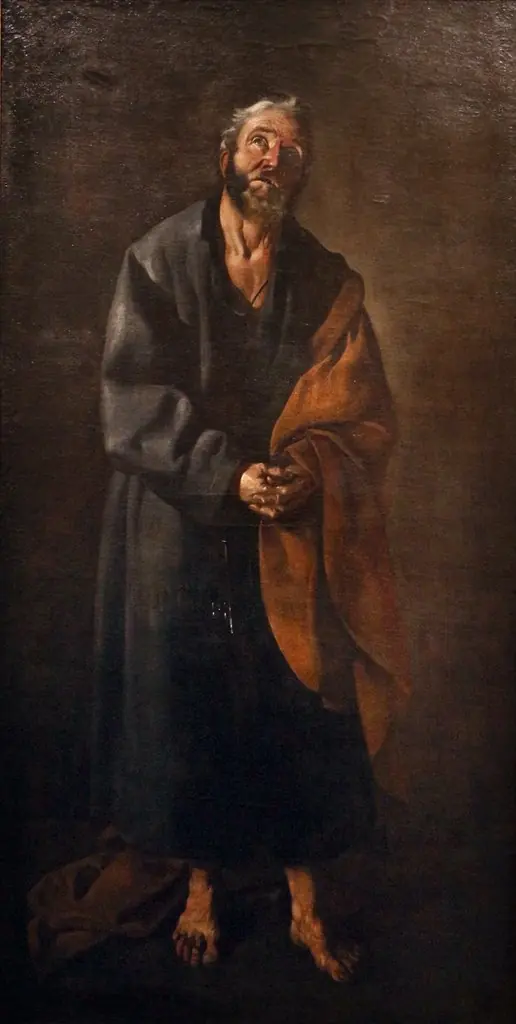
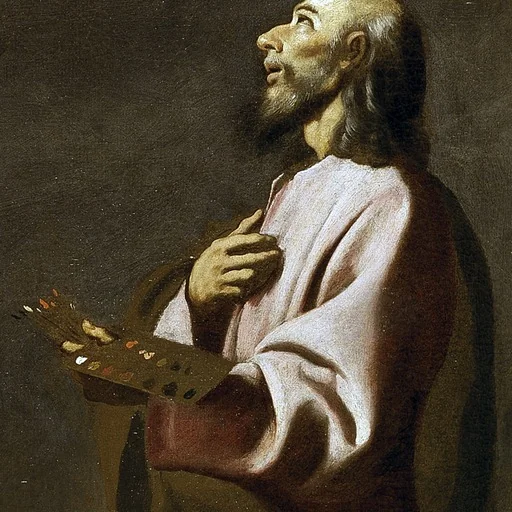
James the Great is an oil painting by the Spanish Baroque Tenebrist artist Francisco de Zurbarán. It dates from 1633 and is held in the collection of the National Museum of Ancient Art.
About this work
Overview
Francisco de Zurbarán’s oil on canvas, dated 1633, portrays the apostle known as James the Great. The figure stands against a deep, shadowed backdrop, illuminated from one side, which emphasizes his solemn expression and the details of his attire and attributes. The work is part of the collection of the National Museum of Ancient Art.
Subject & Meaning
The painting presents the saint as a pilgrim, identifiable by the staff he holds and the white shell resting on his shoulder—traditional symbols of pilgrimage to Santiago de Compostela. His gaze is directed upward, suggesting contemplation or divine aspiration, while his bare foot and simple robe convey humility and devotion.
Technique & Style
Zurbarán employs a stark chiaroscuro, contrasting a dark, indeterminate background with a focused light that models the saint’s face and the smooth surface of the shell. This treatment creates a three‑dimensional presence, highlighting the texture of the robe and the slenderness of the staff, and draws the eye to the central figure.
History & Provenance
Executed in the early 1630s, the canvas entered the holdings of Portugal’s National Museum of Ancient Art, where it remains on display. Its attribution to Zurbarán has been consistently affirmed through stylistic analysis and documentary records linking the work to the artist’s series of saintly portraits.
Artist & collection
Artist
Francisco de Zurbarán was a Spanish Baroque painter. He is known primarily for his religious paintings depicting monks, nuns, and martyrs, and for his still-lifes. Zurbarán gained the nickname "Spanish Caravaggio",…