Artwork
Blind Man's Bluff (sketch)
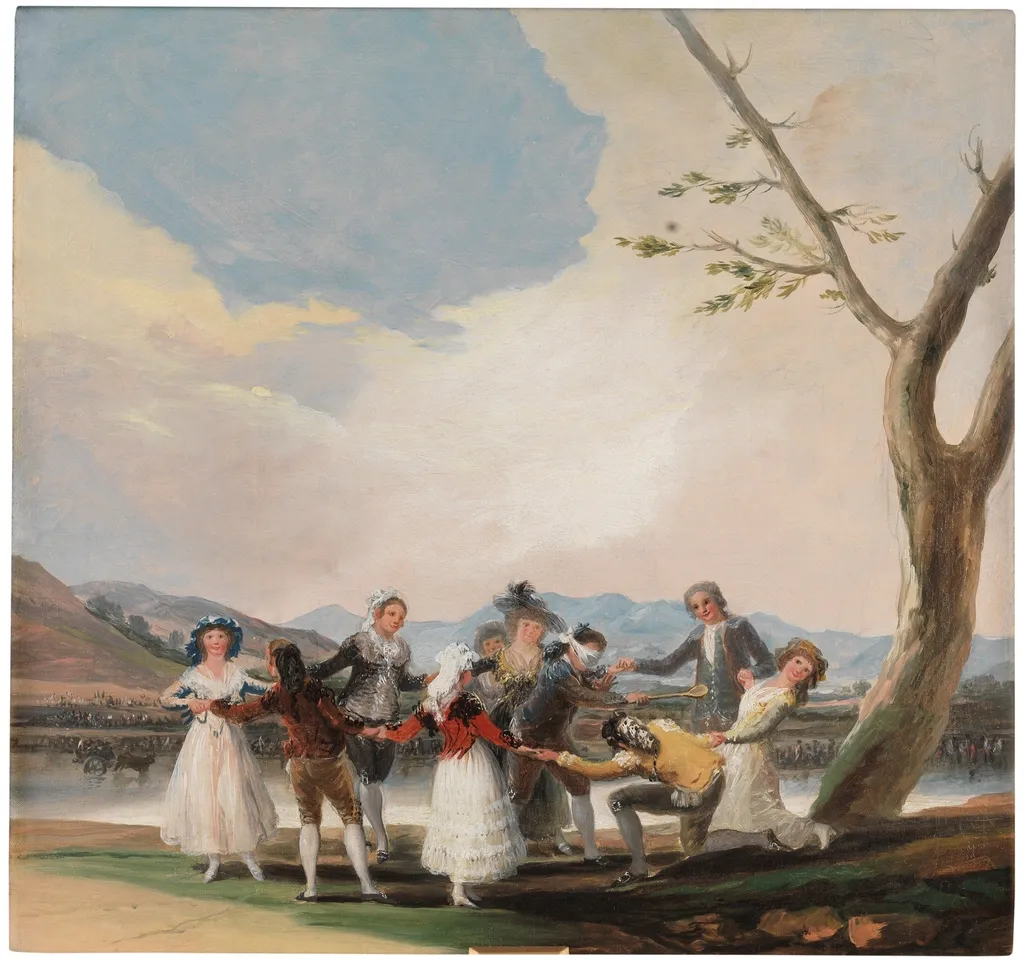
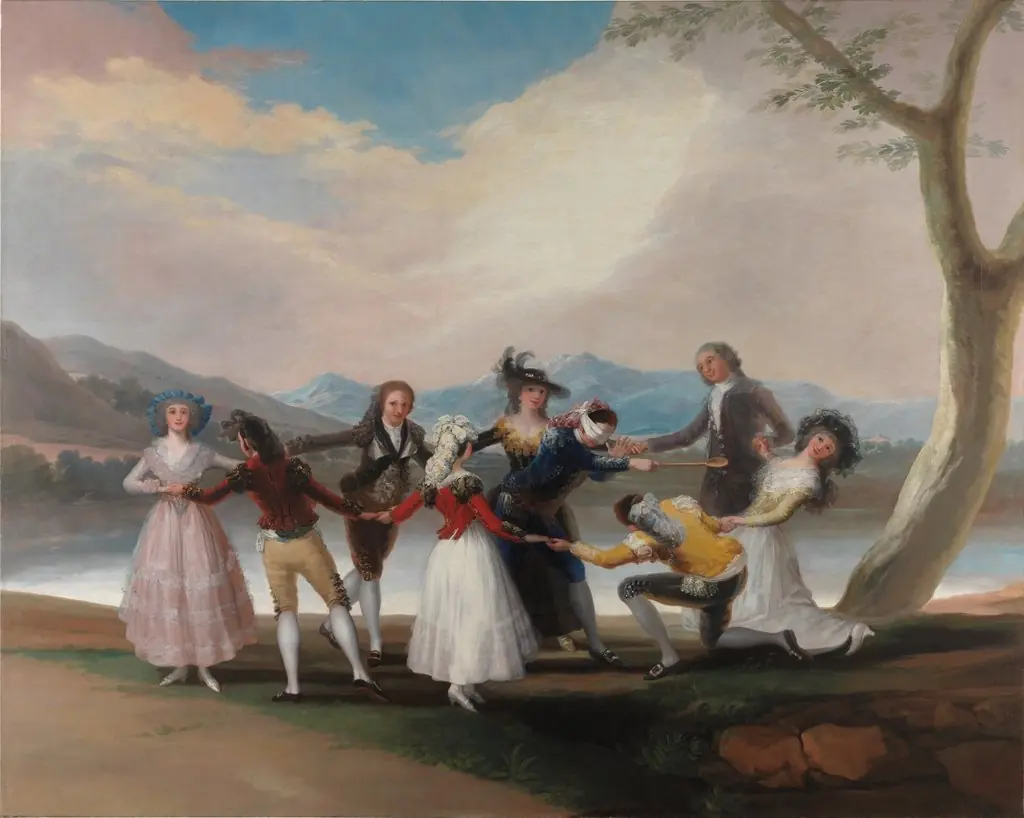
Blind Man's Bluff (sketch) is an oil painting by the Rococo painting artist Francisco Goya. It dates from 1794 and is held in the collection of the Museo del Prado.
About this work
Overview
Created in 1794, this oil sketch by Francisco Goya depicts a lively outdoor scene in which a group of figures, dressed in period costume, engage in the children’s game of blind man’s bluff. The participants stand hand‑in‑hand, guiding a blindfolded player across a pastoral landscape that includes gentle hills and a body of water.
Subject & Meaning
The composition captures a moment of communal amusement, emphasizing interaction and trust as the sightless figure is led by companions who smile and laugh. While the subject is light‑hearted, the work hints at themes of vulnerability and dependence, reflecting broader social dynamics that Goya would later explore more overtly in his mature oeuvre.
Technique & Style
Executed as a rapid oil sketch, the painting employs a loose brushwork characteristic of the late Rococo, with soft, pastel tones that convey a fleeting atmosphere. The handling of light and shadow is understated, allowing the figures and landscape to merge into a harmonious whole, while the sketchy quality suggests an exploratory approach to composition.
History & Provenance
The work entered the collection of Madrid’s Museo del Prado, where it remains on display. It belongs to the early phase of Goya’s career, preceding his more politically charged series, and illustrates his engagement with contemporary European artistic currents during the final years of the Rococo period.
Own this work as a print
Artist & collection
Artist
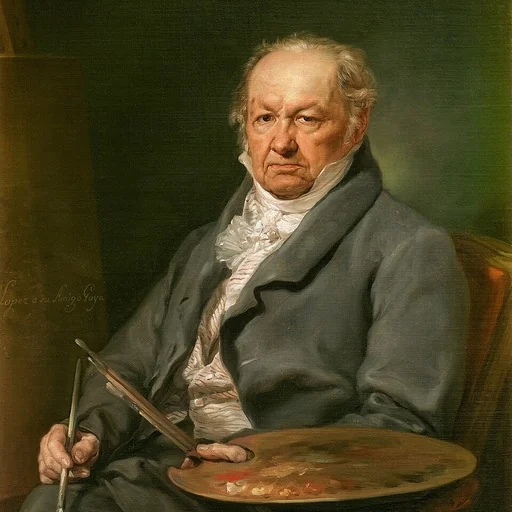
Francisco José de Goya y Lucientes (; Spanish: ; 30 March 1746 – 16 April 1828) was a Spanish romantic painter and printmaker.

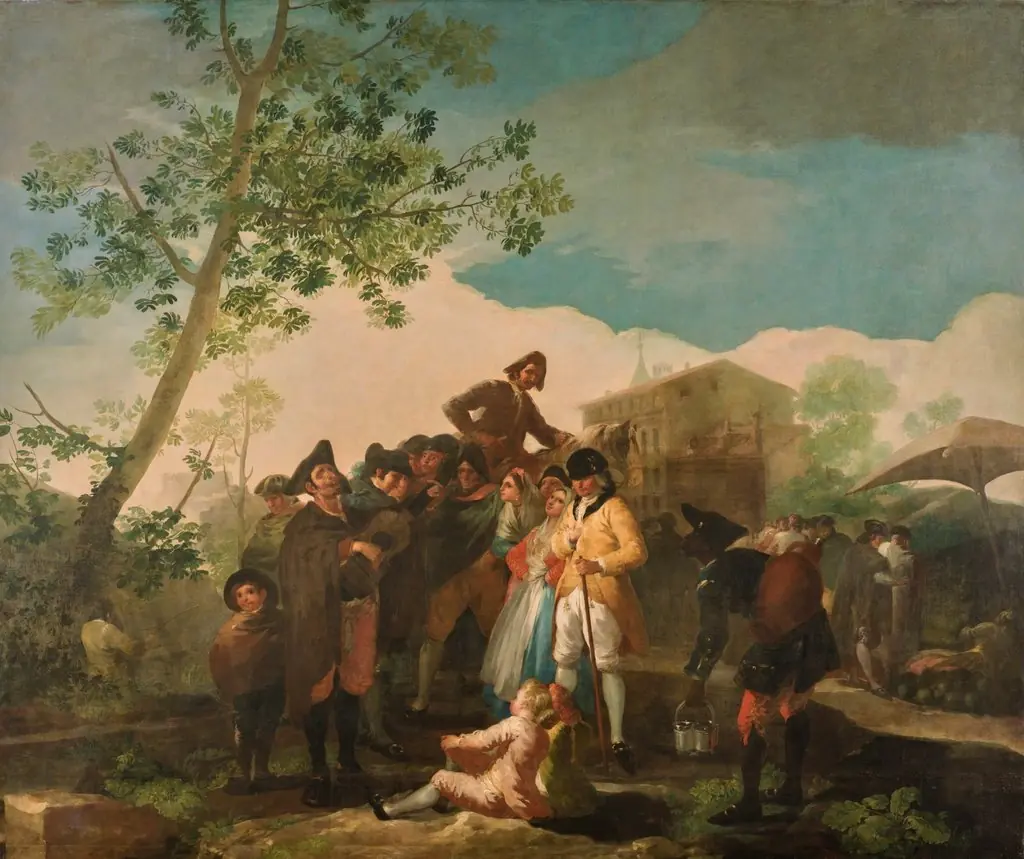 The blind guitarist
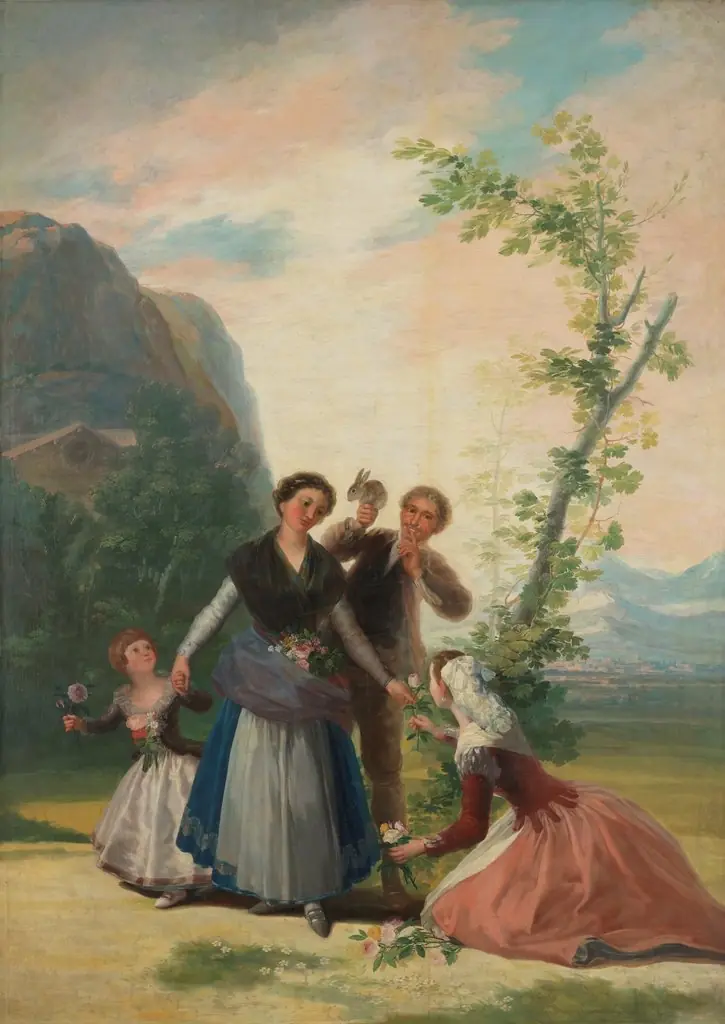 The Flower Girls or Spring
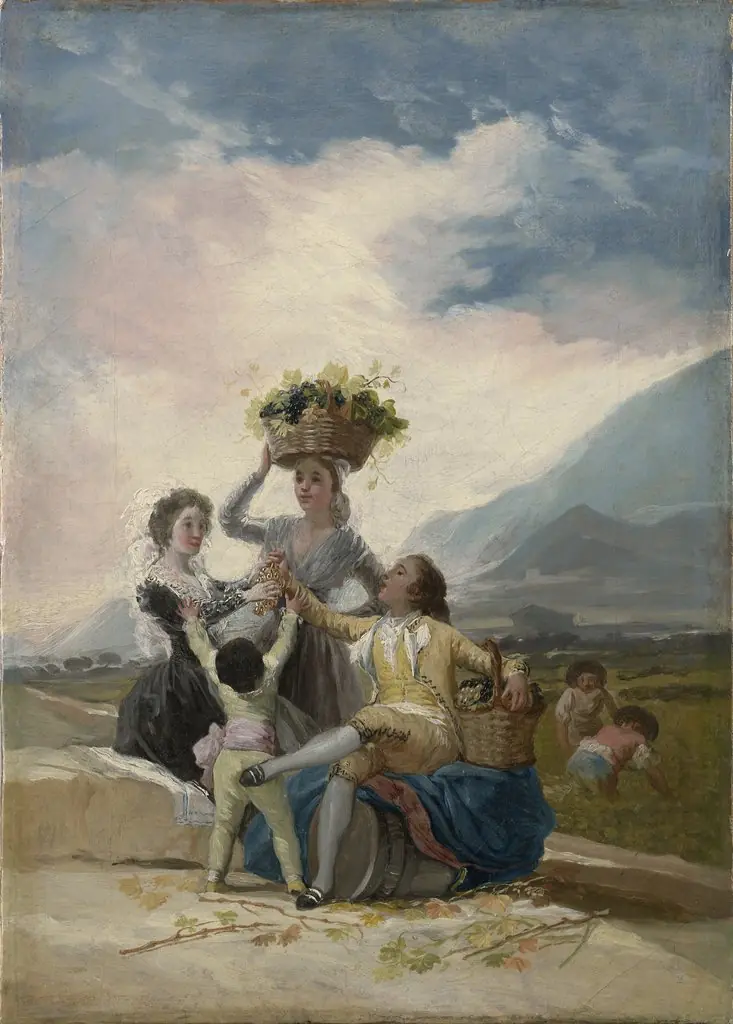 Autumn
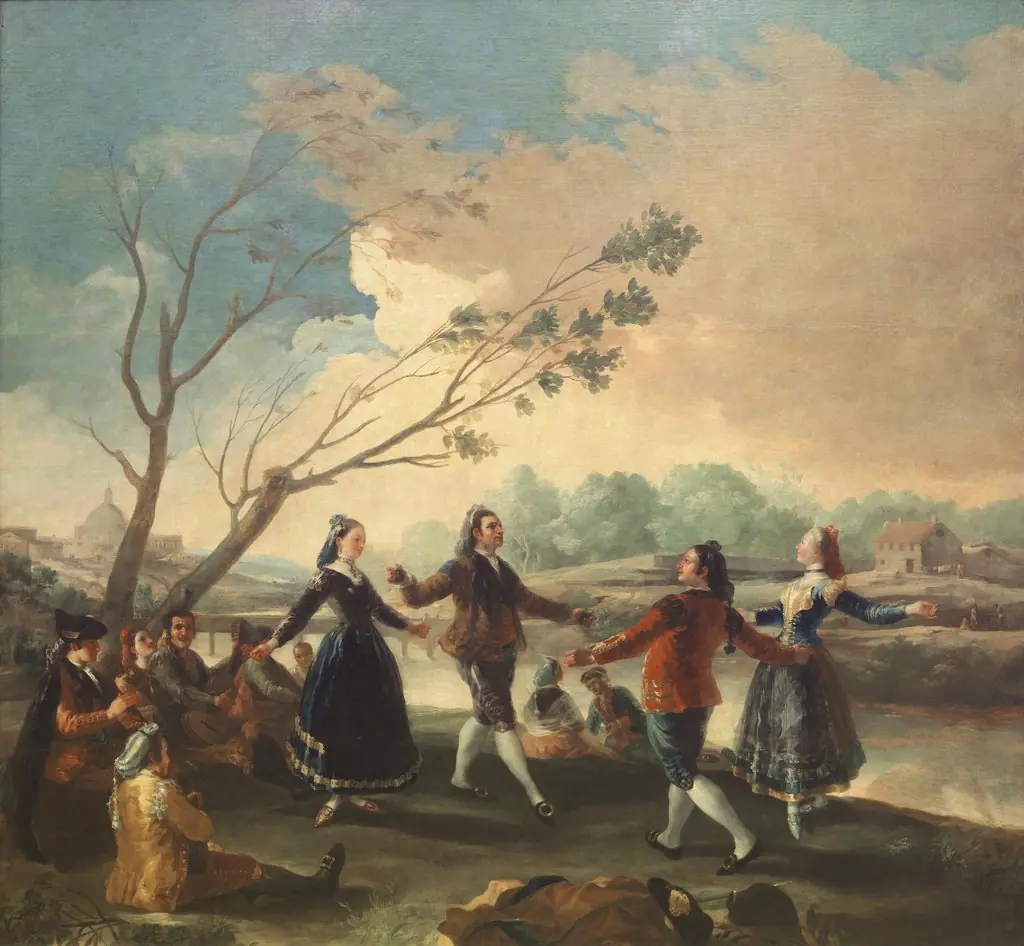 Dance of the Majos at the Banks of Manzanares
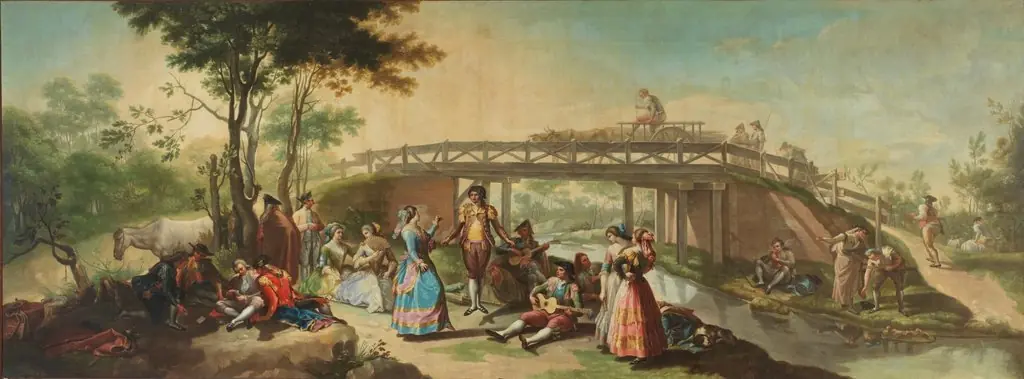 Un baile junto a un puente del canal del Manzanares
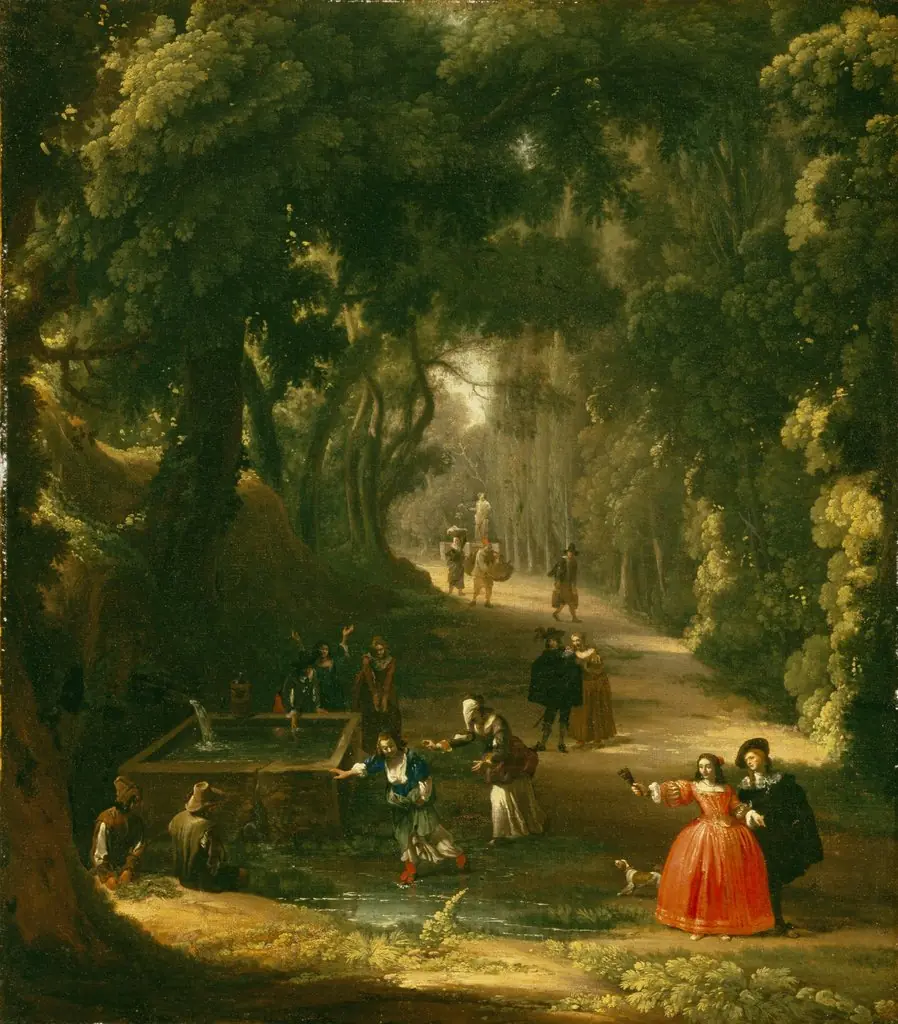 Blindman's Buff
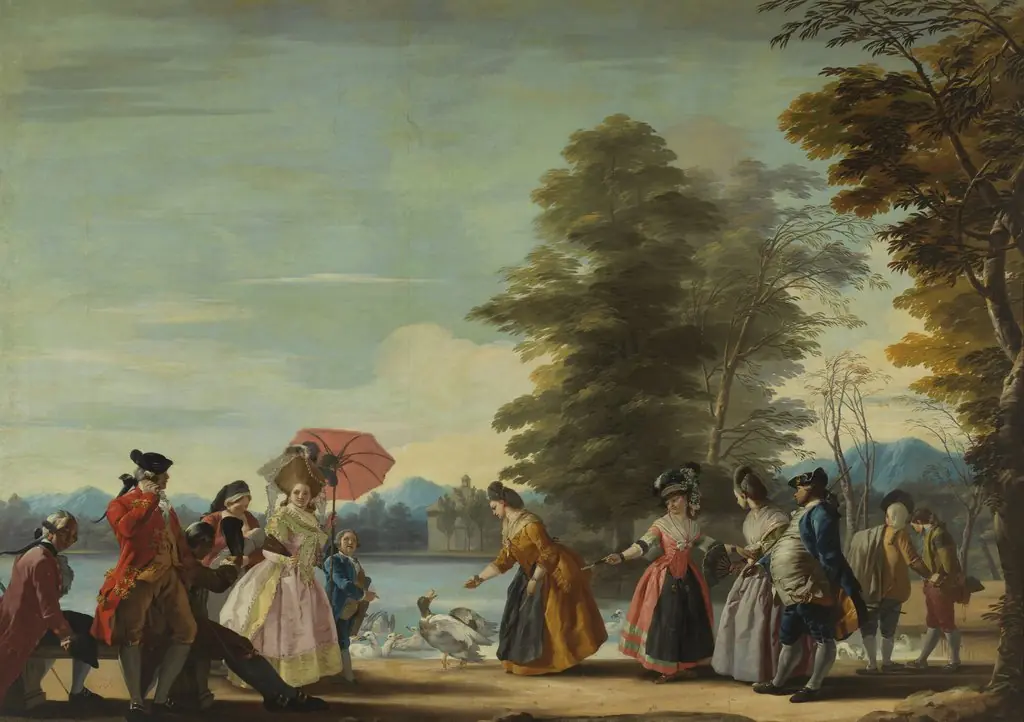 Un paseo a la orilla del Estanque del Retiro
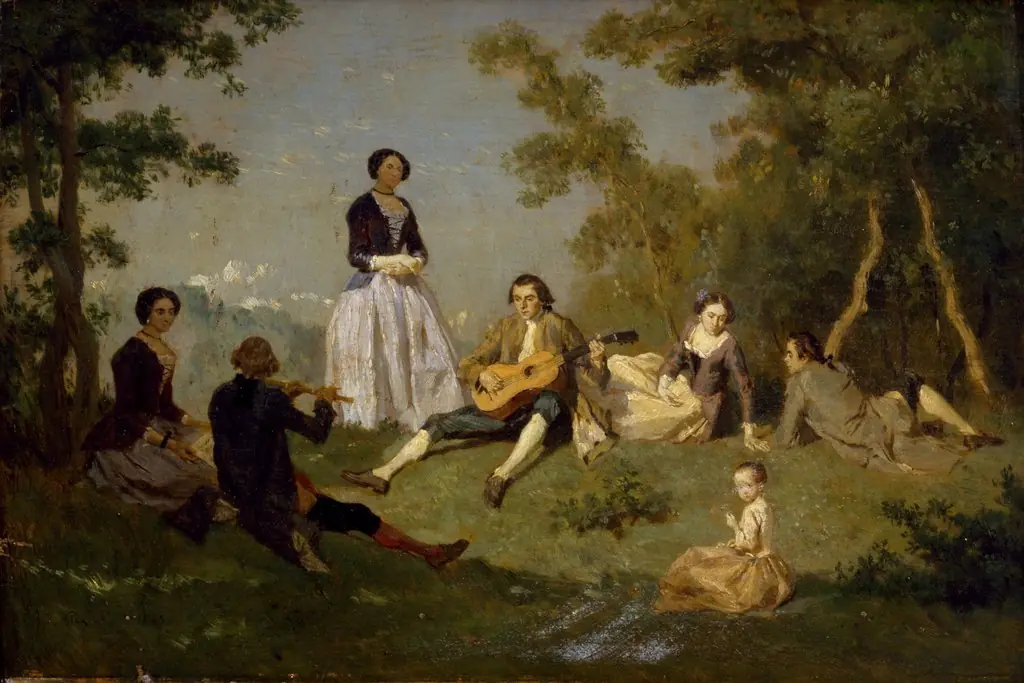 Picnic Scene
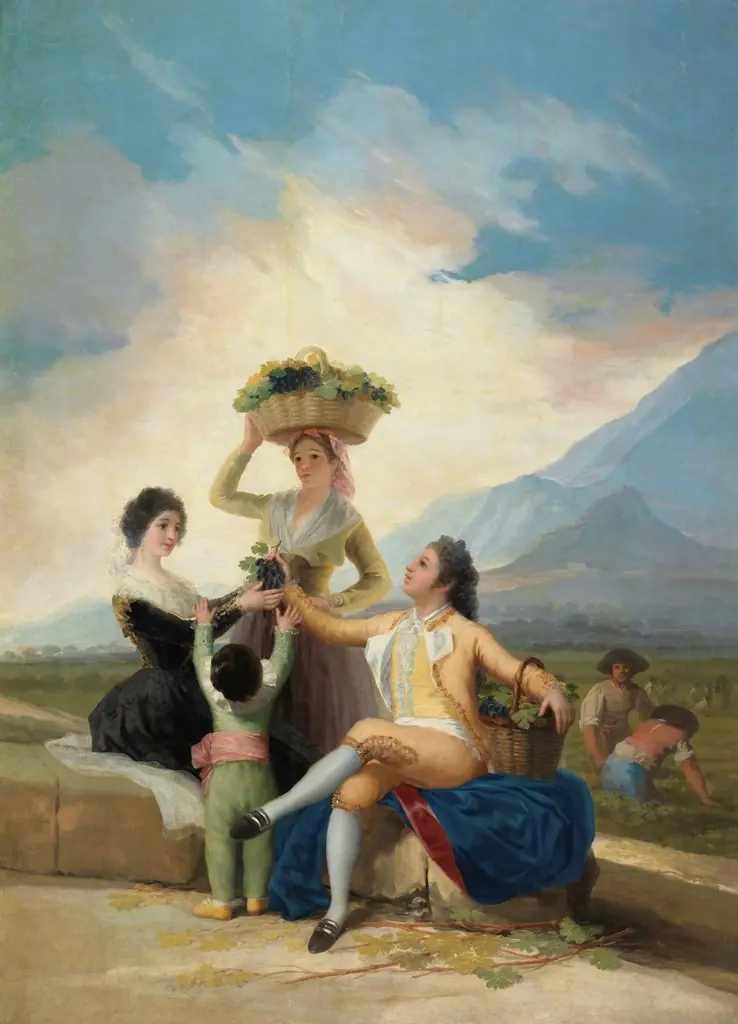 The Grape Harvest
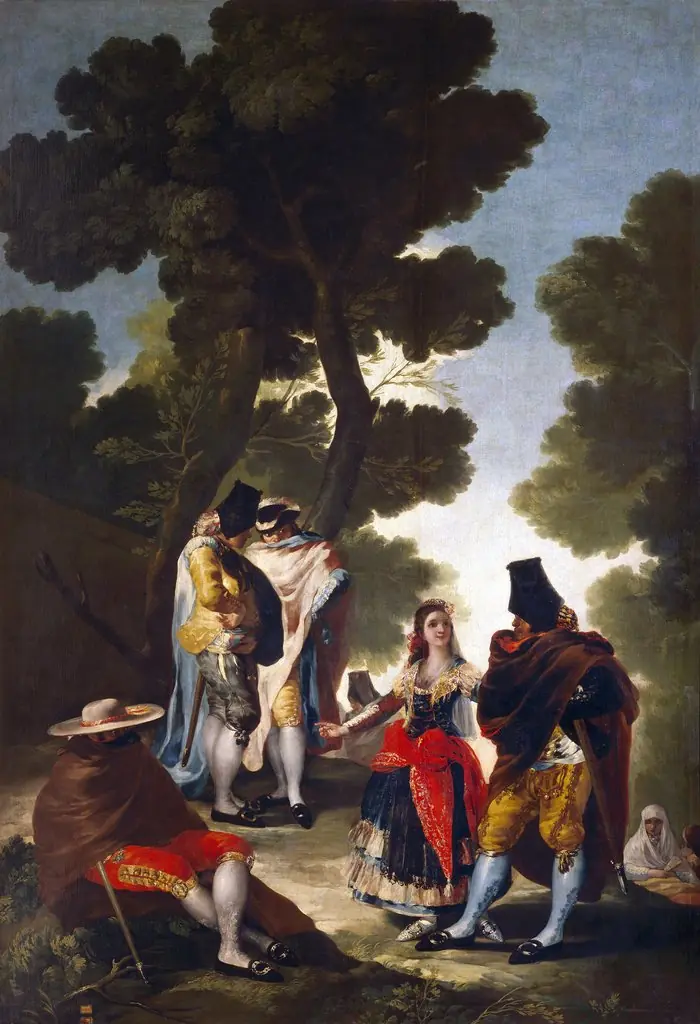 The Pretty Woman and the Masked Men (The Road of Andalusia)
 The Swing
 Blind Man's Bluff