Artwork
La Leocadia
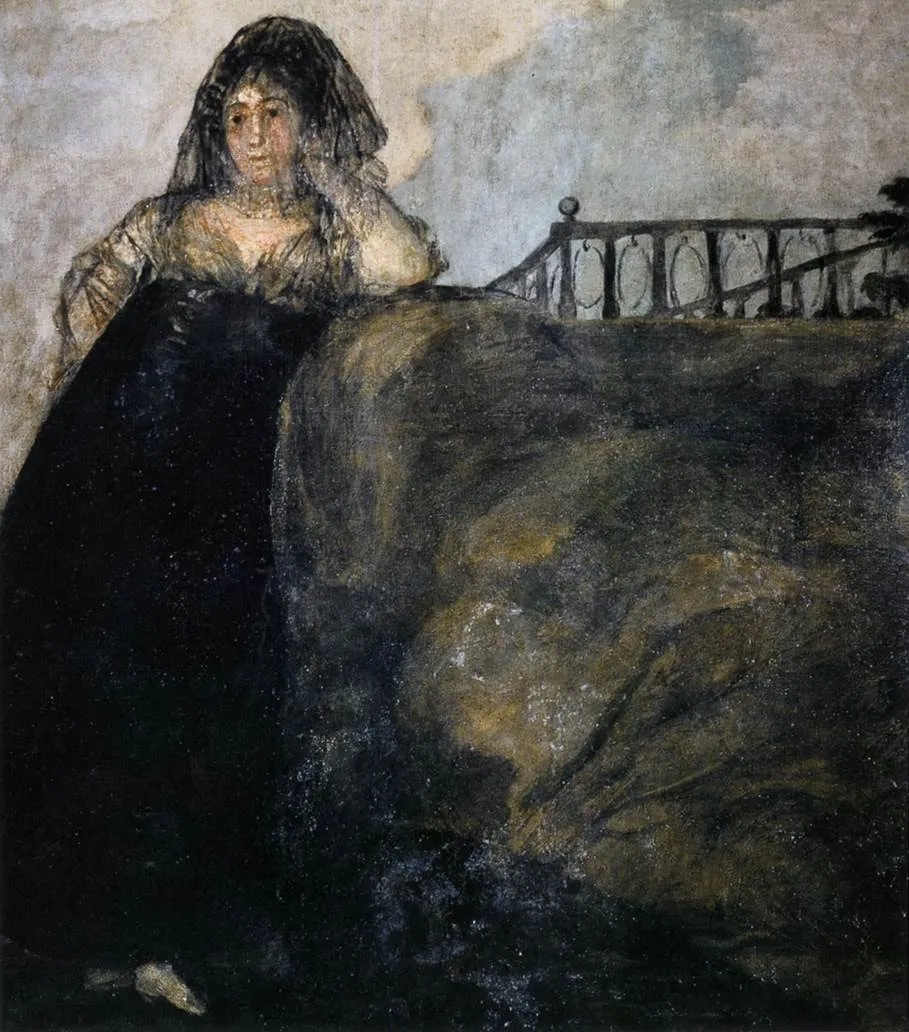
La Leocadia is an oil painting by Francisco Goya. It dates from 1819 and is held in the collection of the Museo del Prado.
About this work
This oil painting shows a woman named Leocadia. Goya painted it late in life, between 1819 and 1823. She leans on something—maybe a mantel or mound—and looks straight at us with a sad face.
She was his maid and likely his lover. The dress is dark and heavy. Goya used bold brushwork to make the mood heavy.
Look up Francisco Goya next.
Overview
La Leocadia, also known as The Seductress, is an oil mural created by Spanish artist Francisco Goya between 1819 and 1823. It belongs to the group of works commonly referred to as the Black Paintings, a series of fourteen large-scale canvases painted directly onto the walls of Goya’s house.
Subject & Meaning
The composition depicts a woman identified as Leocadia Weiss, who served as Goya’s housekeeper and is thought to have been his intimate companion. She is shown in a somber, dark dress typical of a mourning maja, leaning against a structure that may be a mantelpiece or a burial mound, and gazing directly at the viewer with a melancholic expression.
Technique & Style
Goya employs a restrained palette of deep blacks and muted earth tones, applying the oil with vigorous, expressive brushstrokes that heighten the painting’s oppressive atmosphere. The figure is rendered with loose modeling, allowing the texture of the paint to convey emotional weight.
History & Provenance
Originally painted directly on the walls of Goya’s Quinta del Sordo near Madrid, the work was transferred to canvas after the artist’s death. It entered the collection of the Museo del Prado, where it remains on display as part of the Black Paintings ensemble.
Context
Created during the final years of Goya’s life, La Leocadia reflects the painter’s personal isolation and the turbulent political climate of post‑Napoleonic Spain. The bleak tonalities and introspective subject matter align with the broader mood of the Black Paintings, which explore themes of despair and mortality.
Legacy
Although less frequently reproduced than other works from the series, La Leocadia contributes to scholarly understanding of Goya’s late style and his exploration of private sorrow. Its stark visual language continues to inform studies of Romanticism and the psychological dimensions of 19th‑century European art.
Artist & collection
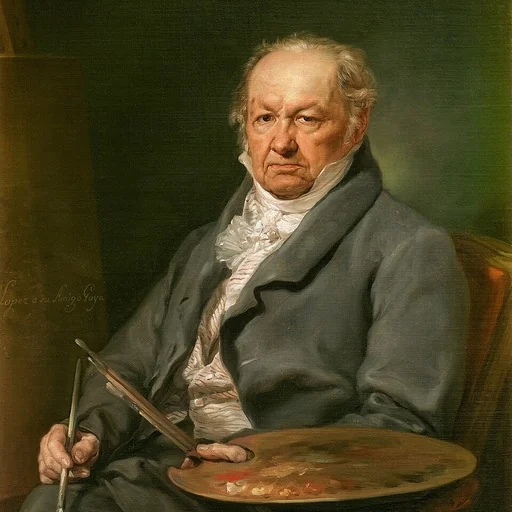
Artist
Francisco José de Goya y Lucientes (; Spanish: ; 30 March 1746 – 16 April 1828) was a Spanish romantic painter and printmaker.