Artwork
The Game of Horse and Rider
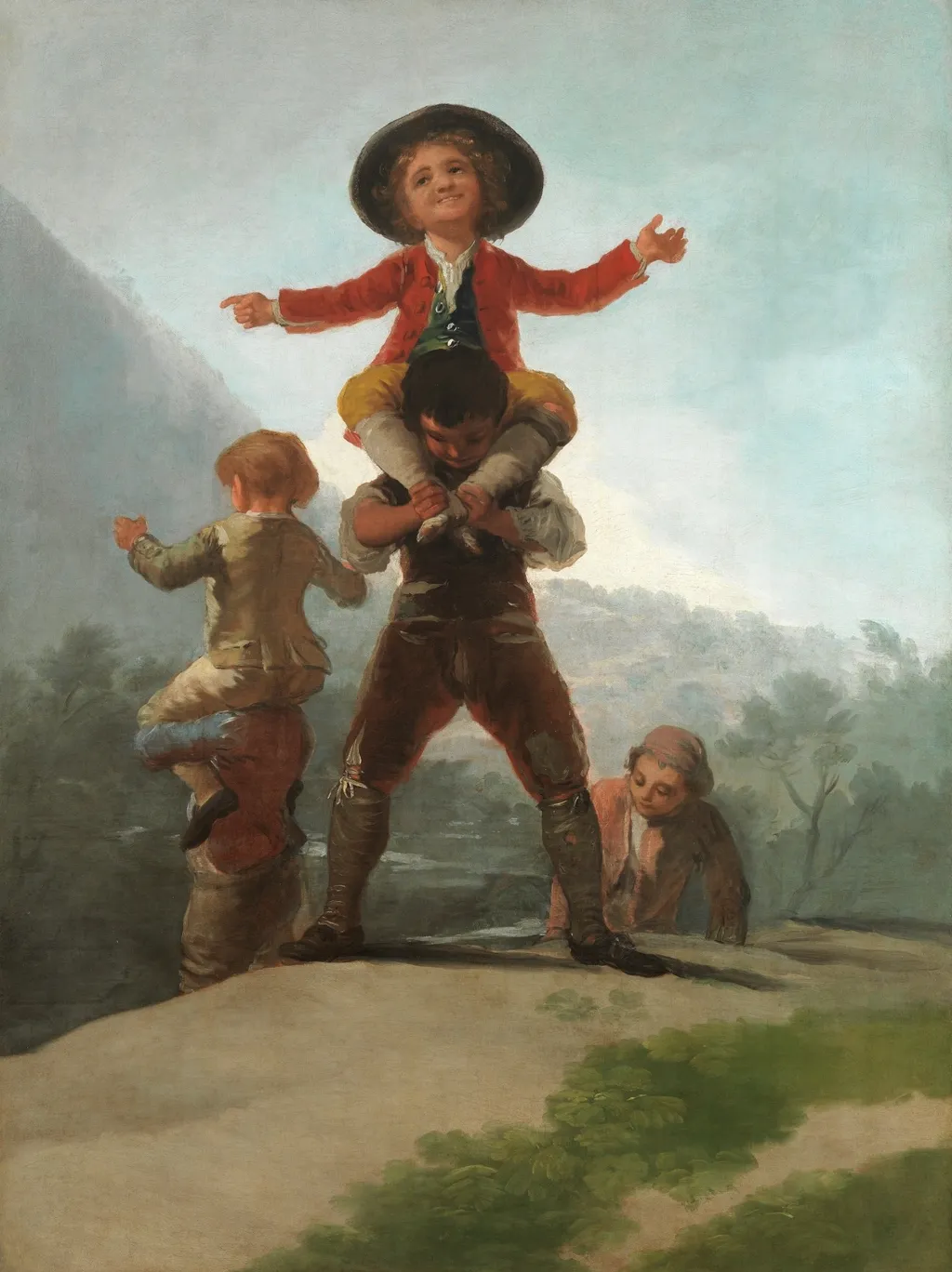
The Game of Horse and Rider is an oil painting by Francisco Goya. It dates from 1796 and is held in the collection of the Museo del Prado.
About this work
Overview
Painted in 1796 by Francisco Goya, *The Game of Horse and Rider* is an oil-on-canvas work depicting a spontaneous moment among children.
Painted in 1796 by Francisco Goya, *The Game of Horse and Rider* is an oil-on-canvas work depicting a spontaneous moment among children. Unlike his later, darker compositions, this piece captures a lighthearted scene of youth at play. It resides in the Museo del Prado in Madrid, part of a series of works Goya produced during his tenure as court painter, reflecting everyday life with quiet observation rather than grand narrative.
Subject & Meaning
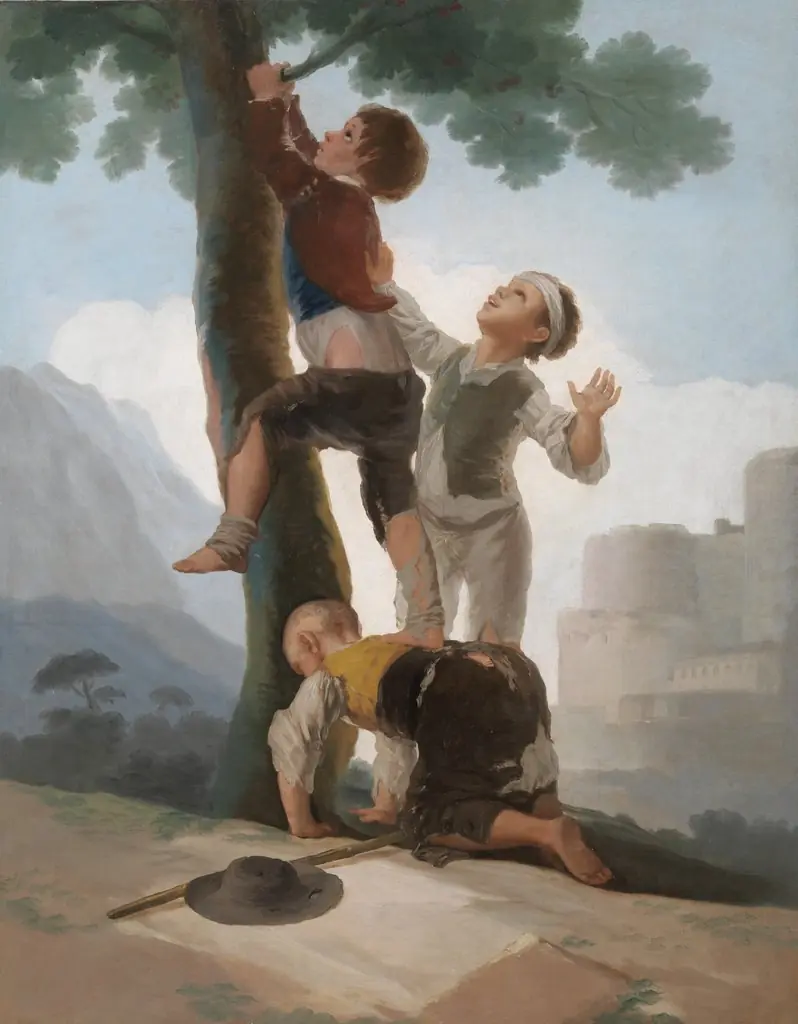
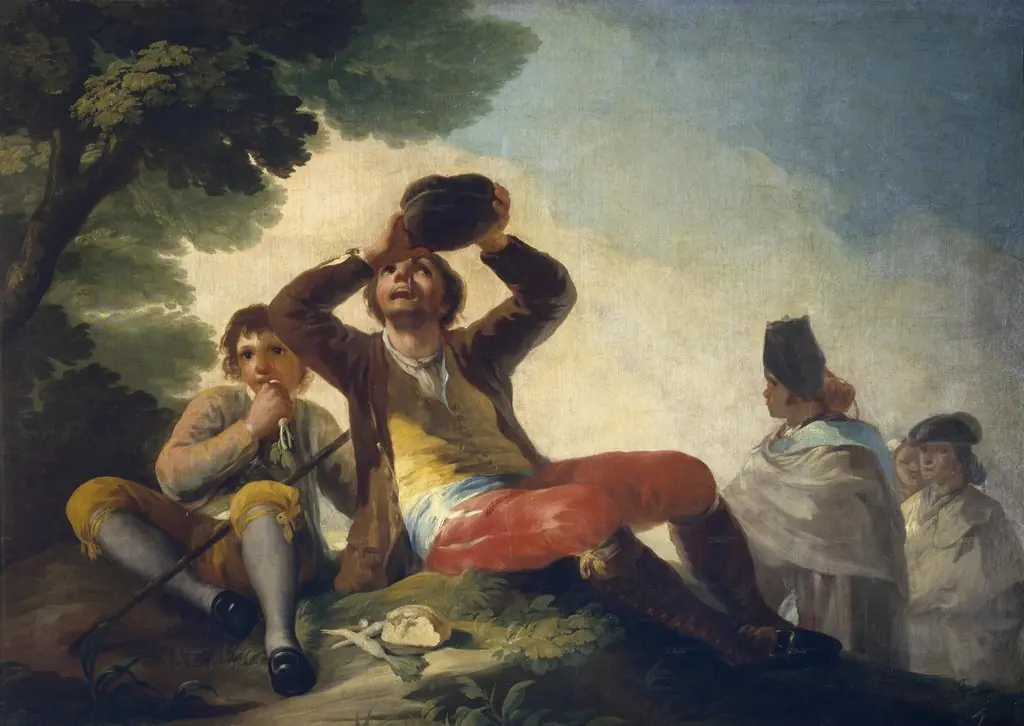
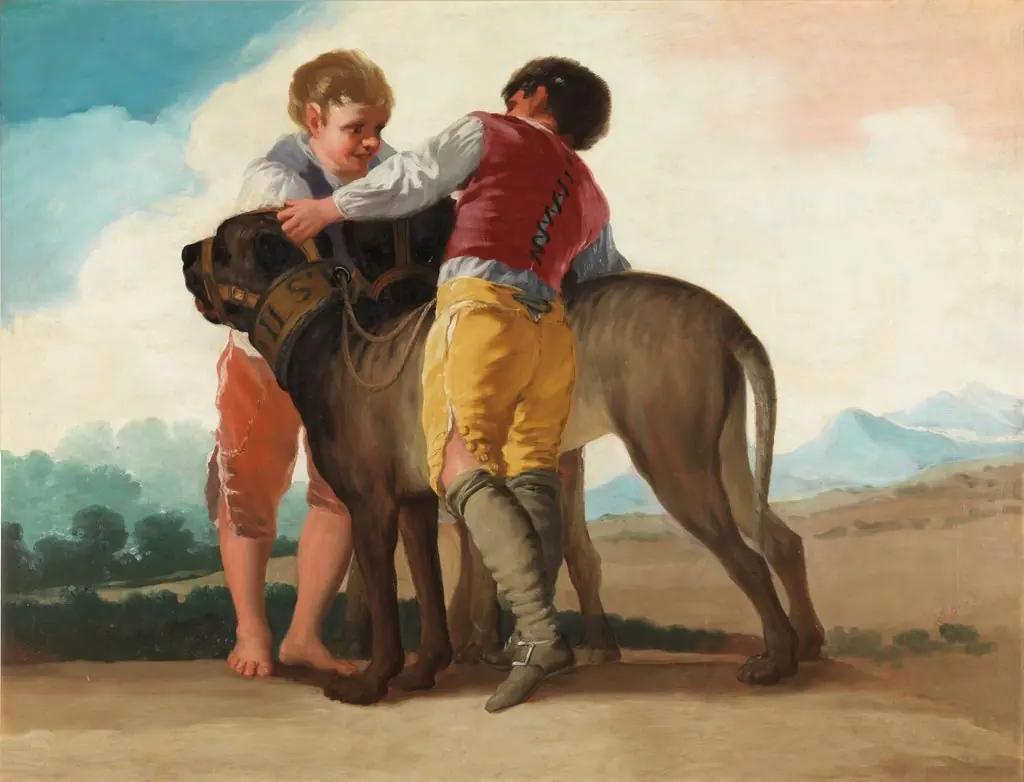
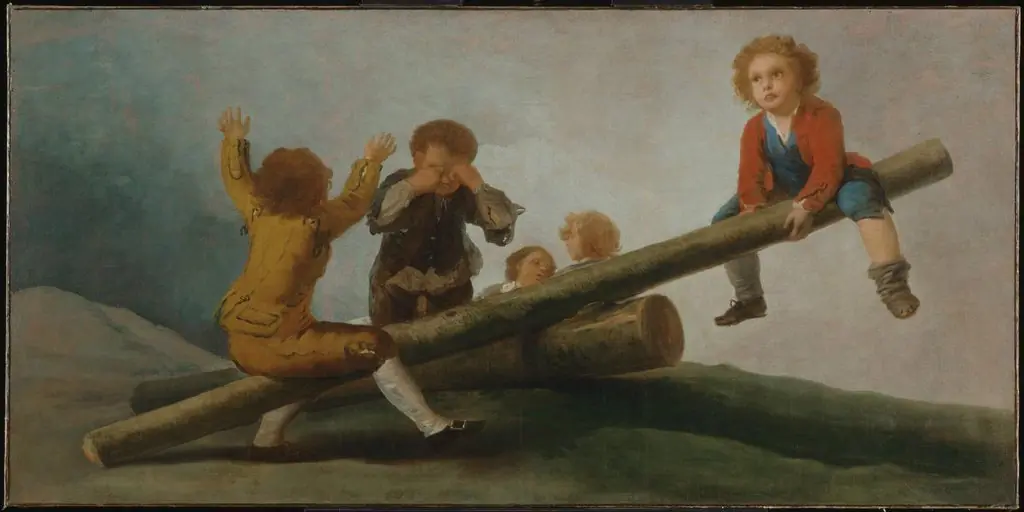
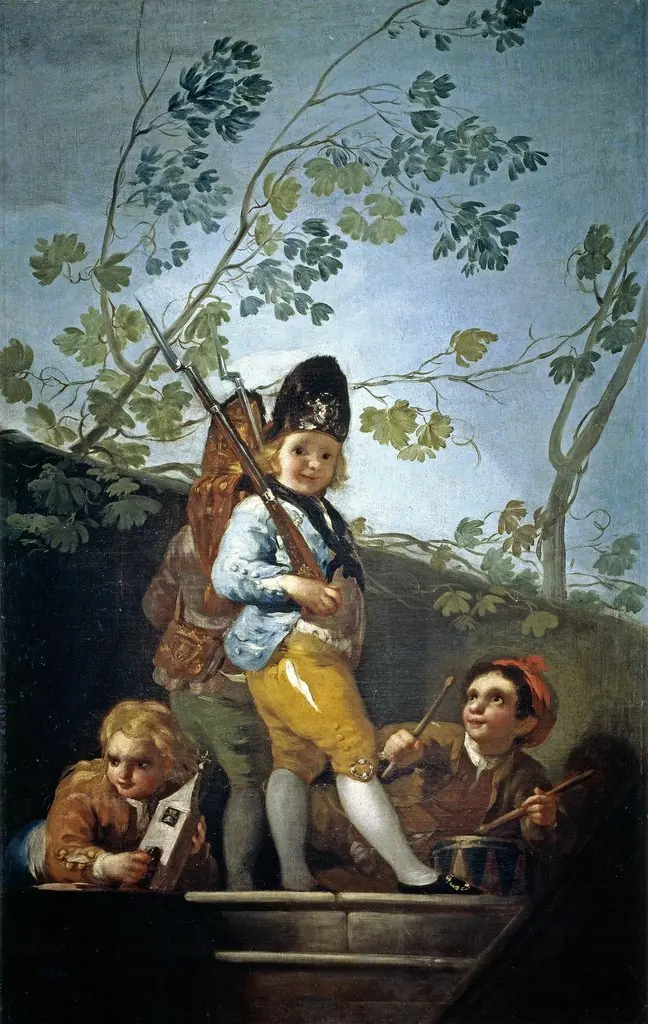
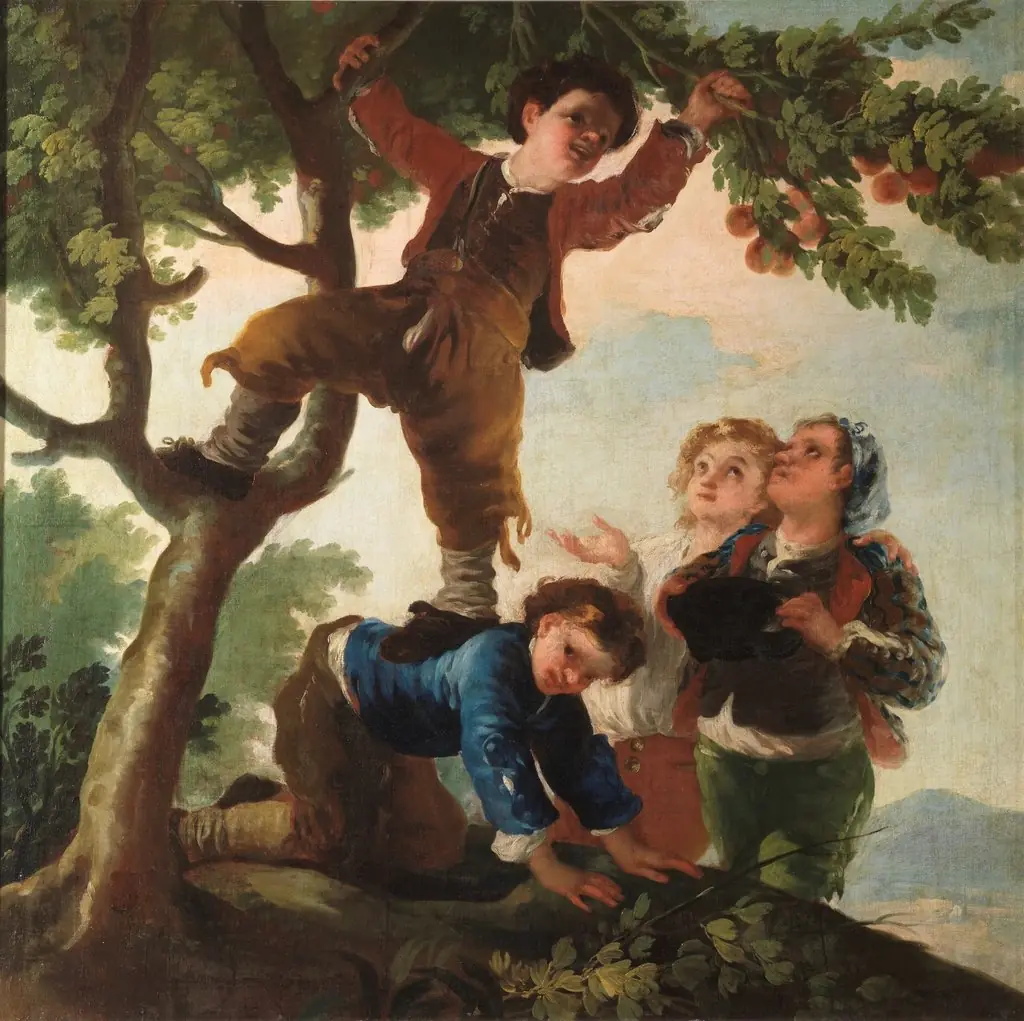
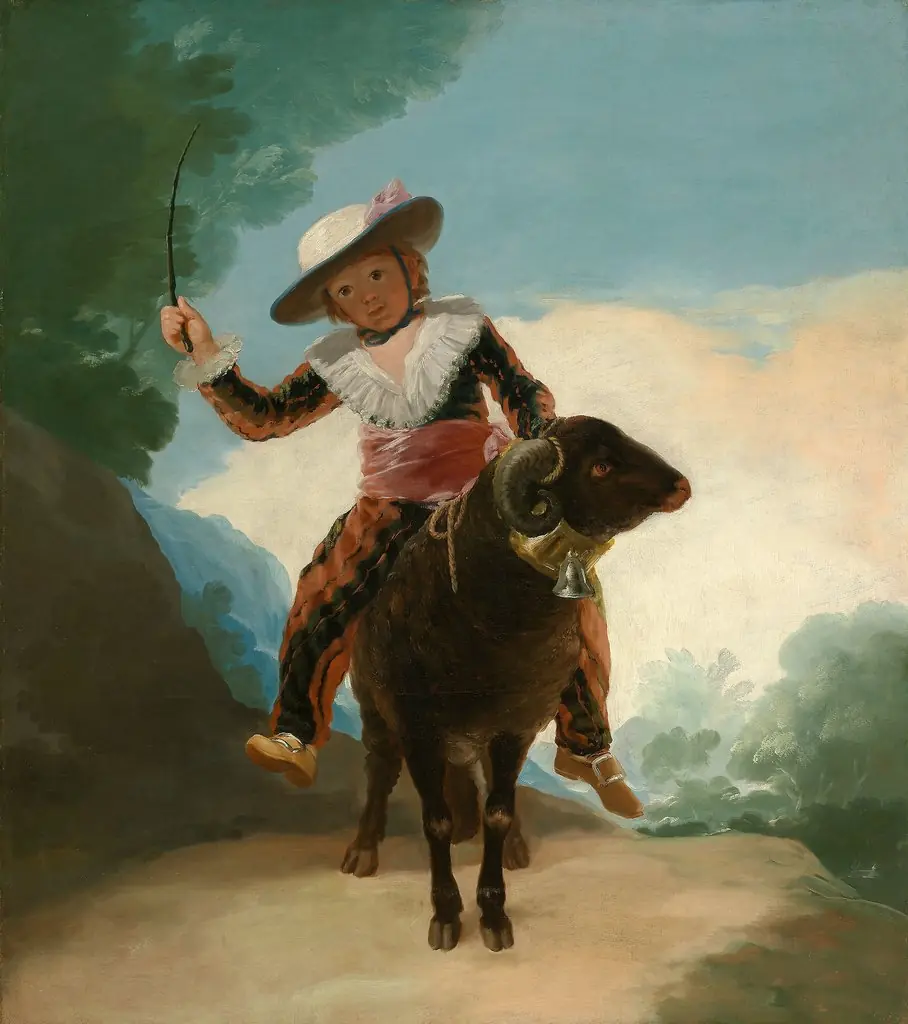
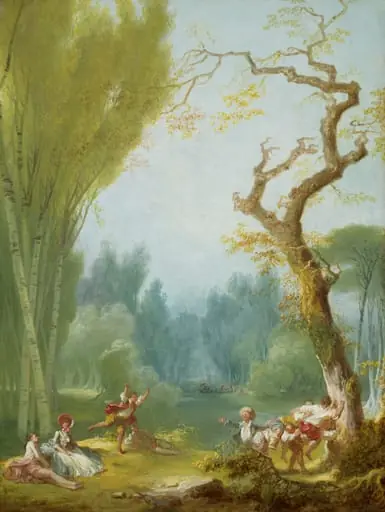
The painting portrays four boys engaged in a rustic game, likely mimicking equestrian rituals. One child is lifted by another, while a third perches on a rock and a fourth crouches below, gazing upward. Their casual clothing and unposed gestures suggest an unscripted, intimate moment. The scene conveys no moral or political message, instead emphasizing the transient, unselfconscious joy of childhood—a rare focus in Goya’s oeuvre.
Technique & Style
Goya employed loose brushwork and soft tonal transitions to evoke natural light and movement. The figures are rendered with minimal detail, their forms suggested rather than meticulously defined. The background fades into a hazy atmosphere, with trees and a winding path receding into the distance. Chiaroscuro is used subtly, enhancing depth without dramatic contrast, aligning the work with emerging Romantic sensibilities rather than academic precision.
History & Provenance
Created during Goya’s time as a court painter to the Spanish monarchy, the painting likely originated as a private commission or personal study. It entered the Museo del Prado’s collection in the 19th century, following the nationalization of royal holdings. Its survival through political upheavals and shifting artistic tastes reflects its quiet endurance as a record of domestic life, distinct from Goya’s more overtly political works.
Context
In the late 1790s, Spain was undergoing social and political change, yet Goya turned his attention to intimate, non-political subjects. This painting aligns with a broader European interest in childhood and nature, influenced by Enlightenment thought and Rousseauian ideals. Unlike formal portraits of aristocratic children, Goya’s subjects are ordinary, their setting rural and unidealized, signaling a shift toward realism in Spanish art.
Legacy
Though less celebrated than Goya’s later satirical or haunting works, *The Game of Horse and Rider* influenced 19th-century realist painters who sought to depict everyday life with authenticity. Its unembellished portrayal of children helped pave the way for modern depictions of childhood as a subject worthy of serious artistic attention, separate from allegory or moral instruction.
Artist & collection
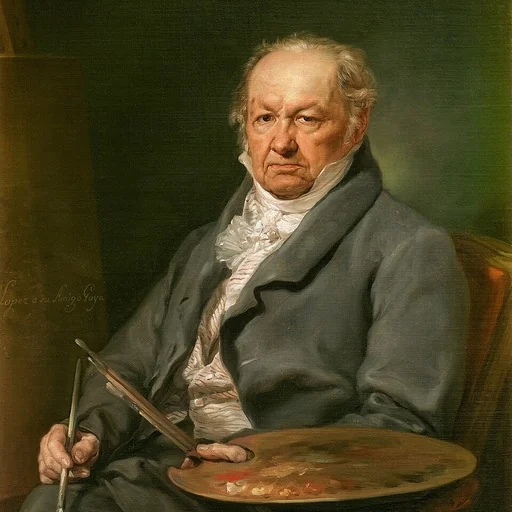
Artist
Francisco José de Goya y Lucientes (; Spanish: ; 30 March 1746 – 16 April 1828) was a Spanish romantic painter and printmaker.