Artwork
Friar Pedro Shoots El Maragato as His Horse Runs Off
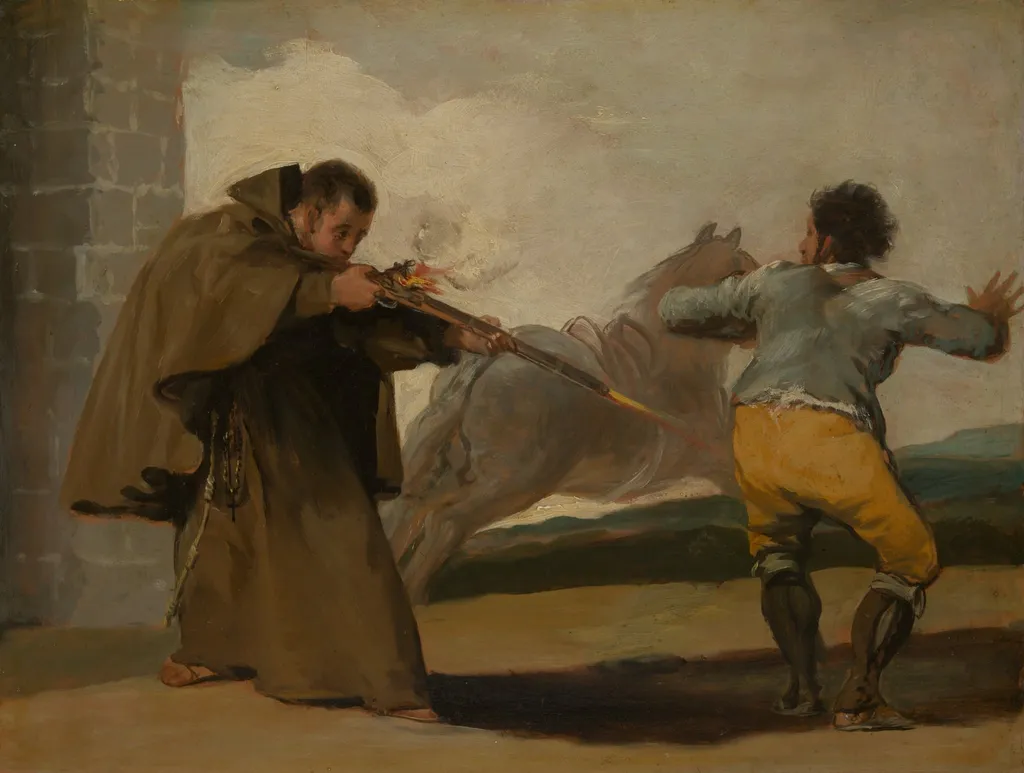
Friar Pedro Shoots El Maragato as His Horse Runs Off is an oil painting by the Romanticist artist Francisco Goya. It dates from 1806 and is held in the collection of the Art Institute of Chicago.
About this work
If you like how Goya freezes action, look up *chiaroscuro*—the way he uses sharp light and shadow to make the scene pop.
You see a friar in a brown robe firing a rifle at a wounded bandit on the ground while a horse bolts away.
This painting shows a real moment from 1806 Spain—when a quiet monk turned the tables on a dangerous outlaw. Goya painted it like a news report, not a grand legend. The friar’s calm face and the bandit’s wild struggle make it feel immediate, almost like a snapshot.
If you like how Goya freezes action, look up *chiaroscuro*—the way he uses sharp light and shadow to make the scene pop.
Overview
Painted in 1806, this oil on panel depicts a moment from a real incident in rural Spain: Friar Pedro de Zaldivia, a lay Franciscan, disarmed and shot the outlaw El Maragato during a home invasion. Part of a six-panel narrative series, the work captures the abrupt reversal of power between captor and captive. Goya rendered the event with urgency and minimal ornament, treating it as contemporary news rather than myth.
Subject & Meaning
The scene shows Friar Pedro, calm and composed in his brown robe, firing at the wounded bandit sprawled on the ground as the outlaw’s horse flees. The contrast between the friar’s quiet resolve and the bandit’s chaotic struggle underscores a theme of unexpected justice. Goya avoids glorification; instead, he presents a raw, unvarnished moment where ordinary courage disrupts violence.
Technique & Style
Goya employed rapid, broad brushstrokes to convey motion and emotion without fine detail. Strong chiaroscuro isolates the figures against a dim background, heightening the drama. The composition is tightly framed, focusing attention on the rifle’s muzzle, the bandit’s twisted body, and the fleeing horse. This direct, almost journalistic approach reflects Goya’s interest in capturing fleeting, authentic moments.
History & Provenance
The painting originated as part of a commissioned series illustrating the widely publicized event of 1806. News of the friar’s act spread through pamphlets and ballads, making it a subject of public fascination. Goya, then court painter, chose to document this grassroots story rather than royal commissions. The six-panel series remained in private hands until entering the Art Institute’s collection.
Context
While Goya is best known for portraits of the Spanish elite, this series reflects his engagement with popular culture and current events. The scene aligns with his broader interest in everyday life, superstition, and social tension. Unlike grand historical paintings, these works embrace the vernacular, using humor and irony to reveal human frailty and resilience in moments of crisis.
Legacy
The series stands as an early example of visual storytelling that prioritizes immediacy over idealization. Goya’s treatment of the event influenced later realist and narrative painters who sought to depict contemporary life without romanticism. Its unembellished style and psychological depth mark a shift toward modern approaches to history painting, grounded in observation rather than myth.
Own this work as a print
Artist & collection
Artist
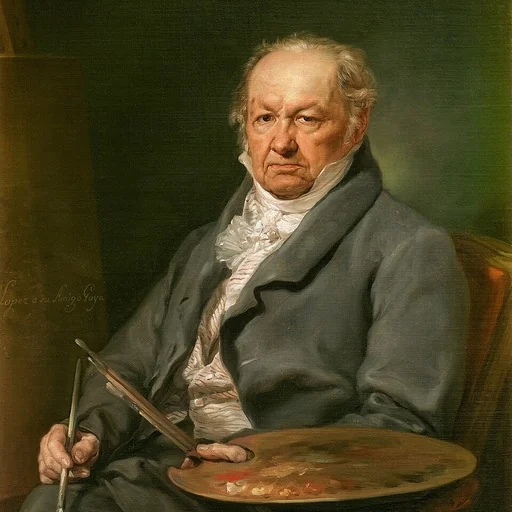
Francisco José de Goya y Lucientes (; Spanish: ; 30 March 1746 – 16 April 1828) was a Spanish romantic painter and printmaker.

 Friar Pedro Binds El Maragato with a Rope
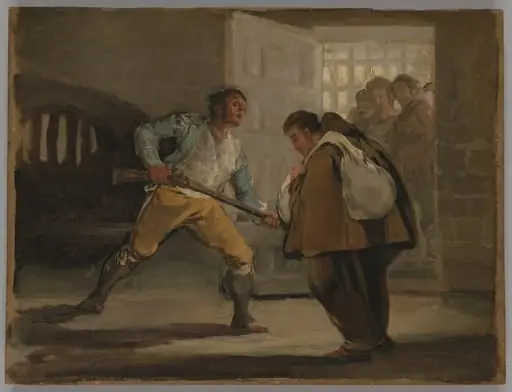 El Maragato Threatens Friar Pedro de Zaldivia with His Gun
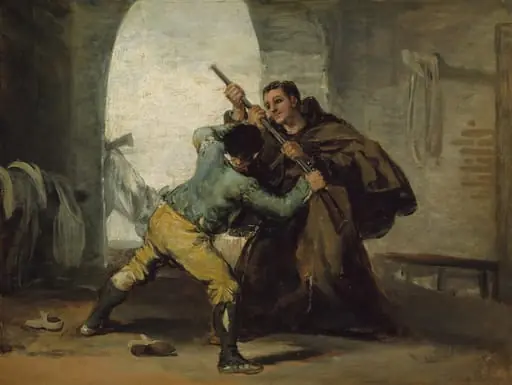 Friar Pedro Wrests the Gun from El Maragato
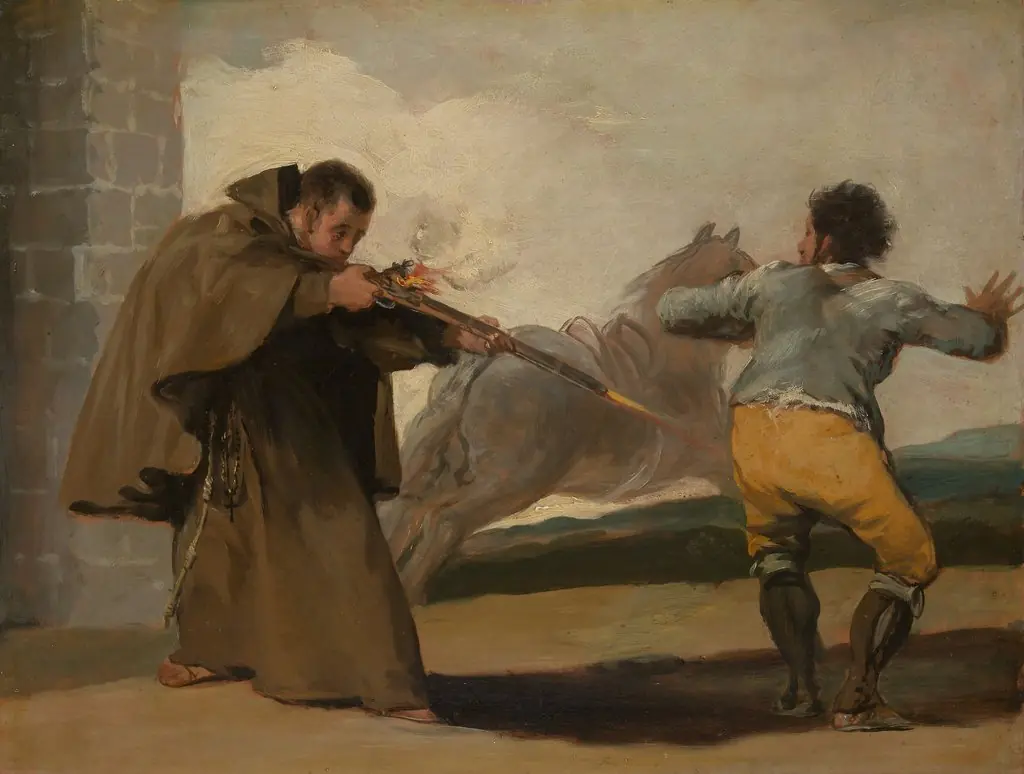 Friar Pedro Shoots El Maragato as His Horse Runs Off
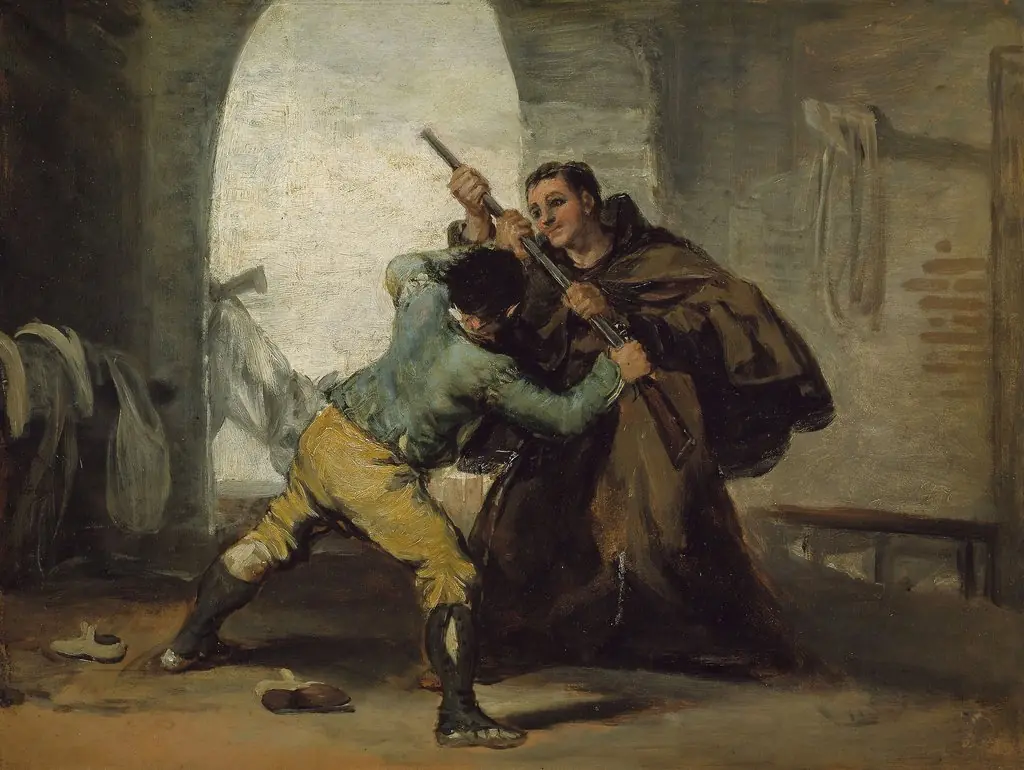 Friar Pedro Wrests the Gun from El Maragato
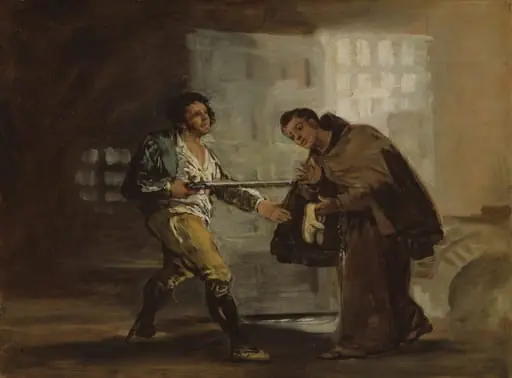 Friar Pedro Offers Shoes to El Maragato and Prepares to Push Aside His Gun
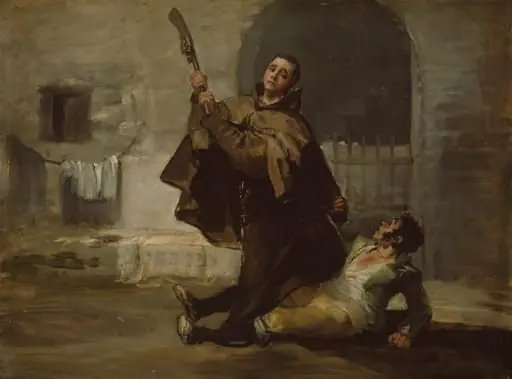 Friar Pedro Clubs El Maragato with the Butt of the Gun
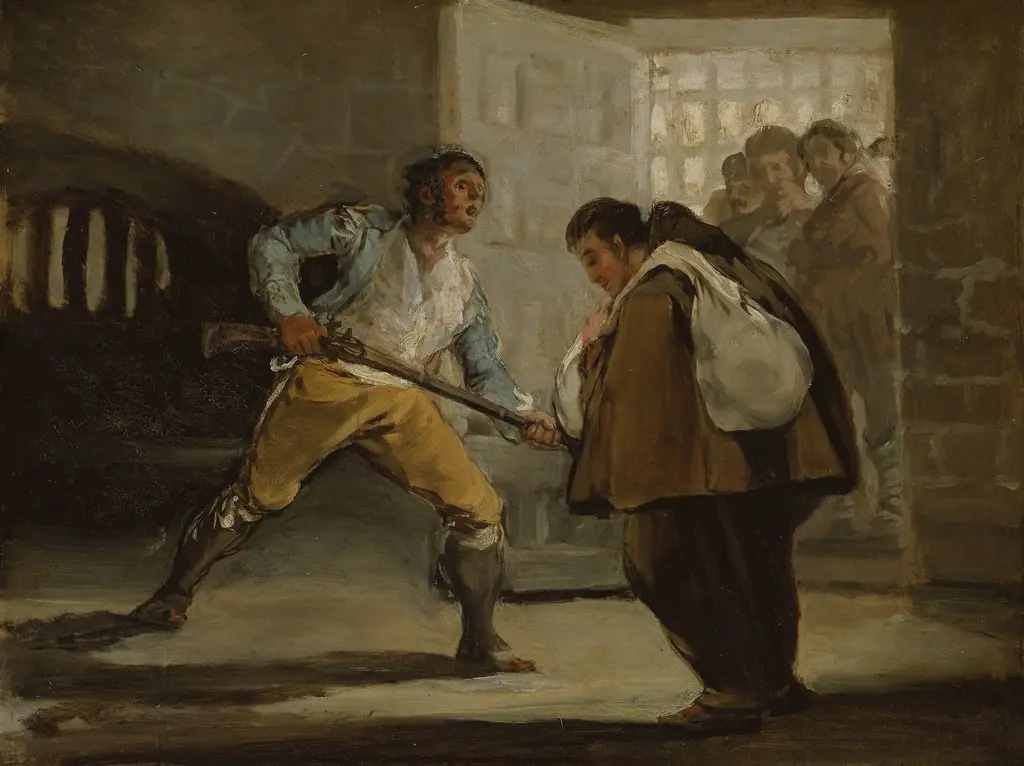 El Maragato Threatens Friar Pedro de Zaldivia with His Gun
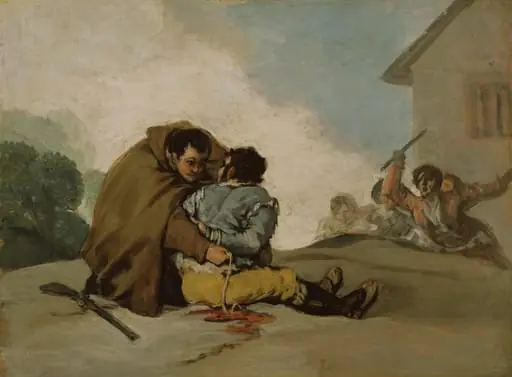
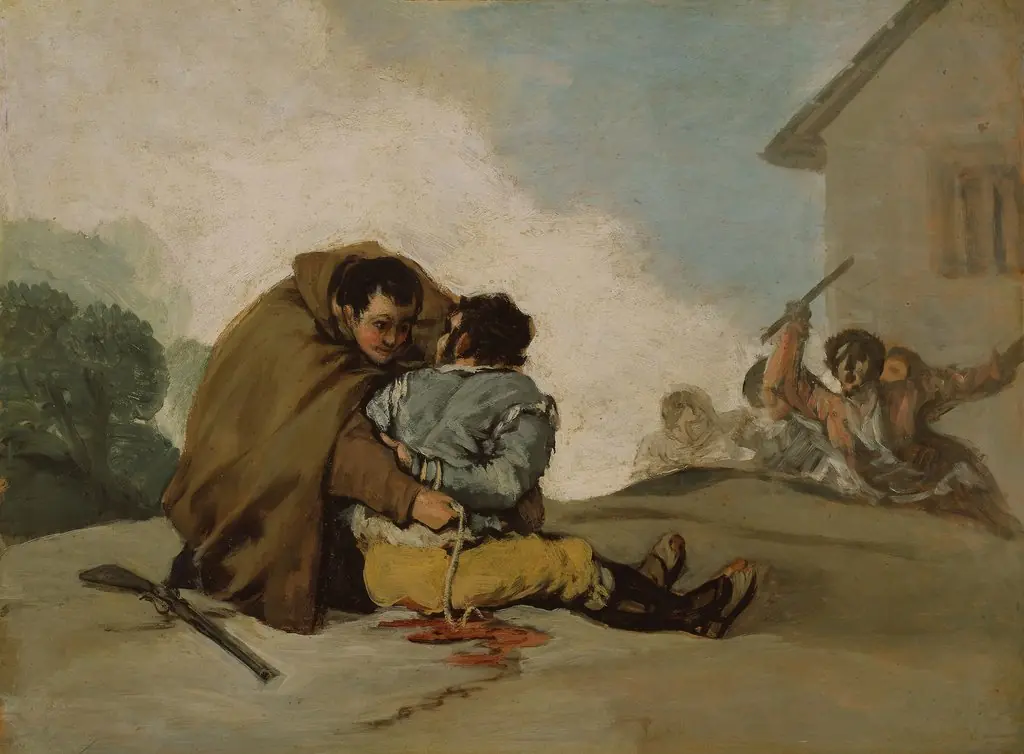 Friar Pedro Binds El Maragato with a Rope
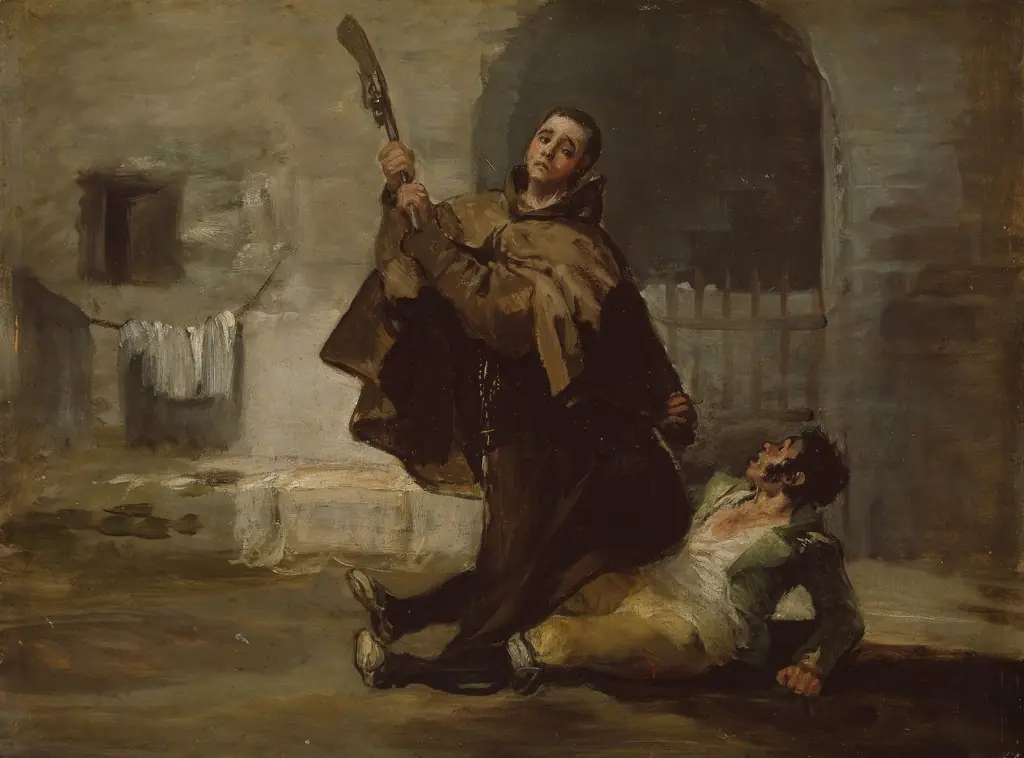 Friar Pedro Clubs El Maragato with the Butt of the Gun
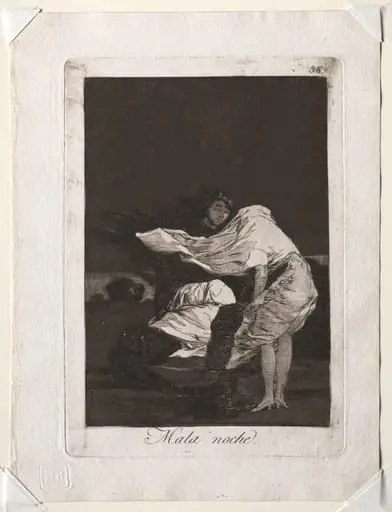 A Bad Night, Plate 36