Artwork
Friar Pedro Wrests the Gun from El Maragato
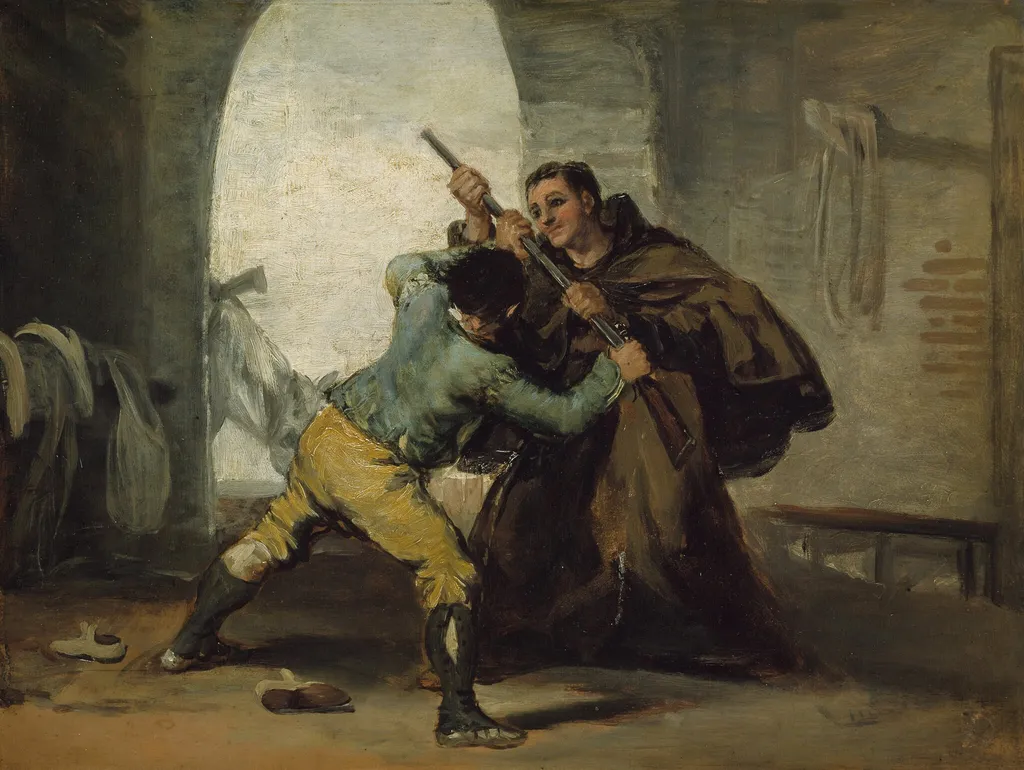
Friar Pedro Wrests the Gun from El Maragato is an oil painting by the Romanticist artist Francisco Goya. It dates from 1806 and is held in the collection of the Art Institute of Chicago. Francisco de Goya’s oil on panel captures a dramatic episode from 1806 in which a friar confronts the notorious bandit known as El Maragato.
About this work
If you like how Goya turns real-life drama into quick, vivid pictures, look up *impasto*—the thick, textured brushstrokes he used to make the scene feel alive.
A friar in a brown robe grabs a pistol from a wild-eyed bandit in a red jacket. The bandit’s other gun lies on the ground, and a donkey stands nearby. It’s a split-second moment—almost like a movie still.
Goya painted this after reading about a real crime in 1806. A friar named Pedro tricked a dangerous thief named El Maragato and took his gun. Instead of a grand hero scene, Goya shows the messy, tense moment when the fight is still happening.
If you like how Goya turns real-life drama into quick, vivid pictures, look up *impasto*—the thick, textured brushstrokes he used to make the scene feel alive.
Overview
Francisco de Goya’s oil on panel captures a dramatic episode from 1806 in which a friar confronts the notorious bandit known as El Maragato. The composition freezes the instant the cleric seizes the thief’s pistol, emphasizing tension and movement rather than a triumphant resolution.
Subject & Meaning
The scene depicts Friar Pedro de Saldivia wresting a gun from the wild‑eyed outlaw, whose other weapon lies discarded on the ground. A donkey watches nearby, underscoring the everyday setting of the encounter. Goya’s focus on the chaotic moment reflects a satirical interest in popular narratives of crime and justice.
Technique & Style
Rendered with thick, impasto brushwork, the painting’s texture conveys immediacy and vigor. Goya employs a limited palette of earthy browns and vivid reds to highlight the friar’s robe against the bandit’s jacket, while the loose handling of paint suggests a fleeting, almost cinematic snapshot.
History & Provenance
Inspired by contemporary newspaper reports of El Maragato’s capture, Goya produced the work for a small circle of private patrons. The episode, widely circulated in early‑19th‑century poetry and song, offered the artist a chance to explore a popular legend without the constraints of official commissions.
Context
The painting belongs to a group of modestly sized works Goya created for personal amusement, where he turned current events into visual anecdotes. By portraying a religious figure confronting a criminal, the artist engages with Spain’s social tensions during the turbulent years of the Peninsular War.
Own this work as a print
Artist & collection
Artist
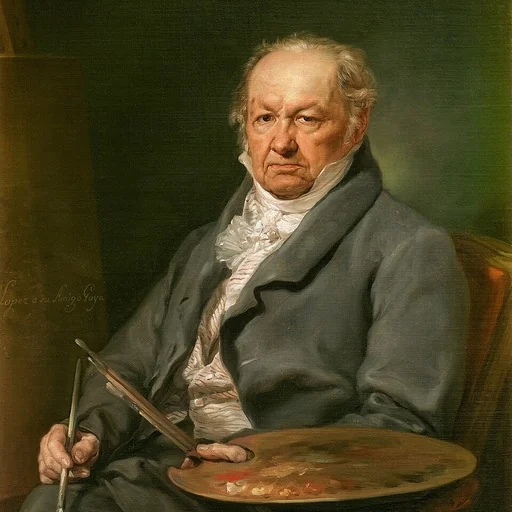
Francisco José de Goya y Lucientes (; Spanish: ; 30 March 1746 – 16 April 1828) was a Spanish romantic painter and printmaker.

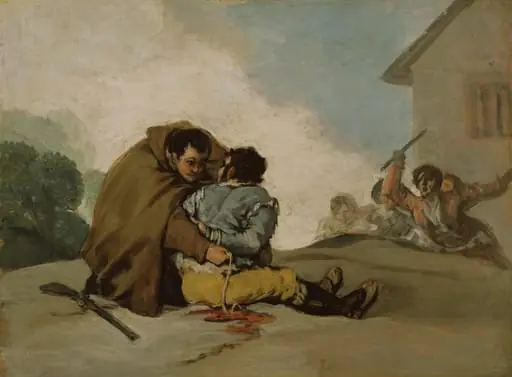 Friar Pedro Binds El Maragato with a Rope
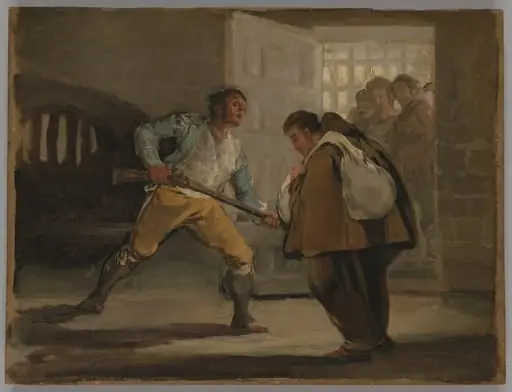 El Maragato Threatens Friar Pedro de Zaldivia with His Gun
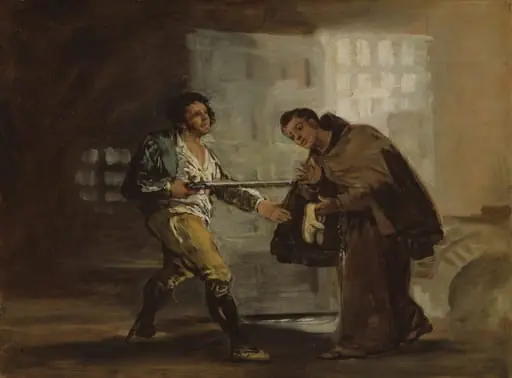 Friar Pedro Offers Shoes to El Maragato and Prepares to Push Aside His Gun
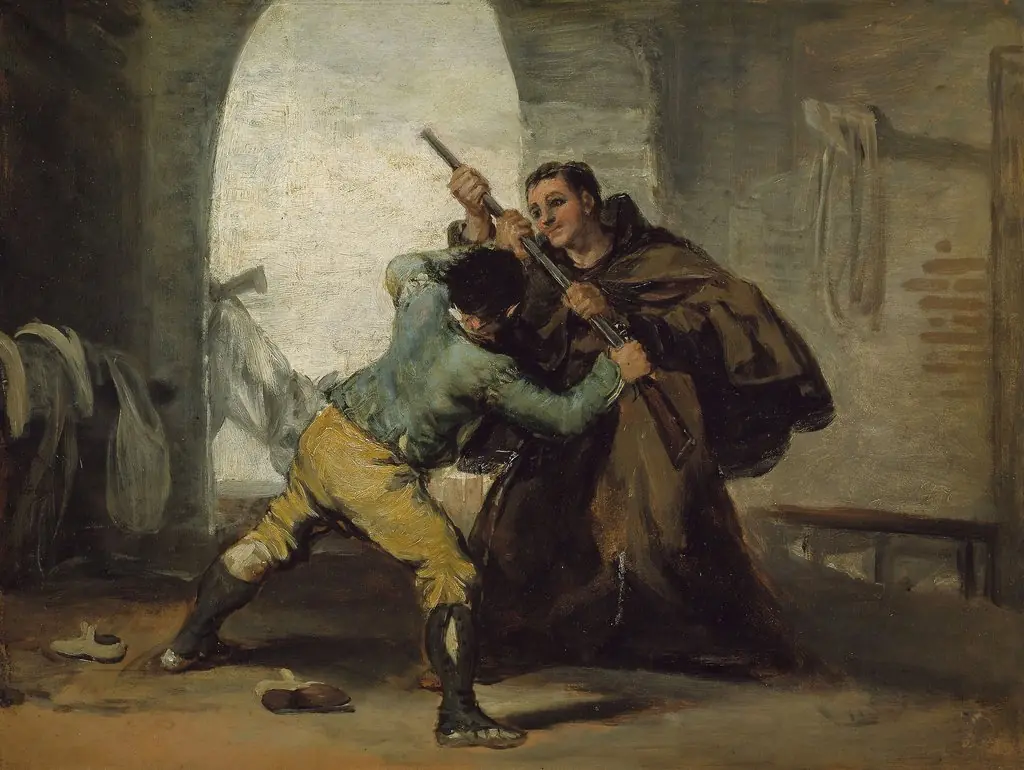 Friar Pedro Wrests the Gun from El Maragato
 Friar Pedro Clubs El Maragato with the Butt of the Gun
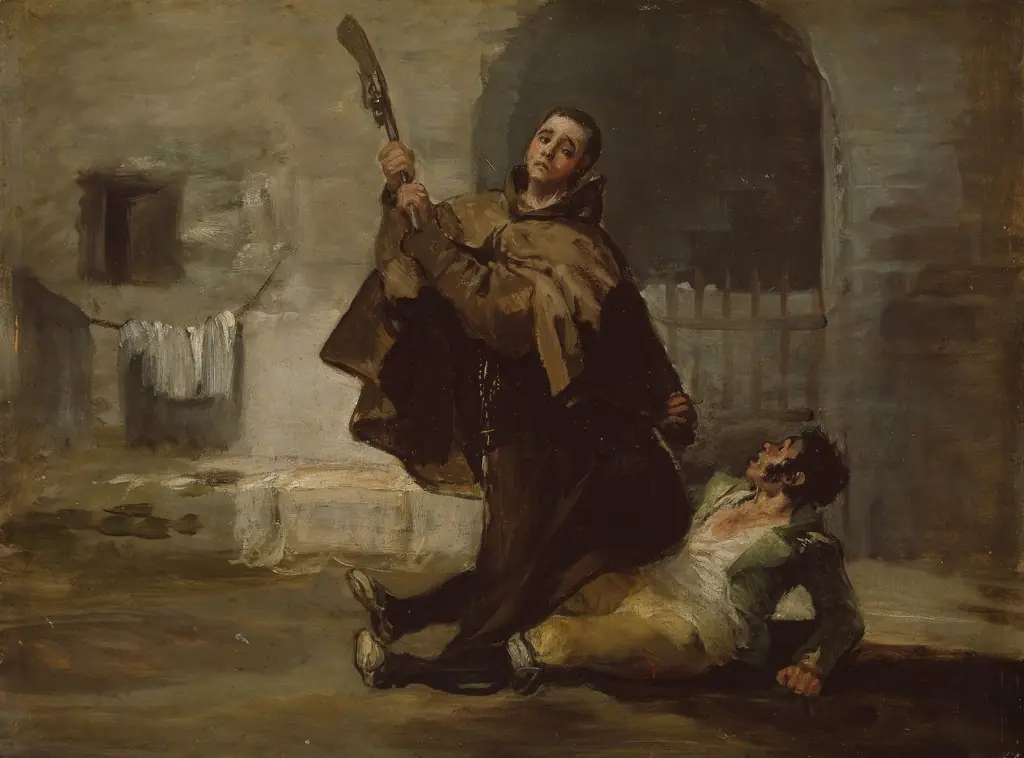 Friar Pedro Clubs El Maragato with the Butt of the Gun
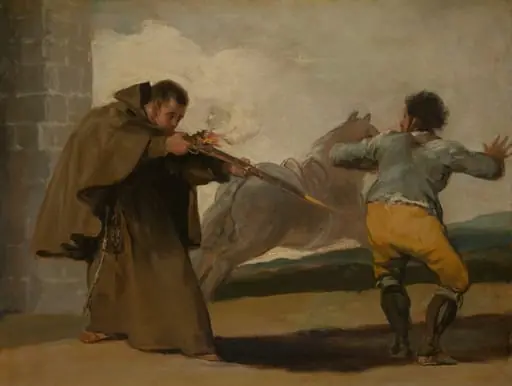 Friar Pedro Shoots El Maragato as His Horse Runs Off
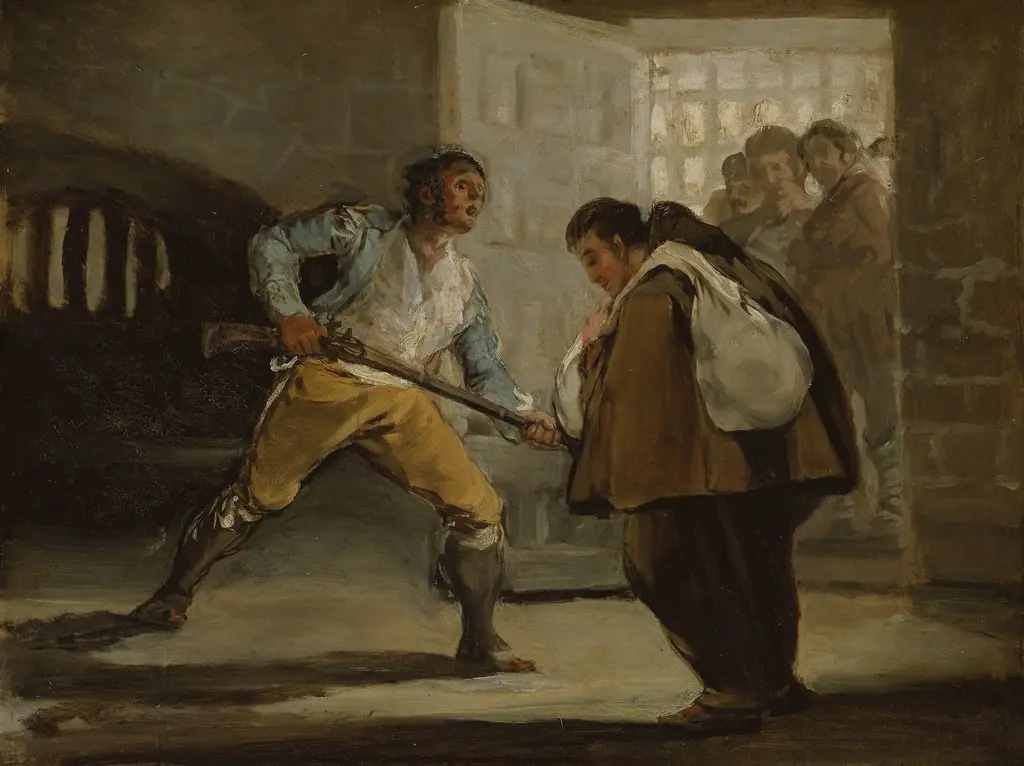 El Maragato Threatens Friar Pedro de Zaldivia with His Gun
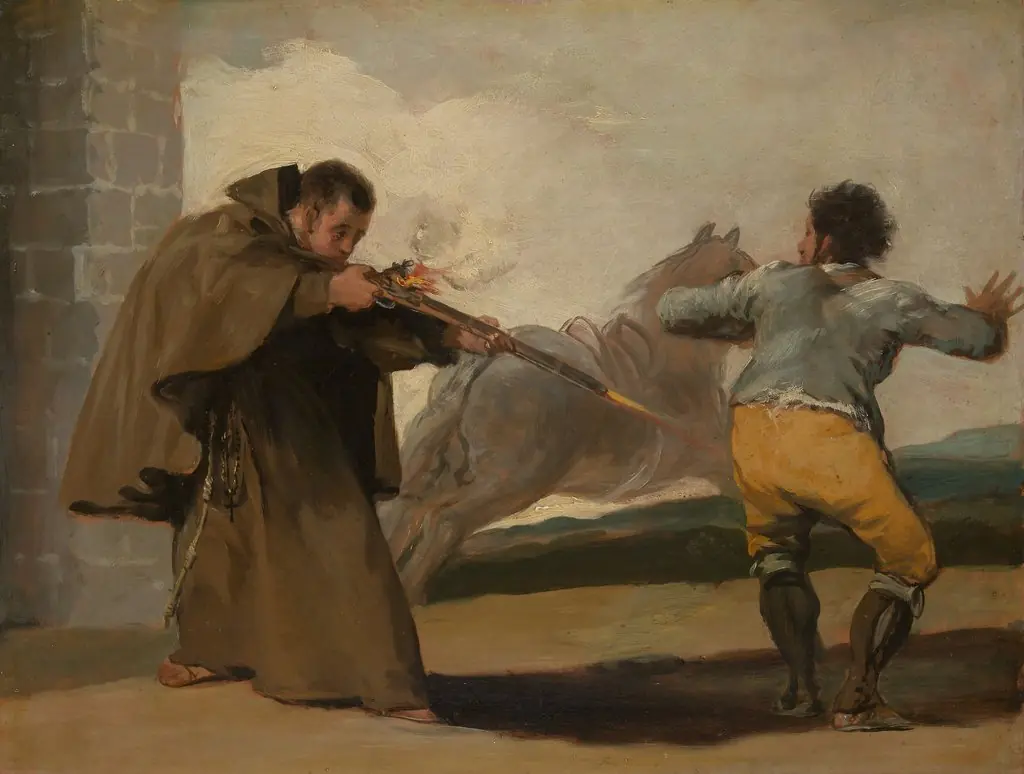 Friar Pedro Shoots El Maragato as His Horse Runs Off
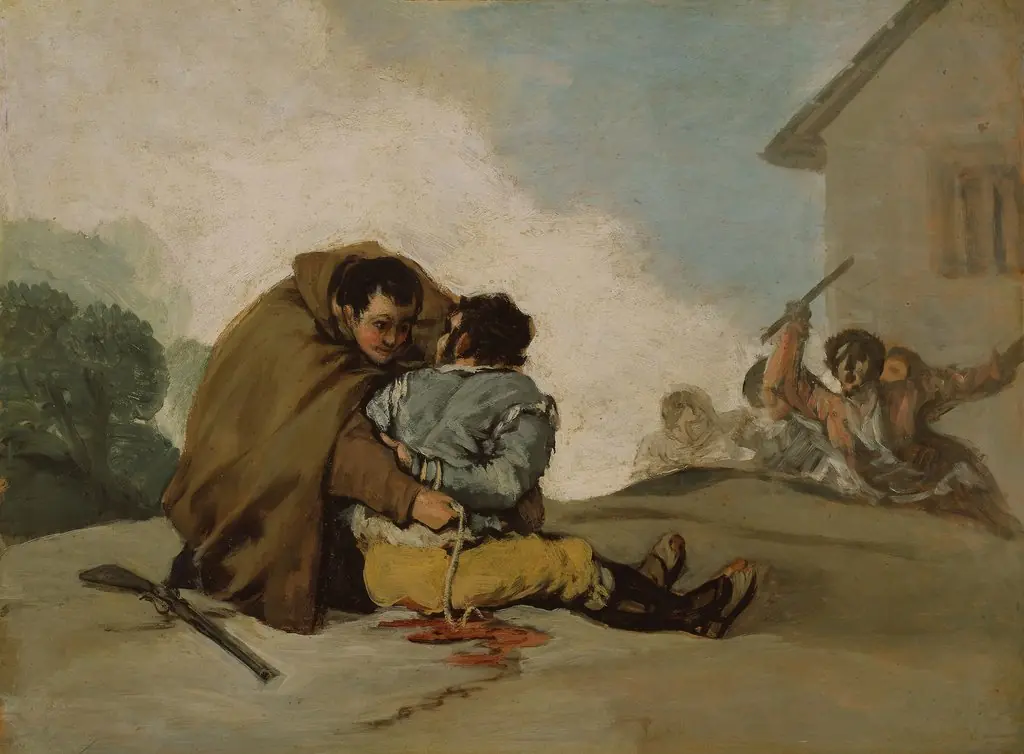 Friar Pedro Binds El Maragato with a Rope