Artwork
Kazimierz and Esterka (?)
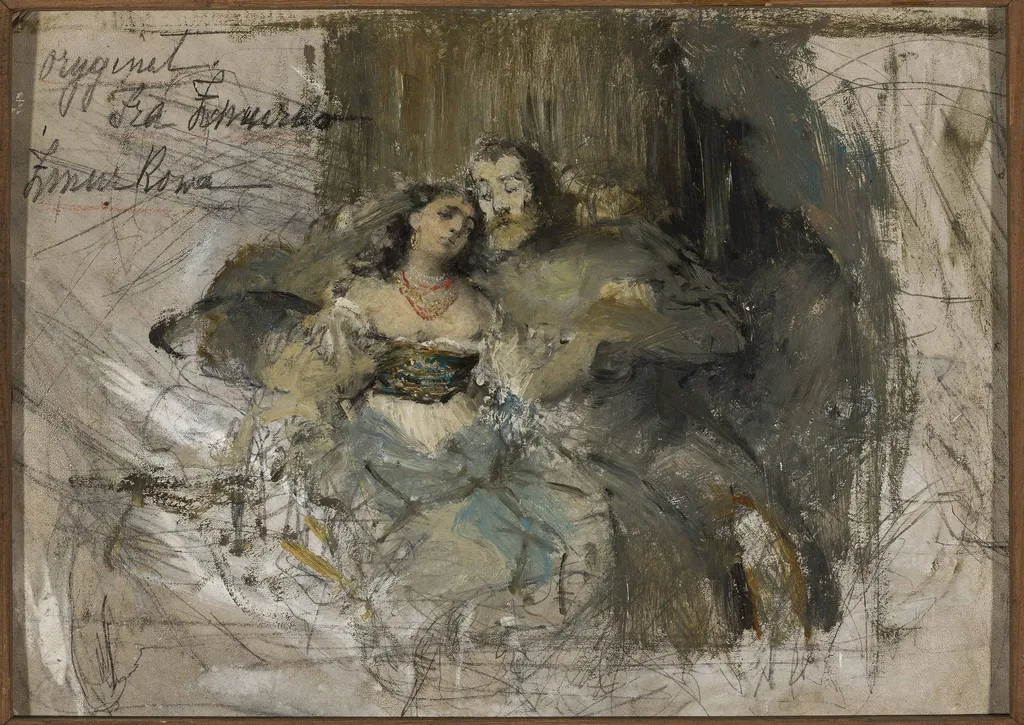
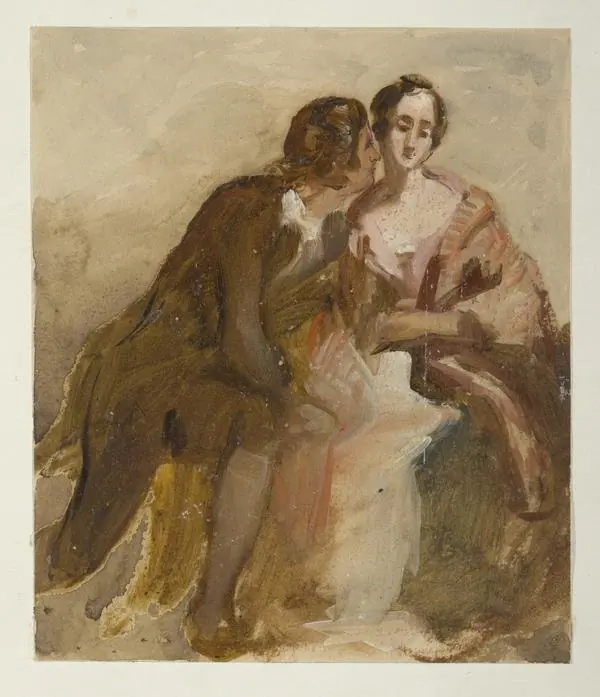
Kazimierz and Esterka (?) is an unspecified painting by Franciszek Żmurko. It dates from 1894 and is held in the collection of the National Museum in Warsaw.
About this work
Overview
The painting’s title, referencing Kazimierz and Esterka, suggests a historical or legendary pairing, though no definitive source confirms the subject.
Painted around 1894 by Franciszek Żmurko, this work emerged during his mature phase after relocating to Warsaw in 1882. Żmurko, trained in multiple European academies, applied his realist foundation to a scene whose narrative remains ambiguous. The painting’s title, referencing Kazimierz and Esterka, suggests a historical or legendary pairing, though no definitive source confirms the subject. It resides today in the National Museum in Warsaw, part of a broader collection of 19th-century Polish genre and historical works.
Subject & Meaning
The figures—a man and woman seated closely—have been tentatively linked to King Casimir III of Poland and his legendary Jewish mistress, Esterka. While this association is popular in folklore, no contemporary records verify it, and the painting offers no textual or symbolic clues to confirm the identity. The intimacy of their posture invites interpretation as a moment of personal connection, but the ambiguity preserves the work as an evocative rather than didactic historical image.
Technique & Style
Żmurko employed loose, expressive brushwork that conveys immediacy rather than polished finish. The dark, indistinct background isolates the figures, drawing attention to their physical presence. Muted tones of gray and brown dominate, punctuated by subtle highlights on the woman’s dress and jewelry, which catch the light with restrained brilliance. The sketchy contours and fluid handling suggest a focus on atmosphere and emotional resonance over precise detail.
History & Provenance
The painting entered the National Museum in Warsaw’s collection in the late 19th or early 20th century, likely acquired directly from the artist or through a private donor. Its attribution to Żmurko is consistent with his known output from the 1890s, and no significant alterations or restorations are documented. It has remained in public custody since acquisition, with limited exhibition history, reflecting its status as a lesser-known work within his oeuvre.
Context
In late 19th-century Poland, historical themes were often used to assert cultural identity under foreign partitions. Żmurko’s interest in romanticized medieval figures aligned with broader nationalist currents, though his approach here is more intimate than monumental. Unlike grand historical canvases by contemporaries, this work emphasizes psychological nuance, reflecting a shift toward psychological realism in Polish painting during this period.
Legacy
Though not among Żmurko’s most widely reproduced works, *Kazimierz and Esterka (?)* exemplifies his ability to blend historical suggestion with emotional subtlety. It contributes to the understanding of how Polish artists navigated national myth and personal expression during a time of political constraint. The painting’s unresolved narrative continues to invite scholarly and public interpretation, preserving its quiet resonance in the museum’s collection.
Artist & collection
Artist
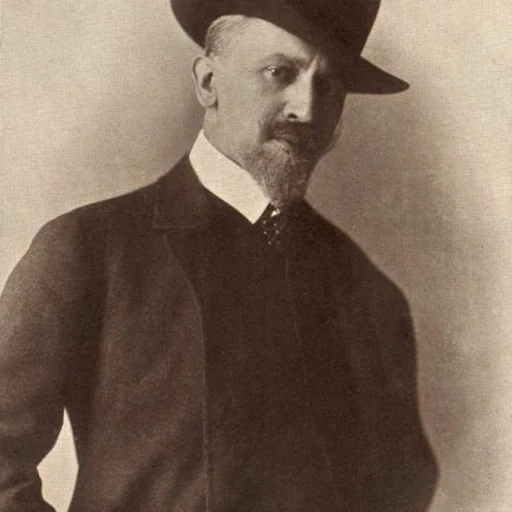
Franciszek Żmurko (18 July 1859, Lviv – 9 October 1910, Warsaw) was a Polish realist painter.

 Burns and his Highland Mary
 At the Ball (recto)
 Ballo in Maschera (Masquerade Ball)
 Lender and Auguez in "La chanson de fortunio" (Lender et Auguez dans "La chanson de fortunio")
 Bal mascat
 Guy and Mealy in "Paris qui marche" (Guy et Mealy dans "Paris qui marche")
 David and Bathsheba
![Young Woman, Florence [recto], by Seth Wells Cheney](https://artifactworldgallery.com/img/seth-wells-cheney--young-woman-florence-recto--05fb201b0cc35006-w320.webp) Young Woman, Florence [recto]
Young Woman, Florence [recto] A Maiden Embraced by a Knight in Armor
 Woman in a Blue Dress (recto)
 Amorous Conversation (Conversation amoreuse)
 Sketches of Figures