Artwork
The Battle of Chocim
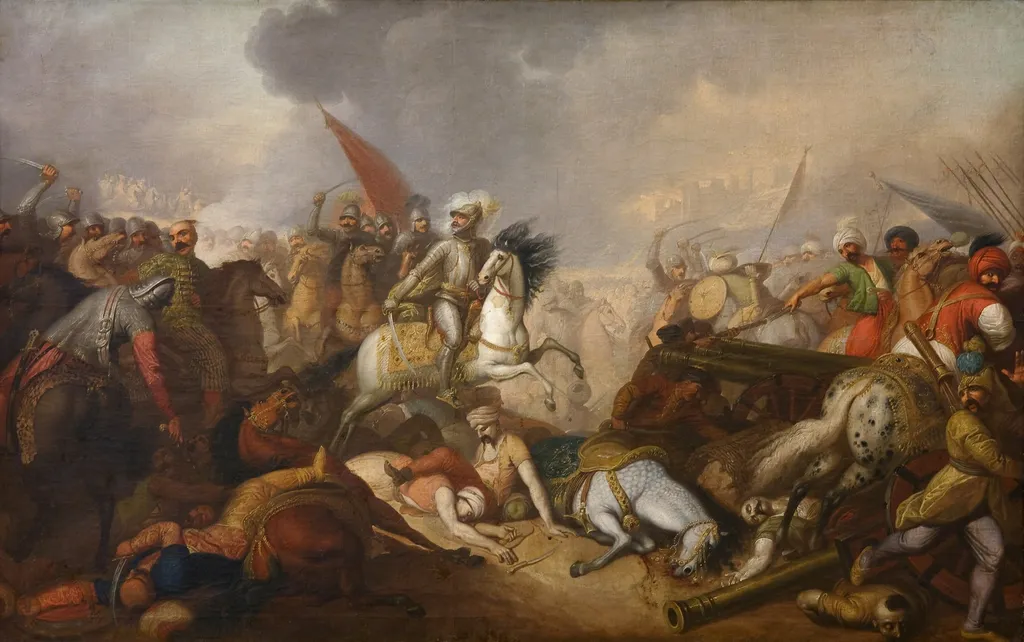
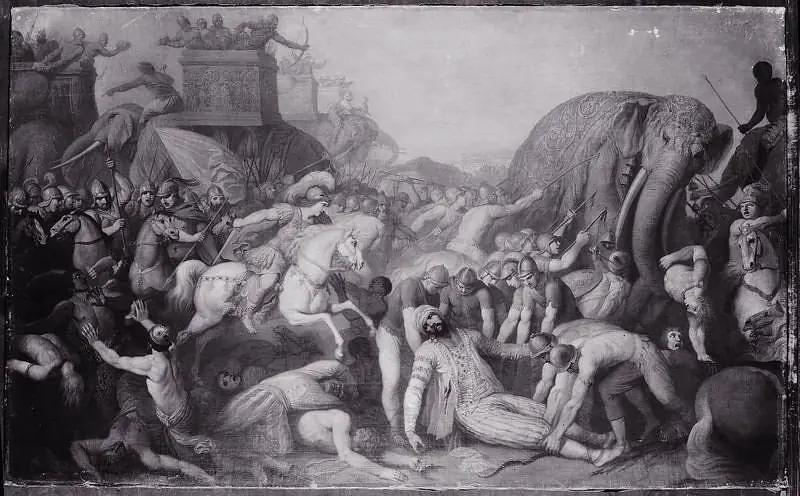
The Battle of Chocim is an oil painting by the Neoclassicist artist Franciszek Smuglewicz. It dates from 1786 and is held in the collection of the National Museum in Kraków.
About this work
Overview
The work resides today in the National Museum in Kraków, where it stands as a testament to early historicist tendencies in regional painting.
Painted around 1786 by Franciszek Smuglewicz, *The Battle of Chocim* is an oil-on-canvas history piece that captures a pivotal moment in the Polish-Ottoman conflict. As a leading figure in the artistic development of the Polish-Lithuanian Commonwealth, Smuglewicz employed neoclassical principles to elevate military narrative into structured visual drama. The work resides today in the National Museum in Kraków, where it stands as a testament to early historicist tendencies in regional painting.
Subject & Meaning
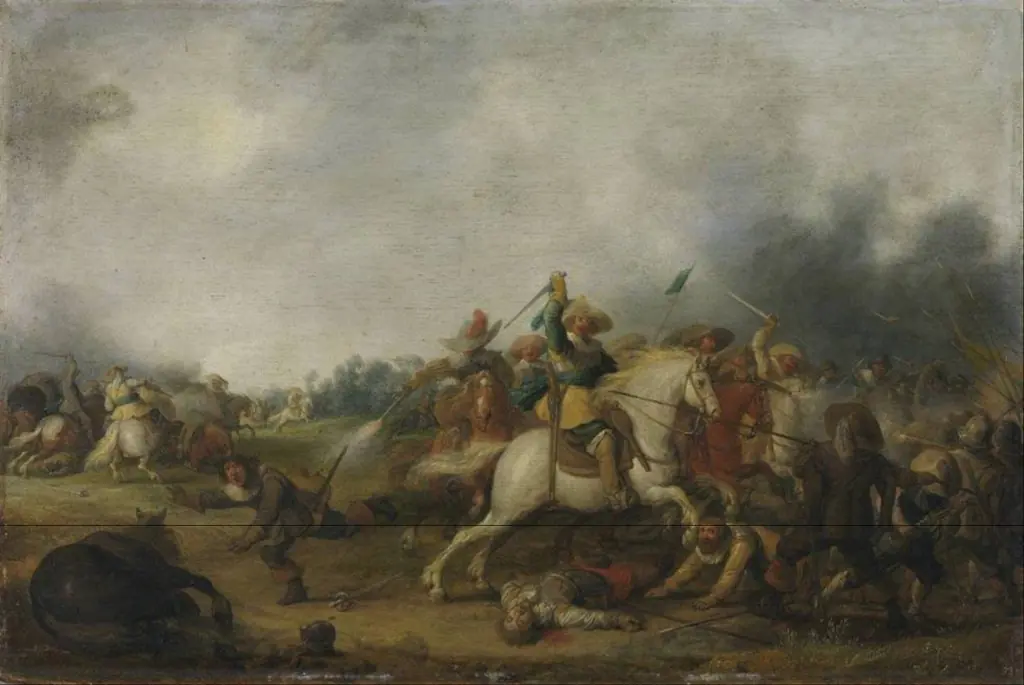
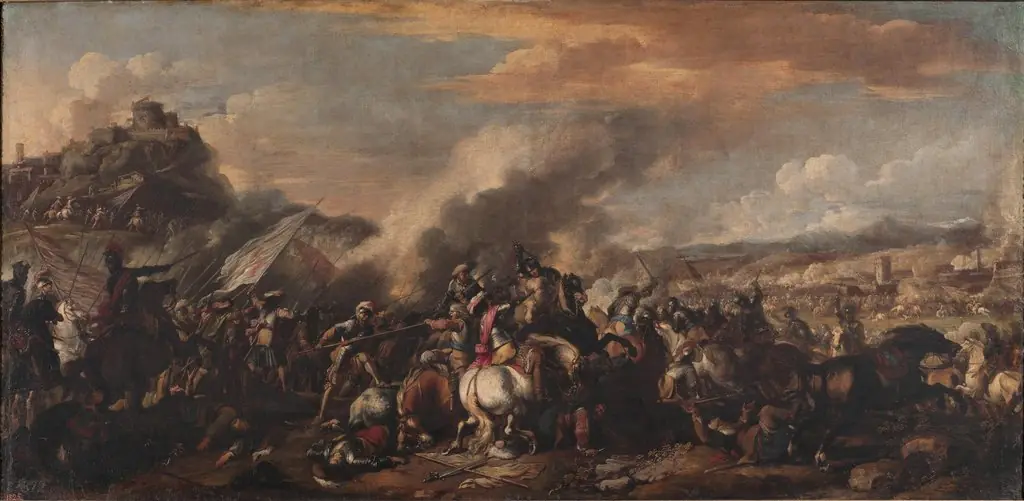
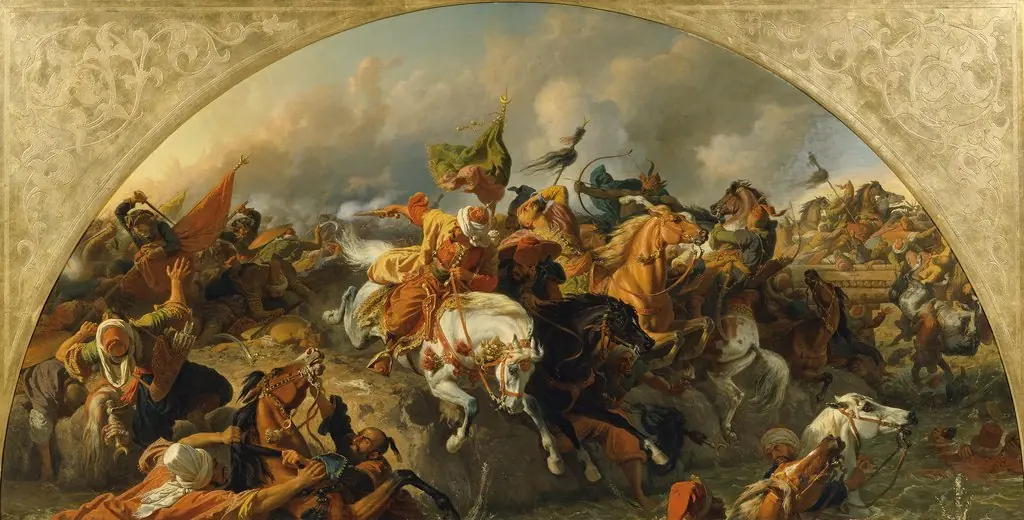
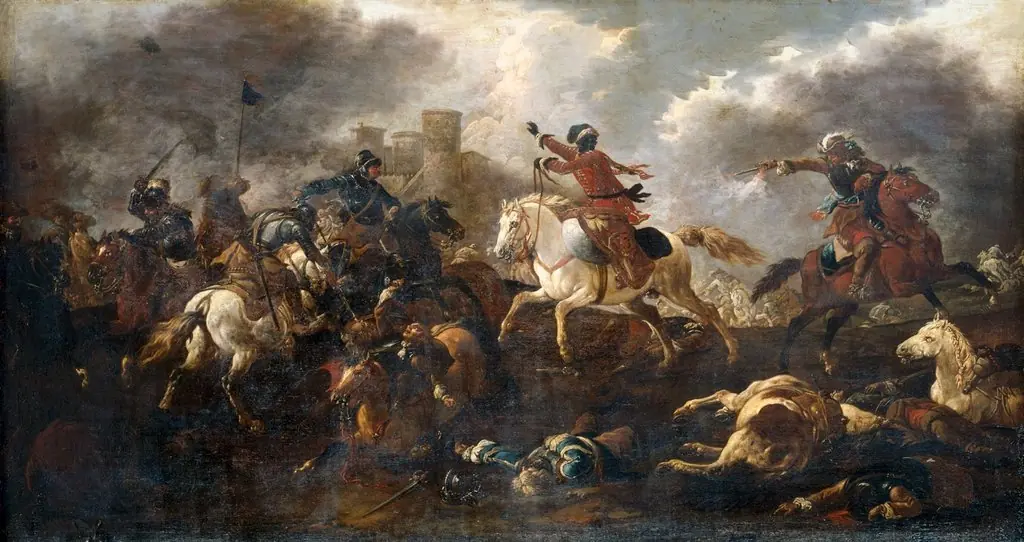
The painting portrays the 1621 Battle of Chocim, where Polish-Lithuanian forces resisted an Ottoman invasion. The central mounted figure, likely a commander in white, symbolizes leadership amid chaos. Surrounding figures—soldiers on horseback, fallen combatants, and a retreating soldier—convey the violence and disarray of battle. The scene does not glorify victory but emphasizes the human cost and turbulence of war, aligning with Enlightenment-era interest in historical truth over myth.
Technique & Style
Smuglewicz applied neoclassical composition to a dynamic battlefield, balancing movement with controlled spatial organization. Figures are rendered with anatomical precision, and lighting creates depth through chiaroscuro, highlighting key actors against smoky backgrounds. The use of muted earth tones and dramatic contrasts enhances the gravity of the moment. Though crowded, the arrangement guides the viewer’s eye toward the central figure, reinforcing narrative focus without sacrificing realism.
History & Provenance
Created during Smuglewicz’s tenure as an instructor in Vilnius, the painting reflects his commitment to cultivating a national artistic identity. It was likely commissioned to commemorate a significant military event in the Commonwealth’s history. By the late 18th century, it entered the collection of the National Museum in Kraków, where it has remained as part of its core historical holdings, preserved through political upheavals and shifts in artistic taste.
Context
Painted during the final decades of the Polish-Lithuanian Commonwealth, *The Battle of Chocim* emerged amid growing interest in national history as a source of cultural cohesion. Smuglewicz’s work responded to Enlightenment ideals that valued historical accuracy and civic virtue. His training in Rome and exposure to classical models informed his approach, distinguishing his style from earlier Baroque excesses and aligning him with emerging European historicism.
Legacy
Smuglewicz’s role in founding the Vilnius school of art positioned him as a mentor to a generation of regional painters. *The Battle of Chocim* exemplifies his contribution to establishing history painting as a serious genre in Eastern Europe. Though less widely known outside the region, the work remains a foundational reference for understanding the evolution of national artistic identity in the late 18th-century Commonwealth.
Own this work as a print
Artist & collection
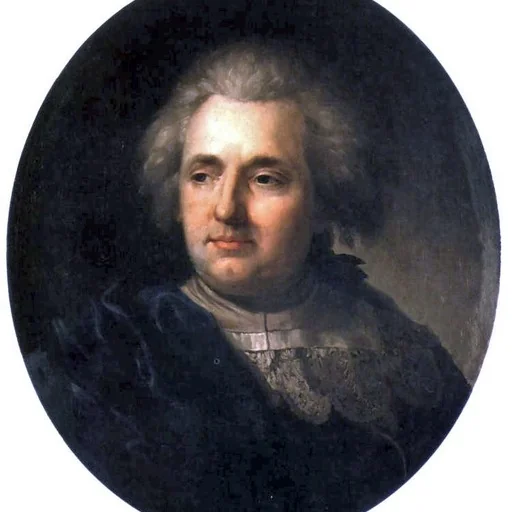
Artist
Franciszek Smuglewicz (Lithuanian: Pranciškus Smuglevičius; 6 October 1745 – 18 September 1807) was a Polish-Lithuanian draughtsman and painter.