Artwork
Boats at Peel—Isle of Man
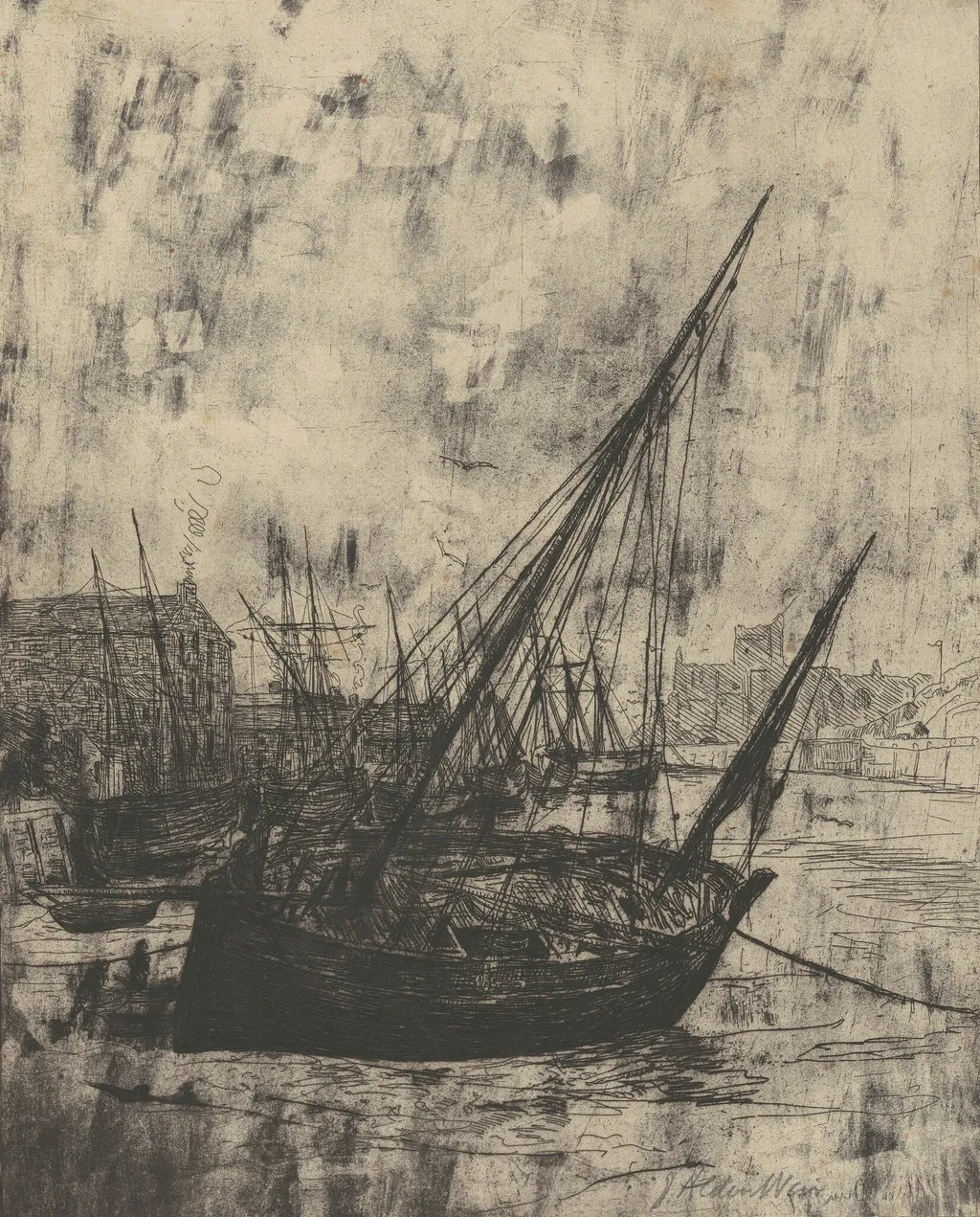
Boats at Peel—Isle of Man is an ink print by the Impressionist artist Julian Alden Weir. It dates from 1889 and is held in the collection of the National Gallery of Art.
About this work
Overview
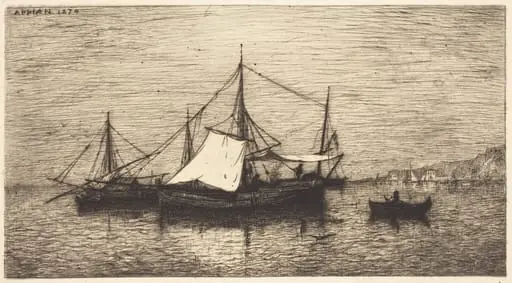
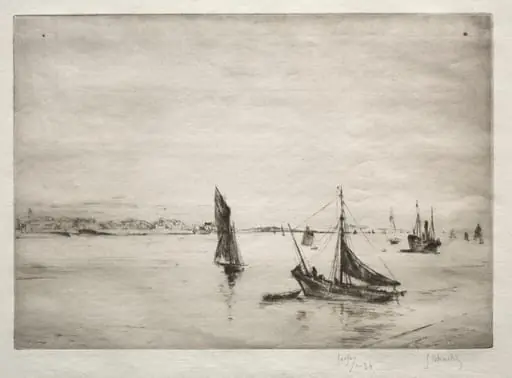
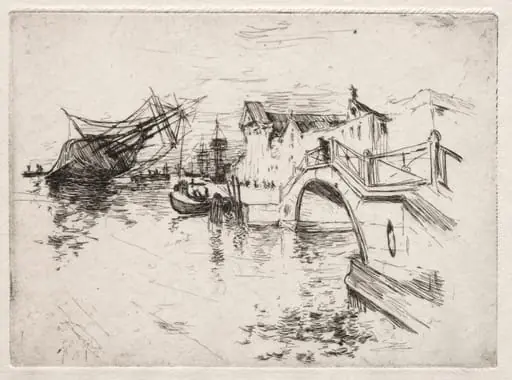
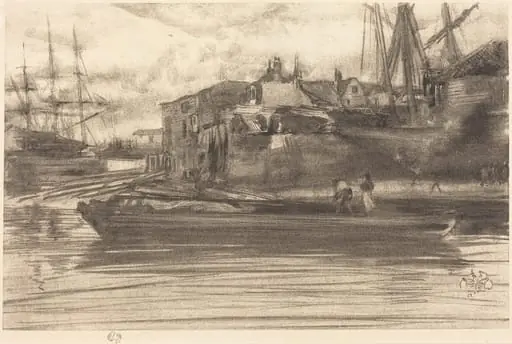
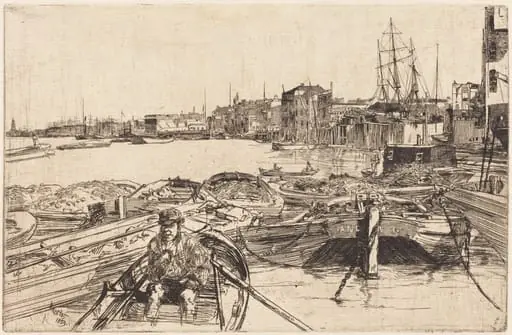
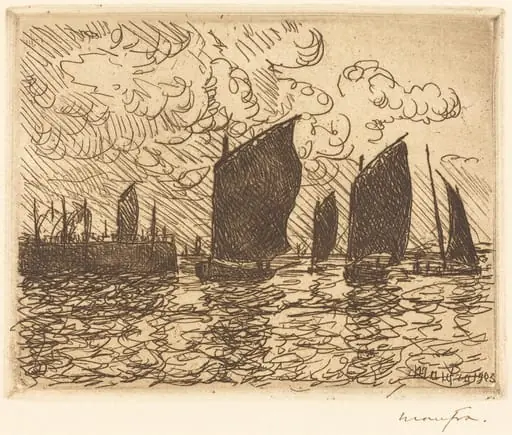
Created in 1889, this etching by Julian Alden Weir depicts a coastal scene at Peel on the Isle of Man. Rendered in black ink on laid paper, the work captures two wooden vessels anchored near shore, their masts and rigging rendered with precise, incised lines. The technique of etching allowed Weir to achieve a sketch-like immediacy, emphasizing texture and atmosphere over detailed realism.
Subject & Meaning
The two aging boats, moored in turbulent water, suggest a quiet moment of rest amid the sea’s volatility. The absence of figures shifts focus to the vessels themselves, evoking themes of labor, endurance, and the passage of time. The storm-laden sky and agitated waves imply nature’s dominance, reinforcing a sense of isolation and resilience in the maritime environment.
Technique & Style
Dark, smudged areas suggest cloud cover and shadow, while quick, undulating lines convey the choppiness of the sea.
Weir employed etching to scratch lines directly into a metal plate, which was then inked and pressed onto paper. The resulting marks are sharp and fluid, mimicking the spontaneity of a drawing. Dark, smudged areas suggest cloud cover and shadow, while quick, undulating lines convey the choppiness of the sea. The medium’s capacity for fine detail and tonal variation enhances the scene’s atmospheric tension.
History & Provenance
The print was made during Weir’s travels to the British Isles, where he sought inspiration in rural and coastal life. It was likely produced as part of a series of works reflecting his interest in everyday maritime scenes. The piece entered institutional collections in the early 20th century, preserved as an example of American etching during the print revival movement.
Context
In the late 19th century, American artists increasingly turned to etching as a serious medium, moving beyond reproduction to original expression. Weir, influenced by European realism and the Tonalist movement, used etching to explore mood and light. This work aligns with broader trends among artists documenting coastal communities, emphasizing quiet dignity over grandeur.
Legacy
Boats at Peel—Isle of Man remains a representative example of Weir’s printmaking, illustrating his ability to convey emotional depth through minimal means. While not widely exhibited, it is cited in scholarly studies of American etching for its restrained composition and technical precision, contributing to the recognition of printmaking as a legitimate fine art form in the United States.
Artist & collection