Artwork
Răstignirea lui Iisus
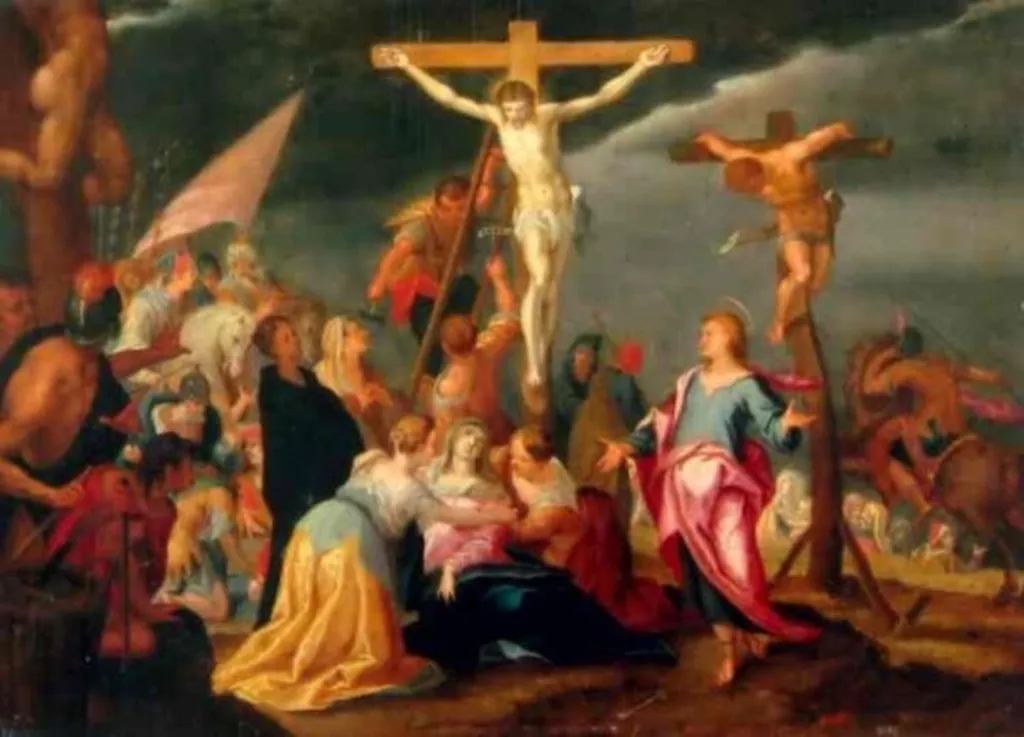
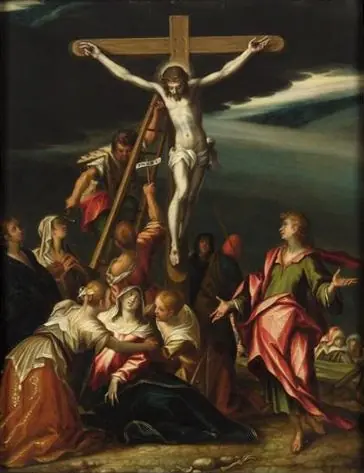
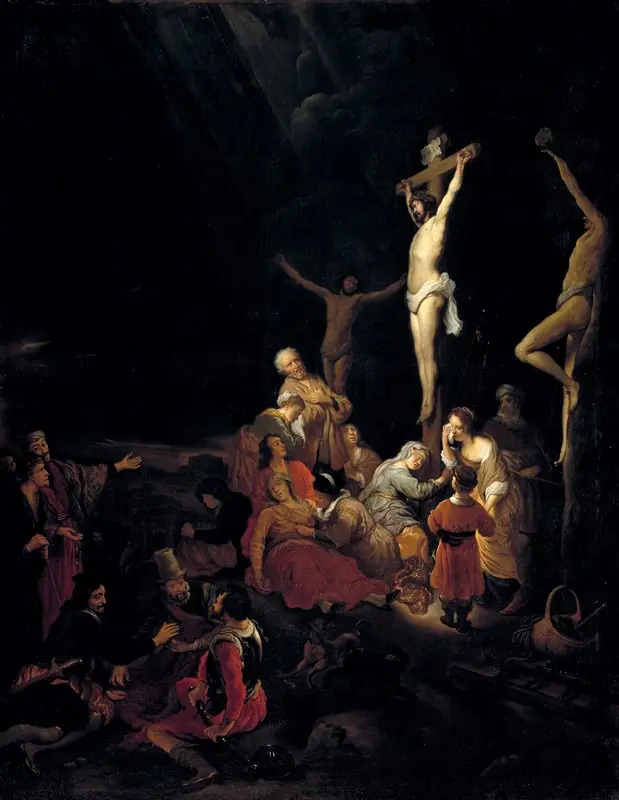
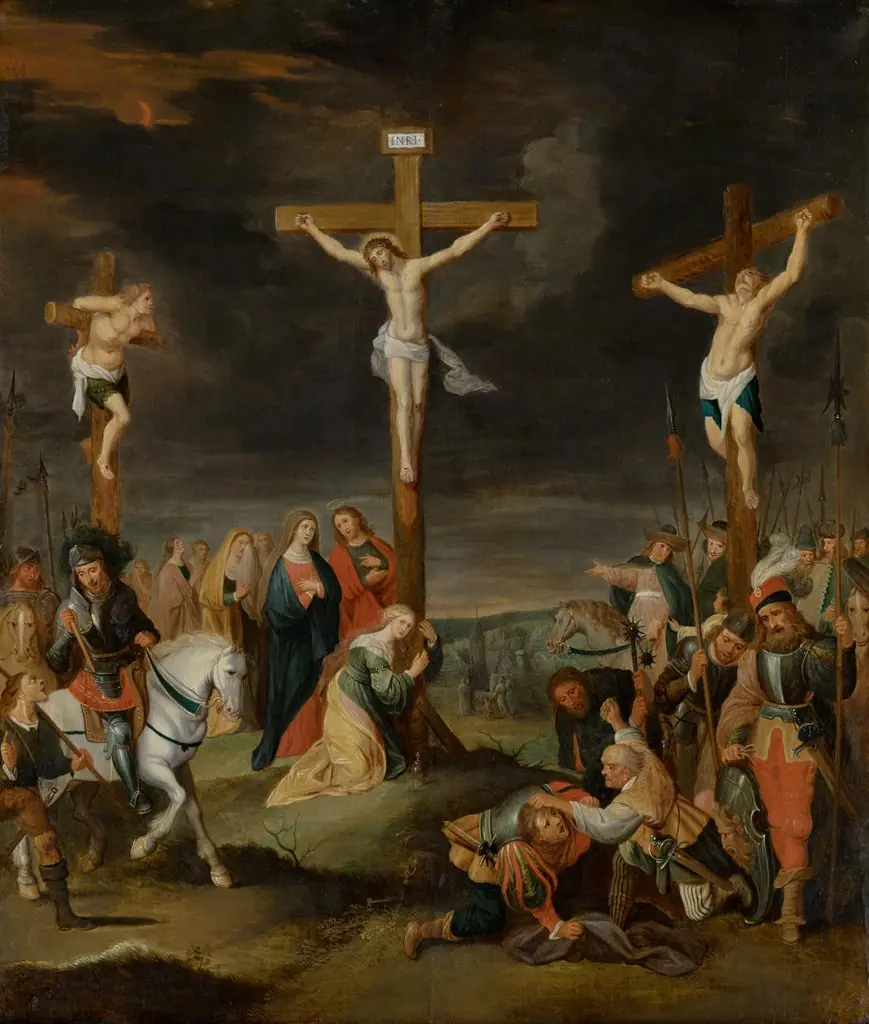
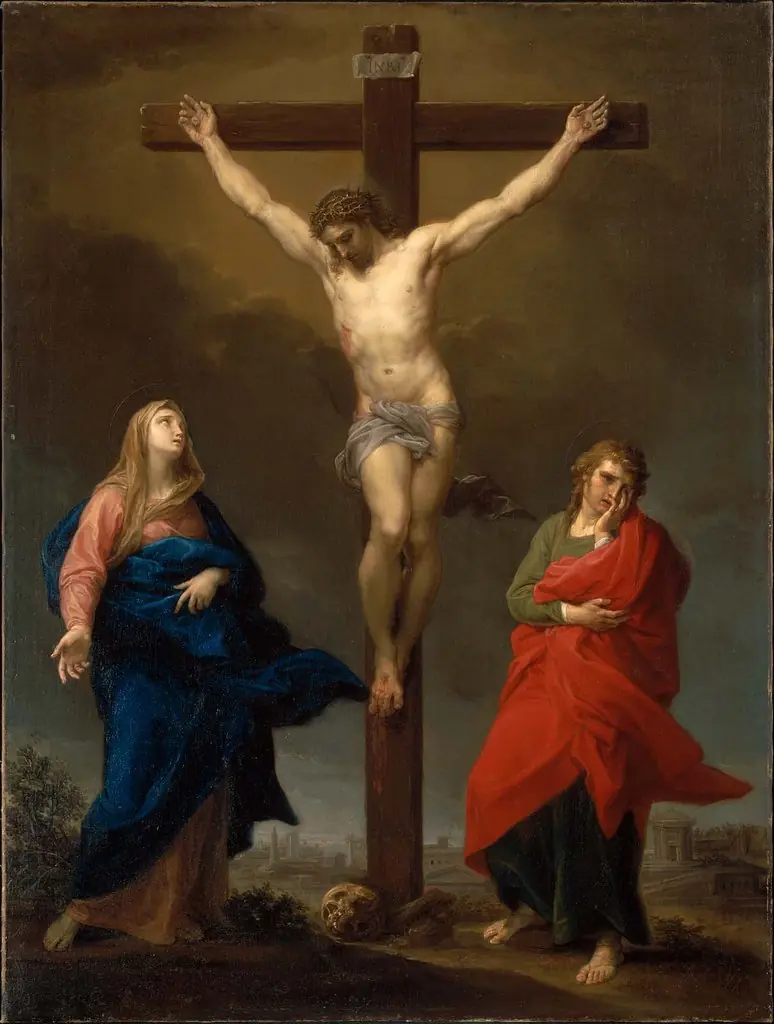
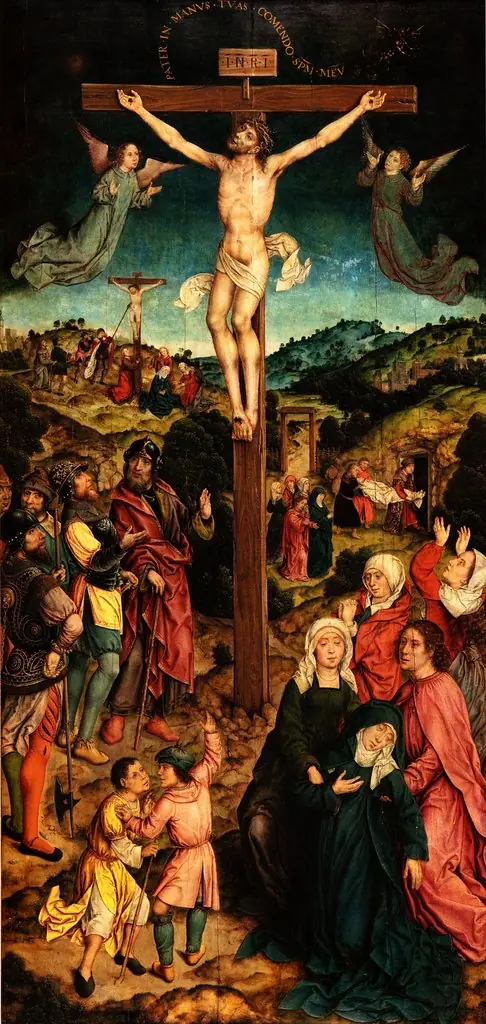
Răstignirea lui Iisus is an unspecified painting by the Byzantine icon painting artist Hans von Aachen. It is held in the collection of the Brukenthal National Museum. This painting depicts the crucifixion of Jesus Christ as a solemn, densely populated scene.
About this work
Overview
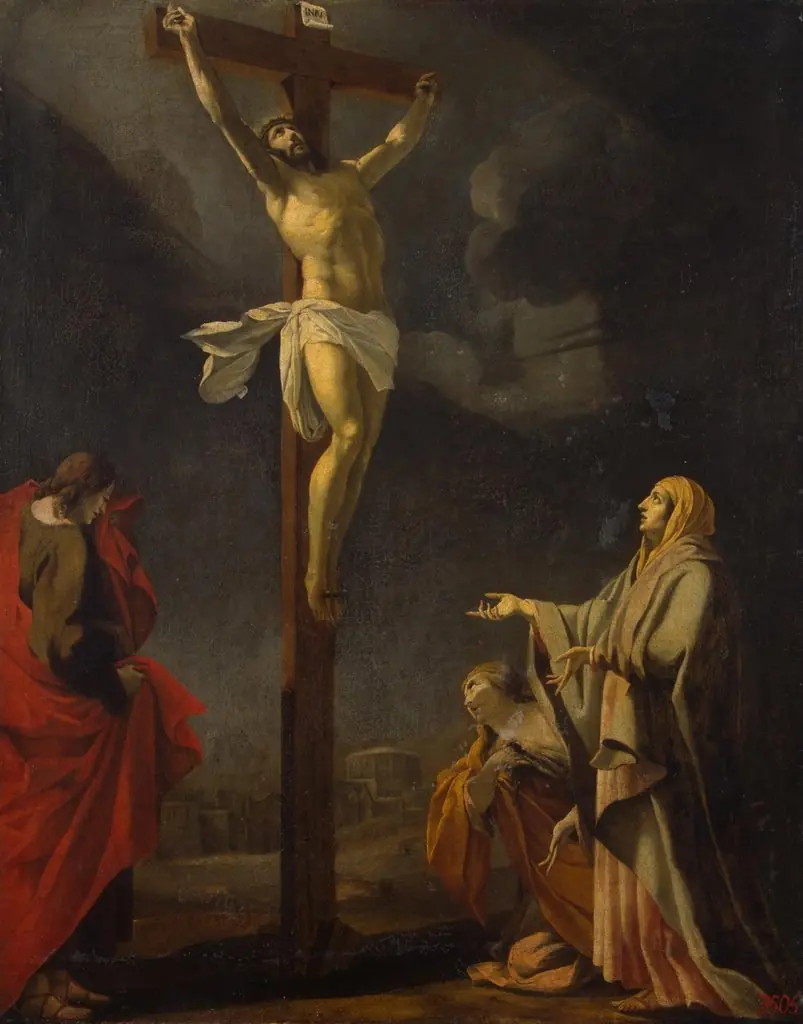
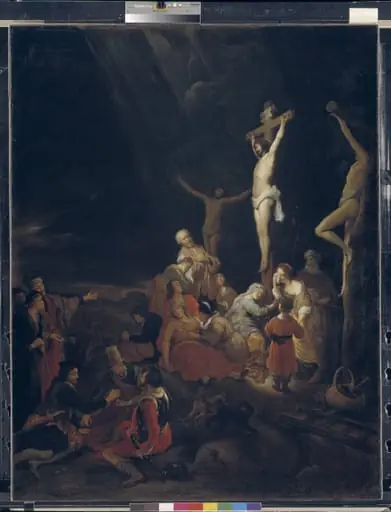
The composition directs attention through controlled lighting, isolating Christ’s face and hands in a soft glow while surrounding figures remain in shadow.
This painting depicts the crucifixion of Jesus Christ as a solemn, densely populated scene. The central figure is nailed to a tall cross, flanked by two smaller crosses with other figures. The composition directs attention through controlled lighting, isolating Christ’s face and hands in a soft glow while surrounding figures remain in shadow. Warm tones of gold, red, and blue emerge from a dark, muted background, enhancing the emotional gravity of the moment without theatricality.
Subject & Meaning
The scene captures the moment of Christ’s crucifixion, a pivotal event in Christian theology. Figures around him display varied reactions—some in grief, others in indifference or scrutiny—reflecting the human responses to divine sacrifice. The inclusion of two additional crosses suggests the presence of the two thieves, reinforcing the biblical narrative. The focus on Christ’s stillness amid chaos underscores themes of suffering, redemption, and quiet endurance.
Technique & Style
The artist employs chiaroscuro to model form and direct focus, using strong contrasts between light and shadow to elevate Christ’s figure above the surrounding crowd. Brushwork is precise yet restrained, with rich, saturated colors—gold, crimson, ultramarine—applied in layered glazes to achieve depth. The dark, receding background enhances the luminosity of the central form, creating a sense of sacred isolation within a bustling scene.
History & Provenance
The painting’s origins are not documented in public records, but its style aligns with late medieval or early Renaissance devotional works from Southern Europe. Its composition and palette suggest influence from Byzantine iconography and Italian chiaroscuro traditions. Likely created for private or ecclesiastical use, it may have been part of a larger altarpiece or devotional cycle, though its early ownership remains unverified.
Context
Created during a period when religious imagery served as both spiritual instruction and emotional anchor for the faithful, this work reflects the era’s emphasis on personal devotion. The crowded, emotionally varied crowd mirrors contemporary sermons that invited viewers to see themselves among the witnesses to Christ’s passion. Such scenes were common in churches and homes, reinforcing theological narratives through visual immediacy.
Legacy
Though not widely attributed to a known master, the painting exemplifies a persistent tradition in Western art: using light and composition to convey sacred narrative with psychological nuance. Its restrained drama and focus on human response to divine suffering influenced later devotional works, particularly in regions where liturgical imagery remained central to religious life well into the early modern period.
Artist & collection
Artist