Artwork
Sugar Mill (Sugar Plantation)
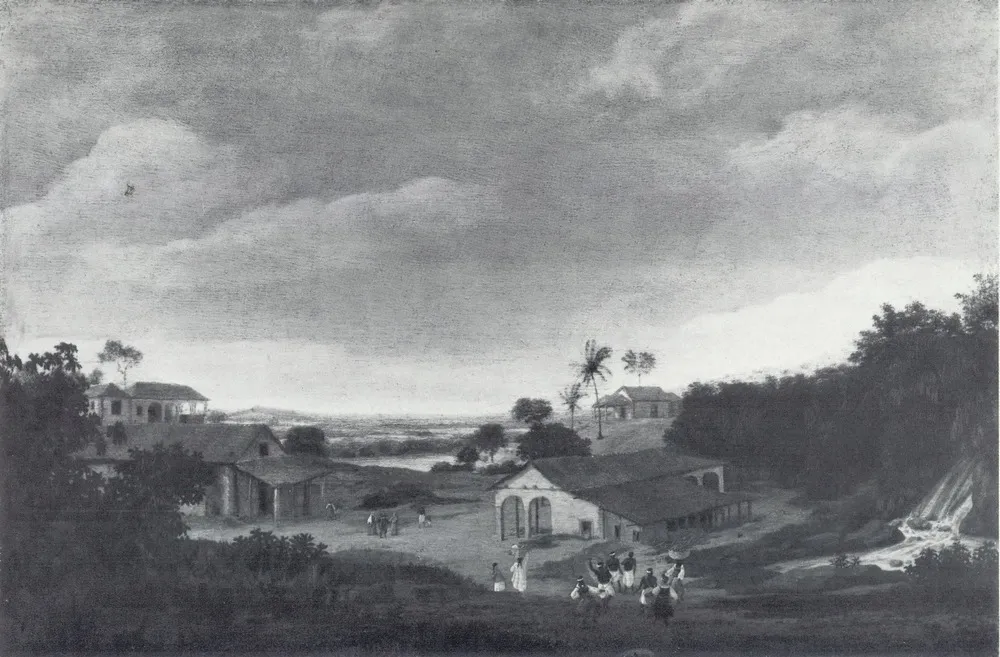
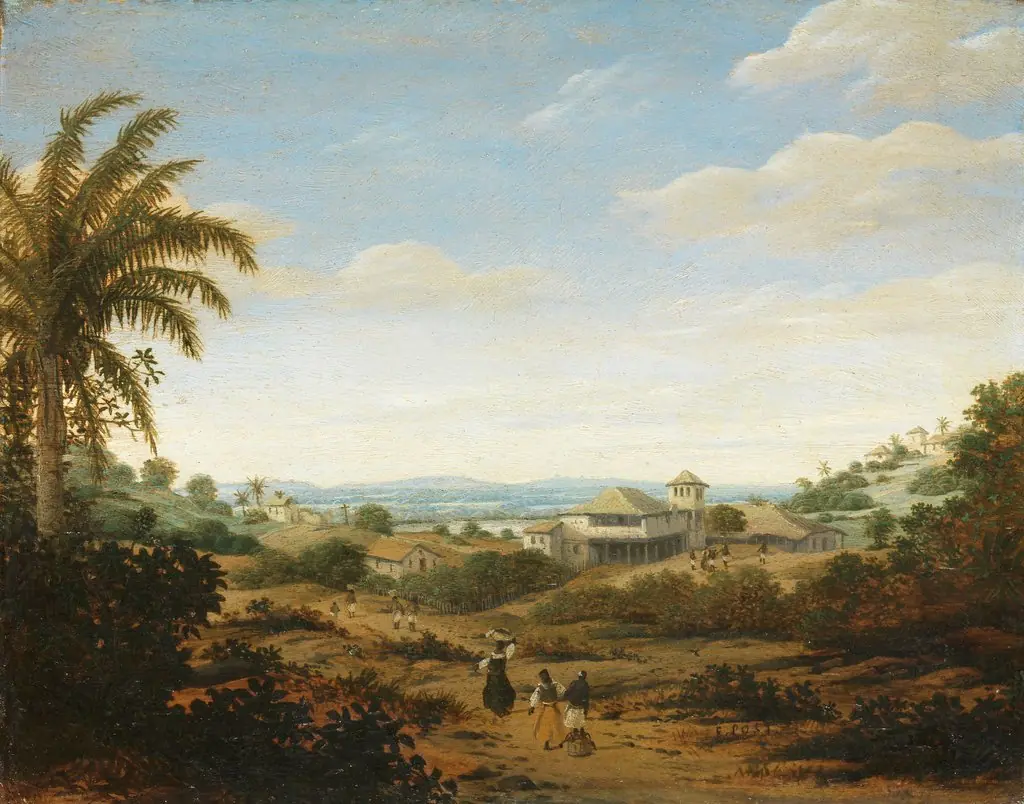
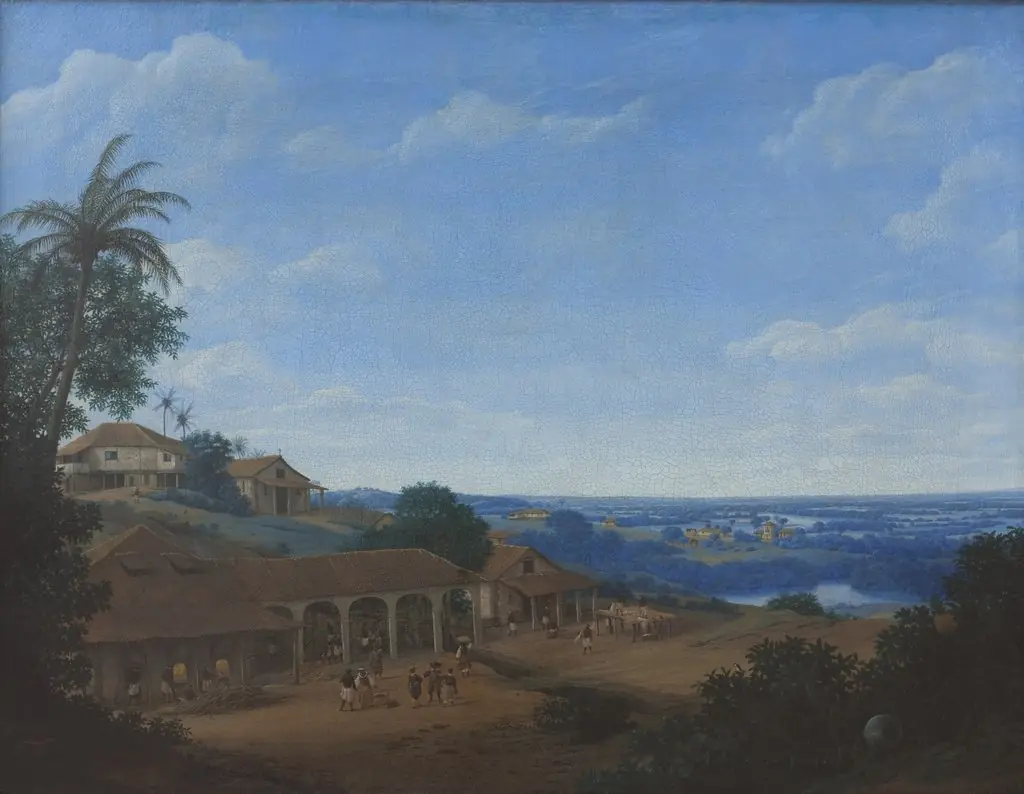
Sugar Mill (Sugar Plantation) is an oil painting by the Dutch Golden Age artist Frans Post. It dates from 1659 and is held in the collection of the Hermitage Museum.
About this work
Overview
Frans Post’s 1659 oil painting presents a tranquil tropical landscape centred on a sugar‑processing mill. Small structures dot the scene, while figures move along pathways beside the mill, under a bright sky broken by a few clouds. In the distance a river winds past further fields and a line of trees, giving a sense of expansive, orderly plantation land.
Subject & Meaning
The work portrays daily activity on a colonial sugar estate, emphasizing the organized labor and built environment that characterized Dutch‑controlled Brazil. By foregrounding the mill and surrounding dwellings, Post conveys an image of productive settlement, reflecting contemporary European ideas of civilised order imposed upon the New World’s resources.
Technique & Style
Post employs a clear contrast of light and shadow to model forms, a practice known as chiaroscuro, which highlights the architecture and figures against the luminous sky. The composition balances detailed foreground activity with a broader, atmospheric background, using a restrained palette that underscores the calm, orderly atmosphere of the plantation.
History & Provenance
Having travelled to Dutch Brazil in 1636 at the invitation of Governor Johan Maurits van Nassau‑Siegen, Post became the first European artist to record the Americas in situ. This canvas, part of his series of Brazilian landscapes, entered the State Hermitage Museum’s collection, where it remains on display as a rare visual record of 17th‑century colonial industry.
Artist & collection
Artist
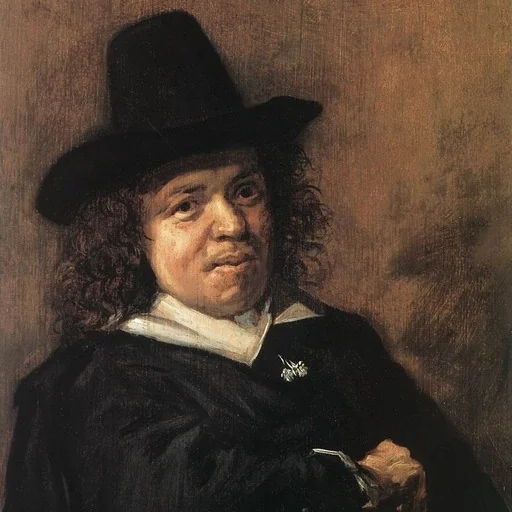
Frans Janszoon Post (17 November 1612 – 17 February 1680) was a painter during the Dutch Golden Age.

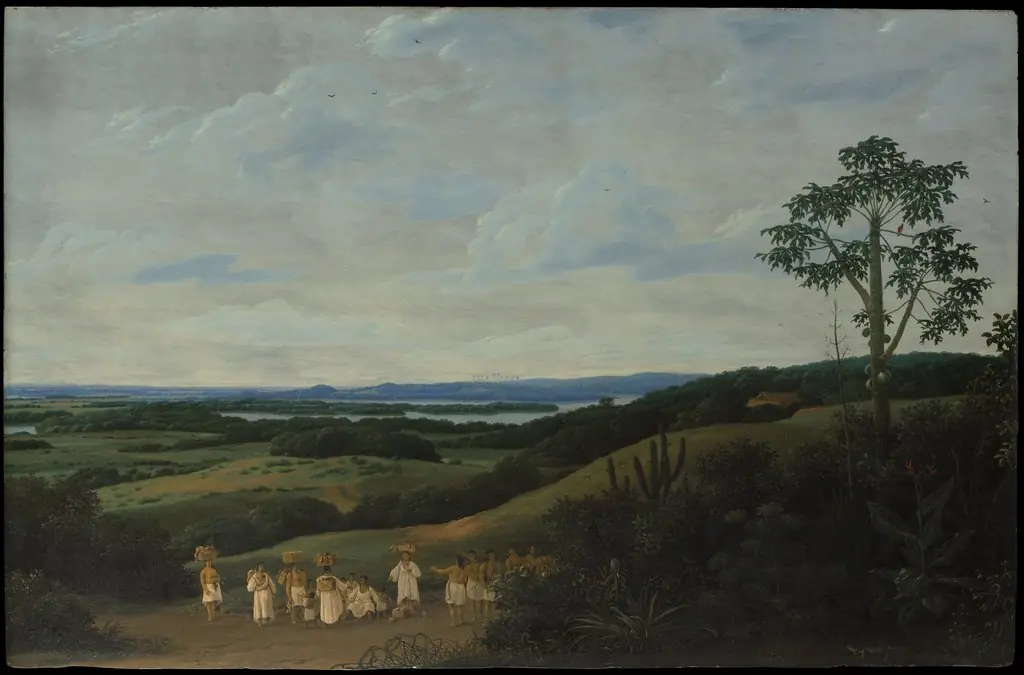
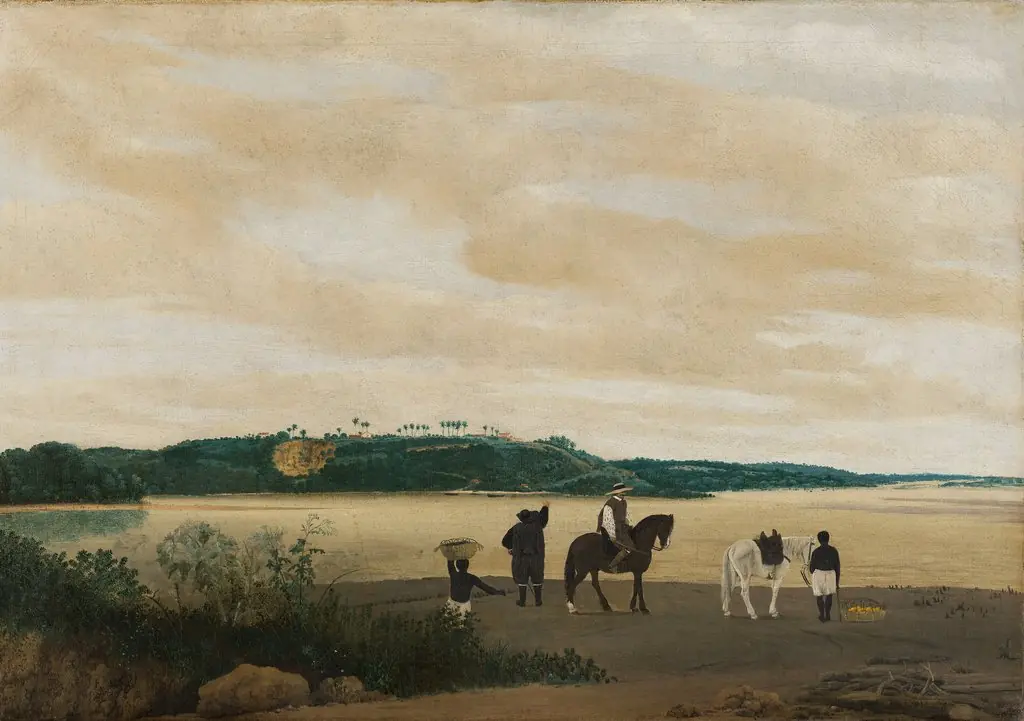
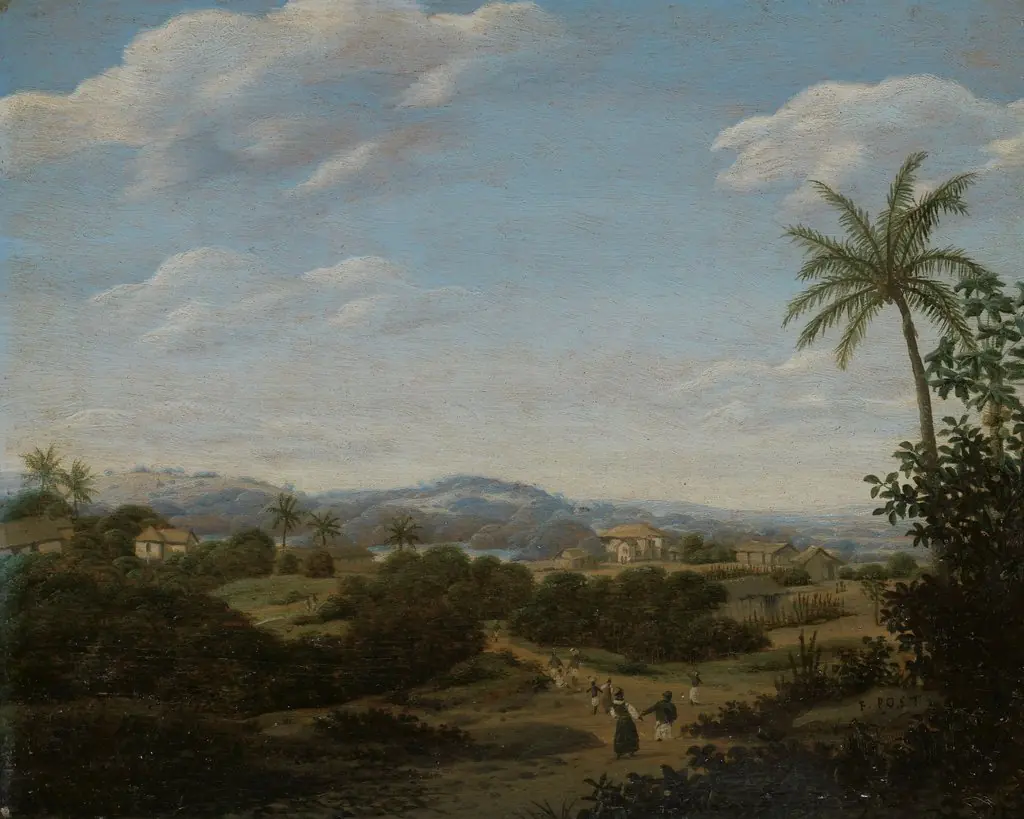
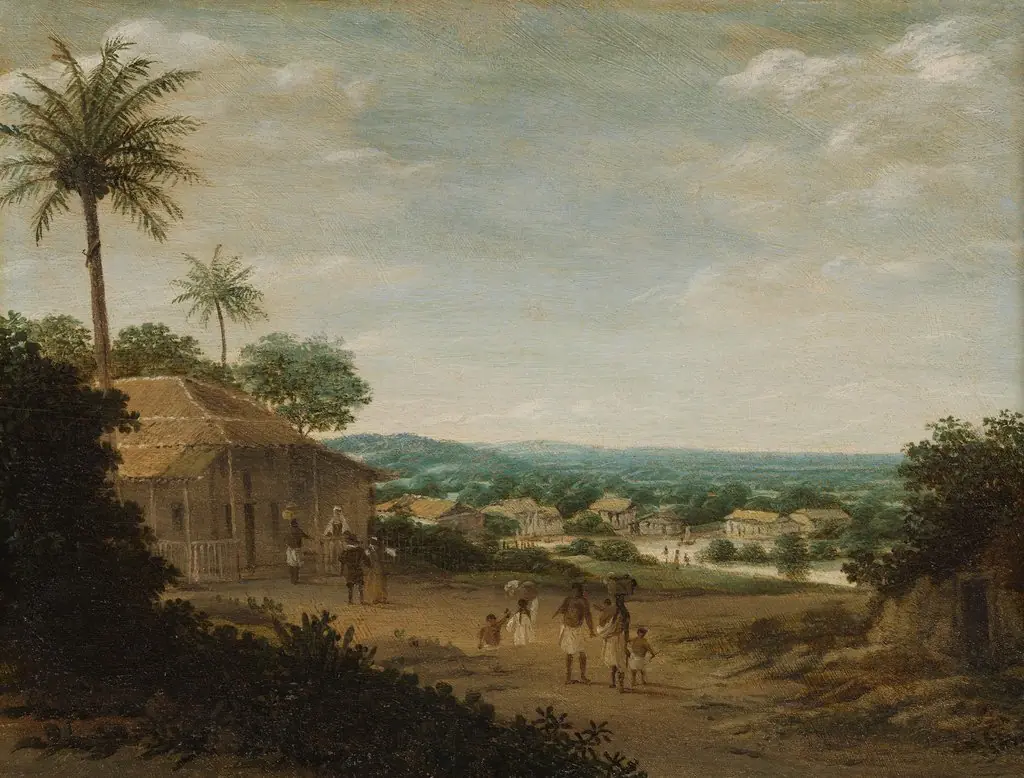
 Landscape in Brazil with Sugar Plantation
 Landscape in Brazil with Sugar Plantation
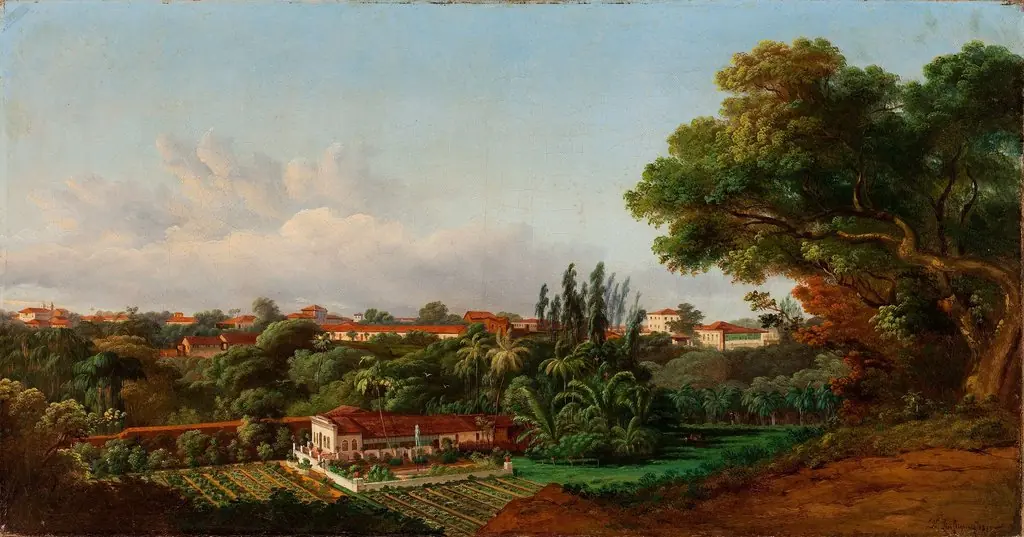 Sítio Sossego, São Luís, Maranhão (atribuído)
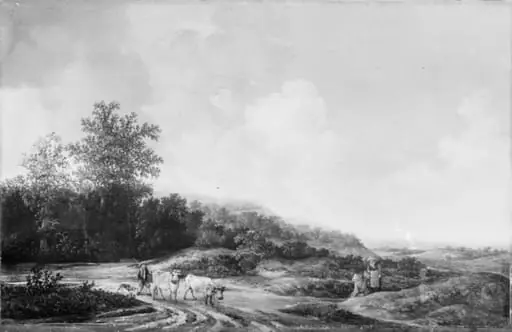 Hilly Landscape
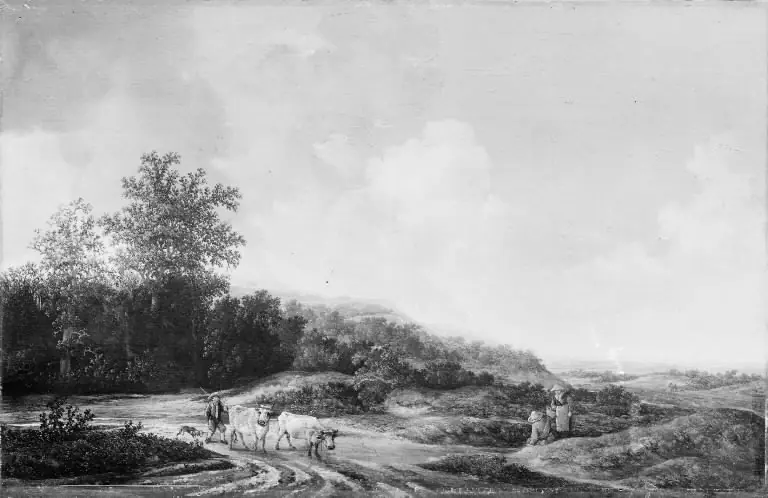 Hilly Landscape
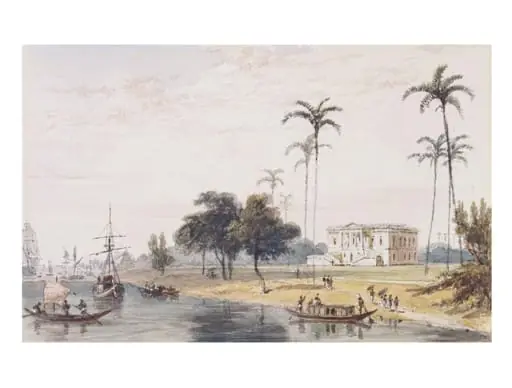 In the Garden House Reach, Calcutta
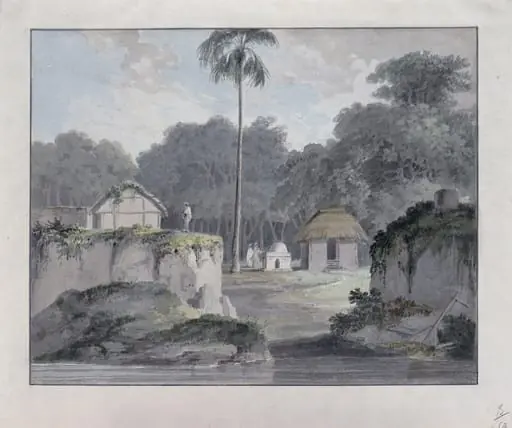 View near Nia-sirai
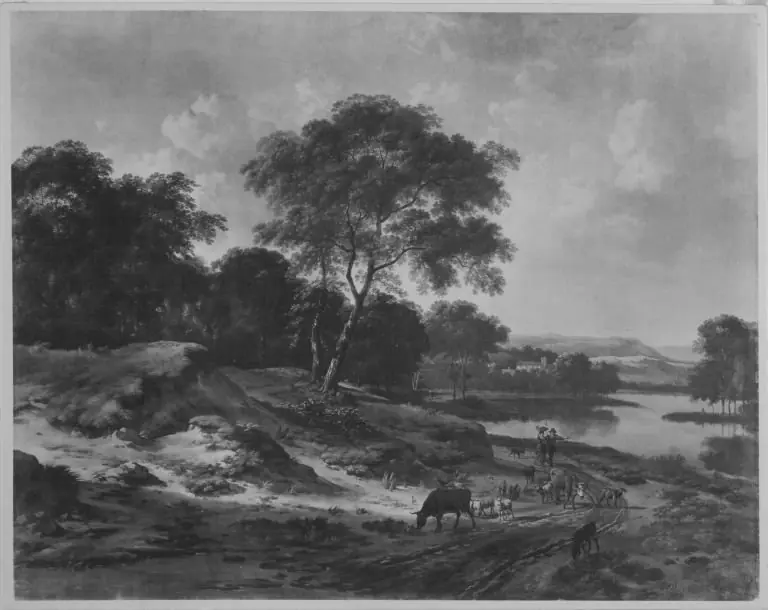 Landschaft mit Hirten
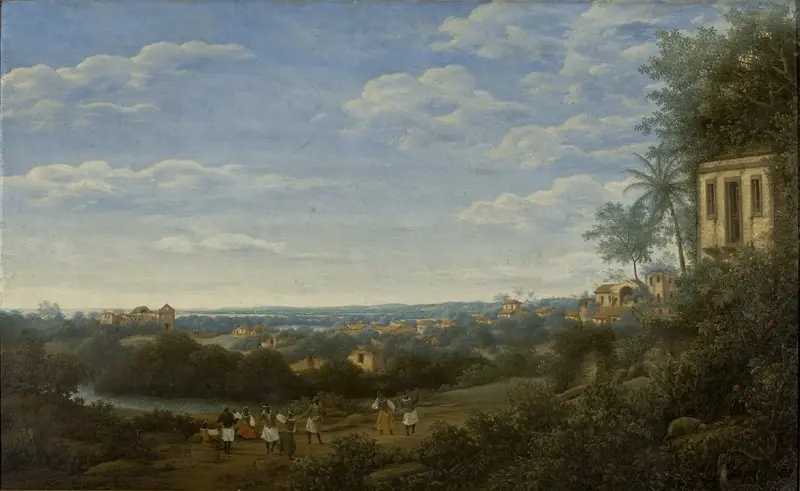 Landscape of Pernambuco with Manor House
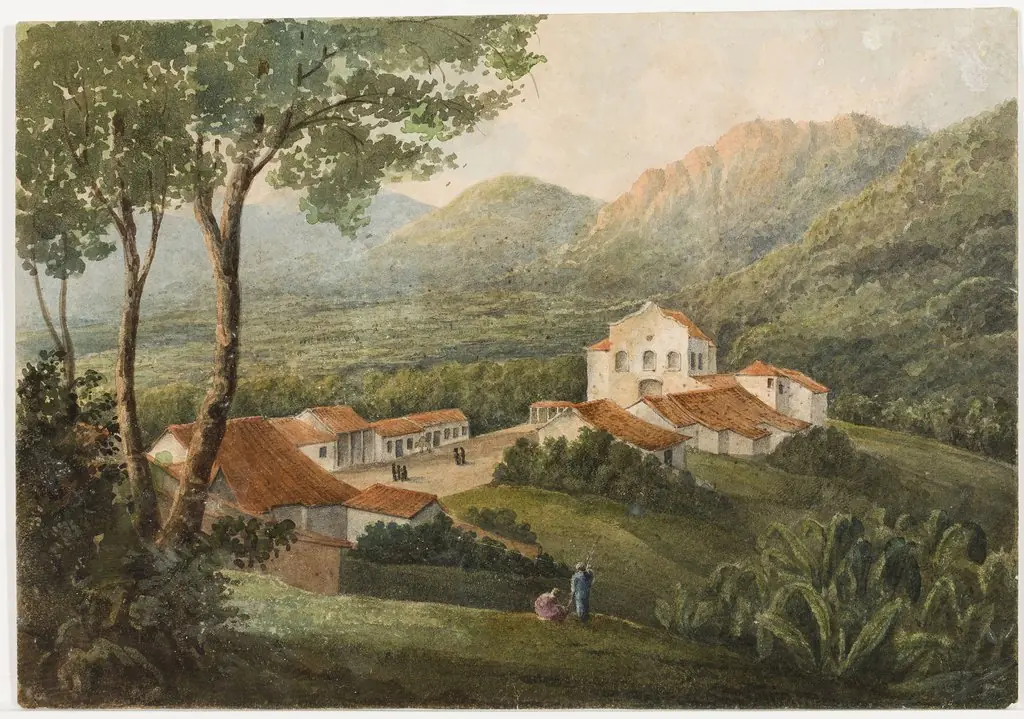 Vila rural e serra (atribuído)