Artwork
Portrait of Count Alexander Kushelev-Bezborodko
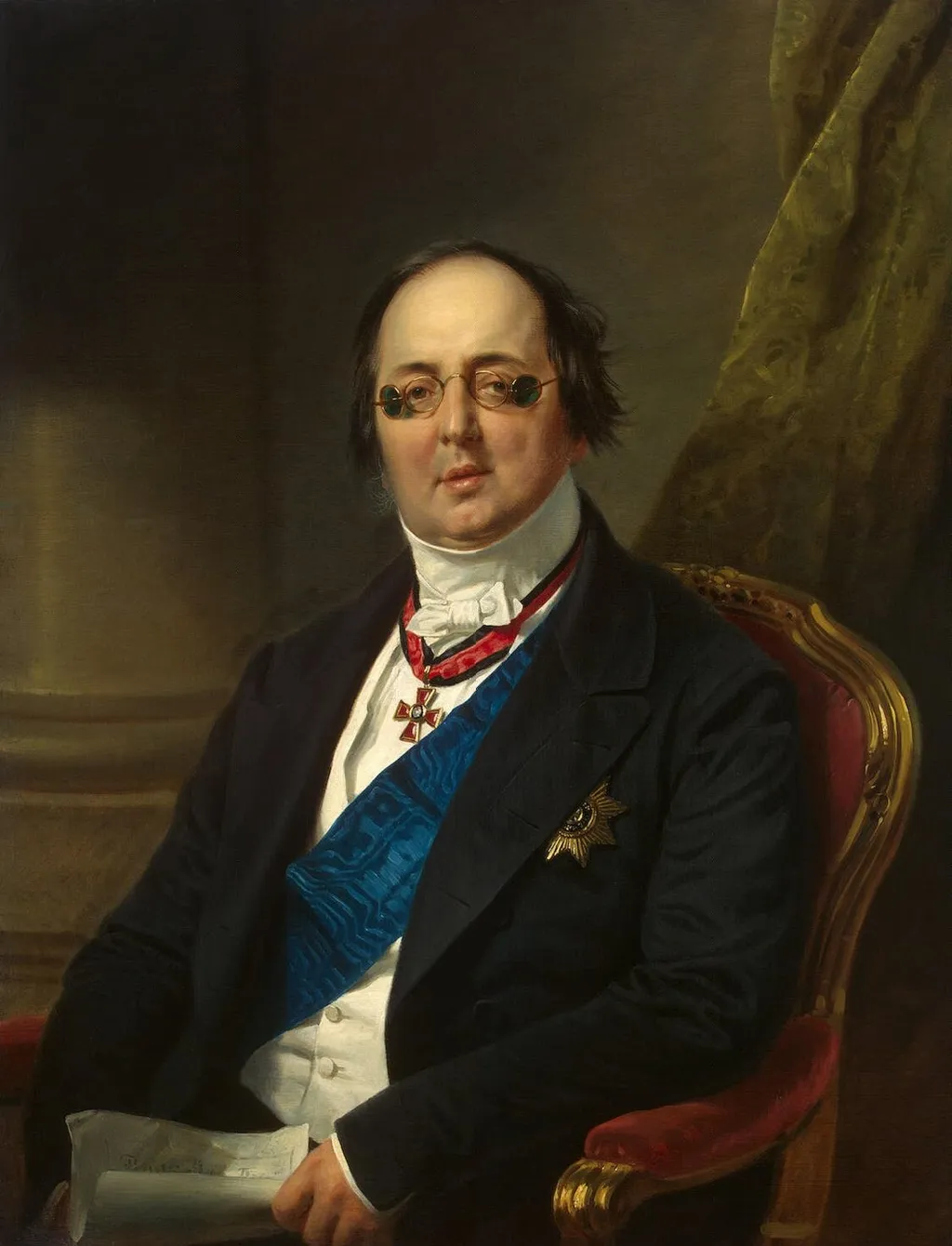
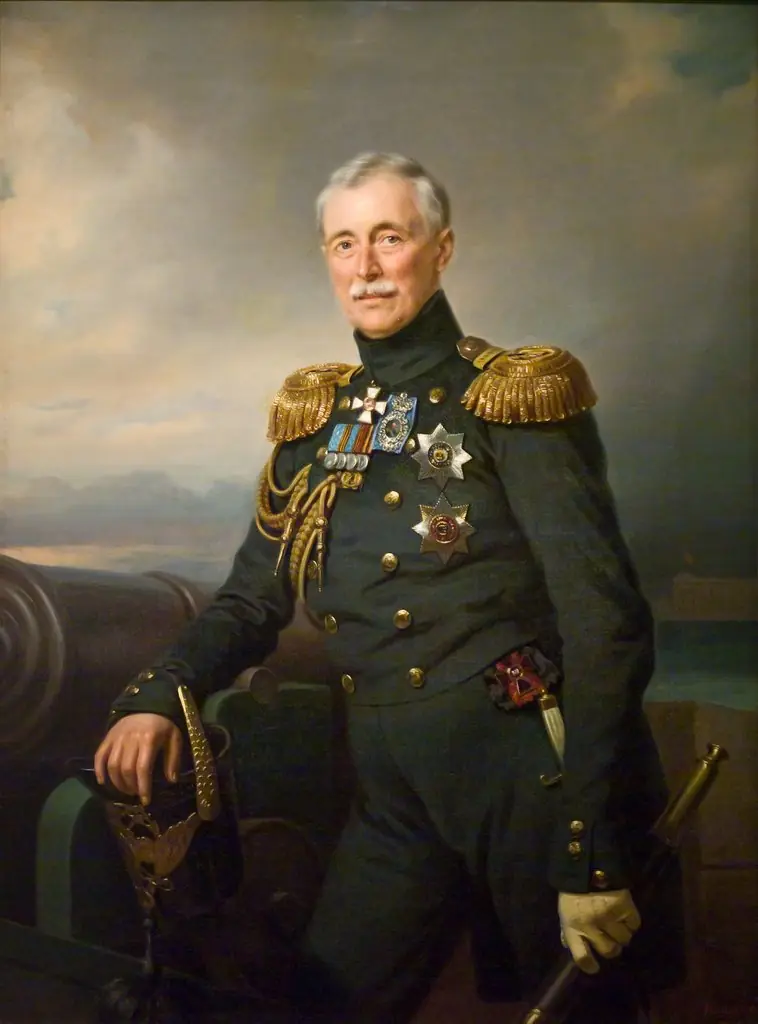
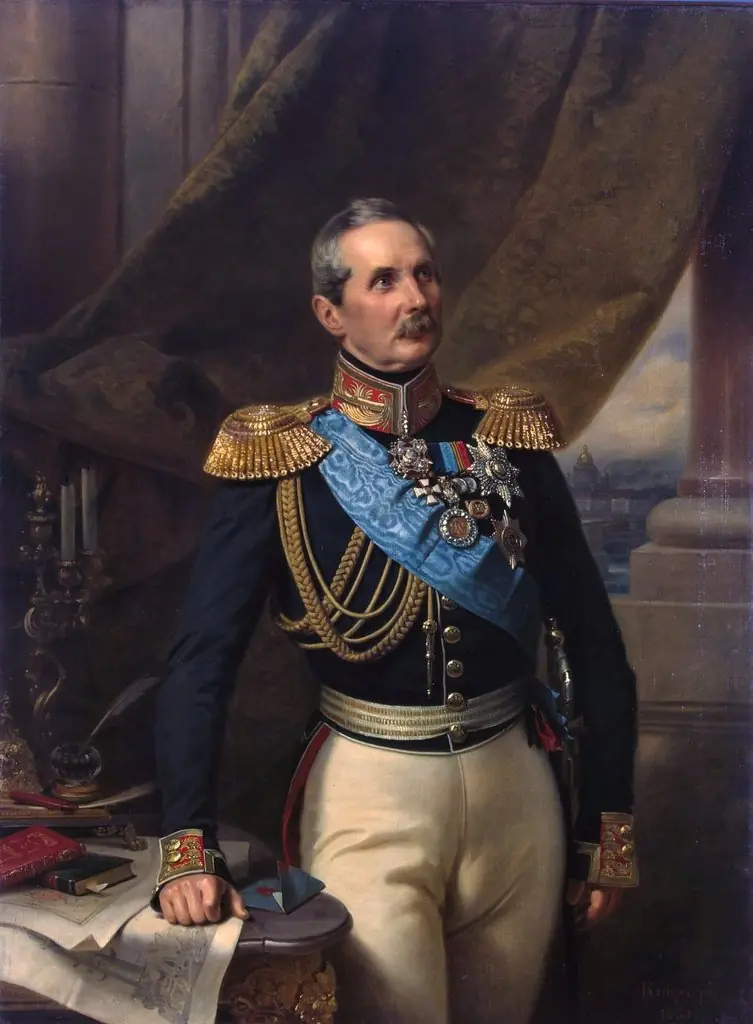
Portrait of Count Alexander Kushelev-Bezborodko is an oil painting by the Biedermeier artist Franz Krüger. It dates from 1850 and is held in the collection of the Hermitage Museum.
About this work
Overview
Franz Krüger, a Prussian artist celebrated for his portraiture and equestrian scenes, executed this oil painting circa 1850.
Franz Krüger, a Prussian artist celebrated for his portraiture and equestrian scenes, executed this oil painting circa 1850. Active in Berlin, he became a favored painter among the aristocracy, blending meticulous detail with a restrained elegance. The work exemplifies the Biedermeier movement, which privileged clarity and directness in representation. It remains part of the State Hermitage Museum’s holdings.
Subject & Meaning
The portrait depicts Count Alexander Kushelev-Bezborodko, a Russian nobleman, seated in a formal pose. His attire—a black jacket, white shirt, and blue sash—signals his rank, while the red neck ribbon and gold insignia denote honors or membership in an order. The paper in his hand may suggest intellectual or administrative roles. The composition conveys authority and refinement, reinforcing the subject’s social standing.
Technique & Style
Krüger’s approach combines precise draftsmanship with a subdued palette, characteristic of Biedermeier aesthetics. The dark background and controlled lighting focus attention on the sitter’s features and regalia, while the red chair and accents introduce warmth. Brushwork remains smooth, prioritizing legibility over expressive flourishes. The result is a polished likeness that balances realism with decorative restraint.
History & Provenance
Commissioned around 1850, the portrait entered the collection of the State Hermitage Museum, where it has been preserved. Its early history remains tied to the sitter’s family or patrons, though specific details of its acquisition are unrecorded. Krüger’s reputation among European elites suggests the work may have been intended for private display before joining a public institution.
Context
The painting reflects the cultural milieu of mid-19th-century Berlin, where Krüger catered to a clientele valuing lifelike yet flattering portrayals. The Biedermeier movement, dominant in Central Europe, responded to political conservatism with domestic and intimate themes. Portraits like this served both personal commemoration and public affirmation of status, aligning with the era’s emphasis on order and decorum.
Artist & collection
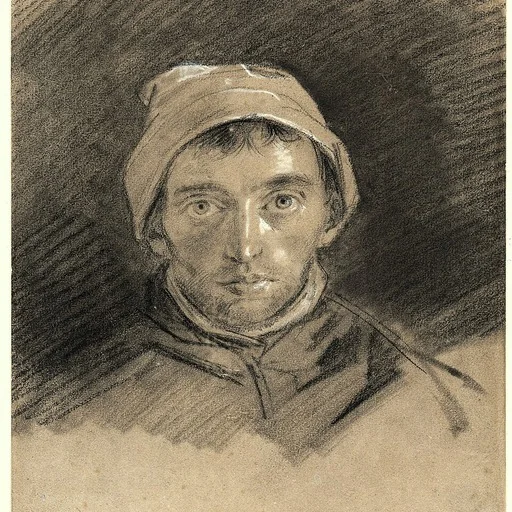
Artist
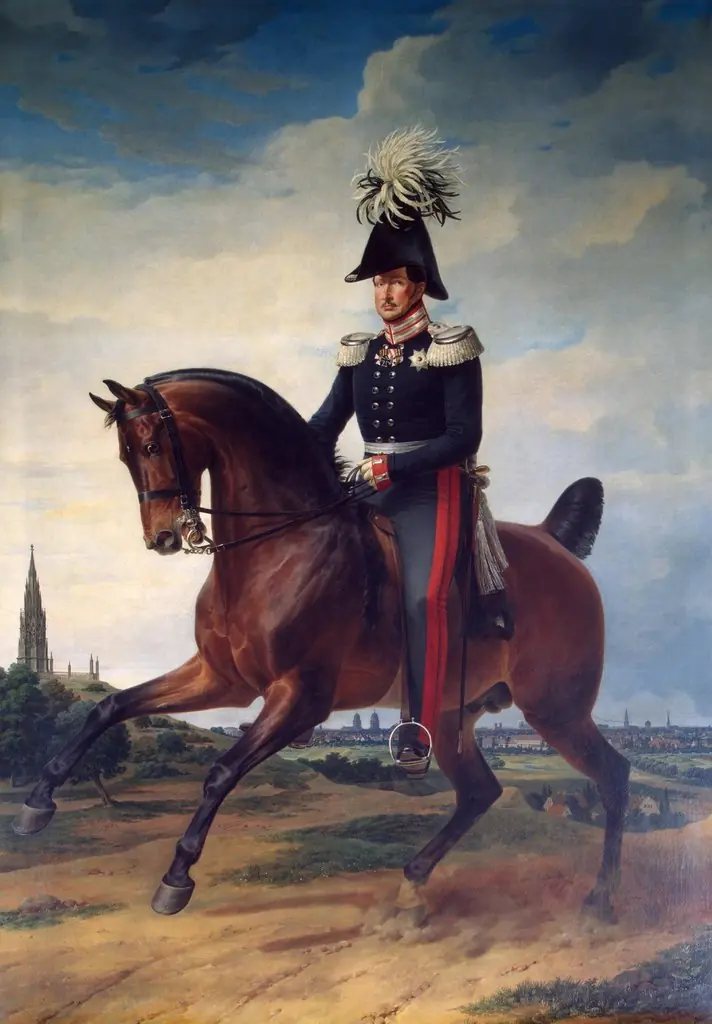
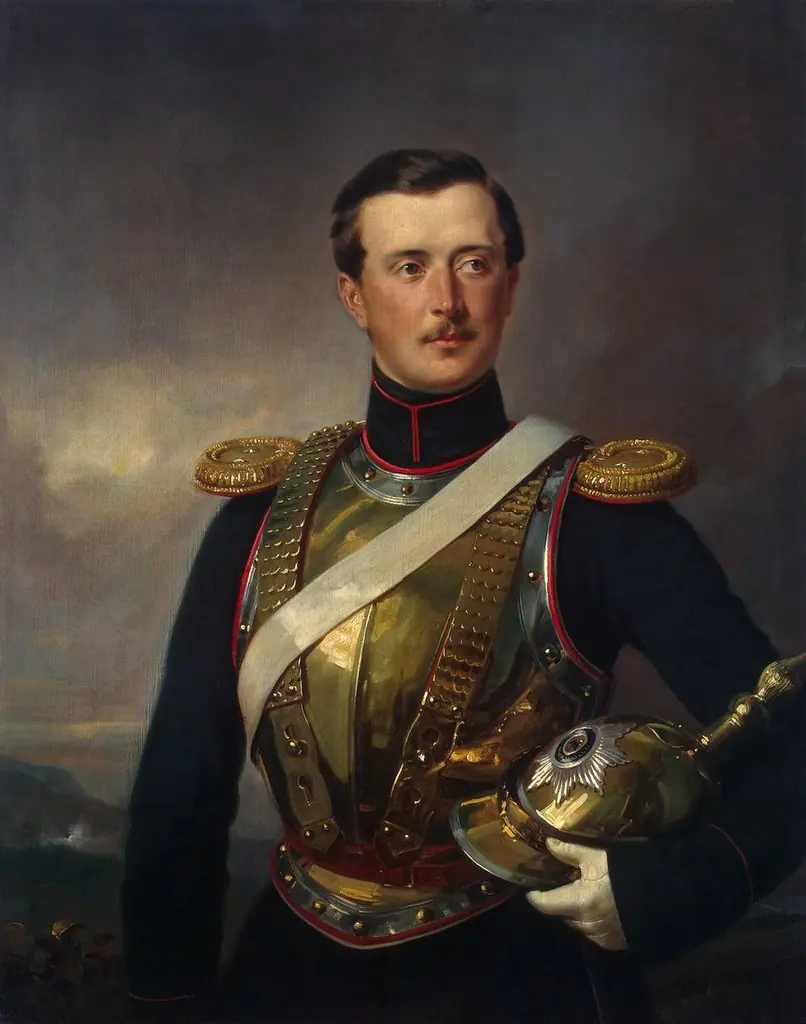
Franz Krüger (10 September 1797, in Großbadegast, Köthen, Anhalt – 21 January 1857, in Berlin), known as Pferde-Krüger ("Horse-Krüger"), was a German (Prussian) painter and lithographer.

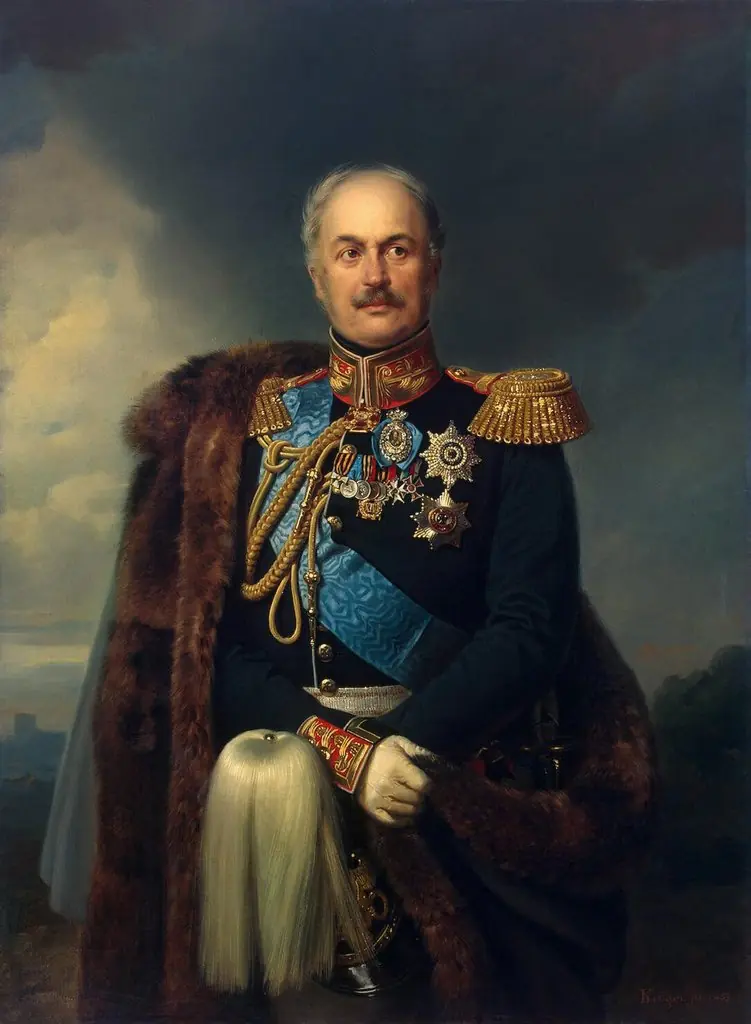
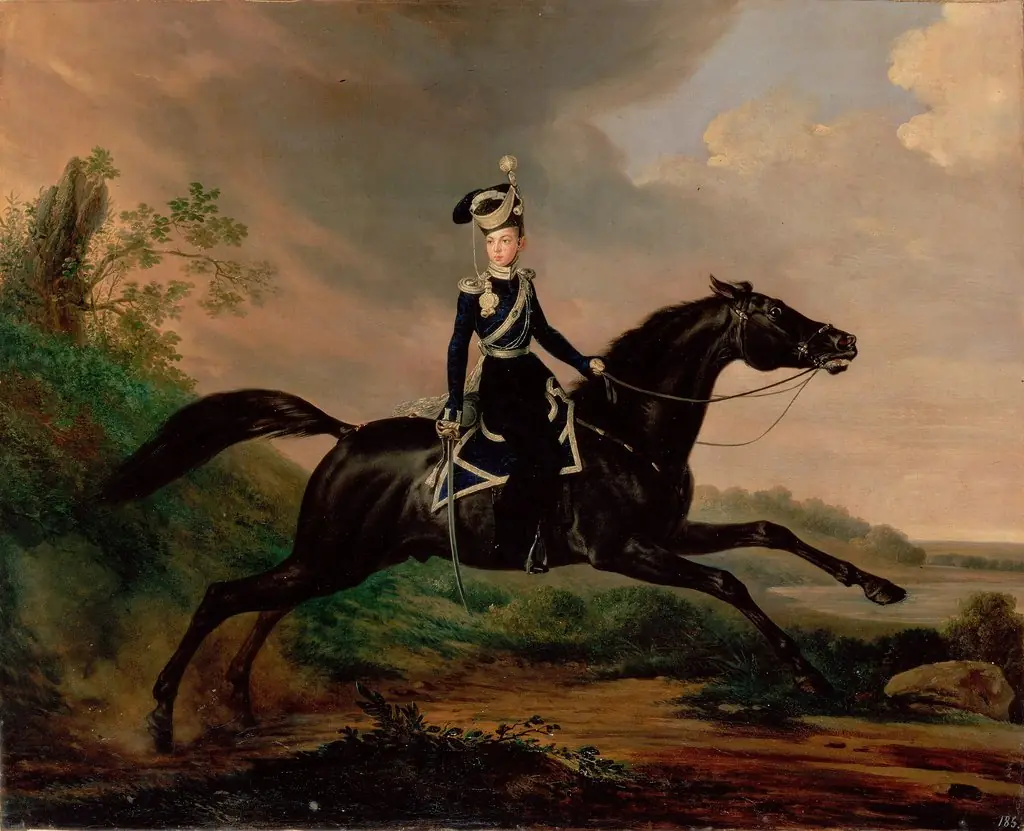
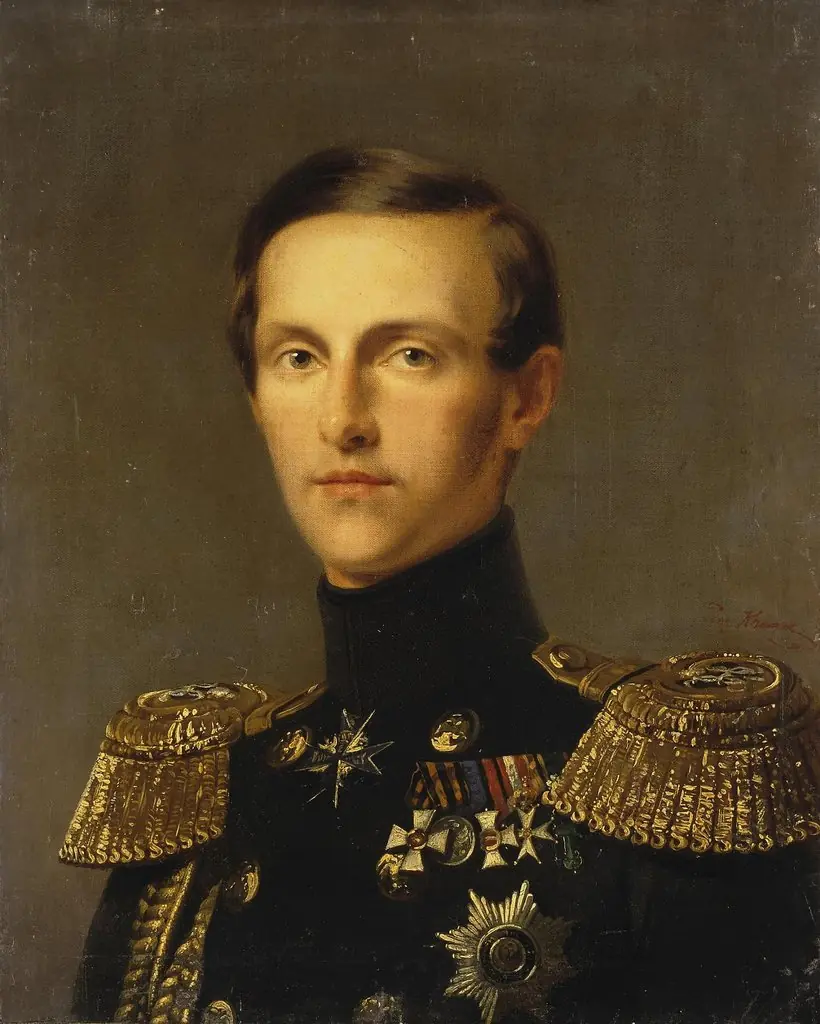
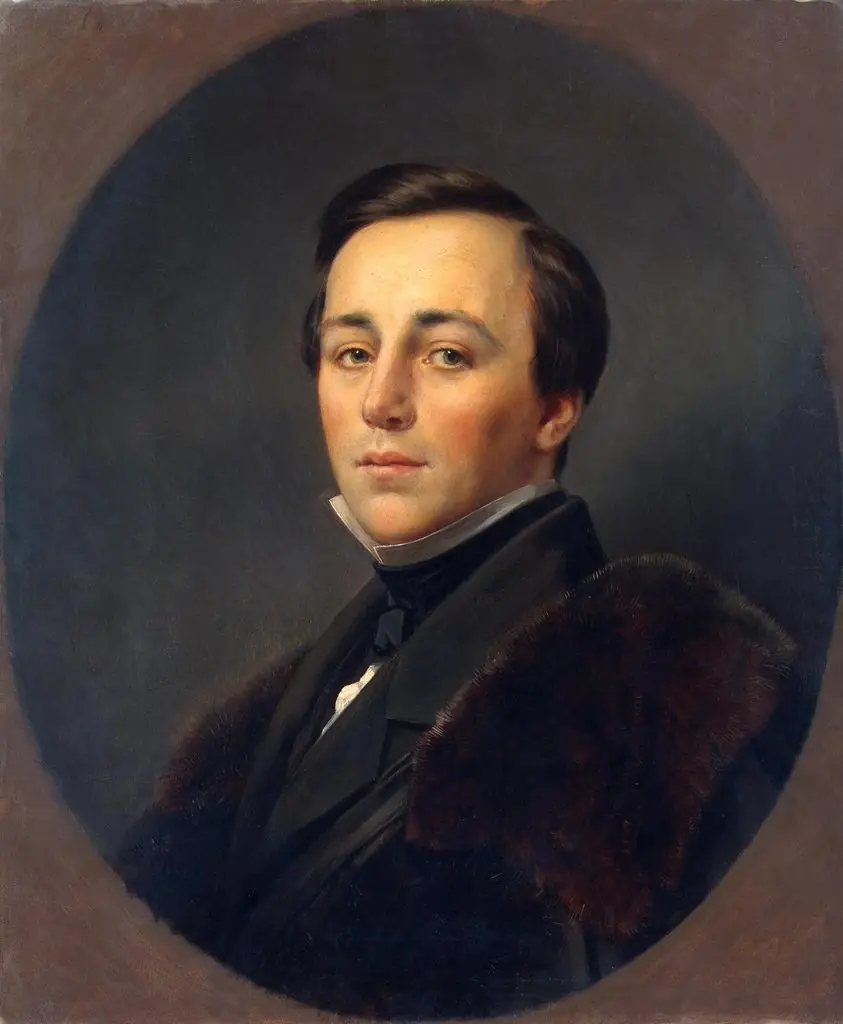
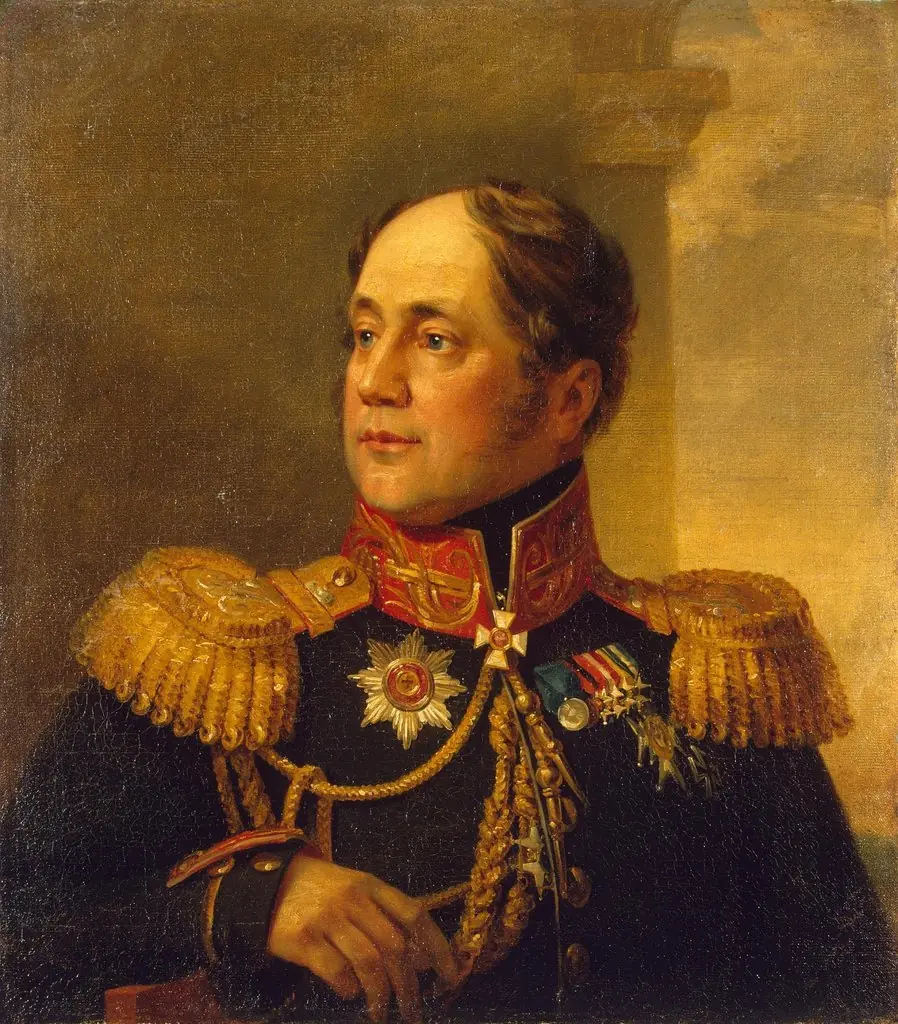 Portrait of Nikolai M. Sipyagin (1785-1828)
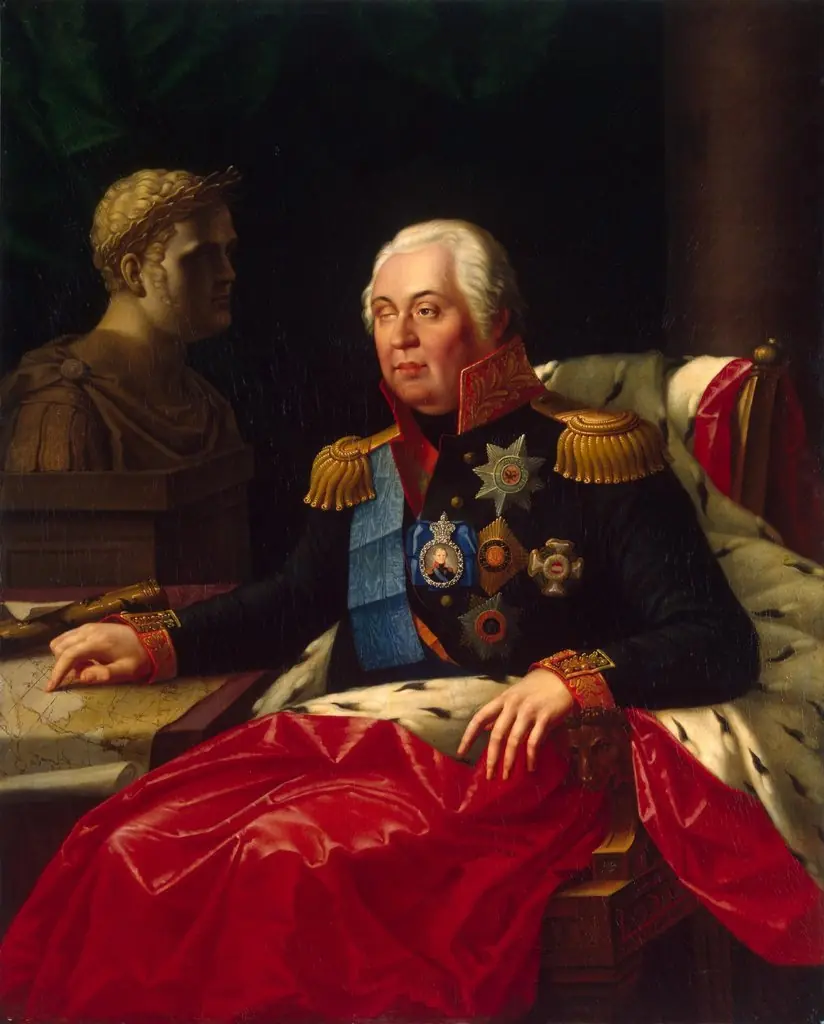 Portrait of Mikhail Kutuzov (Golenishchev-Kutuzov, Prince of Smolensk)
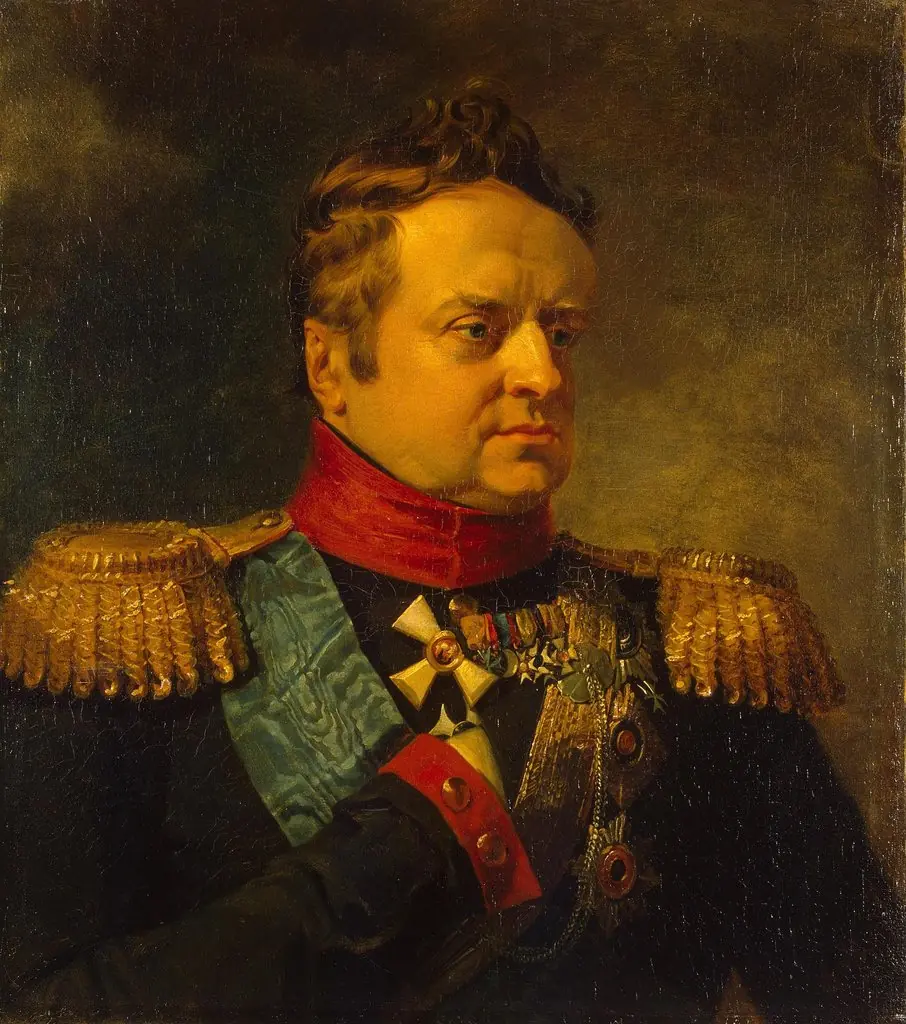 Portrait of Alexander, Prince of Wurttemberg (1771-1833)
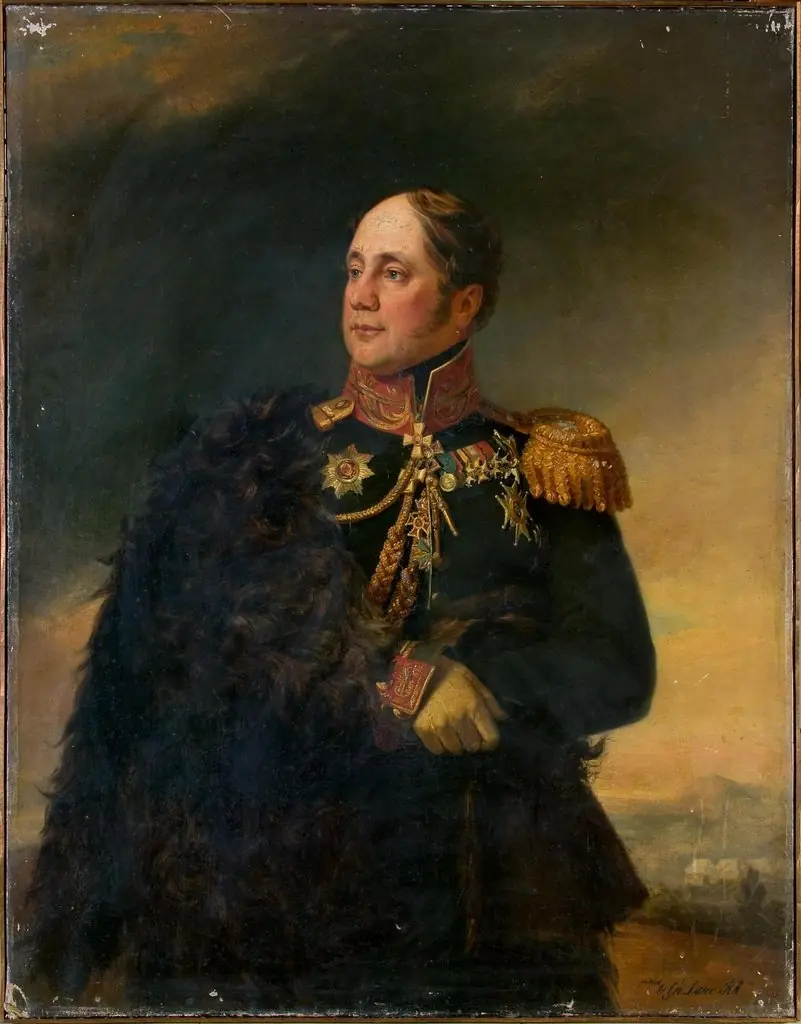 Portrait of Nikolai Sipyagin (1785-1828)
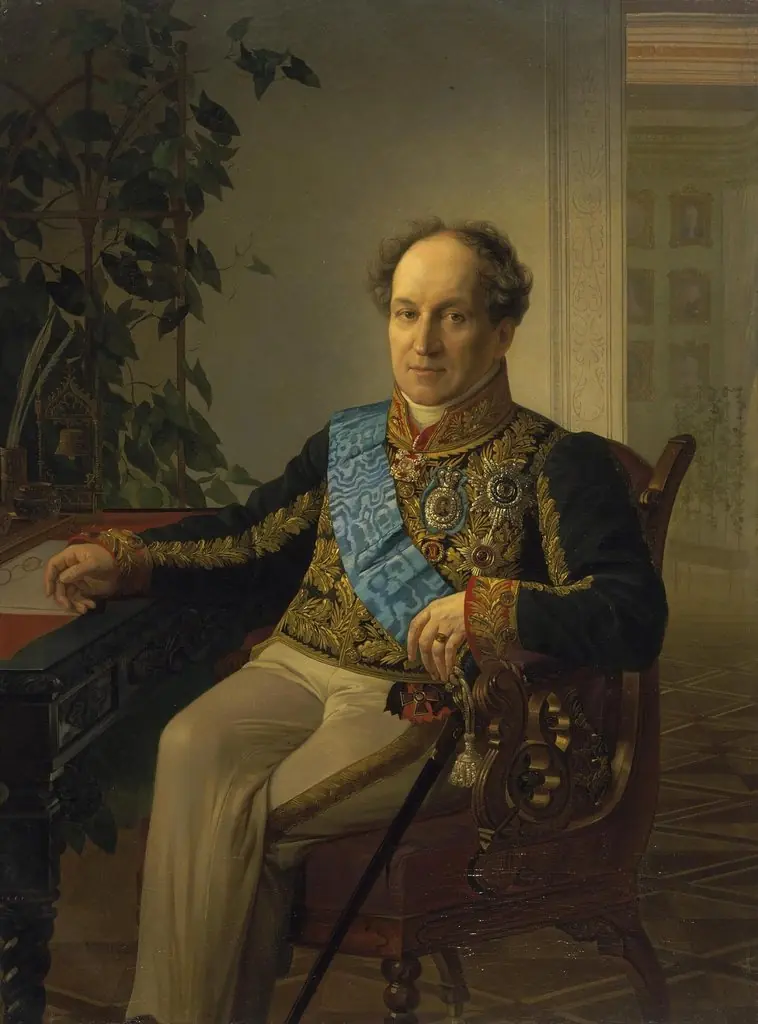 "Portrait of Prince A.N. Golitsyn" ( the fragmented copy of the portrait by K.P. Bryullov)
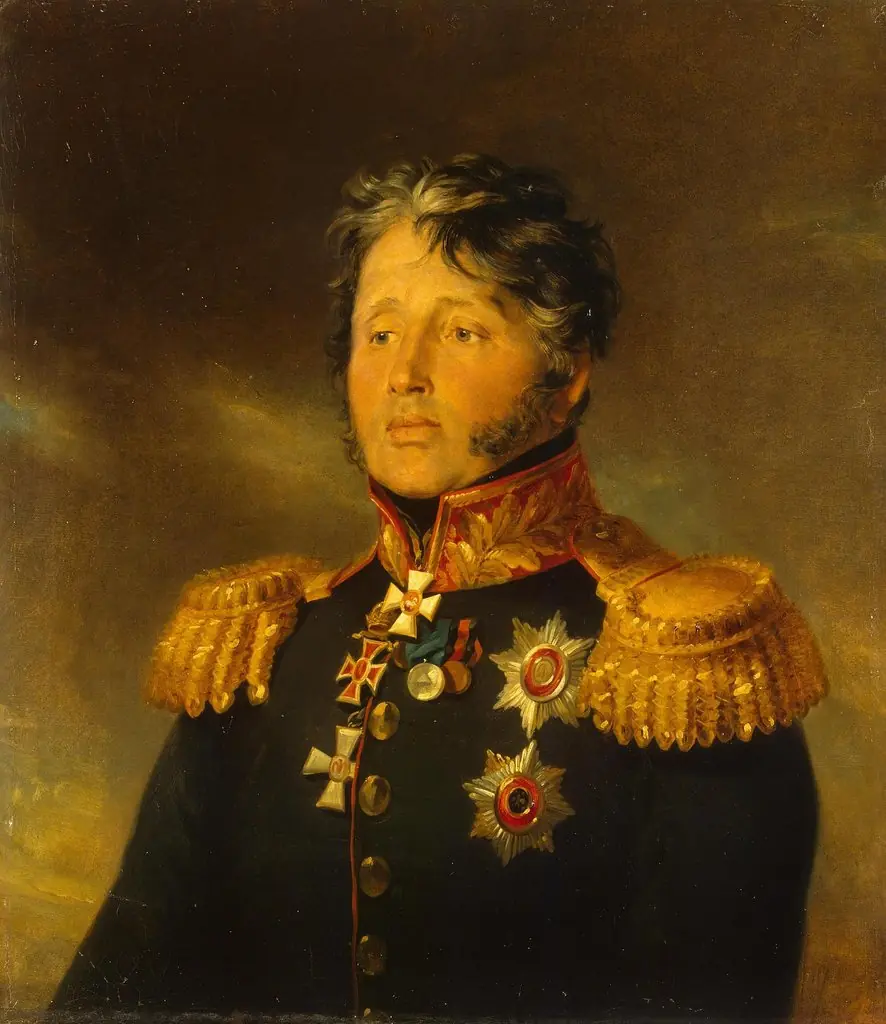 Portrait of Ivan V. Sabaneyev (1770/72-1829)
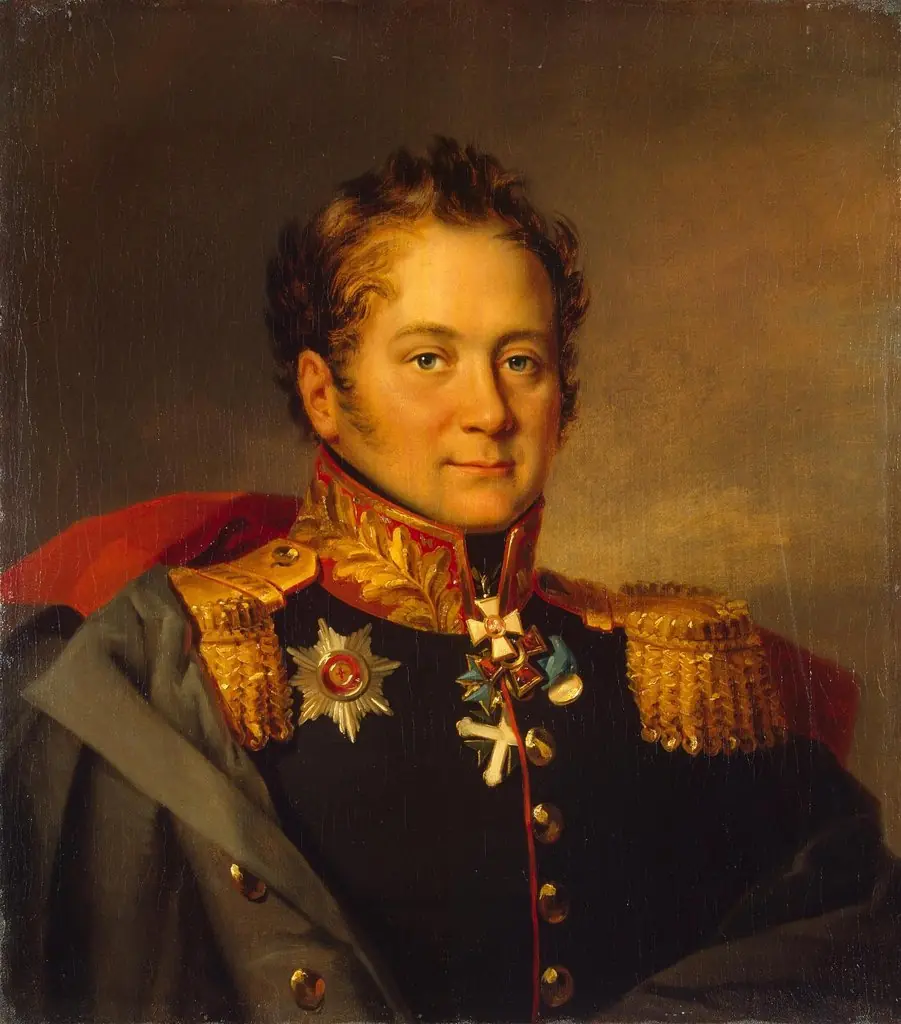 Portrait of Alexander A. Pisarev (1780-1848)
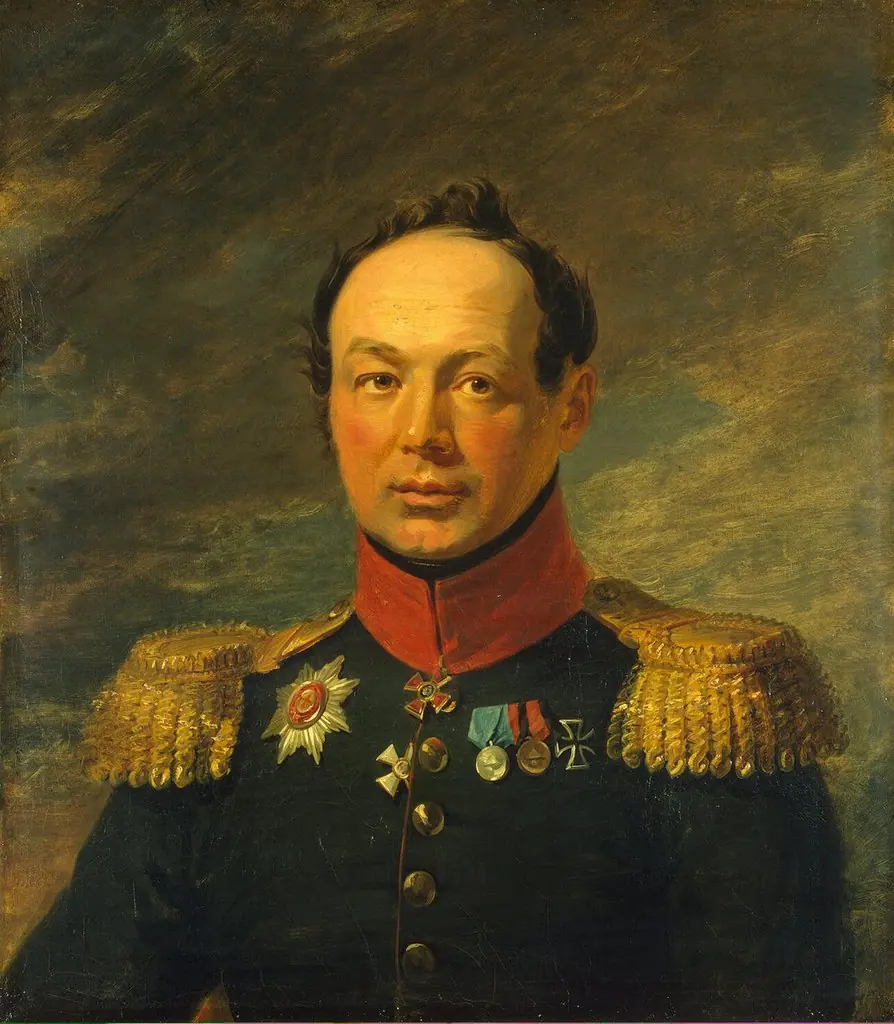 Portrait of Ivan A. Nabokov (1787-1852)