Artwork
Portrait of Count Piotr Wittgenstein
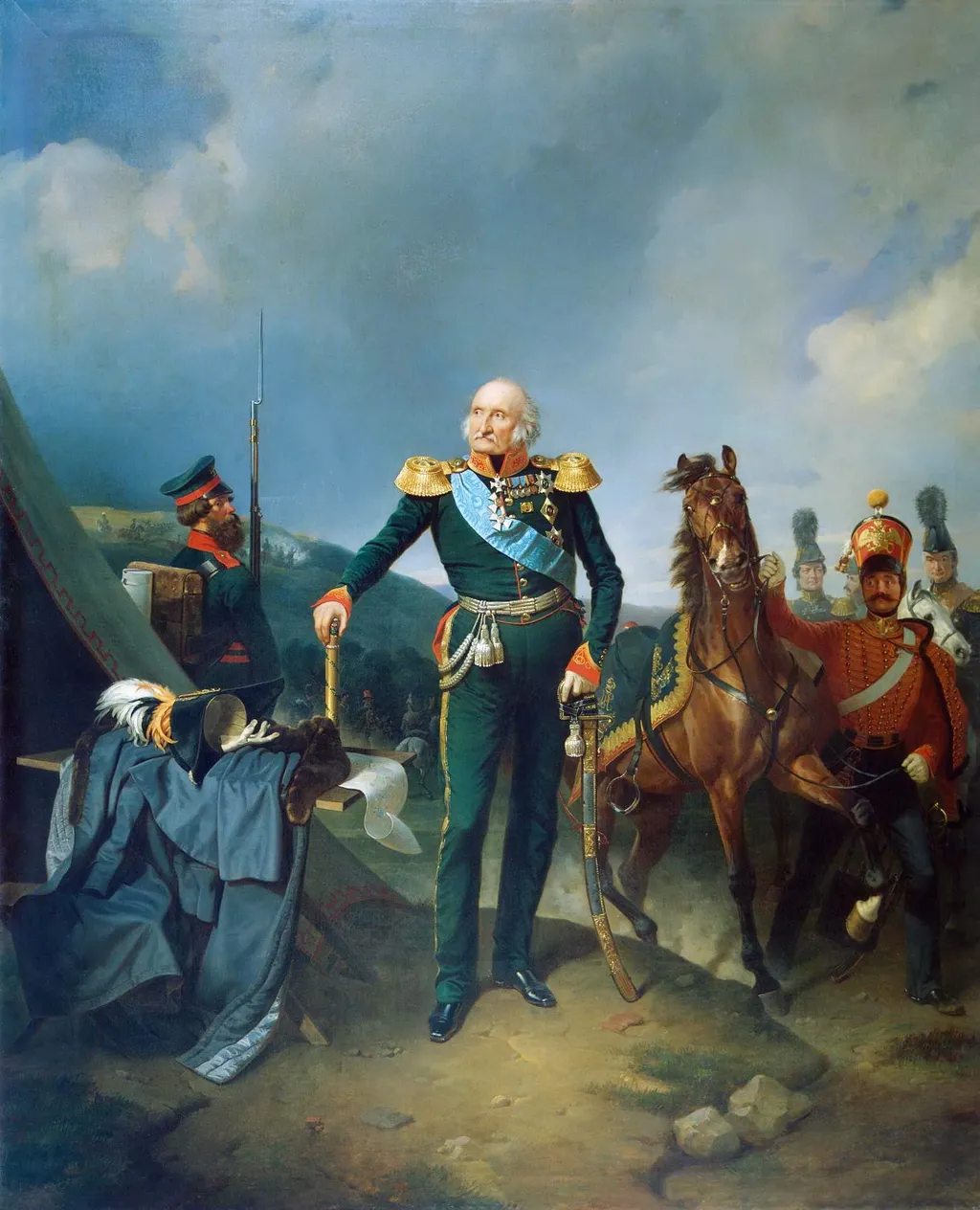
Portrait of Count Piotr Wittgenstein is an oil painting by the Biedermeier artist Franz Krüger. It dates from 1842 and is held in the collection of the Hermitage Museum.
About this work
Overview
Painted in 1842 by the Prussian artist Franz Krüger, this oil portrait depicts Count Piotr Wittgenstein, a Russian noble and military figure.
Painted in 1842 by the Prussian artist Franz Krüger, this oil portrait depicts Count Piotr Wittgenstein, a Russian noble and military figure. Executed in the Biedermeier style, the work reflects the period’s emphasis on quiet dignity and precise detail. Krüger, known for his skill in rendering both human subjects and horses, was a favored portraitist among Prussian elites and military officers in Berlin during the early 19th century.
Subject & Meaning
The portrait presents Count Wittgenstein in full military regalia, standing on a rugged hillside with a baton in hand, signaling authority. His uniform, adorned with numerous medals and gold embroidery, underscores his high rank and service. Behind him, a group of soldiers in vivid uniforms suggests his command, while a figure in a faded blue coat in the foreground—possibly a servant or orderly—adds a subtle contrast of social status and humility.
Technique & Style
Krüger employed fine brushwork to capture the textures of silk, metal, and wool in the uniform, with meticulous attention to the gleam of medals and the folds of fabric. The sky is rendered in soft, muted tones, balancing the bold colors of the uniforms. The composition directs focus to the count’s poised stance, while the background figures are rendered with less detail, reinforcing his central authority without distracting from it.
History & Provenance
The painting entered the collection of the State Hermitage Museum in Saint Petersburg, where it remains today. Its acquisition likely followed Wittgenstein’s prominence in Russian military circles and Krüger’s reputation as a portraitist of European aristocracy. Though Krüger was based in Berlin, his works were sought after across borders, particularly among those with ties to the Prussian and Russian courts.
Context
Created during the Biedermeier era, the portrait aligns with a broader cultural shift toward domestic and personal dignity over grand historical narratives. Military figures like Wittgenstein were depicted not as mythic heroes but as composed, authoritative individuals within their social roles. Krüger’s approach reflected this trend, favoring realism and restrained elegance over theatricality.
Legacy
While Krüger is often remembered for his equine paintings, this portrait illustrates his versatility in capturing the nuance of rank and presence. It stands as a representative example of 19th-century military portraiture in Central and Eastern Europe, preserving the visual language of aristocratic service during a time of political consolidation and military reform.
Own this work as a print
Artist & collection
Artist
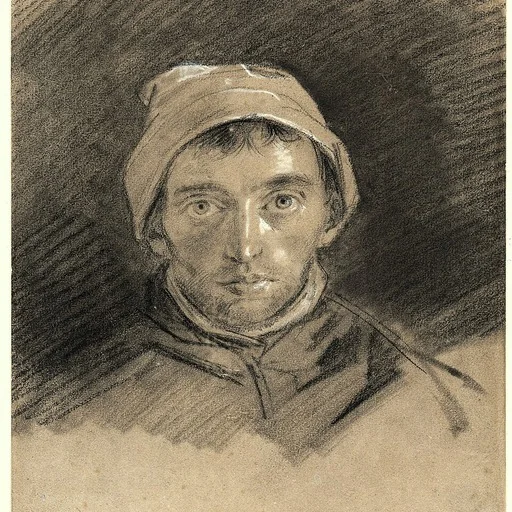
Franz Krüger (10 September 1797, in Großbadegast, Köthen, Anhalt – 21 January 1857, in Berlin), known as Pferde-Krüger ("Horse-Krüger"), was a German (Prussian) painter and lithographer.

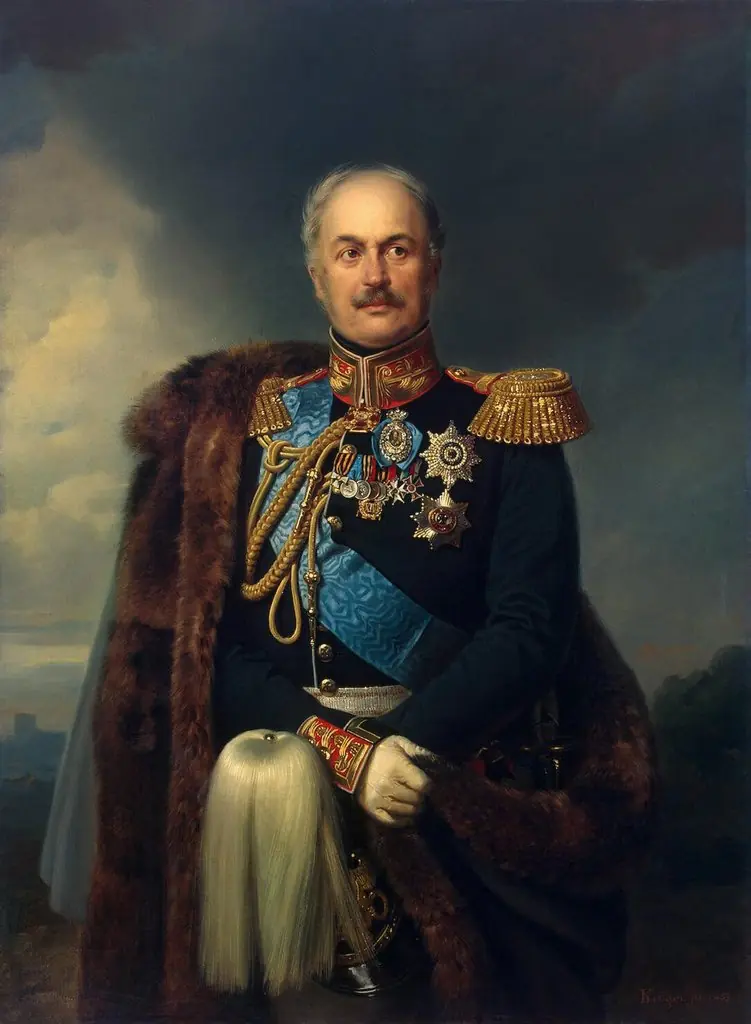 Portrait of Pavel Kiselyov
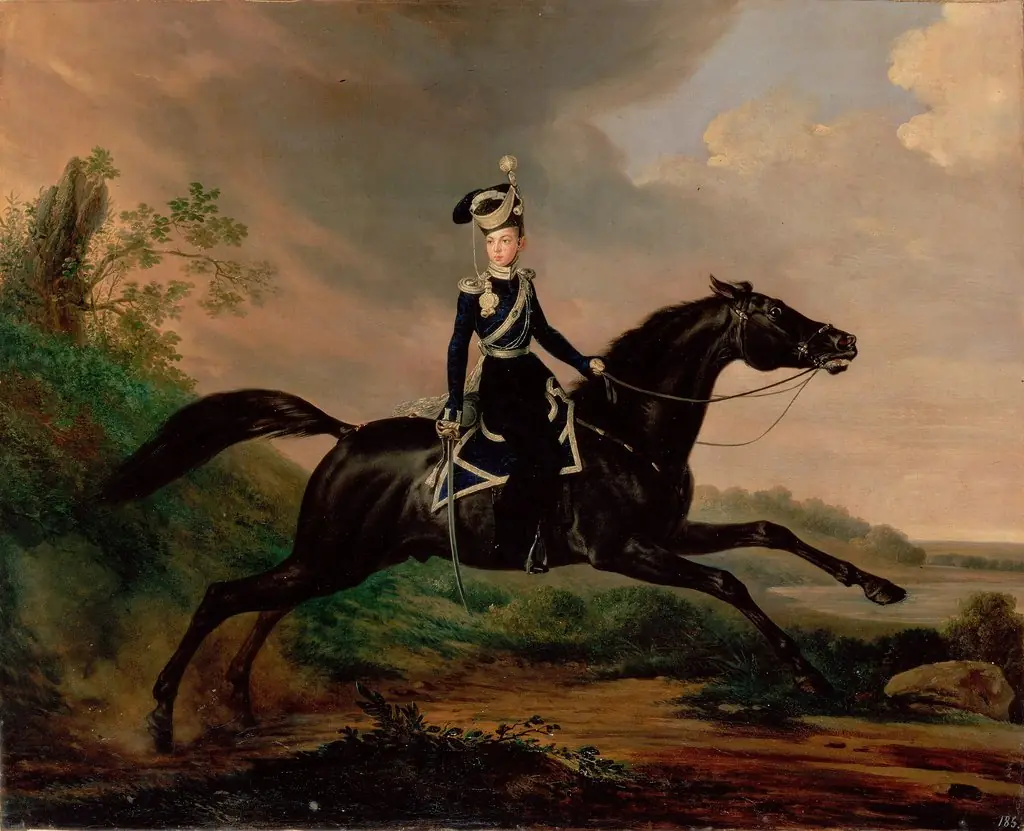 Equestrian Portrait of Grand Prince Alexander Nikolayevich
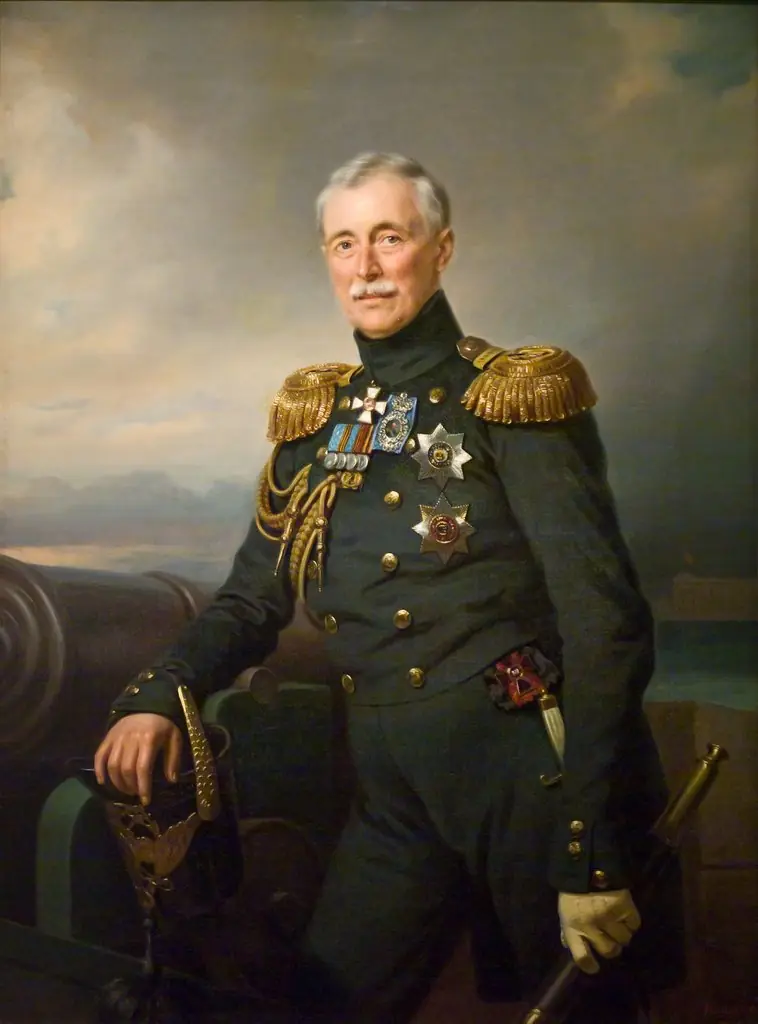 Portrait of Alexander Menshikov
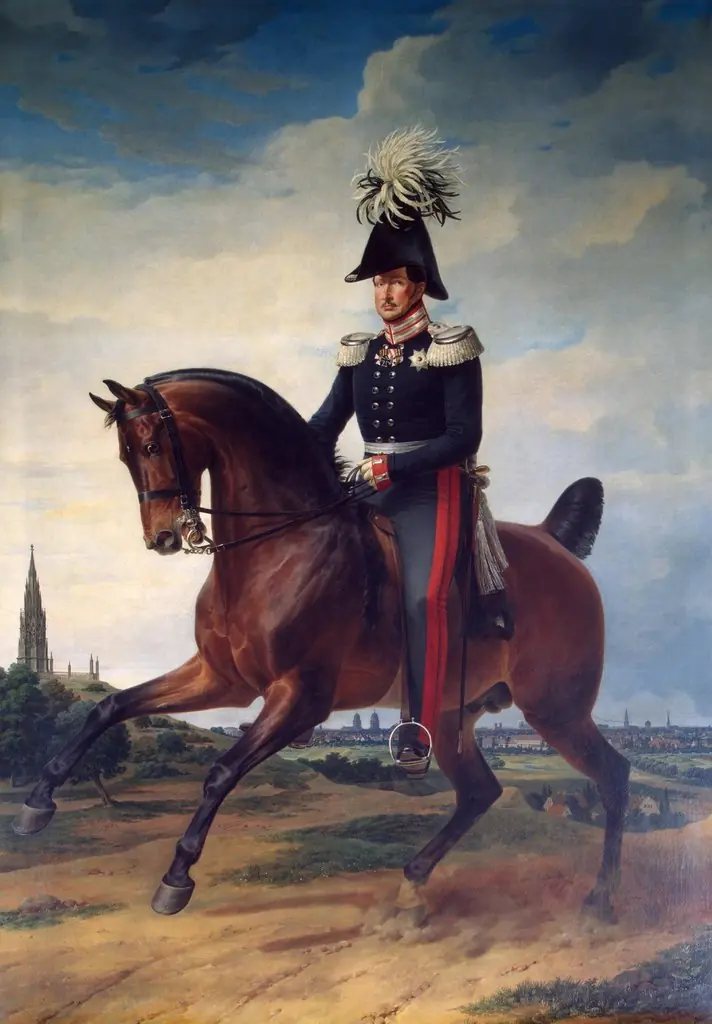 Equestrian Portrait of Frederick William III
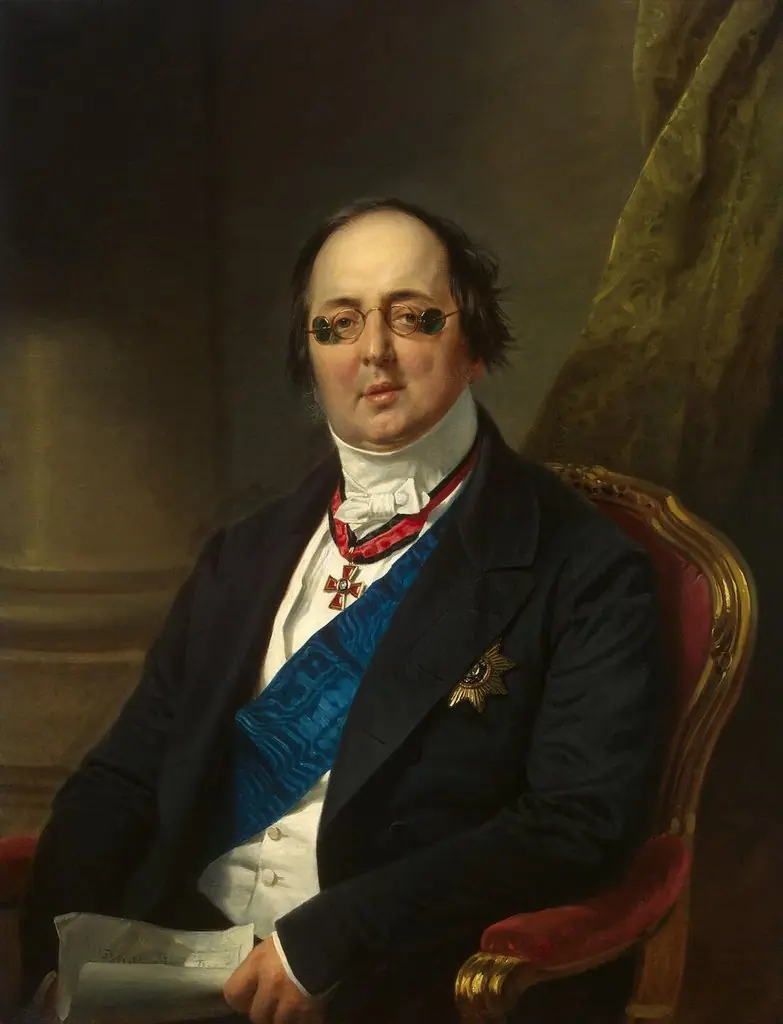 Portrait of Count Alexander Kushelev-Bezborodko
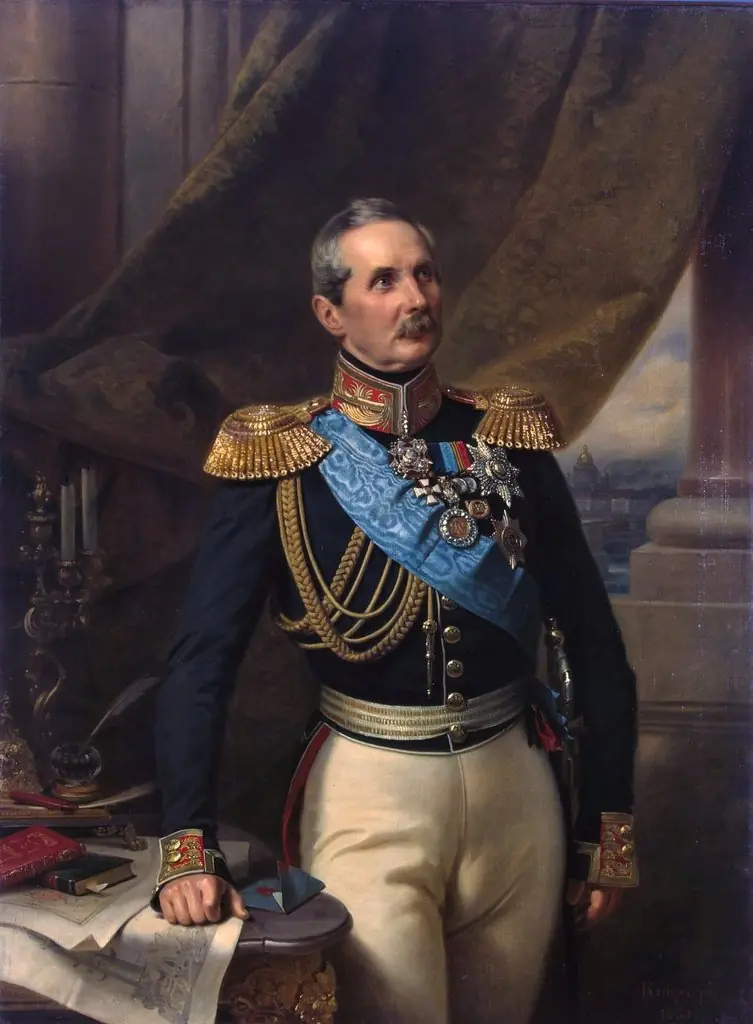 Portrait of Pyotr Kleinmichel
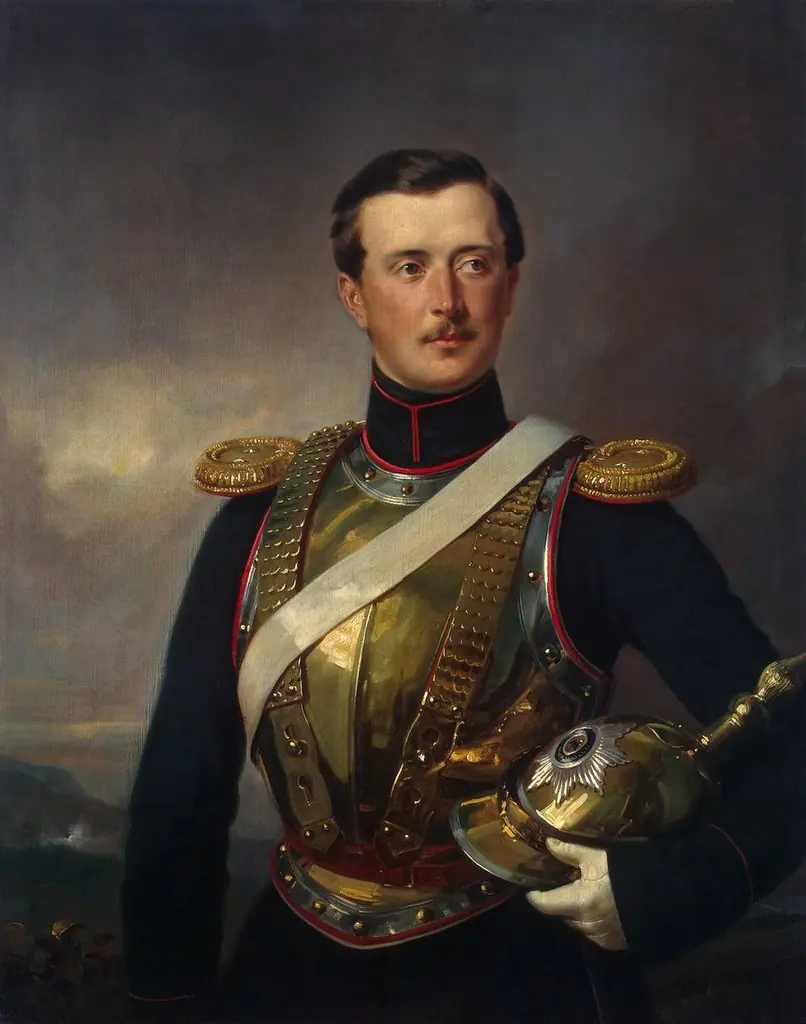 Portrait of Count Pyotr Shuvalov
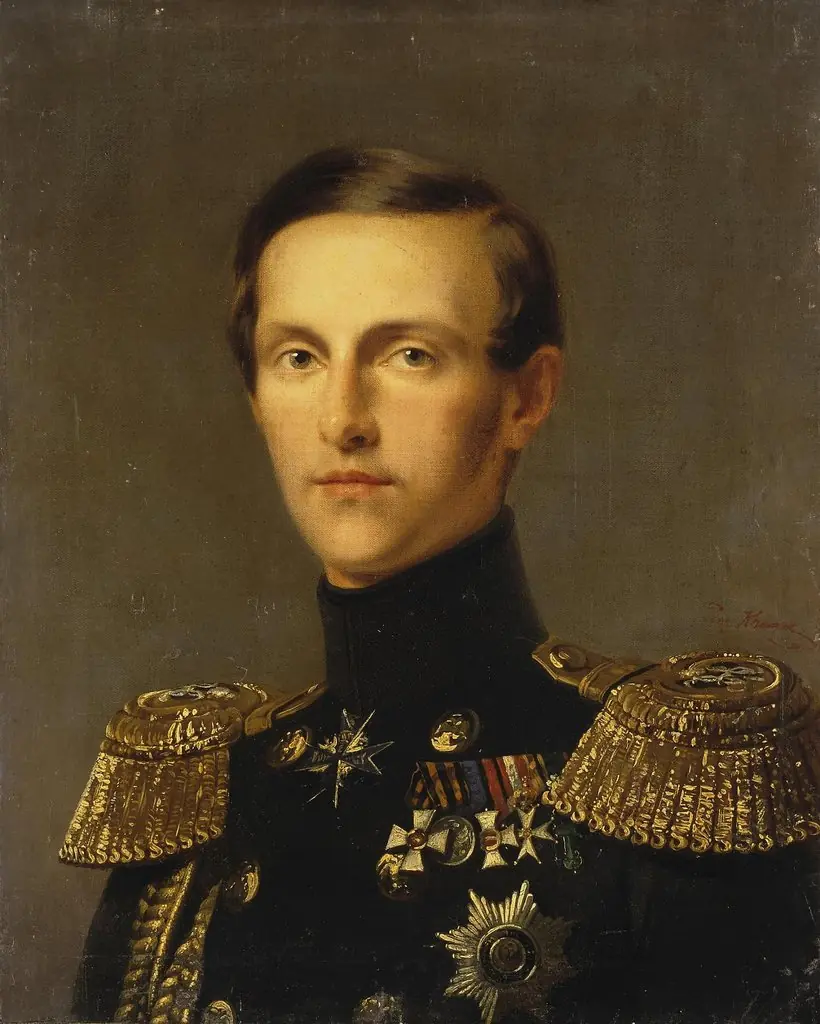 Portrait of Grand Duke Konstantin Nikolayevich
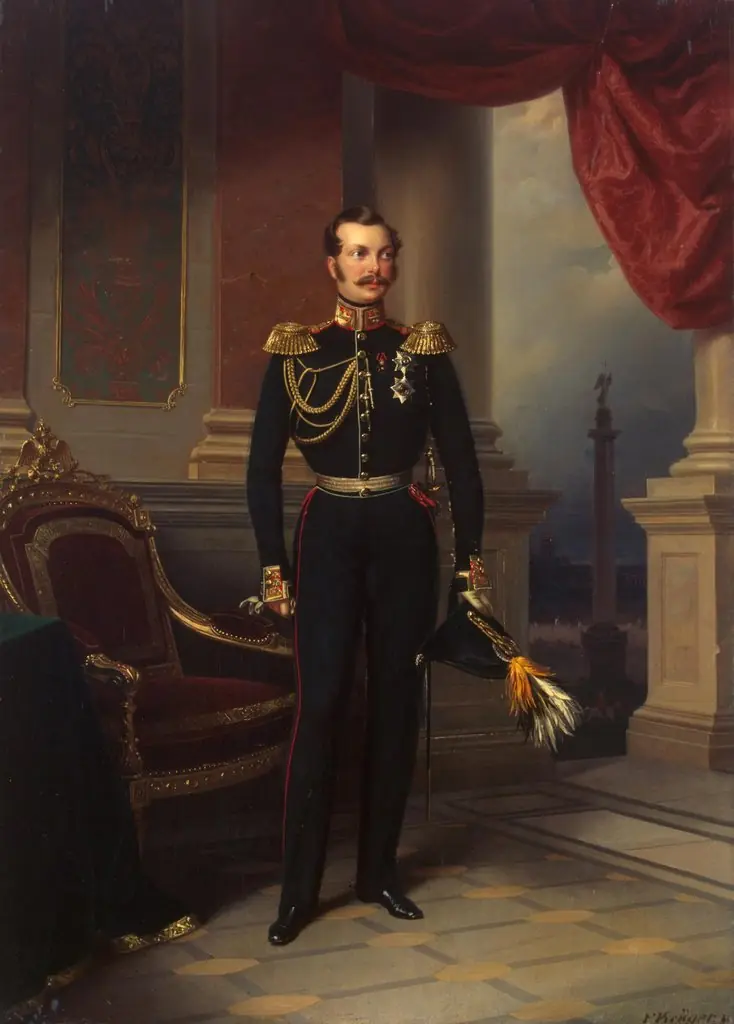 Portrait of Grand Prince Alexander Nikolayevich
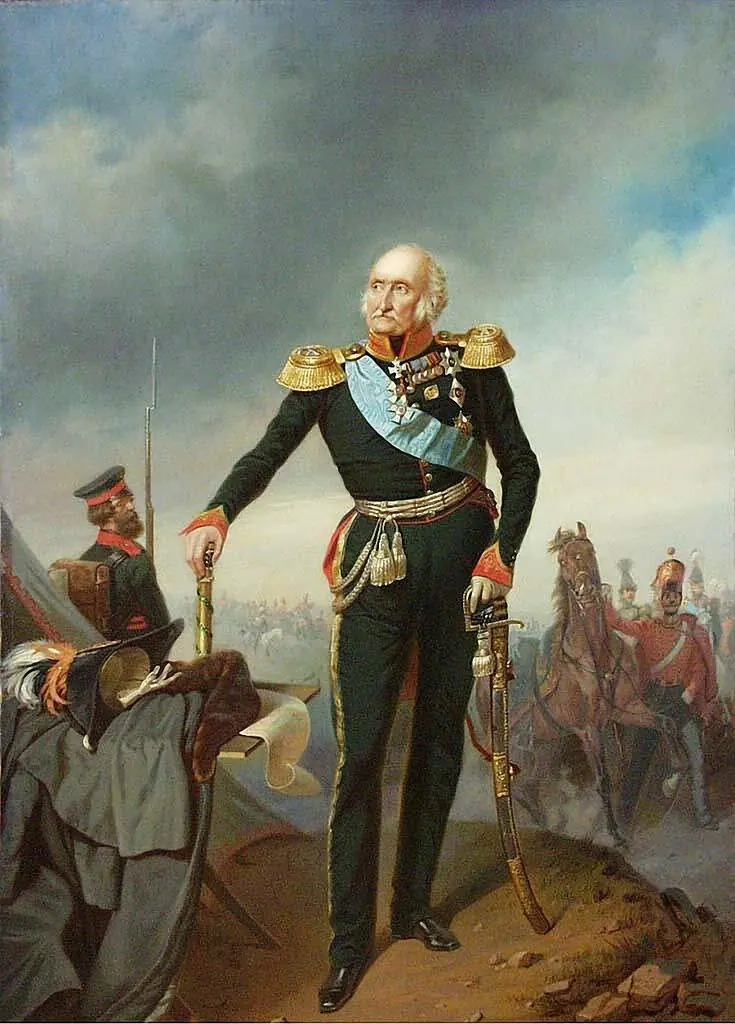 Portrait of Field-Marshal Prince P.H. Wittenstein
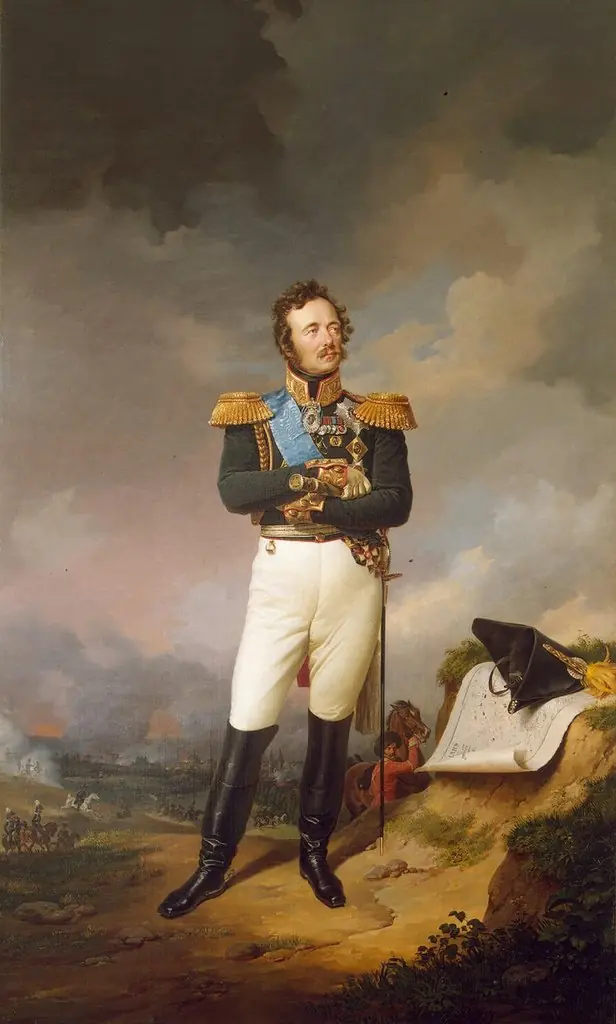 Portrait of Ivan Paskevich
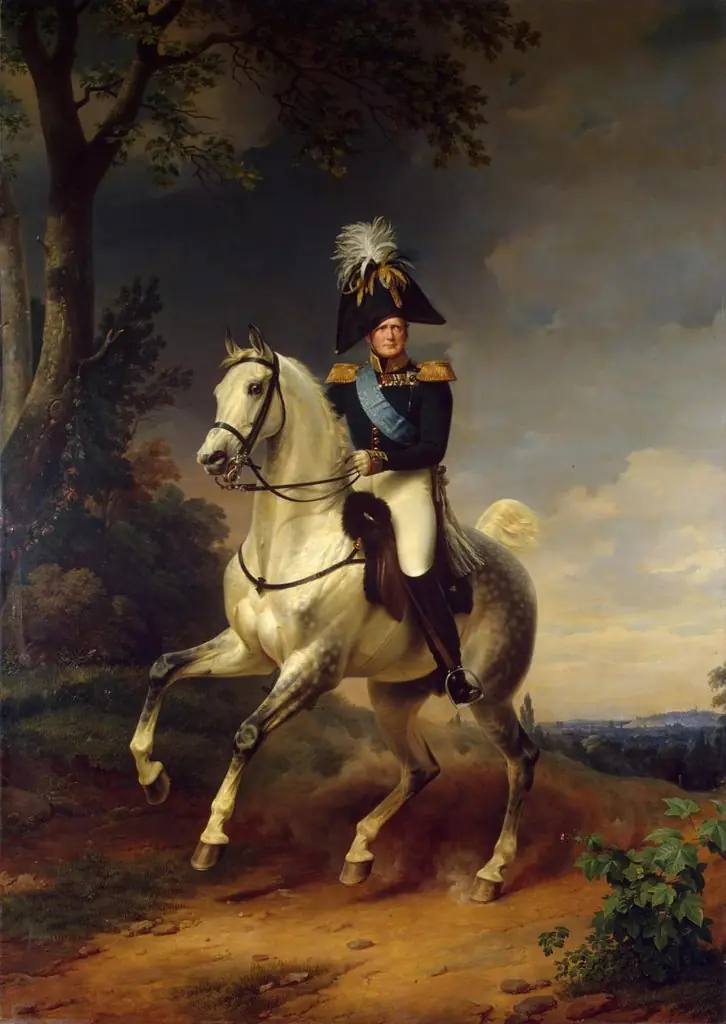 Equestrian Portrait of Alexander I (1777–1825)
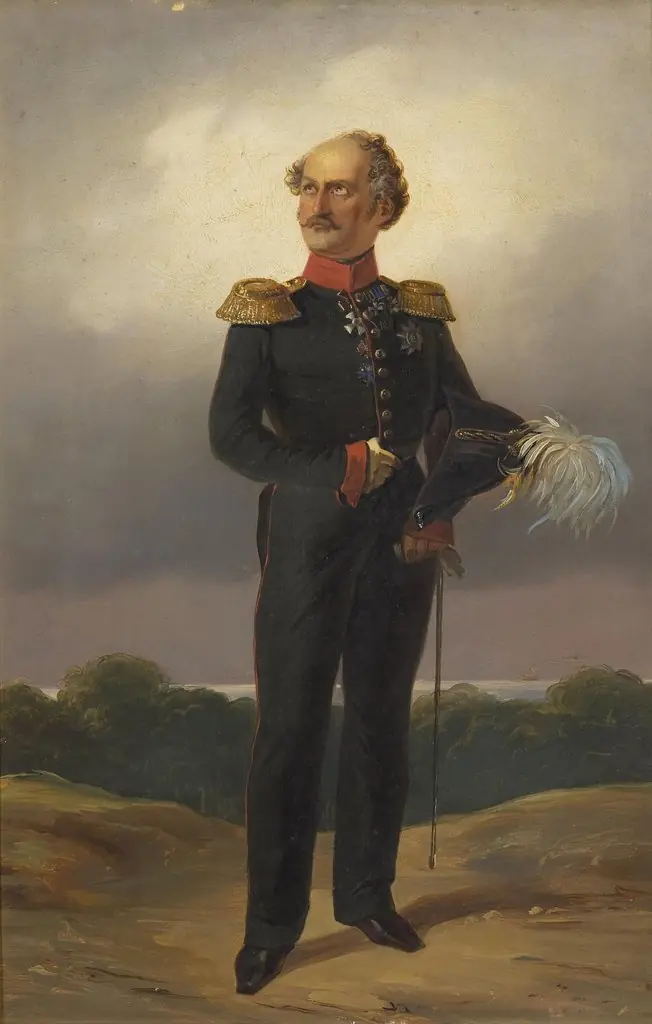 Portrait of a General
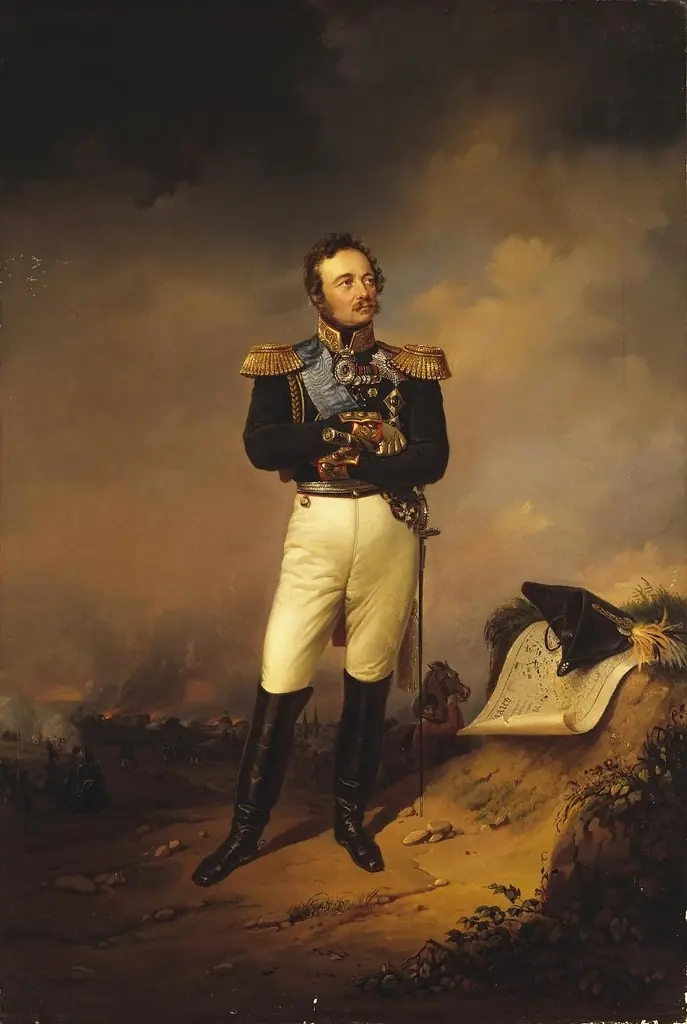 Portrait of Count Ivan Paskevich
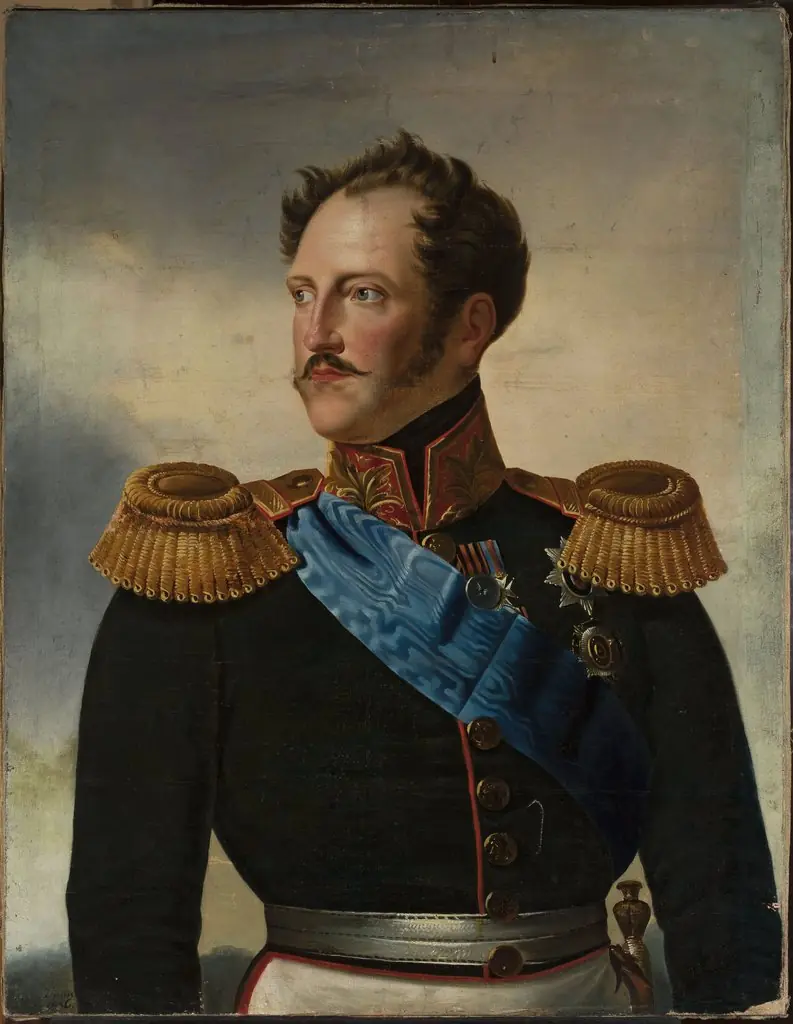 Portrait of Tsar Nicholas I
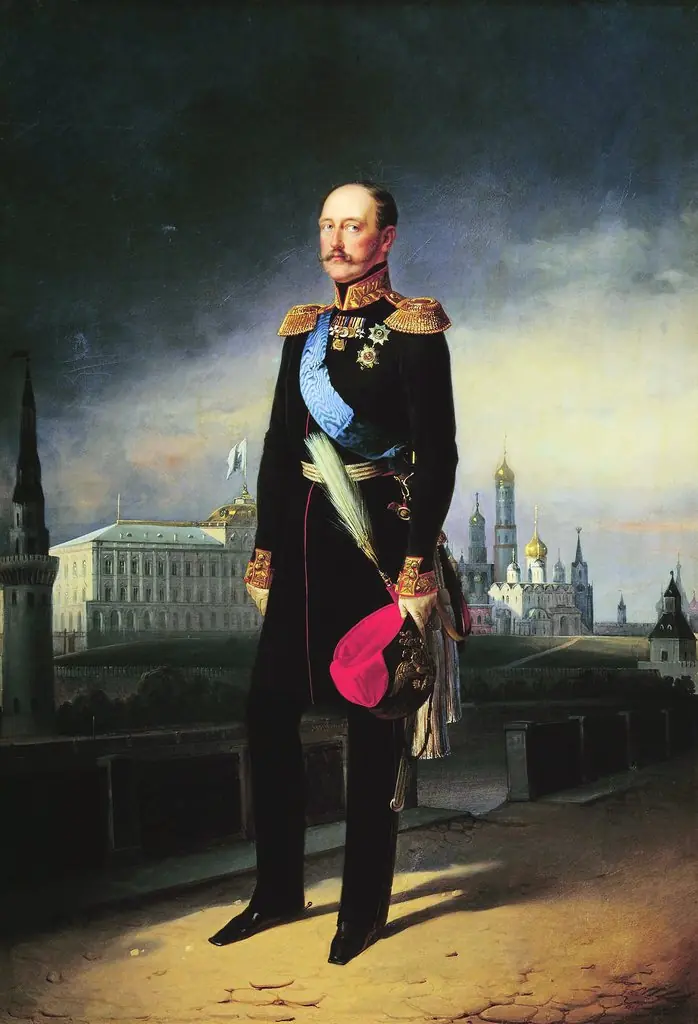 Portrait of Emperor Nicholas I
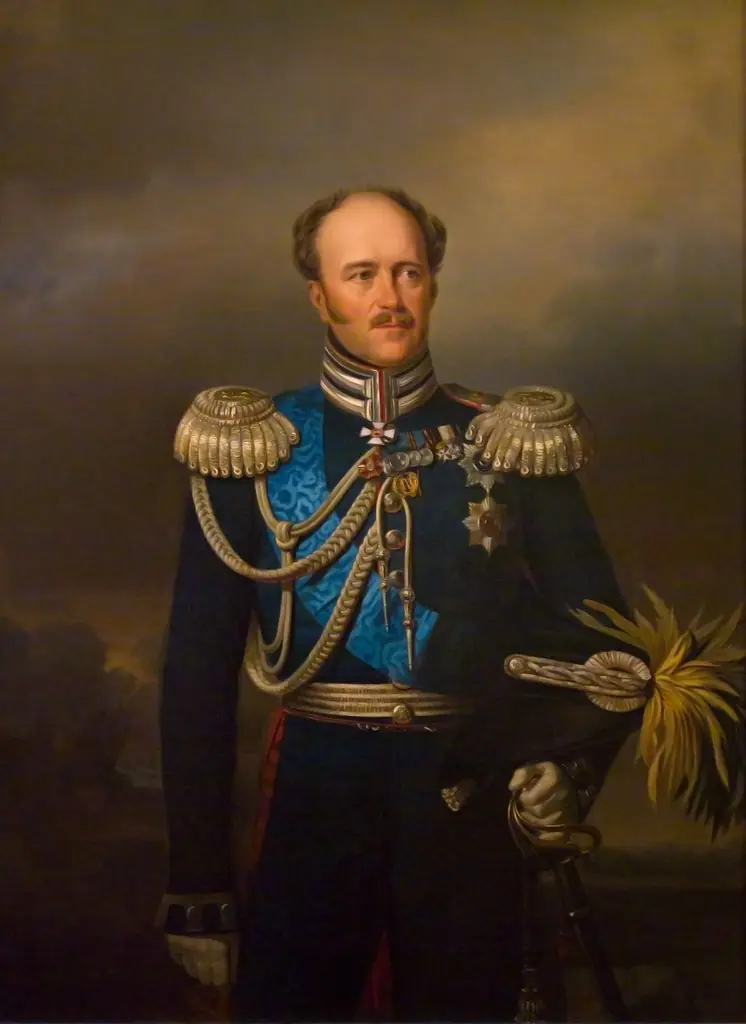 "Portrait of Count Alexander Benkendorff" (copy)
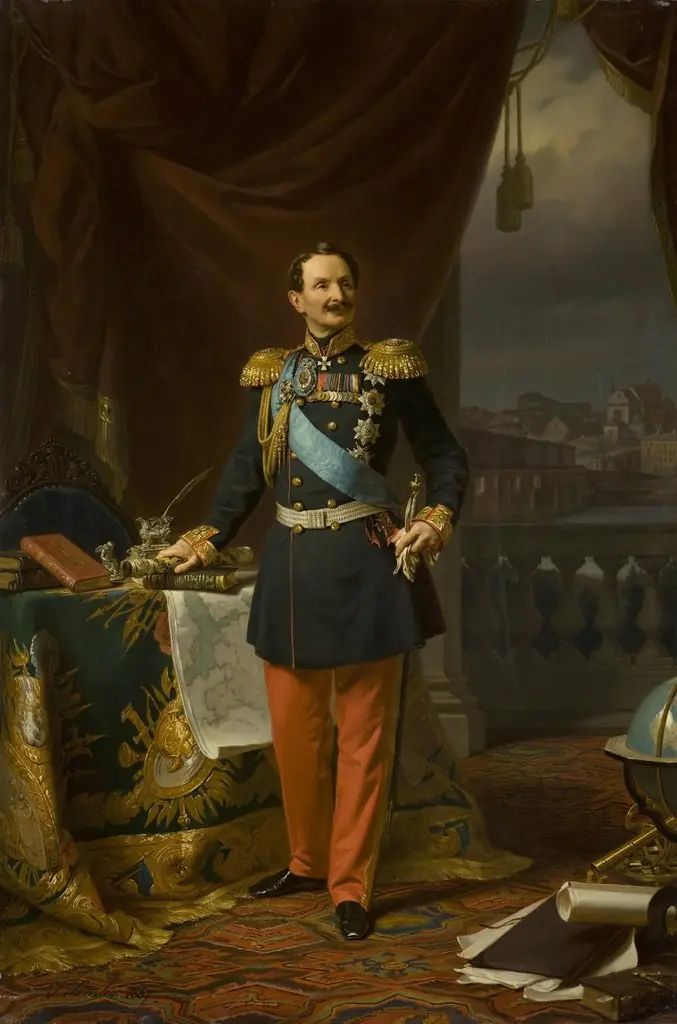 Portrait of Field-Marshal Count Fiodor (Friedrich Wilhelm) Berg