Artwork
The Personifications of the Arts and Sciences Pay Tribute to Carl Theodor von der Pfalz
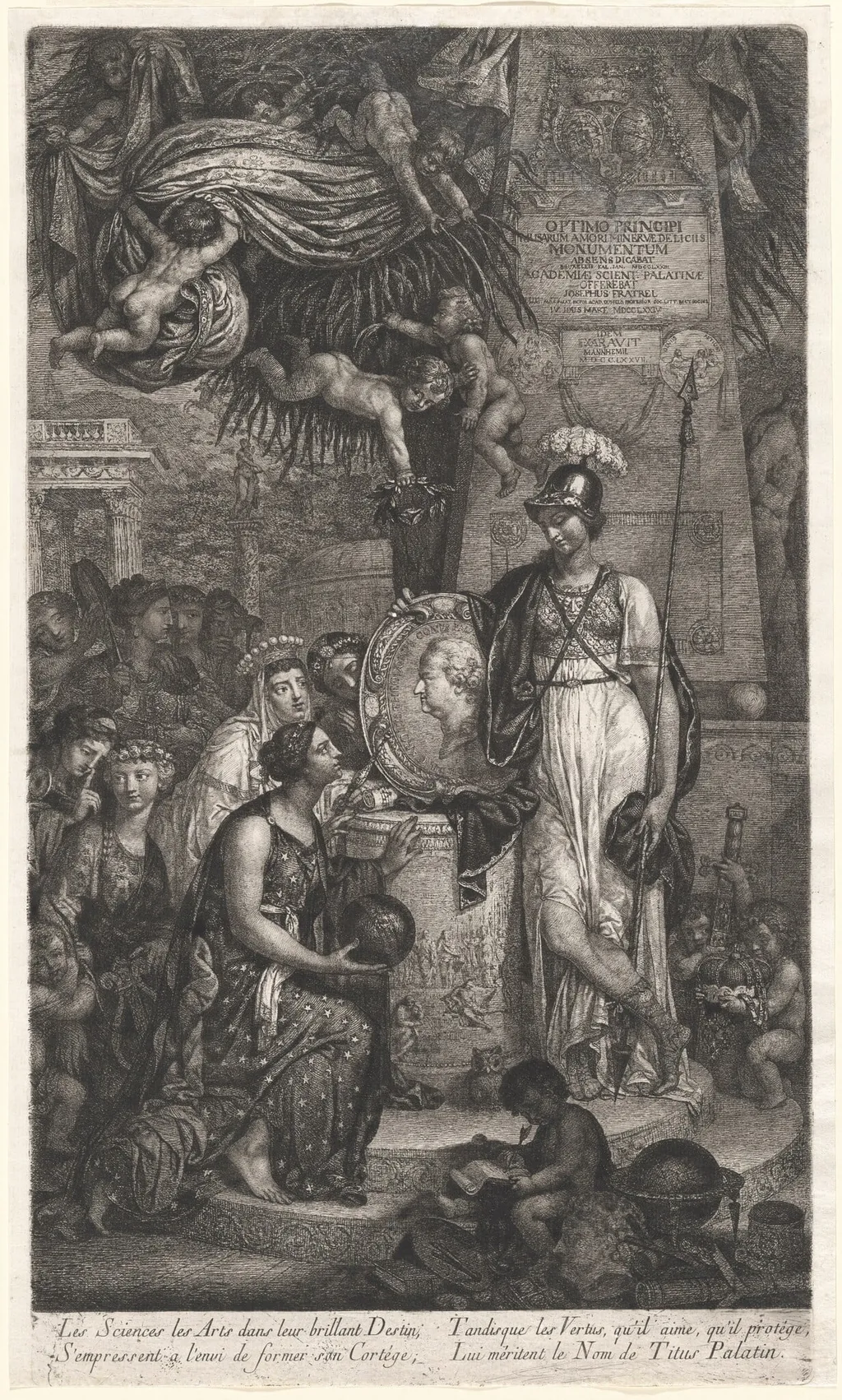
The Personifications of the Arts and Sciences Pay Tribute to Carl Theodor von der Pfalz is an ink print by the Romanticist artist Joseph Fratrel. It dates from 1783 and is held in the collection of the National Gallery of Art.
About this work
Overview
The technical layering of print methods enhances the depth and texture of the scene.
Created in 1783 by Joseph Fratrel, this print combines etching, drypoint, and aquatint on laid paper to depict an allegorical tribute to Carl Theodor von der Pfalz. The National Gallery of Art in Washington holds the work. Its intricate composition features a central portrait surrounded by symbolic figures, classical attire, and floating allegories, all framed by French inscriptions that honor the patron. The technical layering of print methods enhances the depth and texture of the scene.
Subject & Meaning
The image personifies the Arts and Sciences as robed figures offering homage to Carl Theodor, Elector Palatine. Books, scrolls, and musical instruments represent intellectual and creative pursuits, while a figure in armor symbolizes military or civic virtue. Winged entities above suggest divine or celestial approval. The central portrait, elevated on a pedestal, functions as the focal point of reverence, framing the ruler as the patron and embodiment of Enlightenment ideals.
Technique & Style
Fratrel employed etching for fine lines, drypoint for rich, velvety textures, and aquatint to achieve tonal gradations. The dense composition balances detailed figures with atmospheric depth, typical of late 18th-century allegorical prints. Classical drapery and architectural elements ground the scene in antiquity, while the layered printing techniques allow for subtle shading and a sense of volume, enhancing the ceremonial tone without overt realism.
History & Provenance
The print was produced in 1783, likely to commemorate Carl Theodor’s cultural patronage during his rule in the Palatinate. It circulated among educated elites who valued Enlightenment symbolism. The National Gallery of Art acquired it as part of its collection of European prints, preserving its historical and artistic context. Its survival in good condition reflects its significance as a documented tribute from the period’s artistic circles.
Context
In late 18th-century Europe, rulers often commissioned allegorical works to associate themselves with intellectual and artistic progress. Carl Theodor, known for supporting the arts, was a typical beneficiary of such imagery. This print aligns with broader trends in German-speaking territories where visual allegory served political and cultural propaganda, blending classical motifs with contemporary ideals of enlightened governance.
Legacy
Though not widely reproduced today, the print remains a representative example of how Enlightenment patrons were visually celebrated through symbolic language. It illustrates the intersection of printmaking, political messaging, and classical revival in late 18th-century Germany. Its preservation allows scholars to study the visual rhetoric of patronage and the role of print culture in shaping public perception of authority.
Artist & collection
Artist
Joseph Fratrel, was a distinguished painter and etcher in France. Born at Épinal in 1730, he was a scholar of Baudouin in Paris. He became court painter for King Stanislaus and the Elector-Palatine Charles Theodore: in…

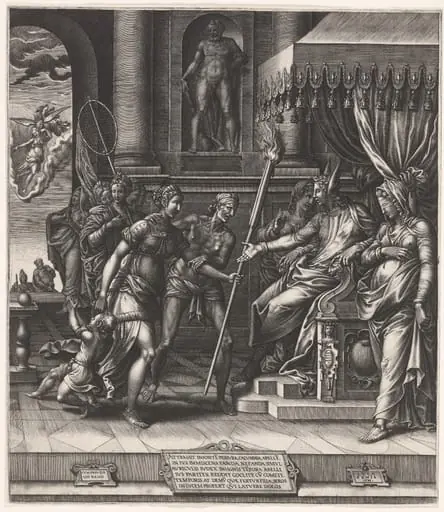 The Calumny of Apelles
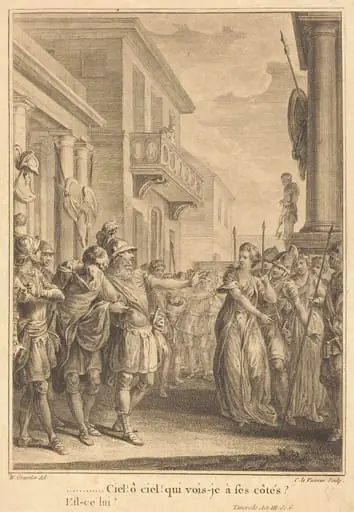 Ciel! ô ciel! qui vois-je à ses côtés?
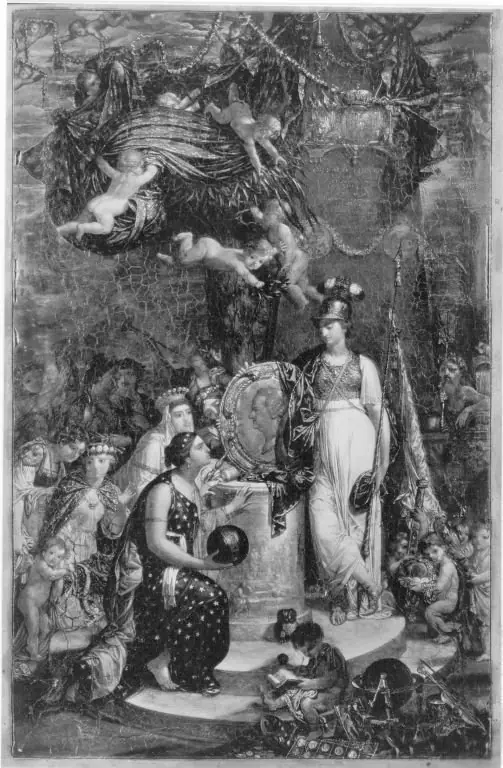 Apotheosis of the Elector Carl Theodor of the Palatinate
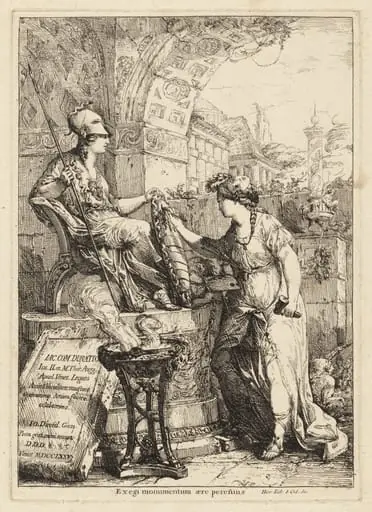 Exegi Monumentum (Art Inscribing Minerva's Shield)
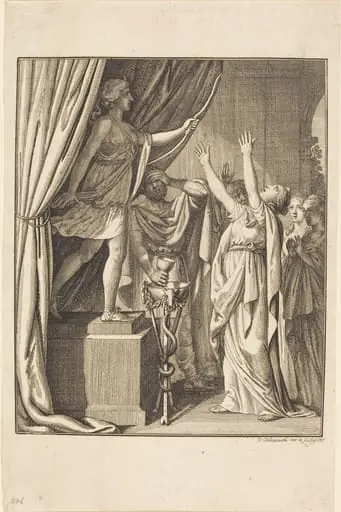 Diana
Diana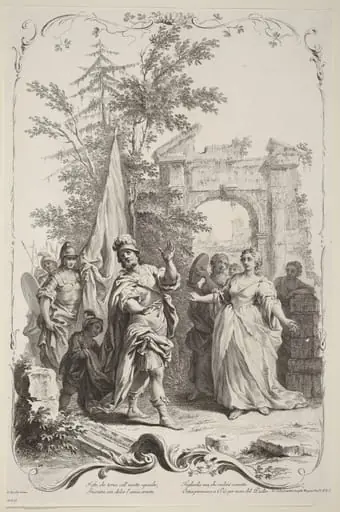 Jephthah and His Daughter
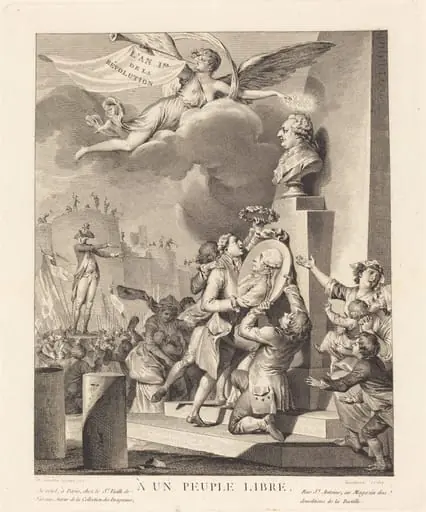 A un peuple libre
 Rome Wearing the Crown
 Law of War and Peace
 Quoi donc, les vrais Chretiens auraient tant de vertu!
 Iphis
Iphis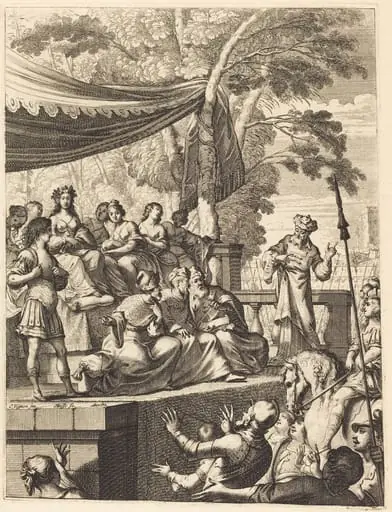 Illustration to Jean Desmarets' "L'Ariane"