Artwork
Quoi donc, les vrais Chretiens auraient tant de vertu!
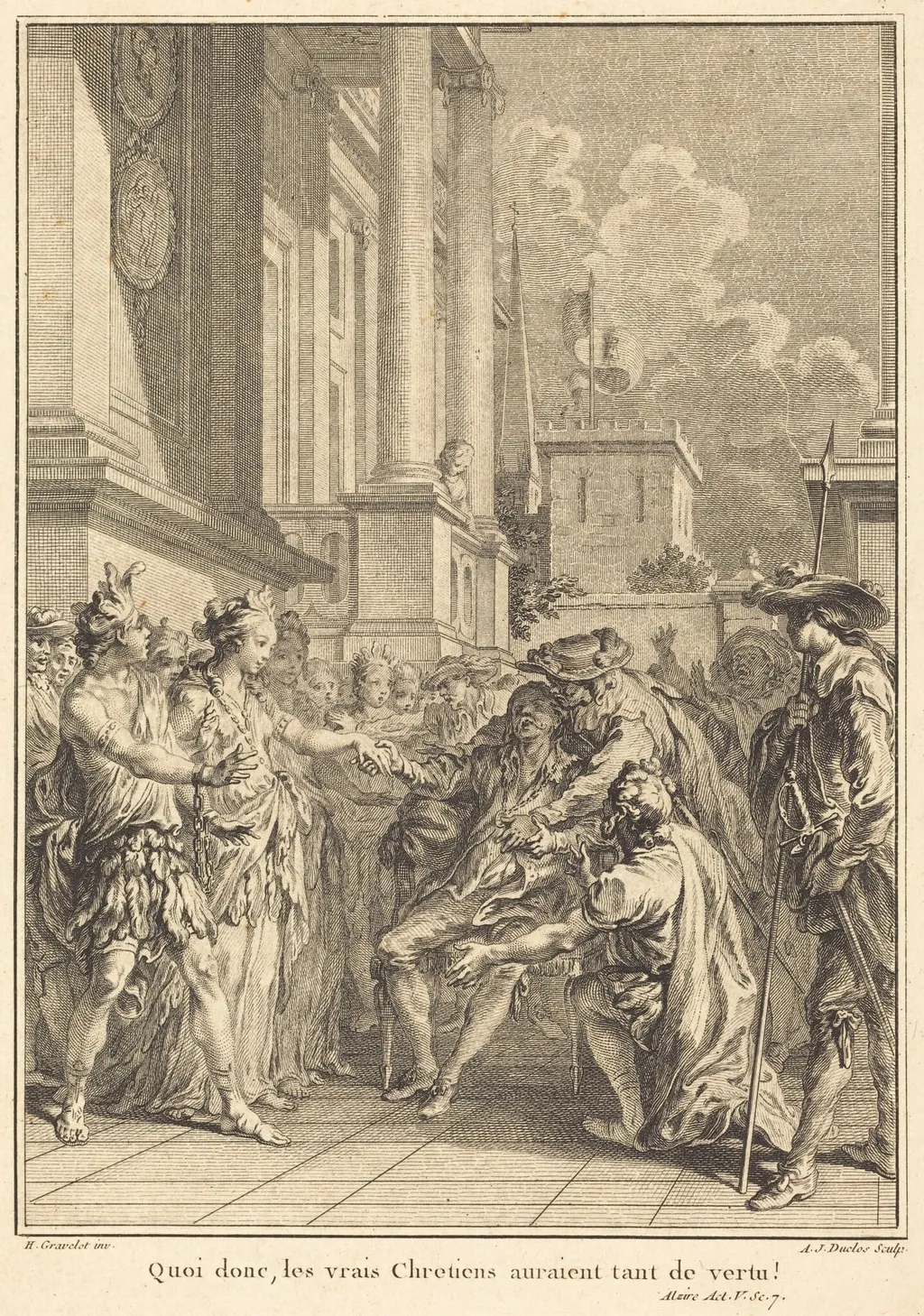
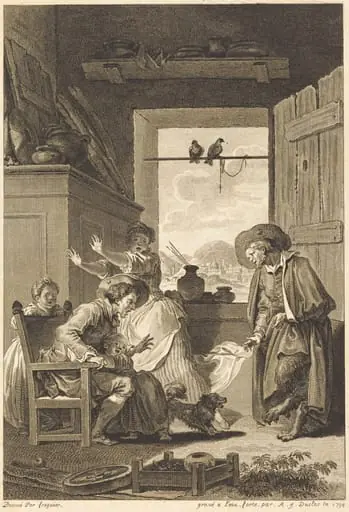
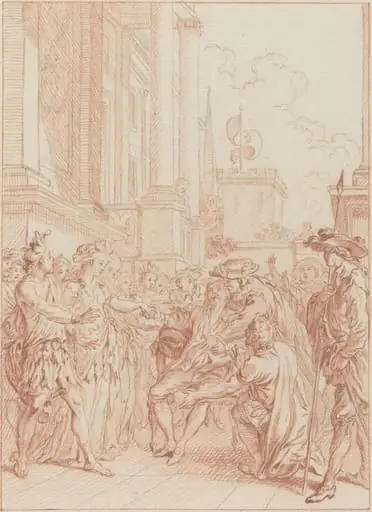
Quoi donc, les vrais Chretiens auraient tant de vertu! is an ink print by the Baroque artist Antoine-Jean Duclos. It dates from 1768 and is held in the collection of the National Gallery of Art.
About this work
Overview
Antoine‑Jean Duclos produced the print Quoi donc, les vrais Chretiens auraient tant de vertu! in 1768. Executed as an etching and engraving, the work presents a bustling courtyard scene populated by figures in period costume, some bearing arms, and arranged in a dynamic composition that emphasizes movement and interaction.
Subject & Meaning
The image functions as an allegory, using the gathered crowd and their gestures to embody abstract ideas about Christian virtue. Central to the scene is a woman with outstretched arms, a pose that suggests openness or proclamation, while a spear‑bearing man on the right adds a martial element, hinting at the tension between spiritual ideals and worldly conflict.
Technique & Style
Duclos combined etching’s fine line work with the deeper tones of engraving to render intricate details—folds in clothing, the texture of stone walls, and the varied expressions of the figures. The energetic arrangement and dramatic chiaroscuro recall the theatricality characteristic of late Baroque printmaking.
History & Provenance
Created in the late eighteenth century, the print reflects the period’s interest in moralizing subjects rendered through popular print media. While specific ownership records are scarce, the work has been catalogued among Duclos’s oeuvre and appears in collections focusing on French engraving of the pre‑Revolutionary era.
Context
The print emerges at a time when French artists frequently employed allegorical scenes to comment on societal values. Its title, questioning the virtue of true Christians, aligns with contemporary debates about religious sincerity and public morality, themes often explored in the visual culture of the Enlightenment.
Legacy
Although not widely reproduced, the work offers insight into the intersection of print technology and moral discourse in the 1760s. It remains a reference point for scholars studying the role of allegory in French engraving and the ways artists negotiated religious critique through visual means.
Own this work as a print
Artist & collection


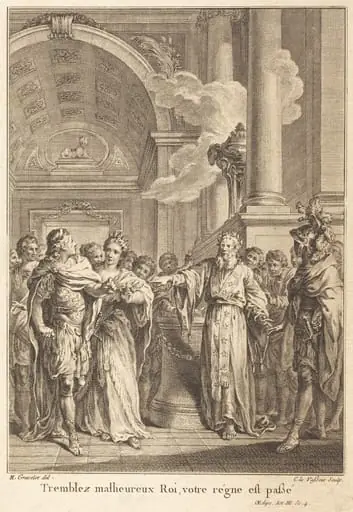 Tremblez malheureux Roi, votre régne est passé
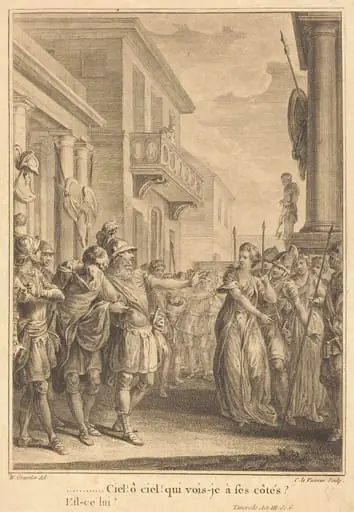 Ciel! ô ciel! qui vois-je à ses côtés?
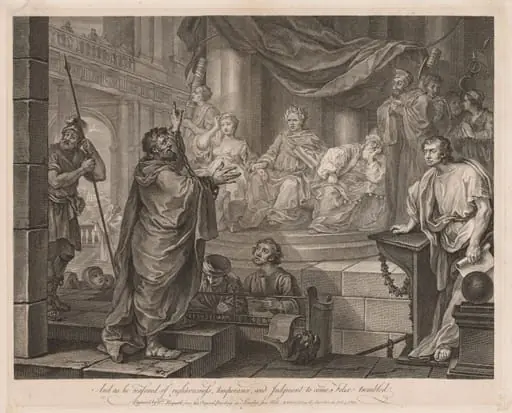 Paul before Félix (Large Plate)
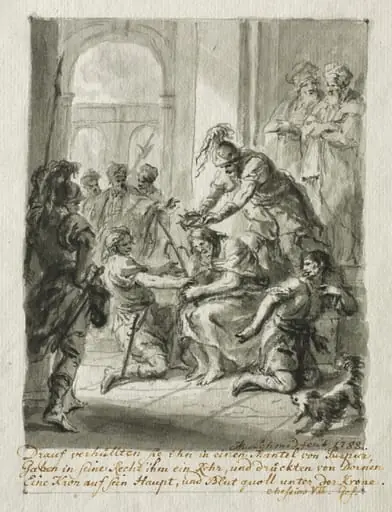 Christ Crowned with Thorns
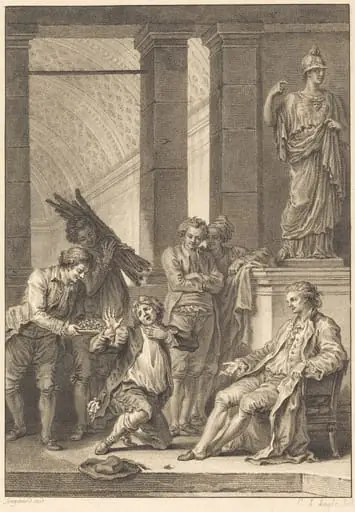 Le paysan
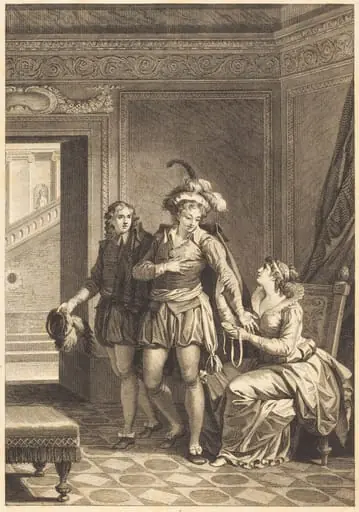 Joconde: Le depart
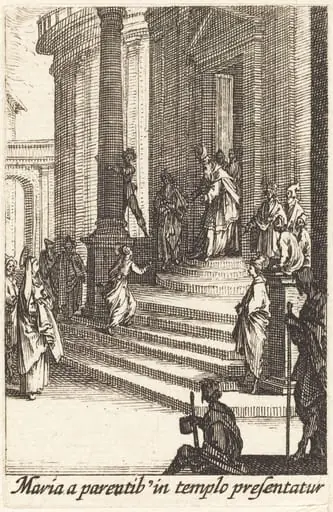 The Presentation of the Virgin
 Joconde: Le depart
 Illustration to Jean Desmarets' "L'Ariane"
 Quoi donc, les vrais Chrétiens auraient tant de vertu