Artwork
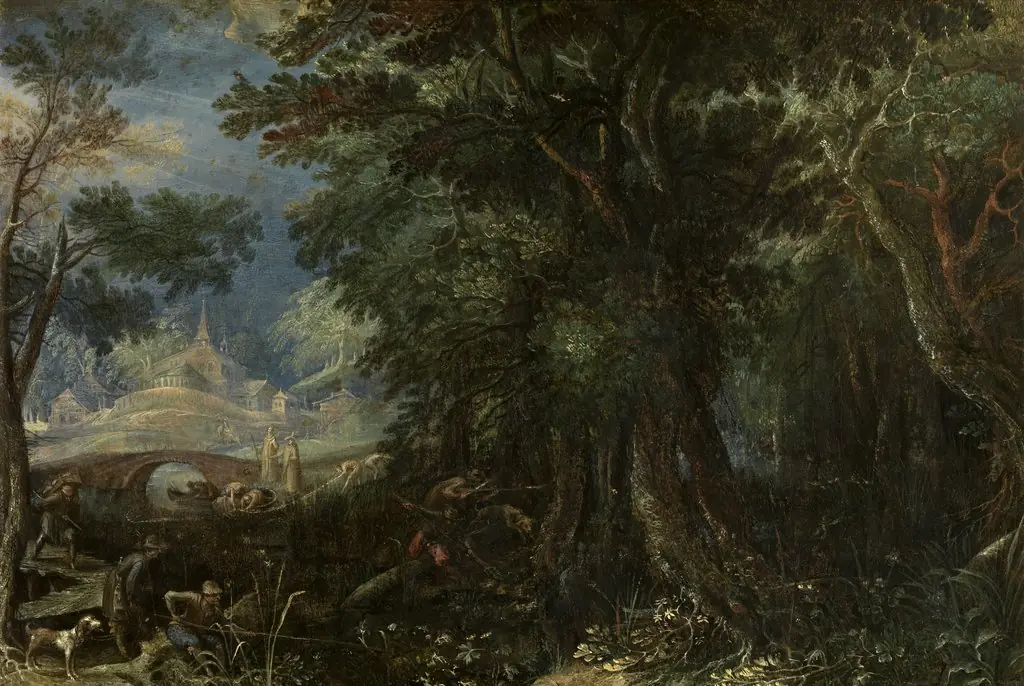
Phantastische Landschaft mit Hirten und Bäumen
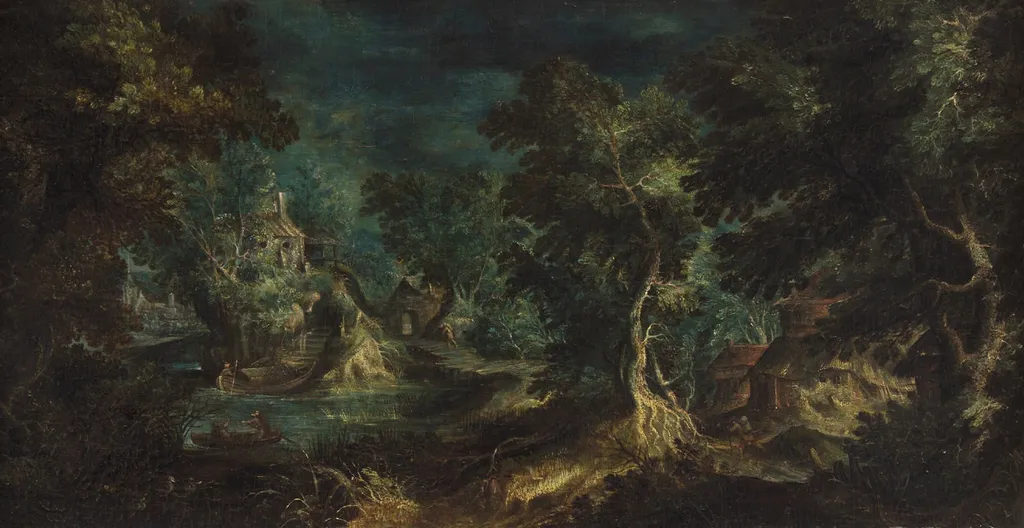
Phantastische Landschaft mit Hirten und Bäumen is an oil painting by the Dutch Golden Age artist Frederik van Valckenborch. It dates from 1600 and is held in the collection of the Kunsthistorisches Museum.
About this work
Overview
Painted in 1600 by Frederik van Valckenborch, this oil-on-panel work presents an invented rural scene blending natural elements with human activity.
Painted in 1600 by Frederik van Valckenborch, this oil-on-panel work presents an invented rural scene blending natural elements with human activity. Though rooted in Flemish traditions, the artist worked extensively in Germany, where his style absorbed regional influences. The painting is cataloged within the Dutch Golden Age corpus due to its period and thematic affinities, and resides today in the Kunsthistorisches Museum in Vienna.
Subject & Meaning
The scene depicts an idealized countryside with shepherds, a modest village, and dense foliage, evoking a quiet, timeless harmony. No specific narrative is present; instead, the composition invites contemplation of nature’s order and human coexistence within it. The figures are small and unobtrusive, emphasizing the landscape’s dominance and suggesting a pastoral ideal rather than a documented place.
Technique & Style
Van Valckenborch employs a late Mannerist approach, with elongated forms and layered spatial depth. Chiaroscuro models the tree trunks and buildings, while cool blues and greens in the sky and water contrast with warmer earth tones in the land and structures. Fine brushwork renders foliage with delicate detail, and atmospheric perspective guides the eye from foreground to distant horizon, enhancing the illusion of space.
History & Provenance
The painting was likely commissioned or acquired during van Valckenborch’s time in Frankfurt or Prague, where he was active among courtly patrons. It entered the Habsburg collections in the early 17th century and remained in imperial holdings, eventually becoming part of the Kunsthistorisches Museum’s founding bequest. Its continuous institutional custody ensures a well-documented lineage.
Context
In the early 1600s, imaginative landscapes were popular among Northern European artists seeking to move beyond topographical accuracy. Van Valckenborch’s work aligns with contemporaries like Bruegel the Elder, who fused observation with invention. Such paintings reflected intellectual interests in nature, cosmology, and the idealized past, rather than serving as mere decoration.
Legacy
Though less widely known than some of his peers, van Valckenborch’s synthetic landscapes influenced later generations of Northern painters who pursued poetic, non-literal environments. His integration of Mannerist structure with naturalistic detail helped bridge the gap between late Renaissance fantasy and the emerging realism of the Dutch Golden Age.
Artist & collection
Artist
Frederik van Valckenborch (1566 in Antwerp – 1623 in Nuremberg) was a Flemish painter and draughtsman known for his imaginary landscapes with figures executed in a late Mannerist style.

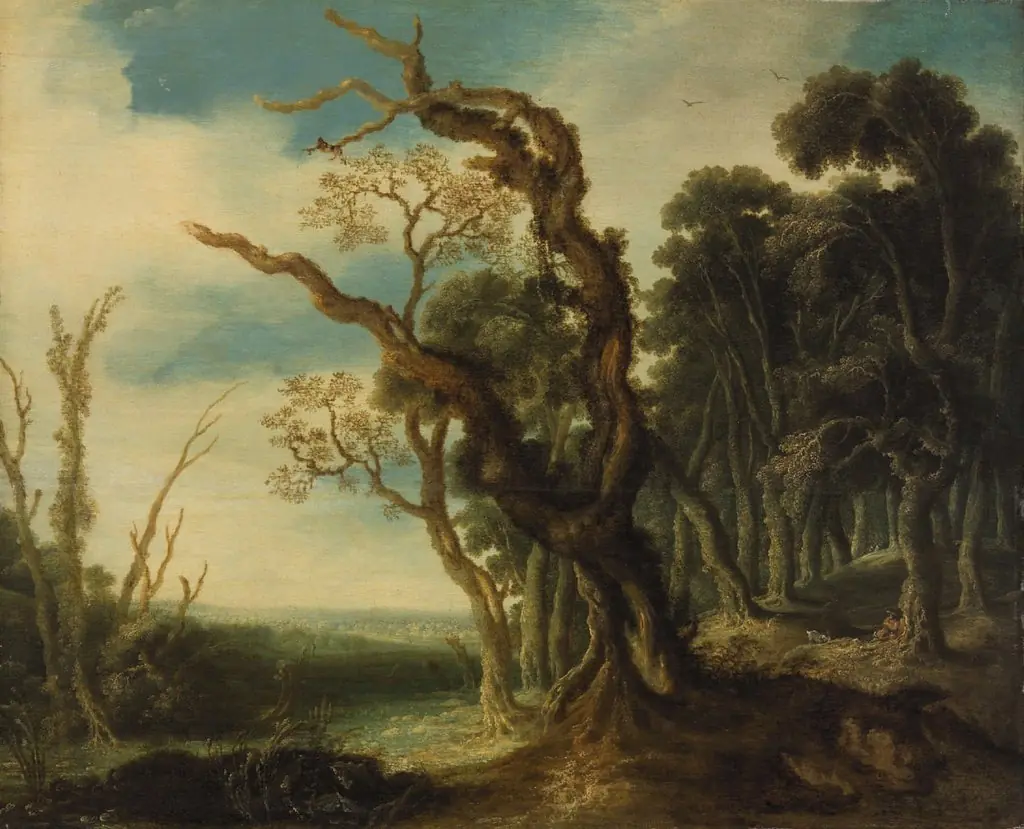 Wooded landscape with a goatherd
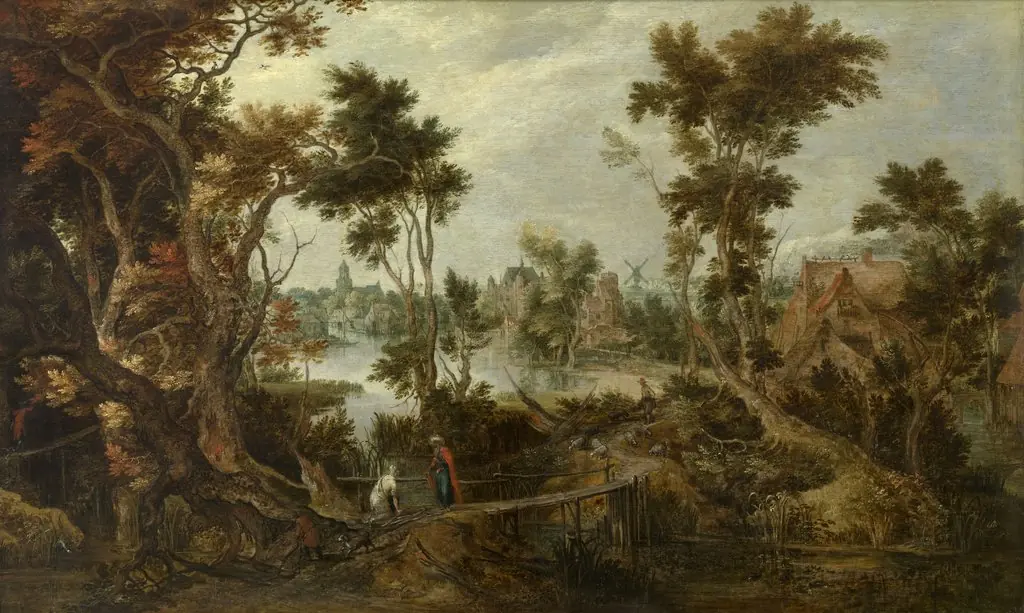 Landscape with Prophet Elijah and the Widow of Zarephath
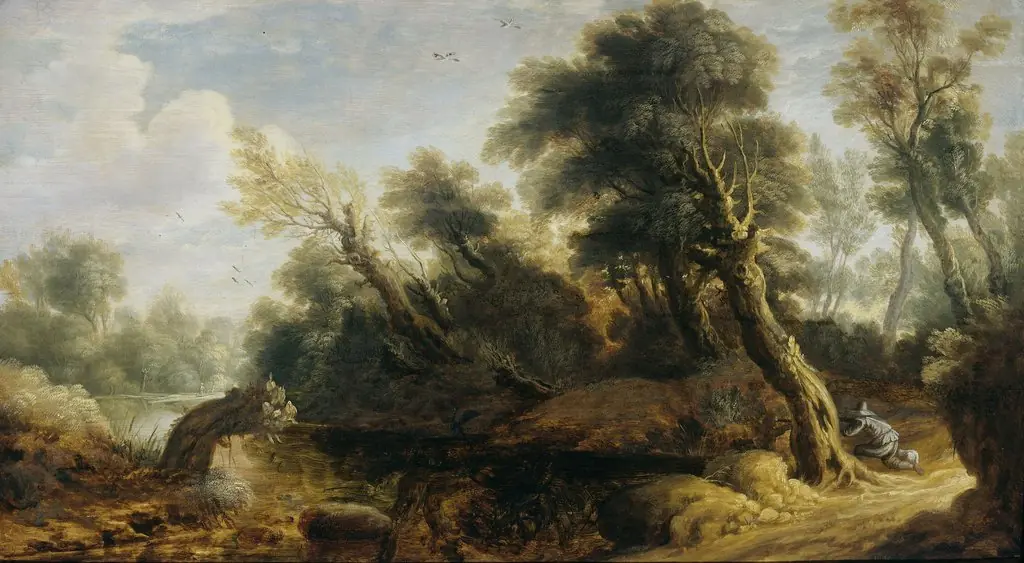 Landscape with a Hunter
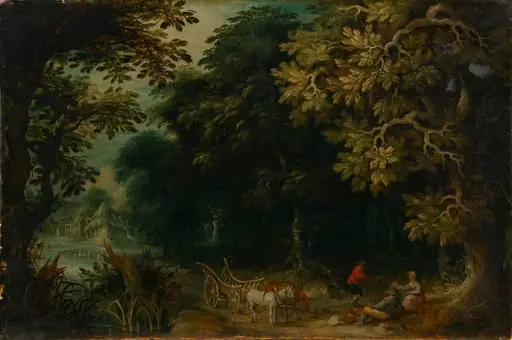 Peisaj de pădure
 Canal
Canal Night Landscape
 Landscape with Anglers and a Distant Town
 Untitled
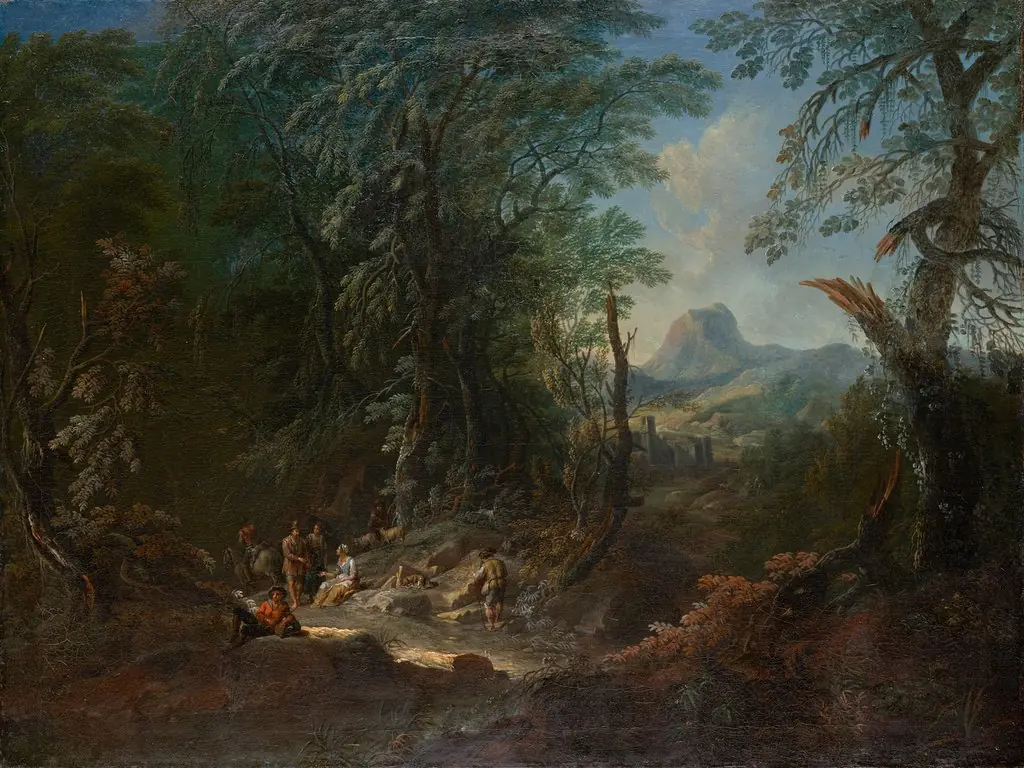 Forest Landscape "Morning"
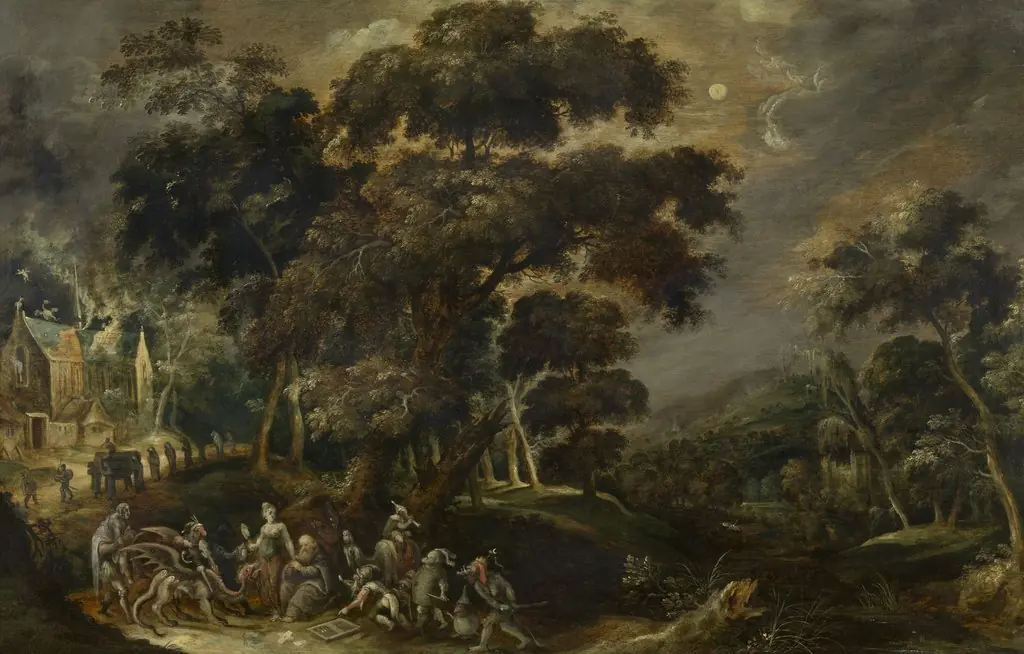 Landscape with the Temptation of Saint Anthony the Great
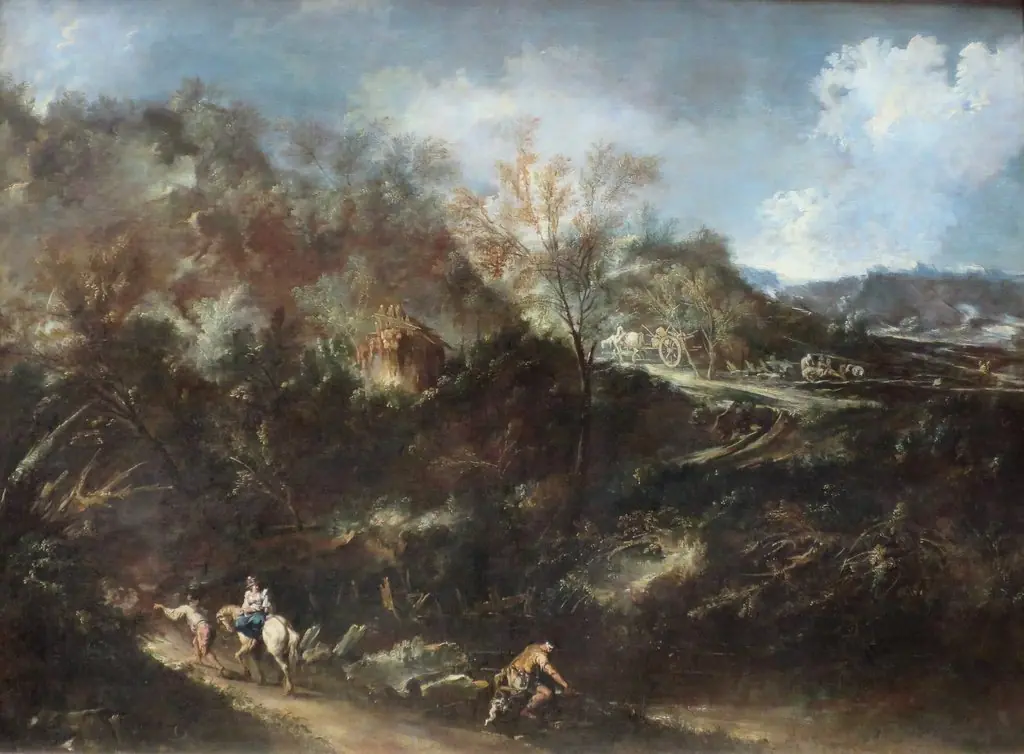 Mountainous Landscape
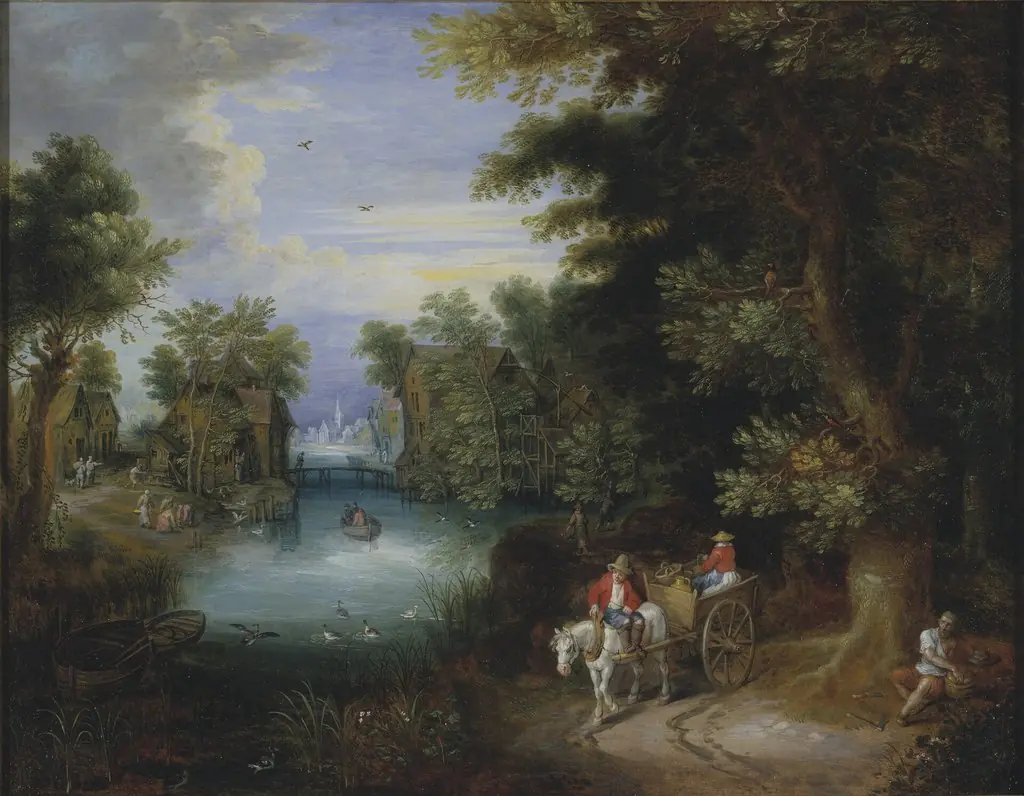 River Landscape with Peasants