Artwork
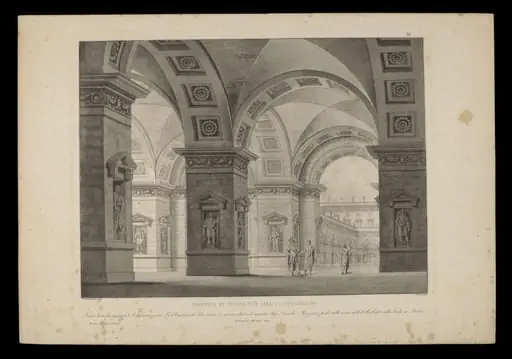
Interior of the Pantheon in Paris
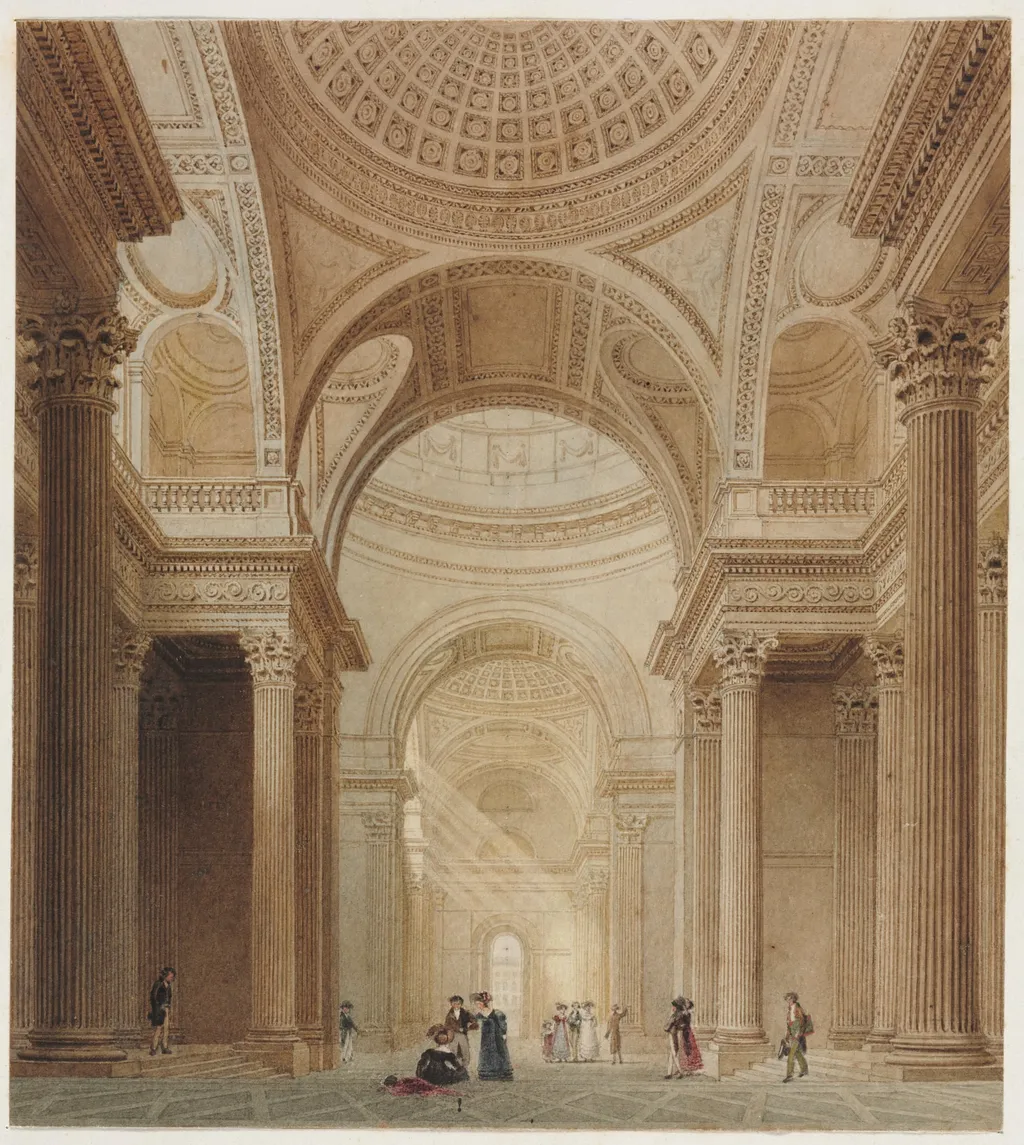
Interior of the Pantheon in Paris is a drawing by the Romanticist artist Fredrick Nash. It dates from 1828 and is held in the collection of the Cleveland Museum of Art.
About this work
Overview
The work is part of the collection at The Cleveland Museum of Art, where it serves as a record of early 19th-century architectural observation.
Created in 1828 by Frederick Nash, this drawing captures the interior of the Pantheon in Paris. Executed in a detailed, linear style, it emphasizes the architectural grandeur of the space. The work is part of the collection at The Cleveland Museum of Art, where it serves as a record of early 19th-century architectural observation. Nash’s focus on spatial depth and light reflects a broader interest in documenting monumental structures of the era.
Subject & Meaning
The drawing depicts the Pantheon’s vast interior, populated by a handful of figures in period attire. Their small scale relative to the architecture underscores the building’s imposing presence. The figures—standing, seated, or leaning—suggest quiet contemplation rather than ceremony, reinforcing the space’s function as a site of public reverence. The composition invites viewers to consider the relationship between human presence and monumental design.
Technique & Style
Nash employed fine pen and ink lines to render the intricate carvings, columns, and arches with precision. The use of light is carefully managed, with a strong source entering from the rear archway to model the space and highlight surface textures. Shadows are minimal, enhancing clarity and structural legibility. The drawing’s restrained palette and linear economy reflect a topographical approach, prioritizing accuracy over expressive flourish.
History & Provenance
The drawing was completed during Nash’s travels in France, likely as part of a broader study of European architecture. It entered The Cleveland Museum of Art’s collection through documented acquisition, though its immediate provenance prior to museum ownership remains unrecorded. Its preservation suggests early recognition of its value as a documentary record of a significant neoclassical monument.
Context
In the 1820s, European architects and artists frequently documented historic buildings as part of a growing interest in classical heritage. The Pantheon, originally a church and later a secular mausoleum, symbolized Enlightenment ideals. Nash’s drawing aligns with this trend, capturing not just form but the atmosphere of a space that had transitioned from religious to civic use, reflecting contemporary cultural values.
Legacy
Though not widely exhibited, the drawing remains a valuable example of topographical art from the early 19th century. It contributes to the historical record of how the Pantheon was perceived before later restorations. Its preservation in a major American museum underscores its role as a bridge between European architectural tradition and transatlantic scholarly interest in classical monuments.
Artist & collection

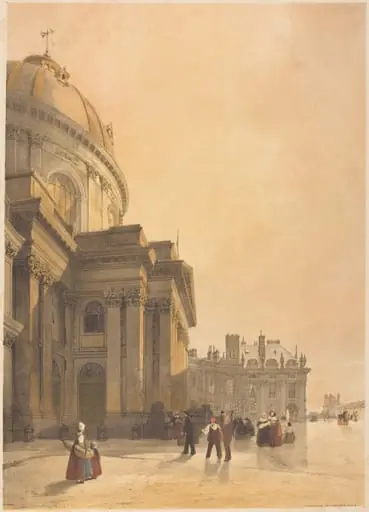 La Chapelle de l'Institut, Paris
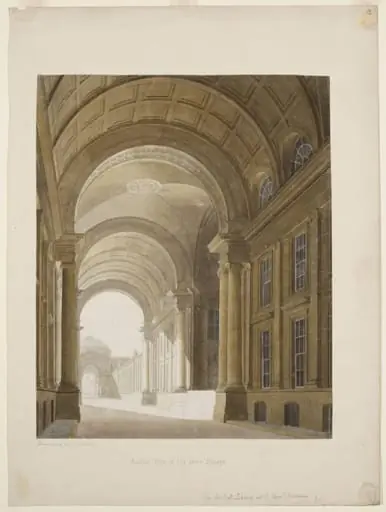 View across the Bridge of Magnificence
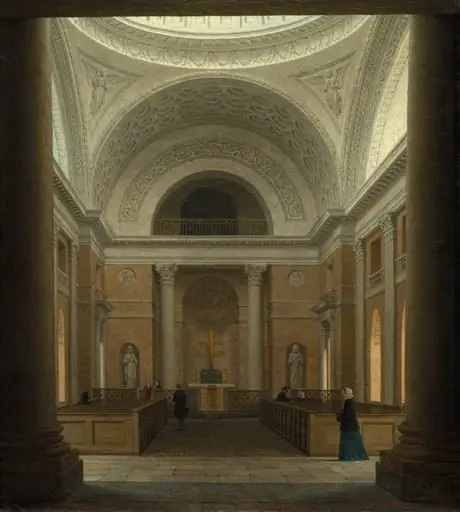 The Slotskirken of Christiansborg, Copenhagen
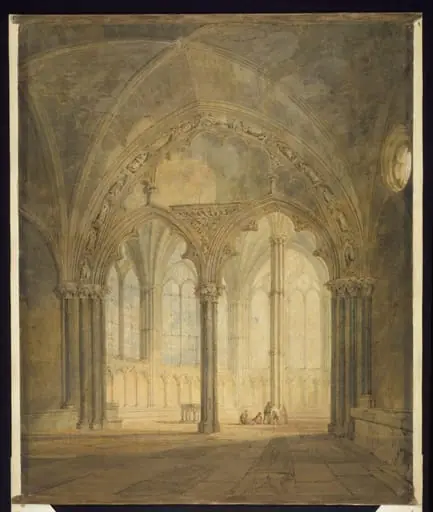 Entrance to the Chapter House, Salisbury Cathedral
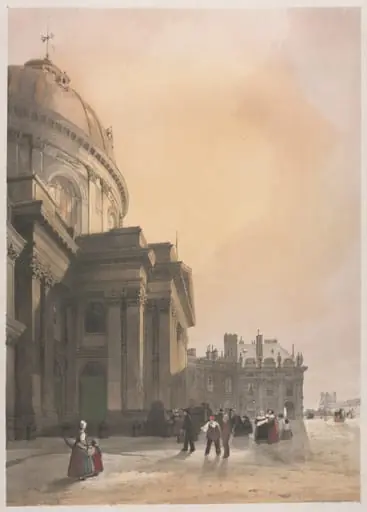 Picturesque Architecture in Paris, Ghent, Antwerp, Rouen: La Chapelle de l'Institut, Paris
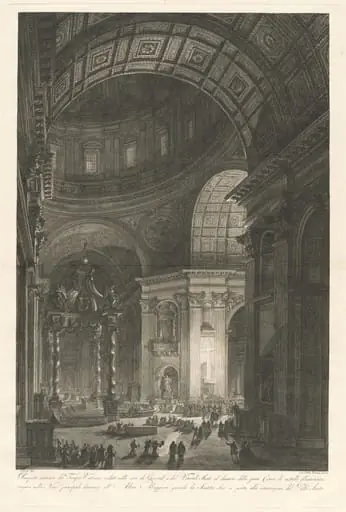 Interior of St. Peter’s, with the Illumination of the Cross of St. Peter
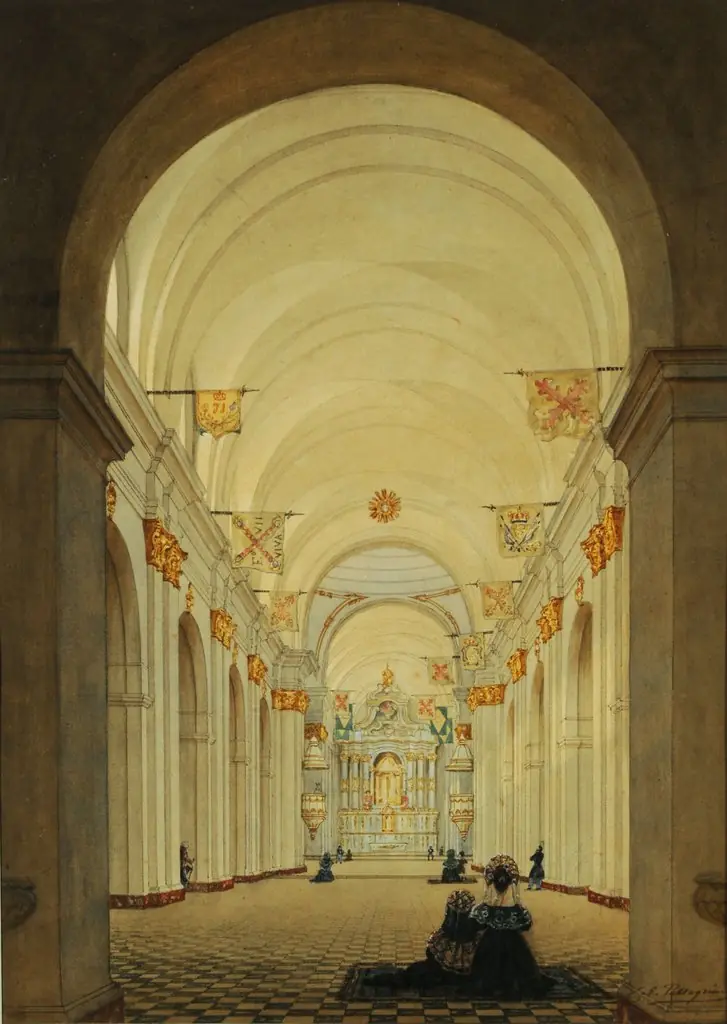 Interior of the Cathedral of Buenos Aires
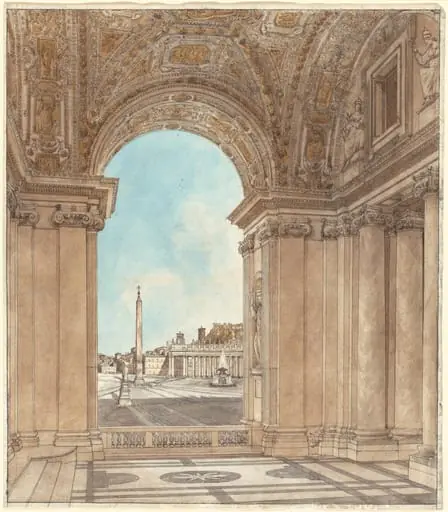 The Piazza of Saint Peter's Seen through an Arch of the Basilica
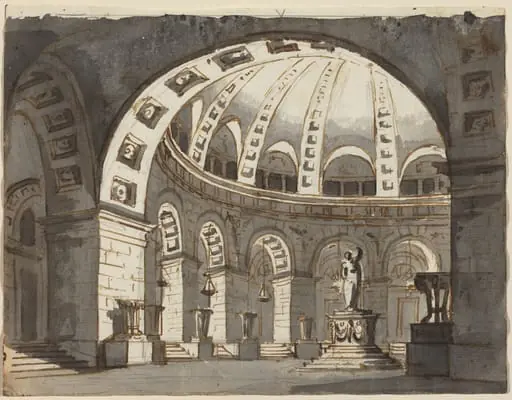 Stage Design
 H Beard Print Collection