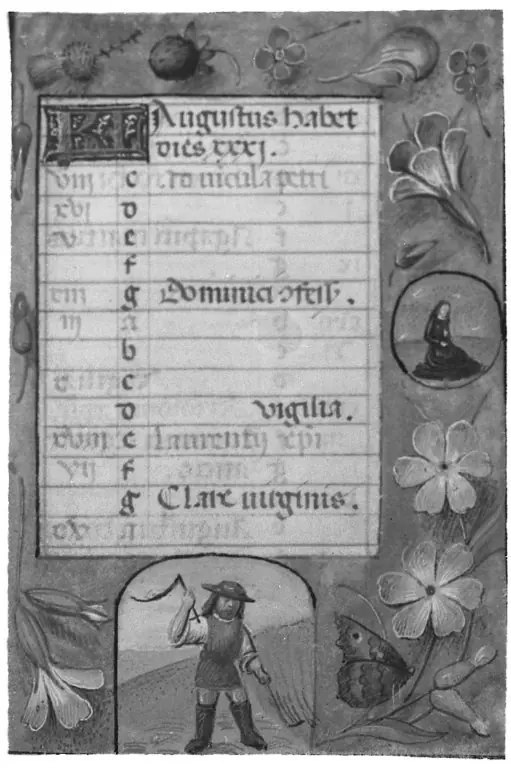
Artwork
Page from a Book of Hours
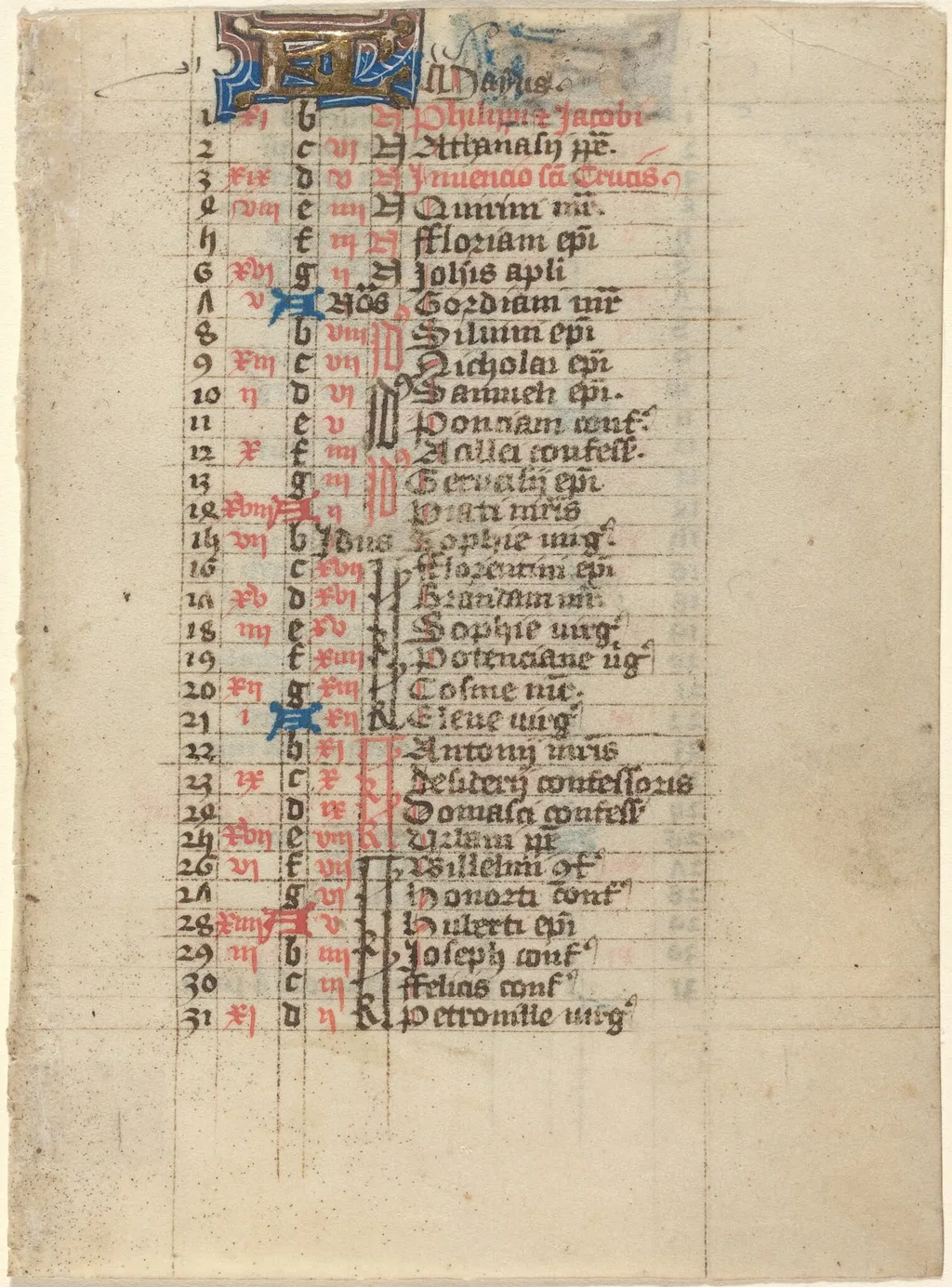
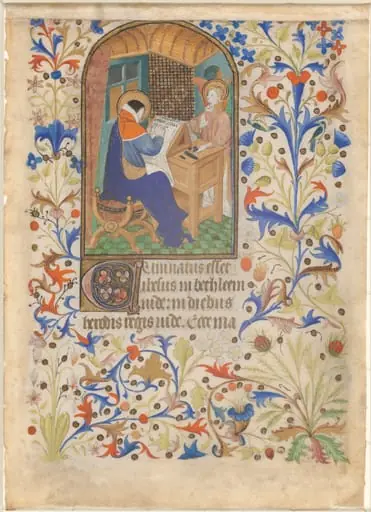
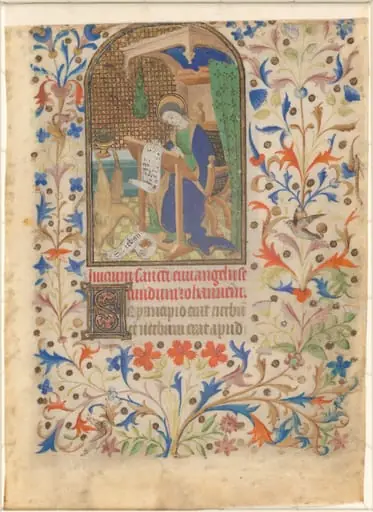
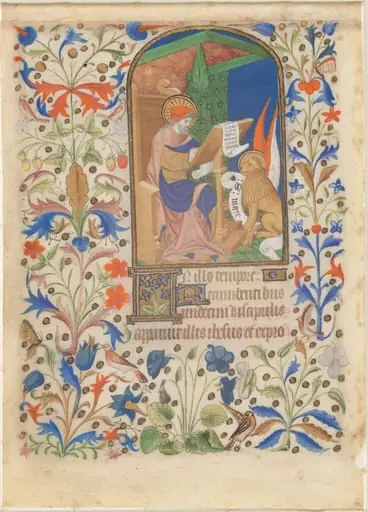
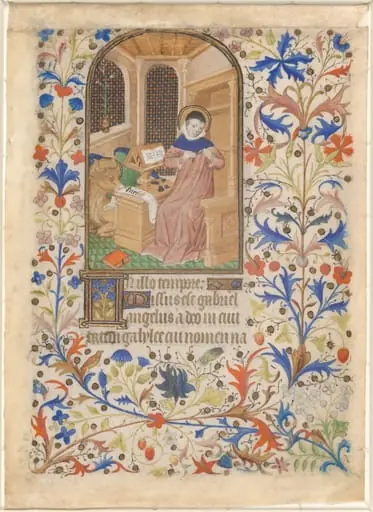
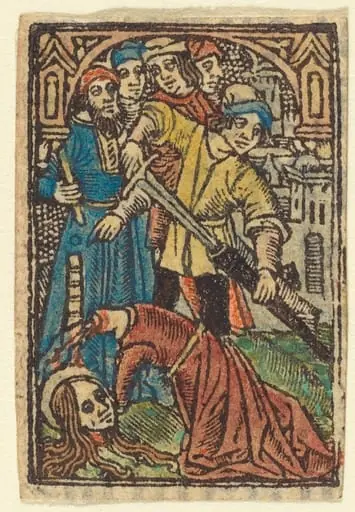
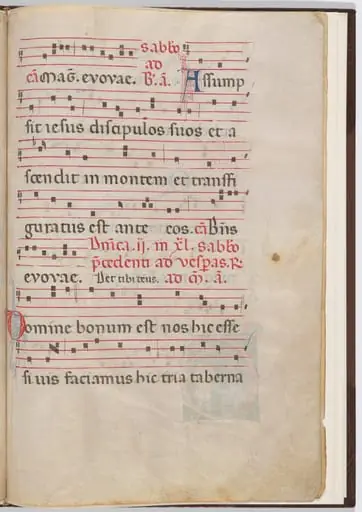
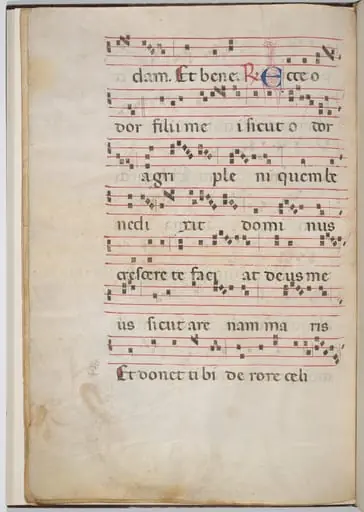
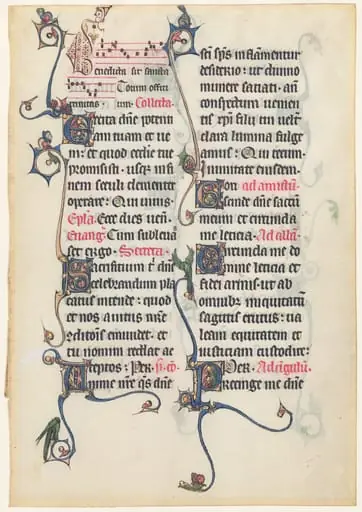
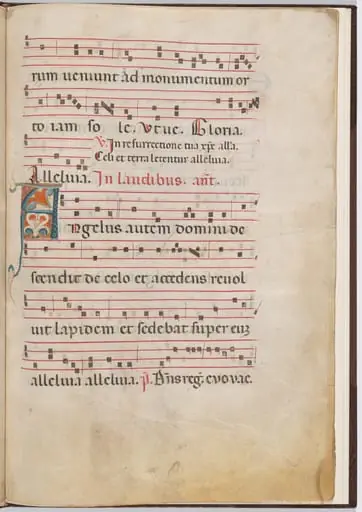
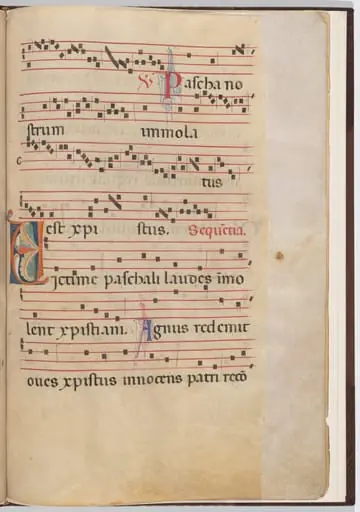
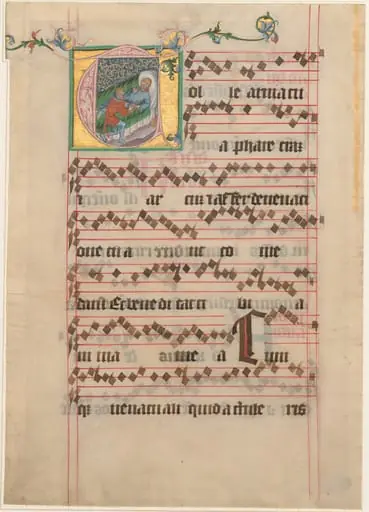
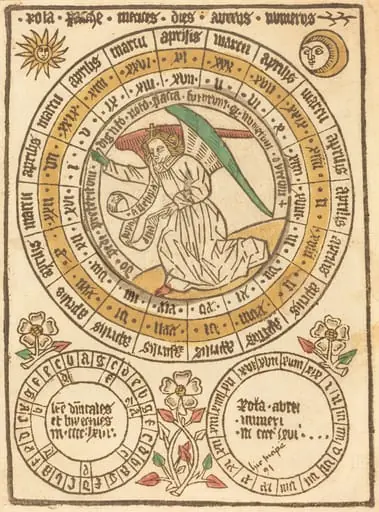
Page from a Book of Hours is a drawing by the Renaissance artist French 15th Century. It dates from 1400 and is held in the collection of the National Gallery of Art. This manuscript page comes from a Book of Hours, a devotional text used by laypeople in late medieval Europe.
About this work
Overview
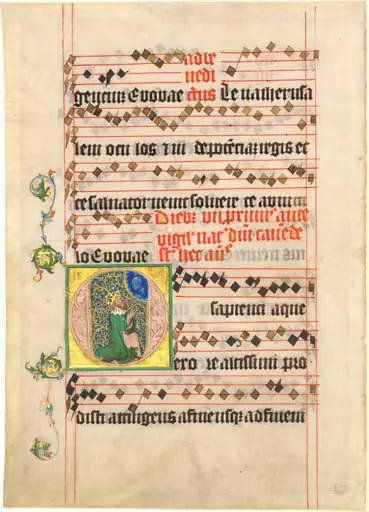
This manuscript page comes from a Book of Hours, a devotional text used by laypeople in late medieval Europe. Written in Latin on vellum, it features tightly spaced columns of script arranged on a ruled grid to ensure uniformity. Decorative initials, rendered in gold and blue pigments, mark the beginning of prayers or psalms, contrasting with the muted brown tone of the aged parchment.
Subject & Meaning
The content centers on daily prayers for the Virgin Mary, structured around canonical hours. The illuminated initials serve both liturgical and symbolic functions, guiding the reader through the text while elevating sacred moments through visual splendor. Gold and blue, costly materials, reflect the spiritual value assigned to these prayers and the piety of their owner.
Technique & Style
The precision of the script and the restraint in ornamentation reflect monastic discipline and the conventions of northern European book production.
Scribes used iron-gall ink for black text and red ochre for rubrics, applying them with quills on prepared animal skin. The large initials were painted with tempera and gold leaf, then detailed with fine brushwork to create floral and geometric motifs. The precision of the script and the restraint in ornamentation reflect monastic discipline and the conventions of northern European book production.
History & Provenance
Produced in the 14th or early 15th century, likely in France or the Low Countries, such pages were commissioned by wealthy patrons for private devotion. Many were later disbound as collectors sought individual illuminated leaves. This fragment’s survival suggests it was valued for its craftsmanship even after the original volume was dispersed.
Context
Books of Hours emerged as personal prayer books during the late Middle Ages, replacing monastic liturgical texts for lay use. Their popularity peaked before the Renaissance, when printed books began to replace hand-copied manuscripts. This page exemplifies the transition from communal worship to individual piety, reflecting broader shifts in religious practice and literacy.
Legacy
Though superseded by print, illuminated manuscripts like this one influenced later book design and decorative arts. Their intricate lettering and symbolic imagery became reference points for 19th-century revivalists and remain studied for their technical precision and cultural insight into medieval spirituality.
Artist & collection

Artist
This artist hid their best work inside old travel trunks. They glued vivid woodcuts into the lids of wooden boxes meant to be carried on horseback, like secret postcards from God. If you’ve ever pried open a cracked lid…