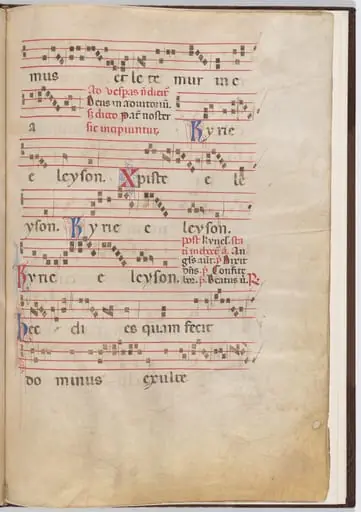
Artwork
Leaf 7 from an antiphonal fragment
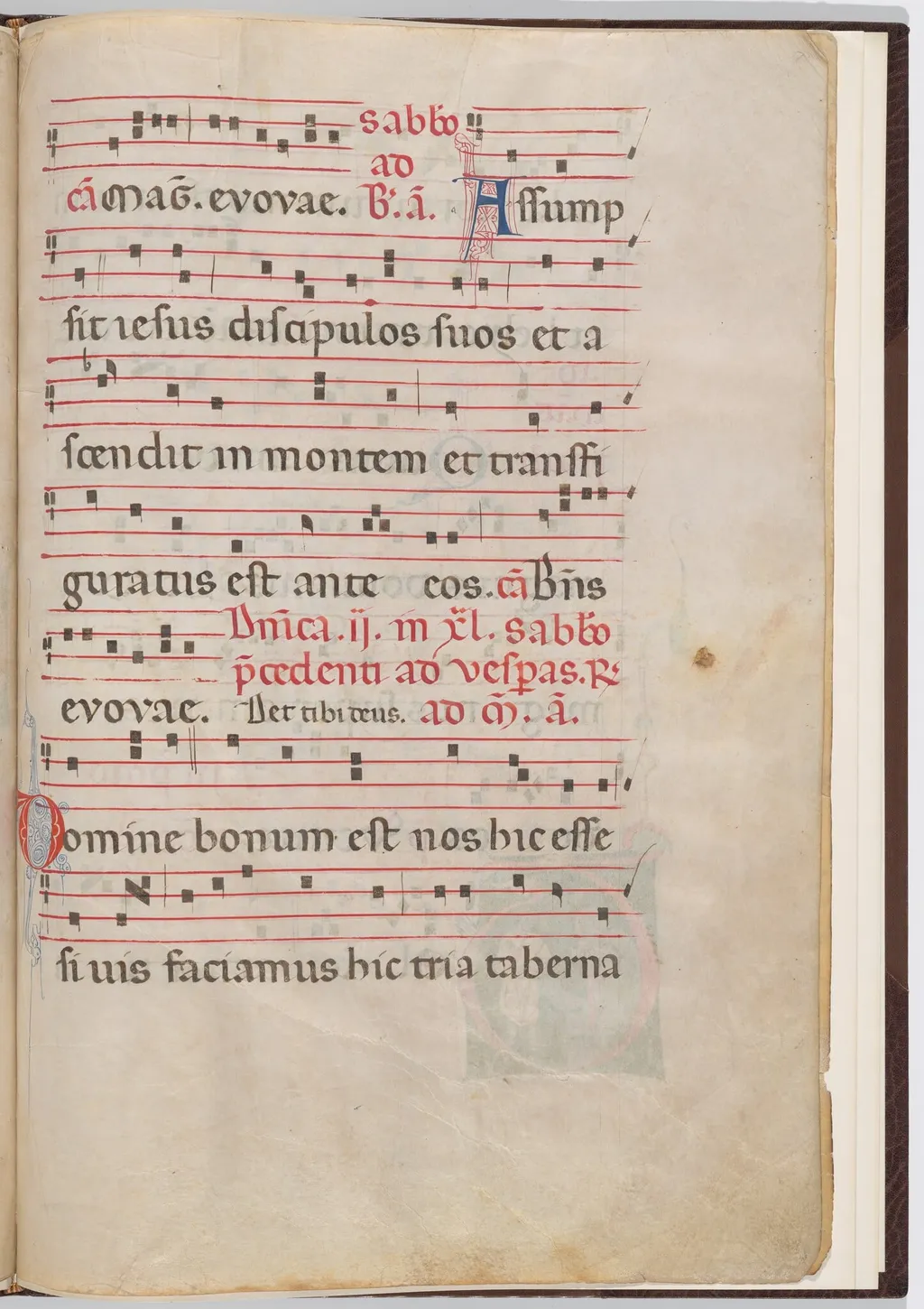
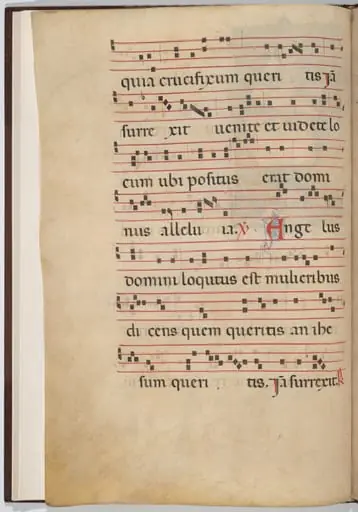
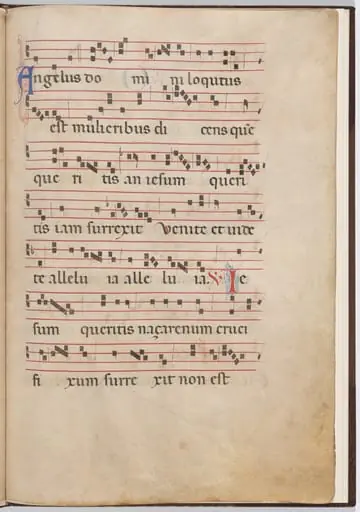
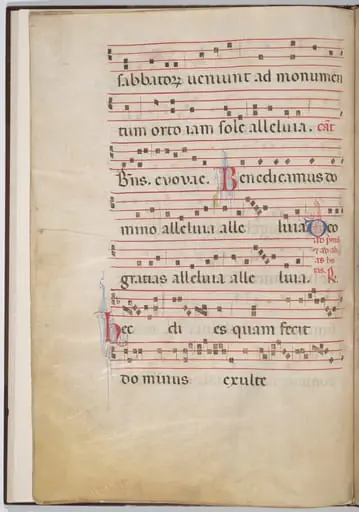
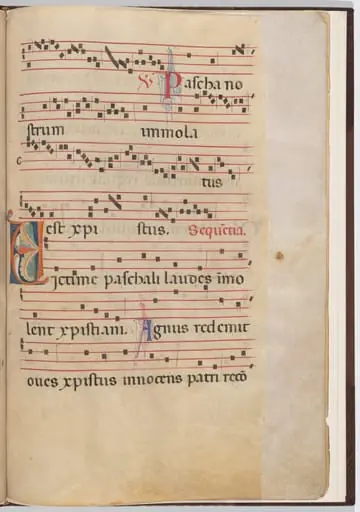
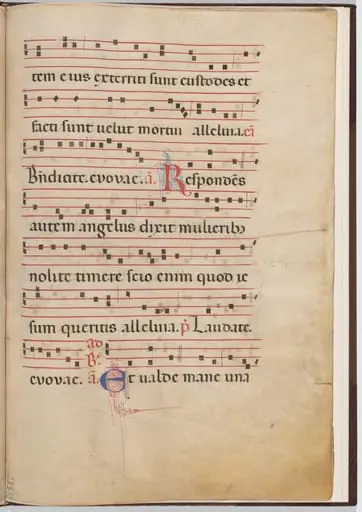
Leaf 7 from an antiphonal fragment is an ink drawing by Italian 13th Century. It dates from 1275 and is held in the collection of the National Gallery of Art. This leaf is a surviving page from a medieval antiphonal, a liturgical book containing chants and prayers.
About this work
The page is a beautiful example of medieval manuscript illumination, with intricate details and careful craftsmanship.
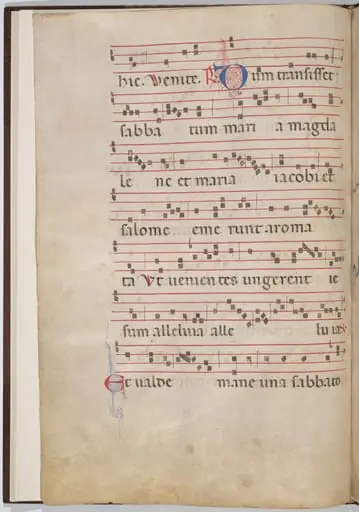
This image shows a page from an old book, with handwritten text in black and red ink. The text is written in a formal, cursive style, with some words and phrases highlighted in red. There are also some decorative elements, such as flourishes and initials, throughout the page.
The page appears to be made of vellum, a type of animal skin used for writing in the Middle Ages. The ink is still vibrant, despite being over 700 years old. The text itself is in Latin, and appears to be a religious text, possibly a hymn or prayer.
The page is a beautiful example of medieval manuscript illumination, with intricate details and careful craftsmanship. To learn more about this style of art, look up the artist "Italian 13th Century".
Overview
This leaf is a surviving page from a medieval antiphonal, a liturgical book containing chants and prayers. Created on vellum, it showcases the craftsmanship of medieval manuscript illumination.
Technique & Style
The page features handwritten text in black and red ink, with decorative elements such as flourishes and initials in red and blue. The formal, cursive script and intricate details demonstrate the artistic skill of the period.
Subject & Meaning
The Latin text is likely a religious hymn or prayer, with certain words and phrases highlighted in red to convey importance or emphasis.
Artist & collection

Artist
This artist shaped the look of church music between 1250 and 1299, painting bold red-and-blue initials on vellum pages meant for choirs.

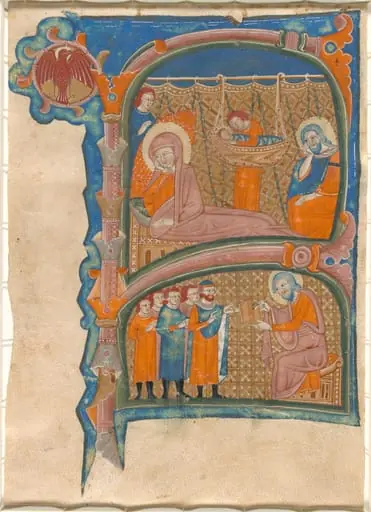 Birth and Naming of John the Baptist
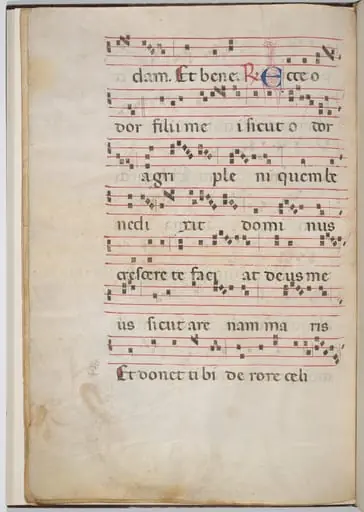 Leaf 8 from an antiphonal fragment (verso)
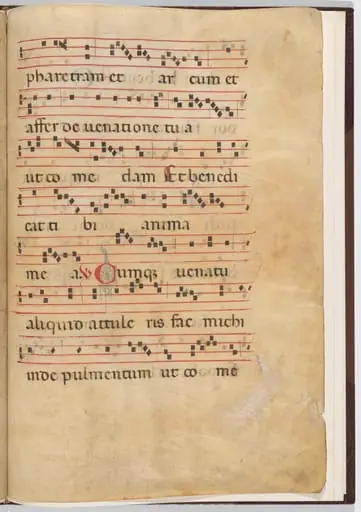 Leaf 8 from an antiphonal fragment
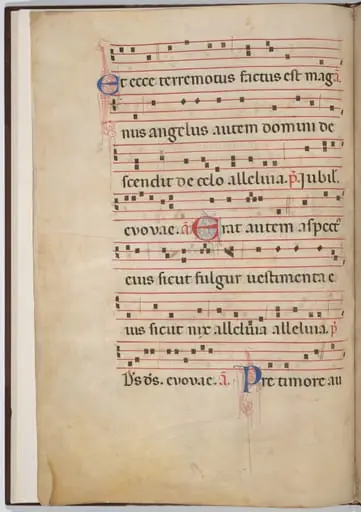 Leaf 3 from an antiphonal fragment (verso)
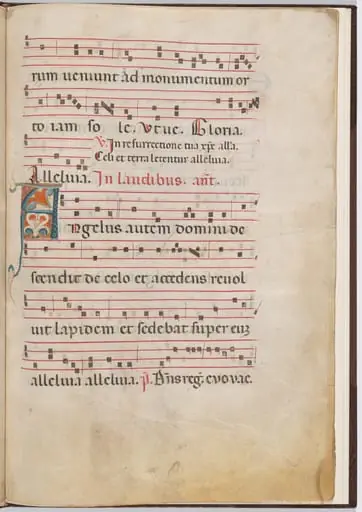 Leaf 3 from an antiphonal fragment
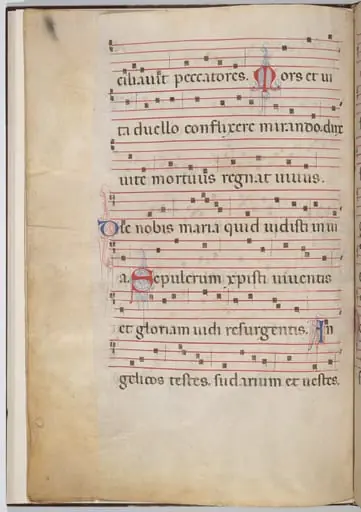 Leaf 6 from an antiphonal fragment (verso)
 Leaf 4 from an antiphonal fragment
 Leaf 2 from an antiphonal fragment (verso)