Artwork
Horae Beatae Mariae Virginis
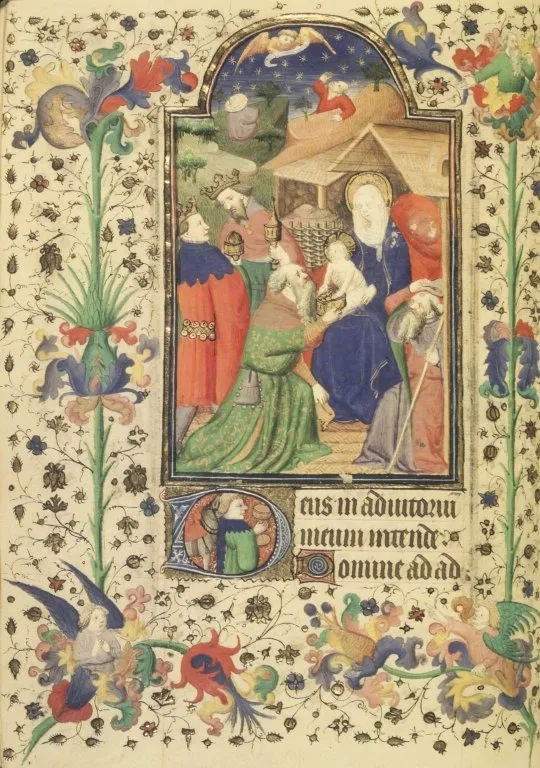
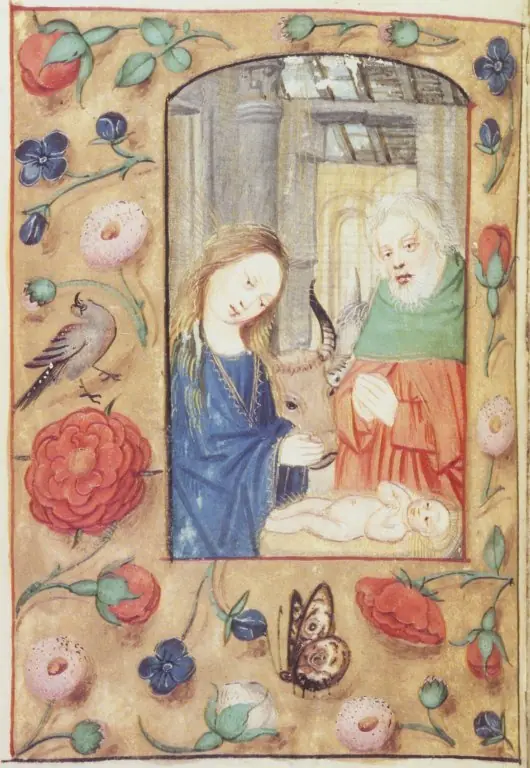
Horae Beatae Mariae Virginis is an unspecified painting by the Mannerist artist Unknown. It dates from 1530 and is held in the collection of the Brooklyn Museum.
About this work
Overview
Horae Beatae Mariae Virginis is a painted composition that presents a central female figure in a blue garment cradling an infant. Surrounding her are several attendants dressed in elaborate attire, set against a backdrop densely populated with stylized flora and foliage. The overall arrangement conveys a festive and intimate atmosphere through its populated scene and decorative surroundings.
Subject & Meaning
The central motif focuses on the Virgin Mary holding the infant Jesus, a traditional Christian iconography. The surrounding figures likely represent saints or angels, emphasizing reverence and communal celebration of the holy family. The abundant floral and leafy elements may symbolize purity, fertility, and the divine garden of Eden, reinforcing the sanctity of the scene.
Technique & Style
The composition balances ornamental richness with narrative clarity, characteristic of late medieval or early Renaissance devotional paintings.
The artist employs a vivid palette, assigning distinct hues to the garments, blossoms, and leaves, which creates visual dynamism. Contrasting colors delineate individual figures and decorative elements, while the intricate detailing of the foliage adds depth. The composition balances ornamental richness with narrative clarity, characteristic of late medieval or early Renaissance devotional paintings.
Context
Although specific provenance is not provided, works titled Horae Beatae Mariae Virginis were commonly produced for liturgical or private devotional use in European workshops. The emphasis on elaborate costume and lush natural motifs aligns with the period’s interest in merging sacred themes with courtly elegance, reflecting contemporary tastes for both piety and visual splendor.
Artist & collection

 Domestic Scene
 Giacomo and Cardinal Marco, investing Andrea, Abbot of San Zeno, with his Benefice
 The Nymph of Fontainebleau
 Portrait of a Woman
 Madonna and Child with Saints in the Enclosed Garden
 Venus and Minerva
 Family Group of Four on Sofa
 Wall painting from Room H of the Villa of P. Fannius Synistor at Boscoreale
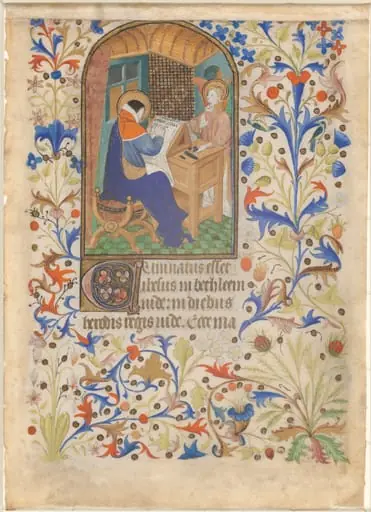 Saint Matthew
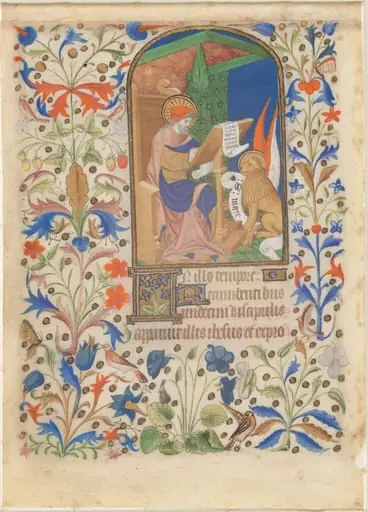 Saint Mark
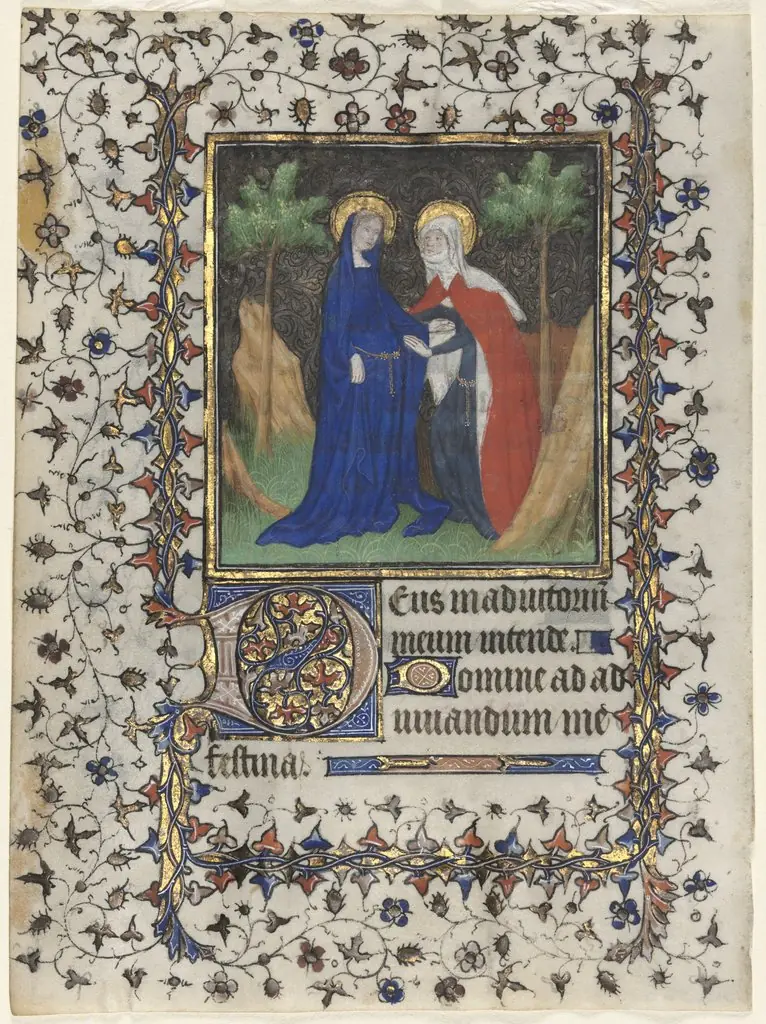 Leaf from a Book of Hours: The Visitation
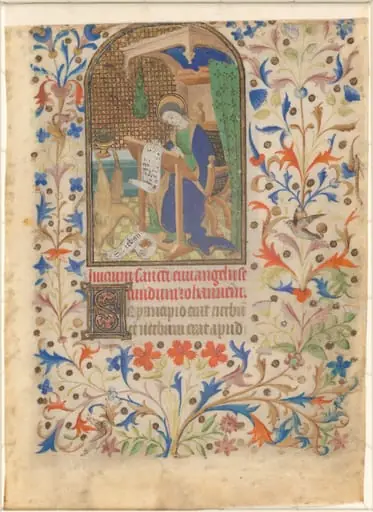 Saint John
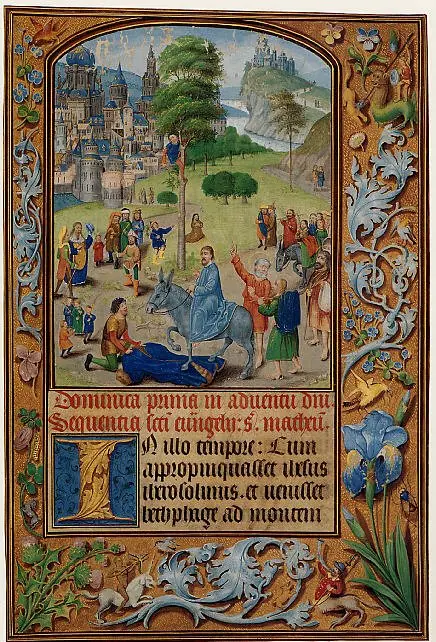 Christ's Entry into Jerusalem
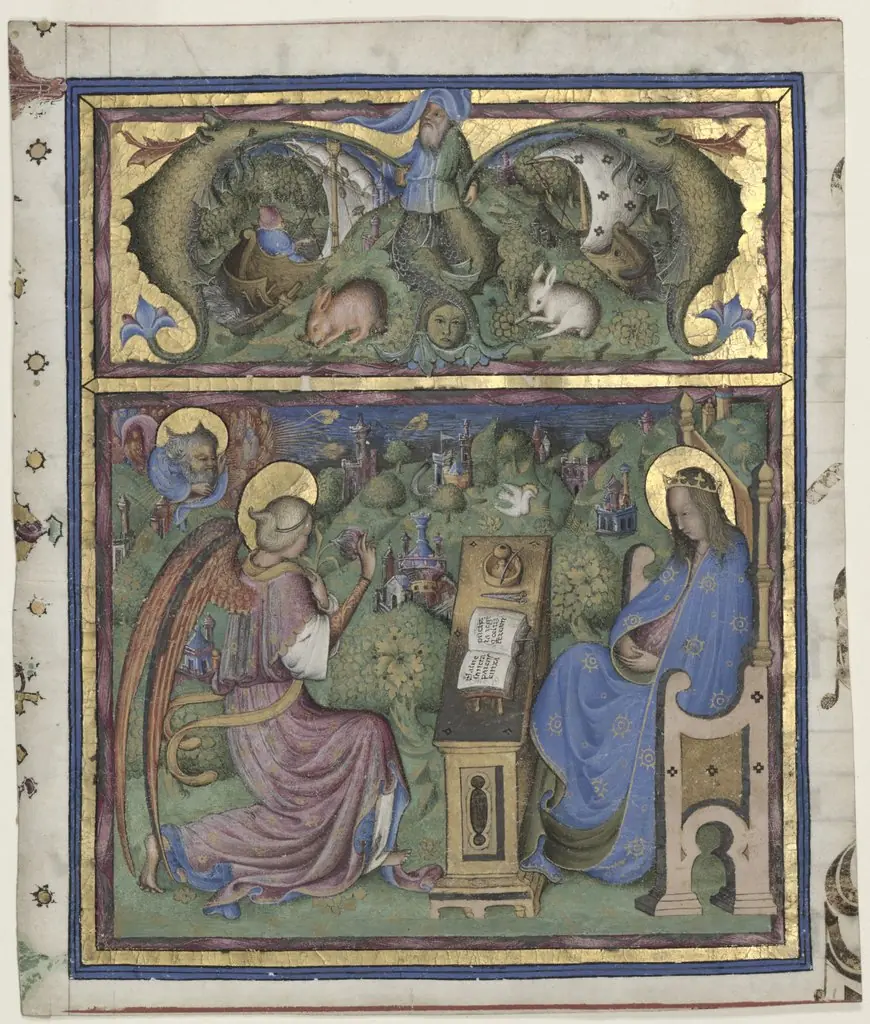 Annunciation
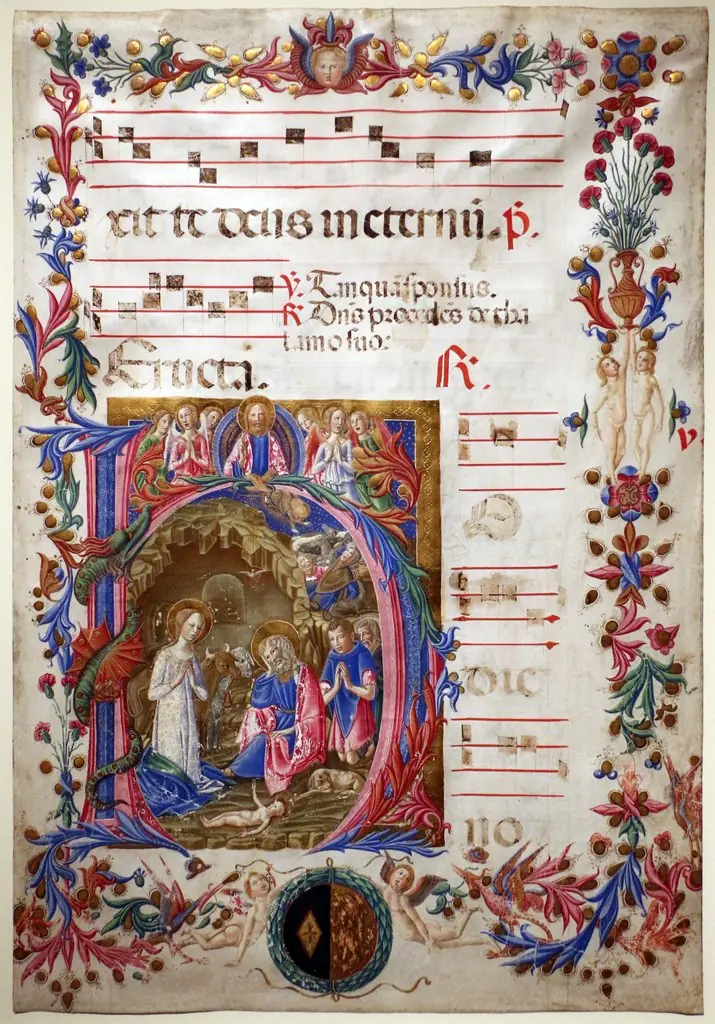 pagina di antifonario con iniziale H e la natività
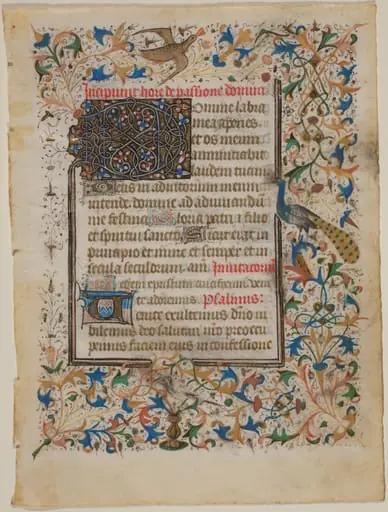 Manuscript Leaf from a Book of Hours (incip. Passionis)
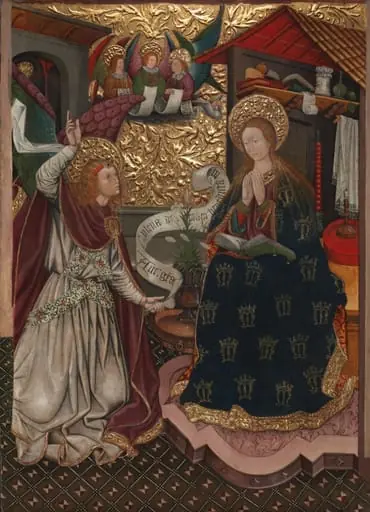 The Annunciation
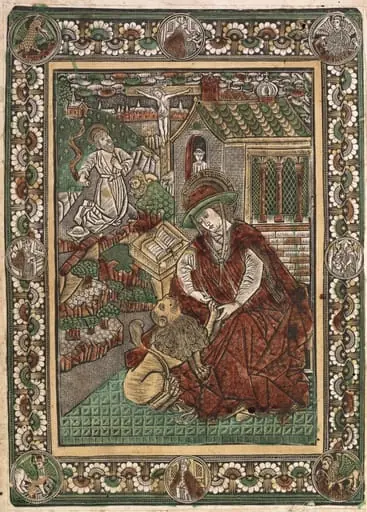 St. Jerome
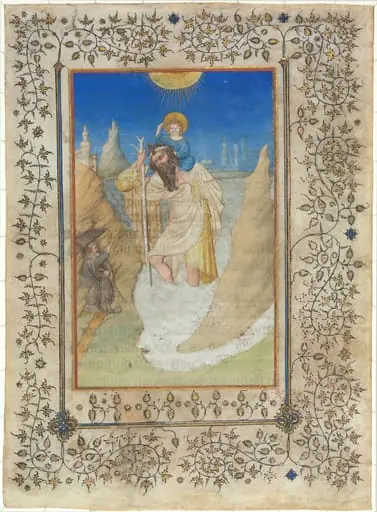 Saint Christopher Carrying the Christ Child
 Horae Beatae Mariae Virginis