Artwork
Beggar Woman and Child
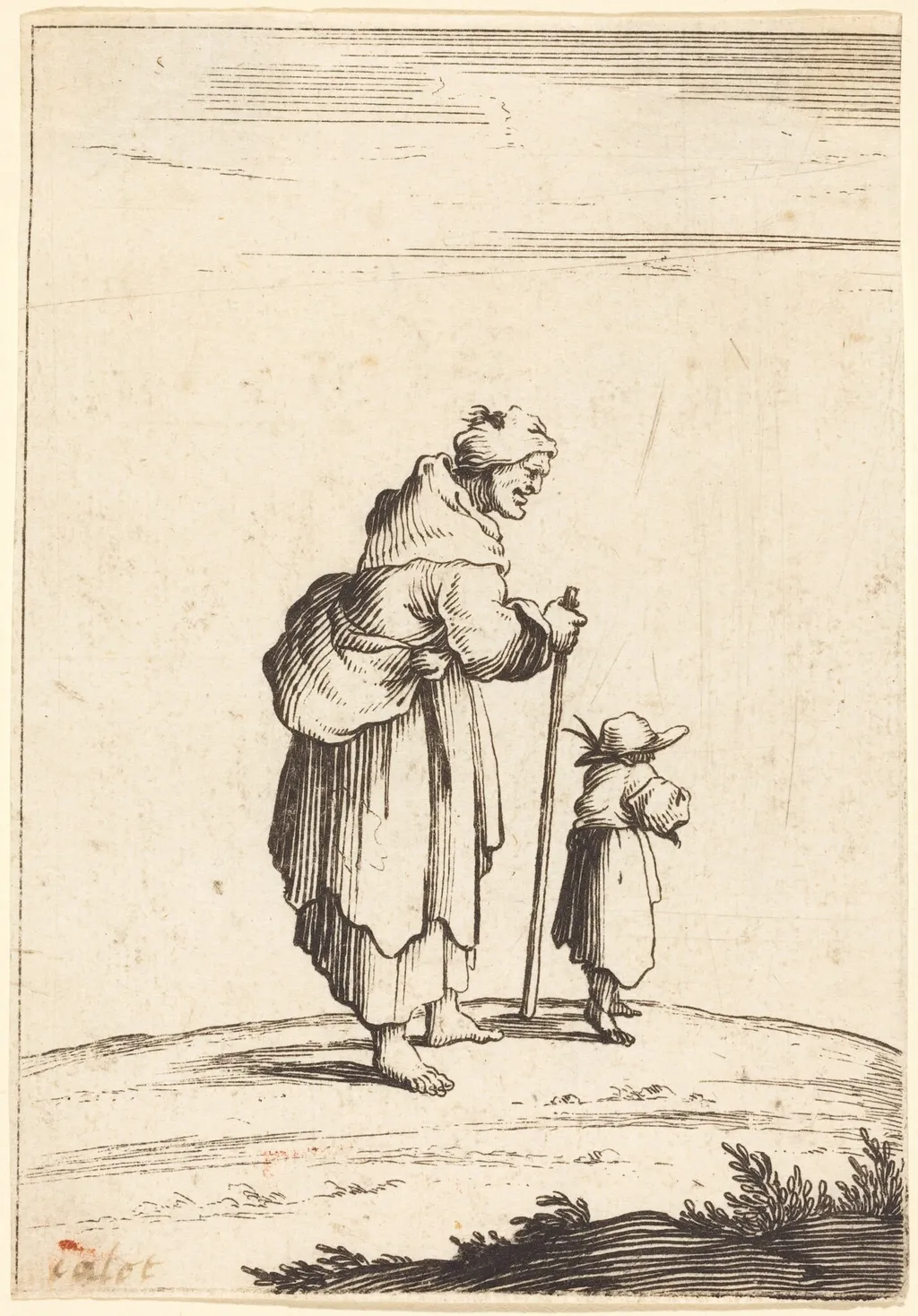
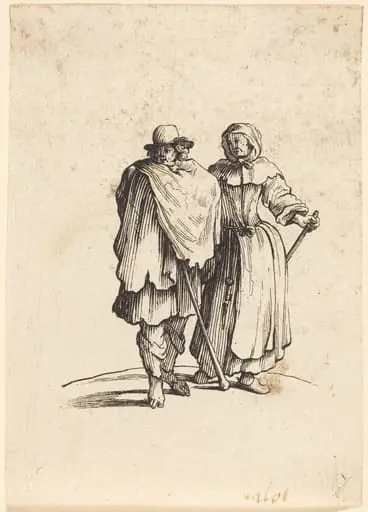
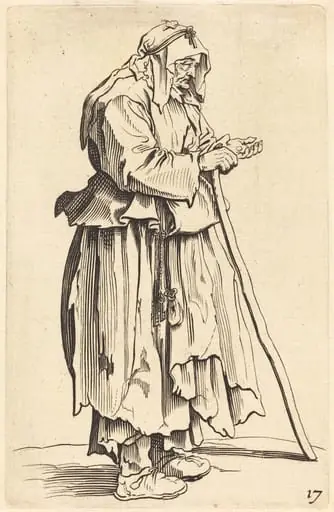
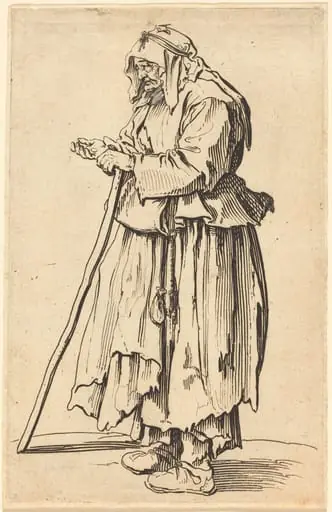
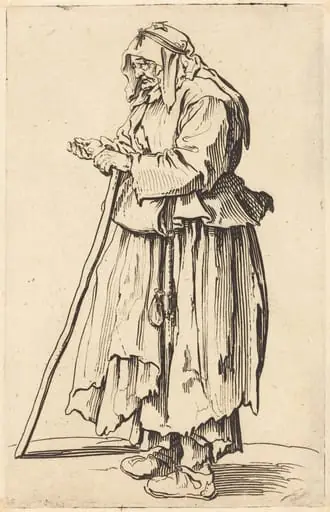
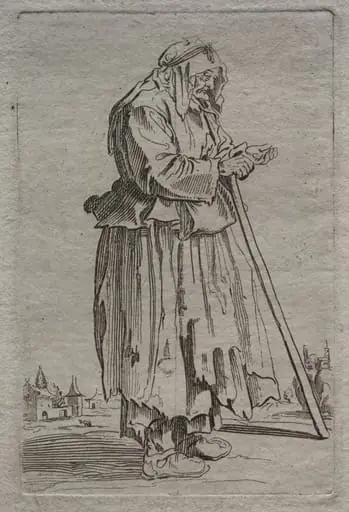
Beggar Woman and Child is an ink print by the Baroque artist French 17th Century. It dates from 1601 and is held in the collection of the National Gallery of Art. This etching on laid paper depicts an elderly woman and a young child moving together through a sparse, rugged landscape.
About this work
Overview
Executed with loose, uneven lines typical of the medium, the work captures a moment of quiet movement rather than a formal portrait.
This etching on laid paper depicts an elderly woman and a young child moving together through a sparse, rugged landscape. Executed with loose, uneven lines typical of the medium, the work captures a moment of quiet movement rather than a formal portrait. The artist used minimal detail to suggest form and atmosphere, emphasizing gesture over precision. The rough texture of the paper and the scratchy ink lines reflect the immediacy of the sketch-like process.
Subject & Meaning
The figures—a frail woman leaning on a staff and a small child walking beside her—suggest themes of dependence, endurance, and shared hardship. Their simple clothing and lack of identifying features render them anonymous, possibly representing broader social conditions rather than specific individuals. The absence of narrative context invites contemplation of daily survival among the poor, without sentimentality or moral judgment.
Technique & Style
The image was made using etching, a printmaking method involving acid-bitten lines on a metal plate. The artist employed rapid, irregular strokes to convey texture and movement, avoiding fine detail in favor of expressive energy. The uneven line quality and coarse background suggest a spontaneous approach, typical of preparatory sketches or informal studies. The use of laid paper, with its visible chain lines, adds to the tactile, unrefined character of the work.
History & Provenance
The work’s origin is undocumented, but its style and technique align with 17th- or early 18th-century European printmaking practices. Similar subjects appear in the works of artists who documented rural poverty, though no known hand has been definitively attributed. Its survival as a single impression implies it was not part of a published series, possibly a private or experimental piece, passed down without formal record.
Context
During the period when this print was likely made, etching was widely used by artists to record observations quickly, often outside the studio. Images of beggars and itinerant figures were common in Northern European art, reflecting both social awareness and the growing interest in everyday life. This work fits within a tradition that valued honest depiction over idealization, even when executed with minimal means.
Legacy
Though unsigned and unattributed, the print contributes to a broader visual record of marginalized lives in early modern Europe. Its unpolished technique and emotional restraint distinguish it from more ornate contemporary works, offering a direct, unmediated glimpse into the conditions of the poor. As a fragment of a larger artistic practice, it preserves the quiet dignity of subjects often excluded from formal art history.
Artist & collection

Artist
Seventeenth-century French printmakers turned ink into story. Their tools were burin and acid, paper their stage. Look at the Beggar Woman with Rosary (1622), etched on laid paper, her hands folded around faith, or The…