Artwork
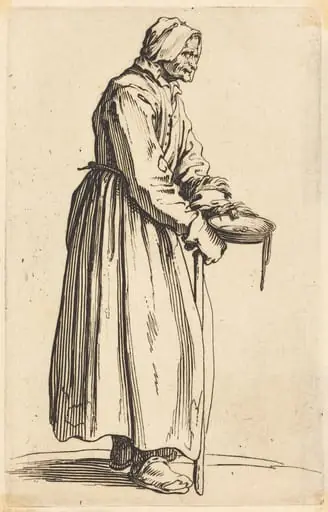
Beggar Woman with Pan
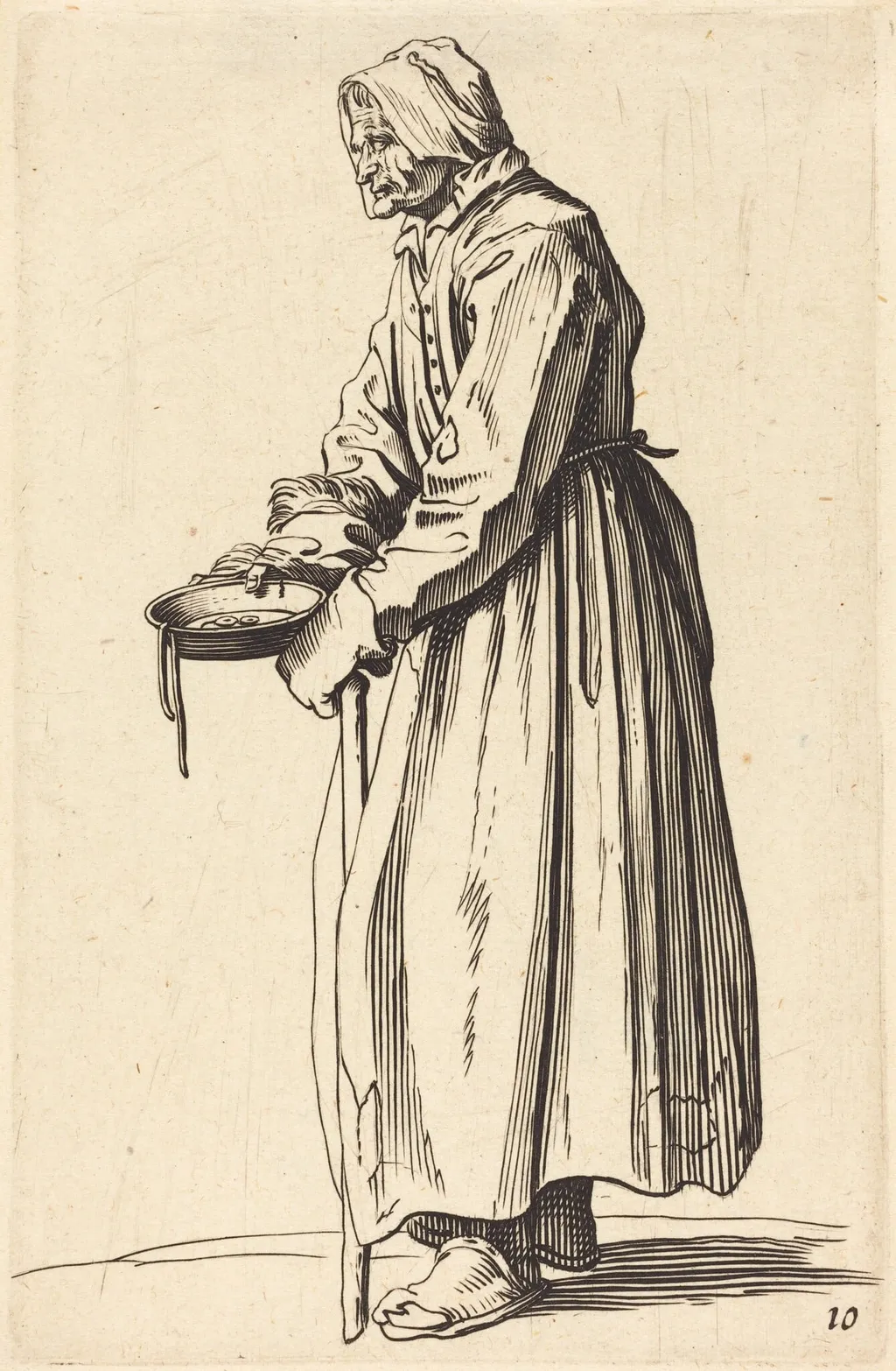
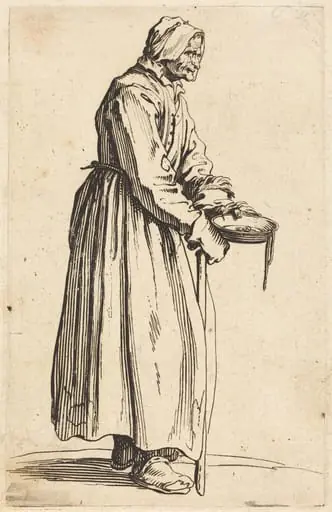
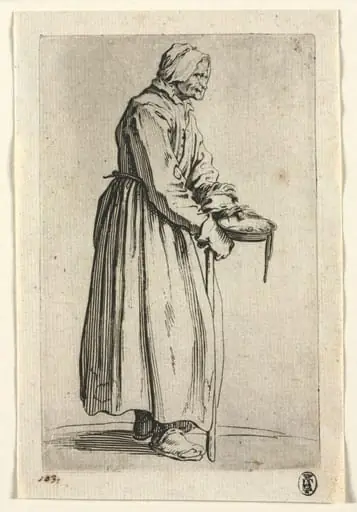
Beggar Woman with Pan is an ink print by the Baroque artist French 17th Century. It dates from 1622 and is held in the collection of the National Gallery of Art. This etching depicts a woman, likely impoverished, standing alone with a shallow pan at her side.
About this work
Overview
Rendered in ink on laid paper, the work emphasizes her solitary presence through minimal background and dense, expressive linework.
This etching depicts a woman, likely impoverished, standing alone with a shallow pan at her side. Rendered in ink on laid paper, the work emphasizes her solitary presence through minimal background and dense, expressive linework. The artist employed etching—a process involving acid-bitten lines on a metal plate—to achieve sharp, textured forms. The absence of context directs attention entirely to the figure’s posture and attire.
Subject & Meaning
The woman’s hunched stance and worn clothing suggest hardship, while the pan may imply begging or food preparation. Her hand resting on her hip conveys a quiet resilience rather than despair. The image avoids overt sentimentality, presenting her with dignity through restraint. No narrative is given; instead, the viewer is left to infer her circumstances from subtle physical cues and the starkness of the composition.
Technique & Style
The artist used etching to incise lines into a metal plate, which were then filled with ink and pressed onto paper. The rough, overlapping strokes create texture in her coat and hat, suggesting fabric movement and weight. The background is left largely untouched, enhancing the figure’s isolation. The contrast between dense, agitated lines and empty space defines the work’s emotional tone without embellishment.
History & Provenance
The print’s origin is tied to a period when etching was revived as a medium for intimate, observational works. Though the artist’s identity is not specified here, similar images emerged in 17th- and 18th-century Europe, often documenting urban poverty. The paper’s laid texture and ink quality align with prints from this era, though its exact provenance remains undocumented in available records.
Context
During the time this print was likely made, urban poverty was increasingly visible in European cities. Artists began turning to everyday subjects, moving away from mythological or aristocratic themes. This etching reflects a growing interest in the lives of the marginalized, captured not as spectacle but as quiet, unadorned reality—part of a broader shift toward social observation in printmaking.
Legacy
This work contributes to a tradition of printmaking that prioritizes human dignity in scenes of hardship. Its directness and technical economy influenced later artists who used etching to document social conditions. Though not widely exhibited, such images helped establish printmaking as a legitimate medium for personal and societal commentary beyond decorative or reproductive purposes.
Artist & collection

Artist
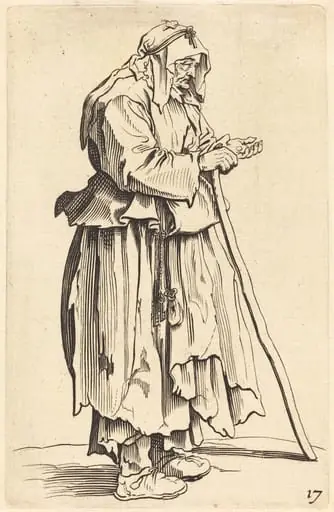
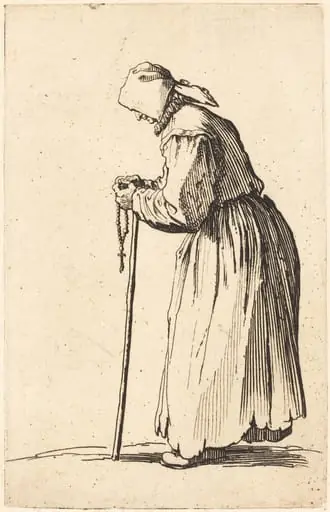
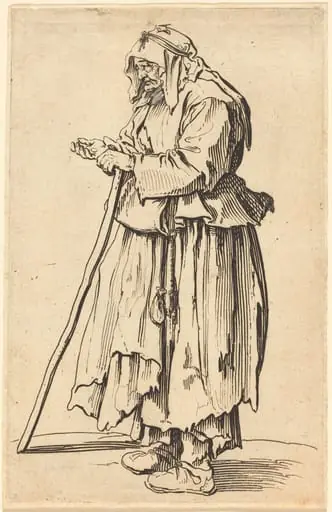
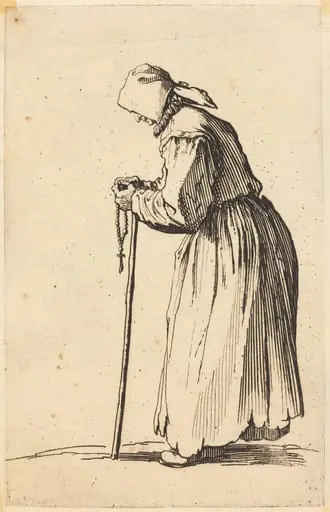
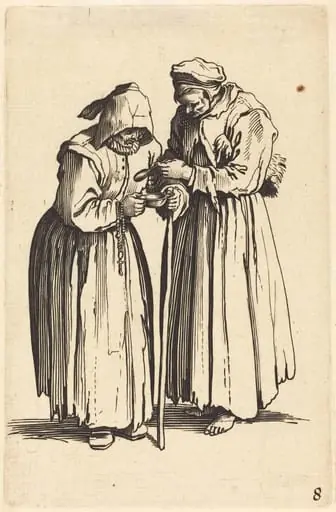
Seventeenth-century French printmakers turned ink into story. Their tools were burin and acid, paper their stage. Look at the Beggar Woman with Rosary (1622), etched on laid paper, her hands folded around faith, or The…