Artwork
Cap. Babeo and Cucuba
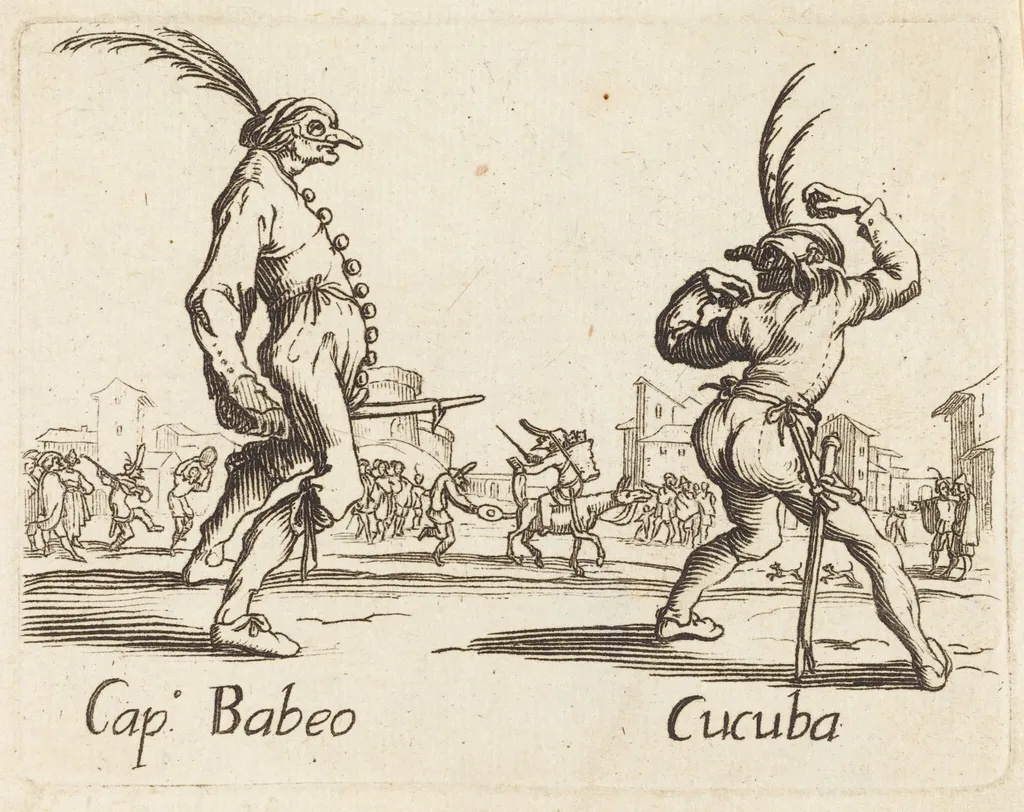
Cap. Babeo and Cucuba is an ink print by the Baroque artist French 17th Century. It dates from 1622 and is held in the collection of the National Gallery of Art. Cap.
About this work
Overview
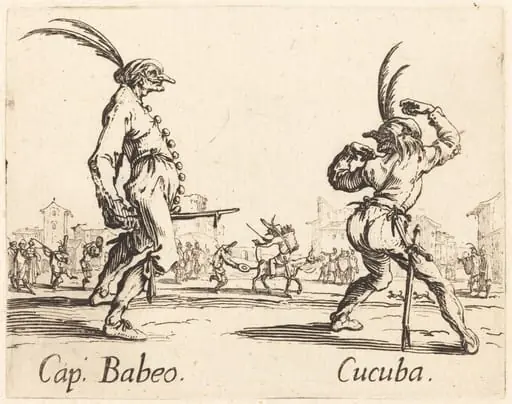
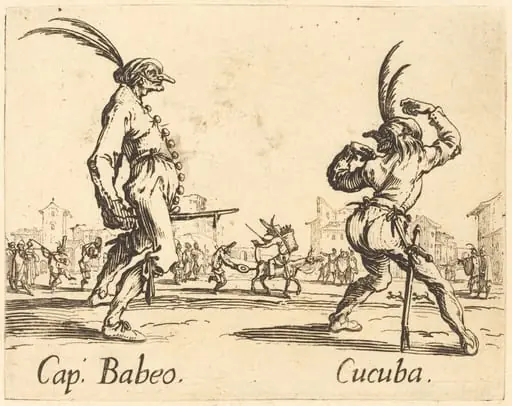
Cap. Babeo and Cucuba is an etching on laid paper depicting a vibrant, crowded street scene dominated by two exaggerated male figures, Cap. Babeo and Cucuba, amidst a backdrop of tiny onlookers in buildings and horse-drawn carts.
Subject & Meaning
The subject features two prominently displayed individuals, Cap. Babeo, strutting with a stick, feathered hat, and bead necklace, and Cucuba, in a balancing or combative pose. The names may satirically reference real individuals or concepts, characteristic of a style that critiques authority.
Technique & Style
The etching exhibits expressive, messy, and busy lines, conveying a sense of chaos and vitality. The technique of etching allows for sharp, detailed prints, as seen in the contrast between the large, detailed main figures and the miniature surrounding crowd.
Context
The work aligns with a satirical tradition that uses exaggeration to poke fun at authority figures or ideas, suggesting a commentary on contemporary societal or political elements through its humorous, crowded scene.
History & Provenance
No specific historical ownership or creation date details are provided for Cap. Babeo and Cucuba, focusing instead on the general technique and stylistic elements of the etching.
Legacy
The legacy of Cap. Babeo and Cucuba is not explicitly outlined in terms of direct influence, but it contributes to the broader appreciation of satirical etchings that critique power through vivid, chaotic compositions.
Artist & collection

Artist
Seventeenth-century French printmakers turned ink into story. Their tools were burin and acid, paper their stage. Look at the Beggar Woman with Rosary (1622), etched on laid paper, her hands folded around faith, or The…

 Cap. Babeo and Cucuba
 Cap. Esgangarato and Cap. Cocodrillo
 Cap. Babeo and Cucuba
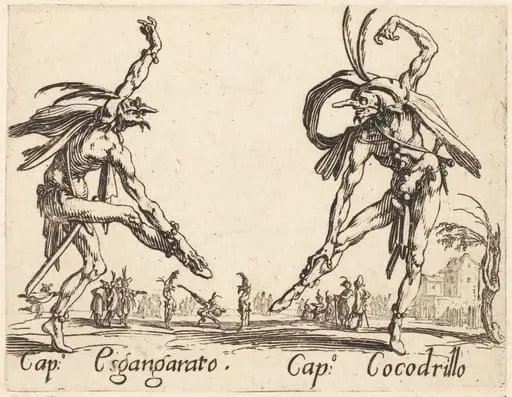 Cap. Esgangarato and Cap. Cocodrillo
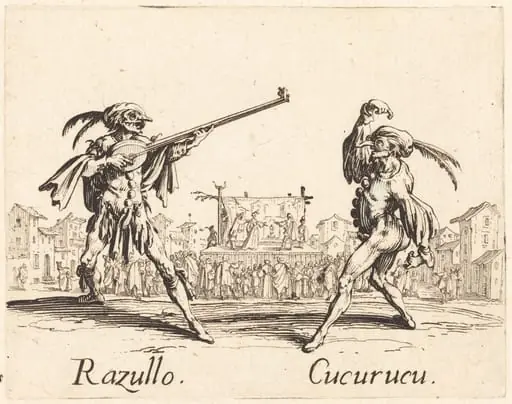 Razullo and Cucurucu
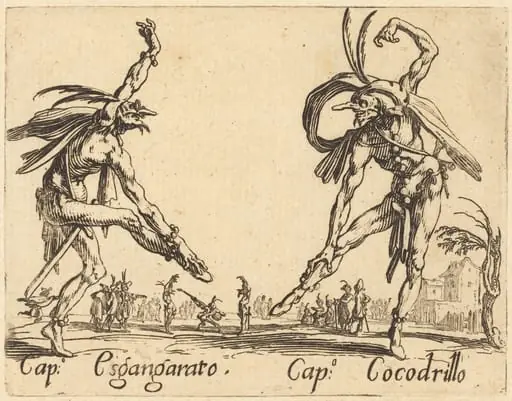 Cap. Esgangarato and Cap. Cocodrillo
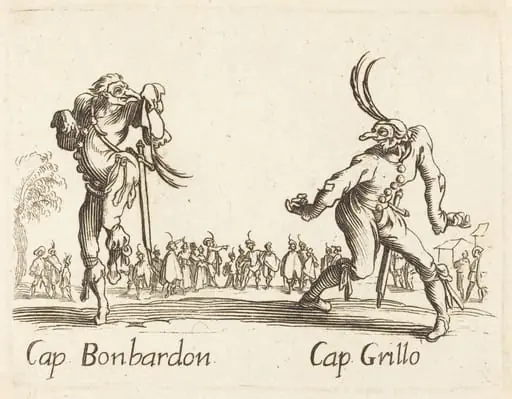 Cap. Bonbardon and Cap. Grillo
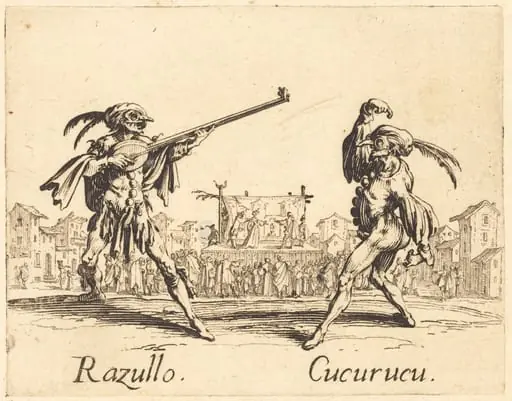 Razullo and Cucurucu
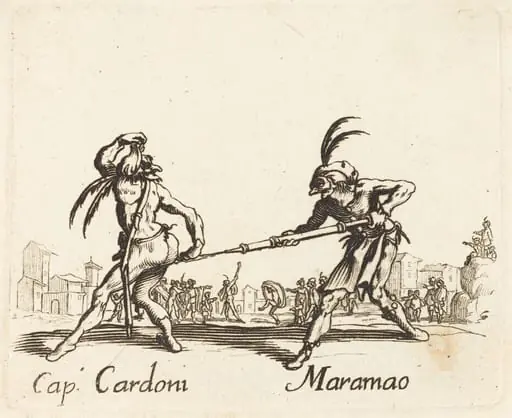 Cap. Cardoni and Maramao
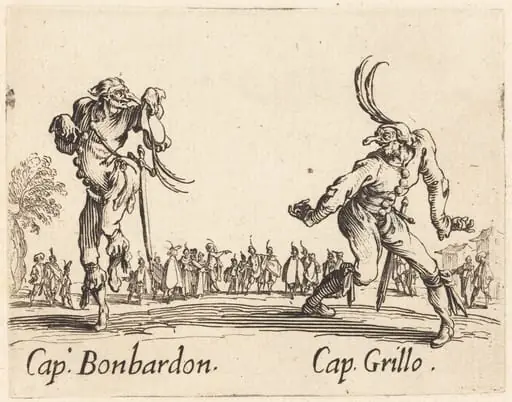 Cap. Bonbardon and Cap. Grillo
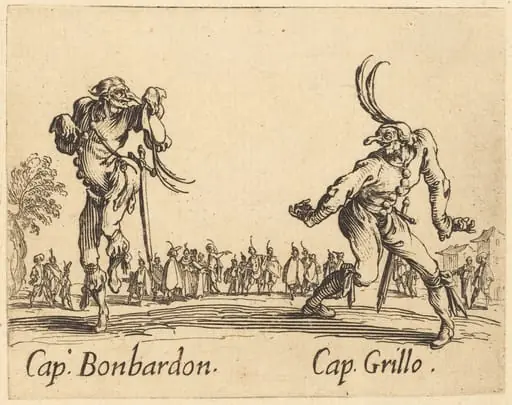 Cap. Bonbardon and Cap. Grillo