Artwork
Coat of Arms
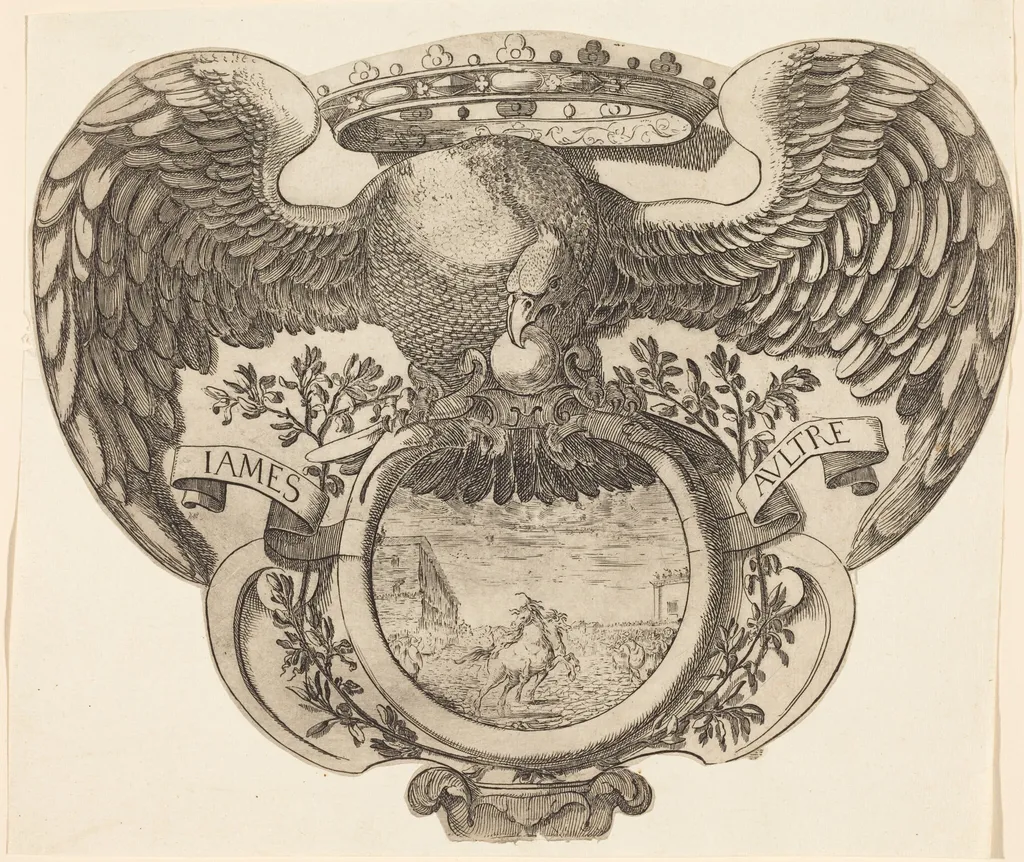
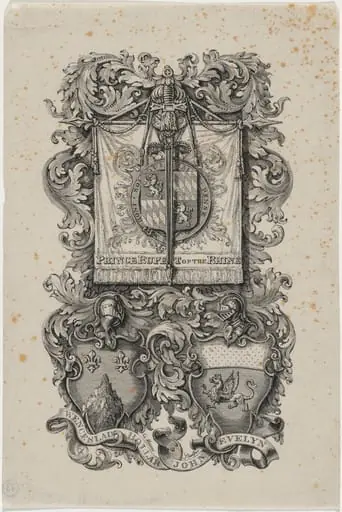
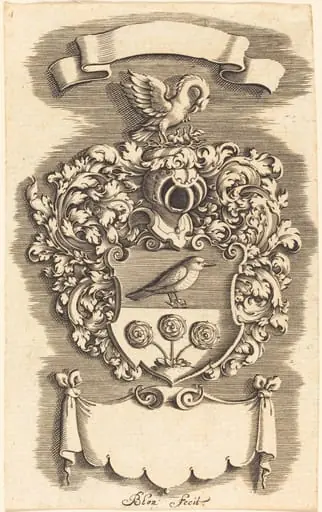
Coat of Arms is an ink print by the Baroque artist French 17th Century. It dates from 1650 and is held in the collection of the National Gallery of Art. This etching on laid paper presents a heraldic design centered on a shield, framed by ornamental wings and a crowned top.
About this work
Overview
This etching on laid paper presents a heraldic design centered on a shield, framed by ornamental wings and a crowned top.
This etching on laid paper presents a heraldic design centered on a shield, framed by ornamental wings and a crowned top. The composition includes decorative foliage, scrolled inscriptions, and a banner bearing the name 'Iames.' A miniature equestrian scene appears within the shield, suggesting a personal or familial narrative. The work is a printed image, likely intended for display or documentation rather than mass circulation.
Subject & Meaning
The imagery conveys nobility through symbolic elements: the crown and wings imply authority or elevated status. The horse and rider within the shield may represent a specific individual or lineage, possibly linked to the name 'Iames.' The accompanying scroll, possibly bearing the motto 'Aventre,' remains unverified in meaning, leaving its intended message partially obscure. The design functions as a visual assertion of identity or heritage.
Technique & Style
Executed in etching, the work employs acid to incise fine lines into a metal plate, allowing for intricate detail in the shield’s ornamentation and the delicate rendering of wings and scrolls. The use of laid paper suggests an early modern production method, with visible chain lines reinforcing its handmade character. The style is formal and emblematic, prioritizing symbolic clarity over naturalism.
History & Provenance
No definitive record of the print’s origin or creator is known. The name 'Iames' may reference a historical figure, possibly James VI of Scotland or James I of England, though this remains speculative. The absence of a date or maker’s mark limits precise dating. The work likely circulated among aristocratic or bureaucratic circles where heraldic imagery was valued for its legitimizing function.
Context
In early modern Europe, heraldic prints like this served as portable emblems of lineage, often commissioned for personal or institutional use. Etchings offered a more accessible alternative to painted armorials, allowing wider dissemination among the gentry. The inclusion of a motto and name aligns with contemporary practices of heraldic self-representation, though the specific cultural context of 'Aventre' remains unconfirmed.
Legacy
As a specimen of early modern heraldic printmaking, this work reflects the enduring use of visual symbols to convey status and identity. Though not attributed to a known artist, it exemplifies the standardized yet personalized nature of noble iconography. Its survival offers insight into how families and individuals visually asserted their place within hierarchical social structures.
Artist & collection

Artist
Seventeenth-century French printmakers turned ink into story. Their tools were burin and acid, paper their stage. Look at the Beggar Woman with Rosary (1622), etched on laid paper, her hands folded around faith, or The…