Artwork
Cucorongna and Pernoualla
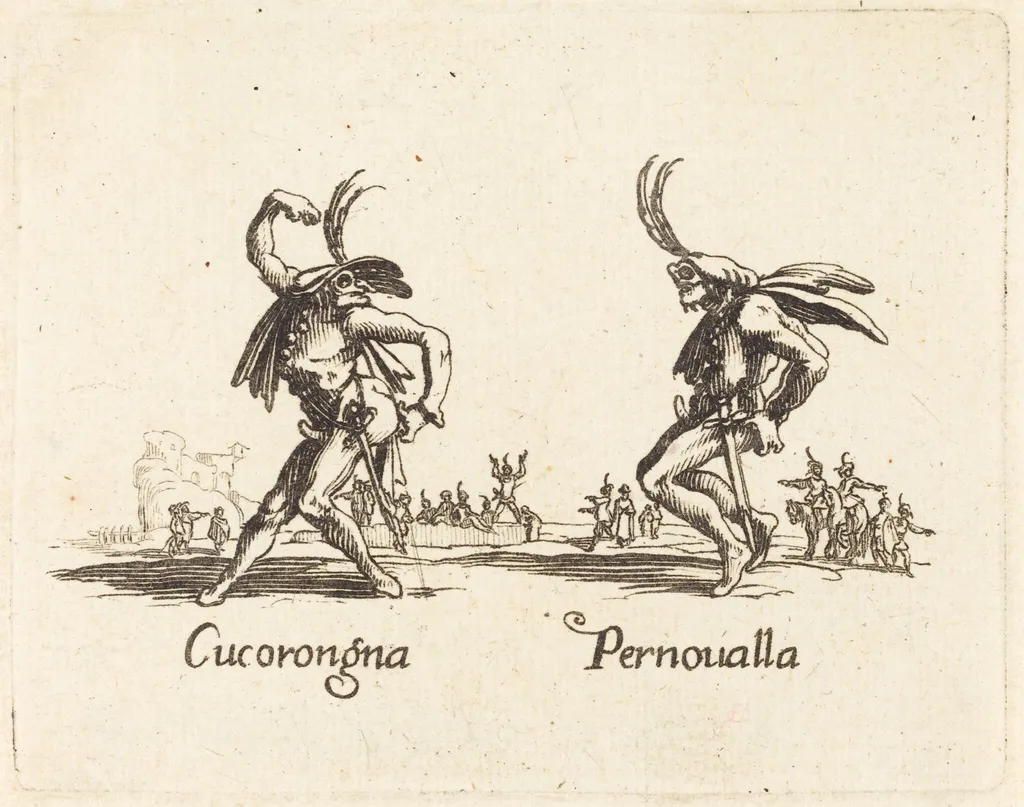
Cucorongna and Pernoualla is an ink print by the Baroque artist French 17th Century. It dates from 1622 and is held in the collection of the National Gallery of Art. The work is an etching on laid paper that depicts two enormous, insect‑like beings advancing through a compact settlement.
About this work
Overview
The work is an etching on laid paper that depicts two enormous, insect‑like beings advancing through a compact settlement. Their massive wings, elongated limbs, and human‑like faces crowned with wild hair dominate the composition, while townspeople scatter or seek shelter as structures and a bridge are crushed beneath the creatures.
Subject & Meaning
The figures are identified as Cucorongna and Pernoualla, names that evoke folkloric monsters. Their exaggerated scale and chaotic movement create a scene of terror and spectacle, suggesting a narrative intended to provoke fear, amusement, or moral reflection about the vulnerability of ordinary life when confronted by monstrous forces.
Technique & Style
Executed through the etching process, the artist incised fine lines into a metal plate, which was then inked and pressed onto laid paper. This method allows for precise detailing of textures such as the creatures’ wing veins and the crumbling architecture, while the contrast of deep blacks and delicate hatching enhances the dramatic tension of the composition.
History & Provenance
The print is catalogued under the title "Cucorongna and Pernoualla" and is known primarily through its surviving impressions on laid paper. No specific date, artist, or collection history is recorded in the available documentation, limiting knowledge of its original exhibition or ownership.
Context
Works featuring monstrous beings overwhelming human settlements were common in early modern print culture, often serving as visual allegories or popular entertainment. The depiction aligns with a tradition of grotesque satire that used fantastical creatures to comment on societal anxieties or simply to captivate viewers with sensational imagery.
Artist & collection

Artist
Seventeenth-century French printmakers turned ink into story. Their tools were burin and acid, paper their stage. Look at the Beggar Woman with Rosary (1622), etched on laid paper, her hands folded around faith, or The…

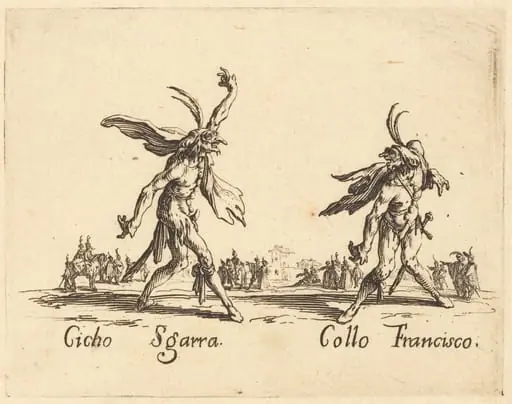 Cicho Sgarra and Collo Francisco
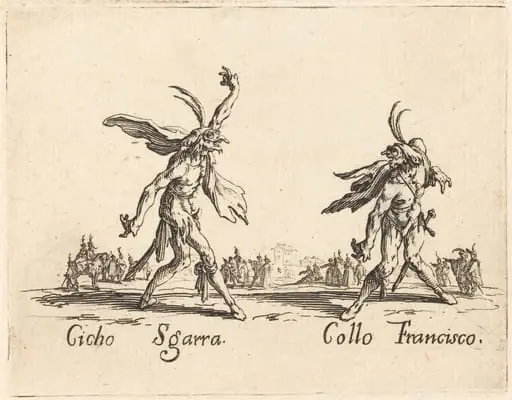 Cicho Sgarra and Collo Francisco
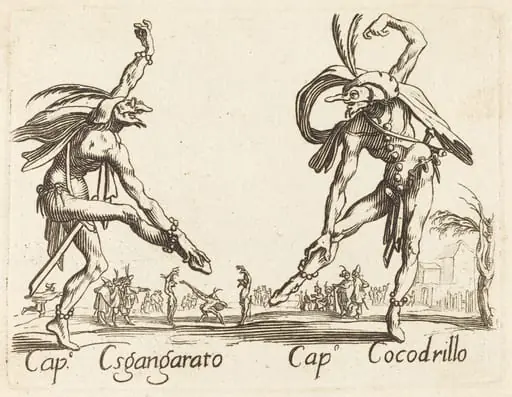 Cap. Esgangarato and Cap. Cocodrillo
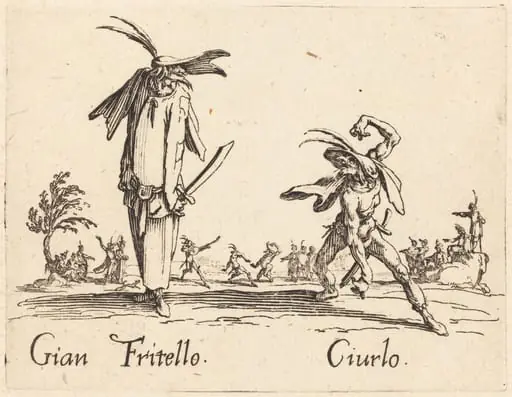 Gian Fritello and Ciurlo
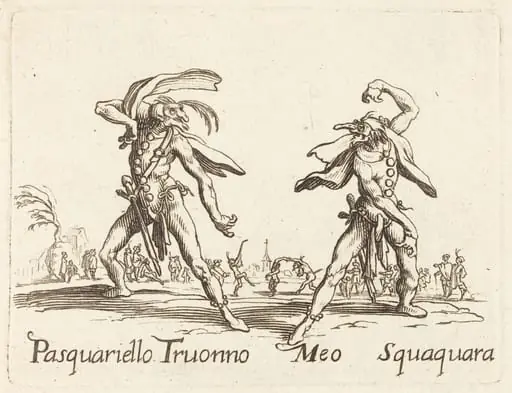 Pasquariello Truonno and Meo Squaquara
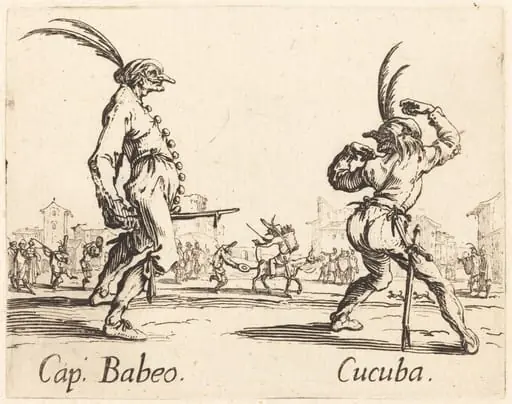 Cap. Babeo and Cucuba
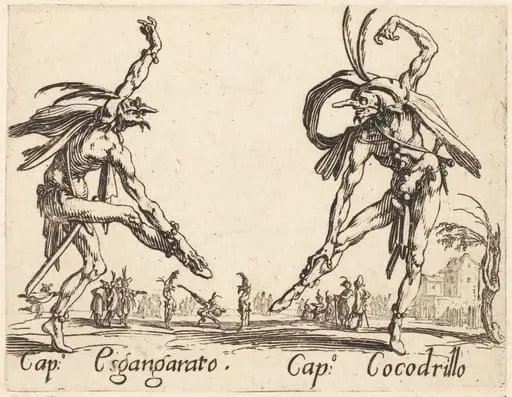 Cap. Esgangarato and Cap. Cocodrillo
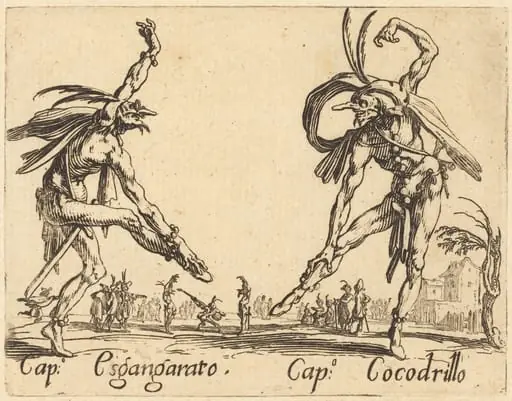 Cap. Esgangarato and Cap. Cocodrillo
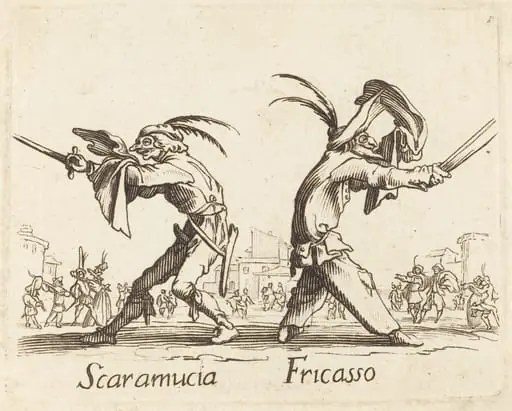 Scaramucia and Fricasso
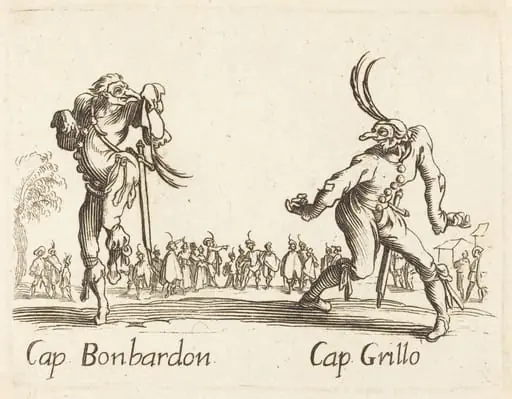 Cap. Bonbardon and Cap. Grillo