Artwork
One-Eyed Woman
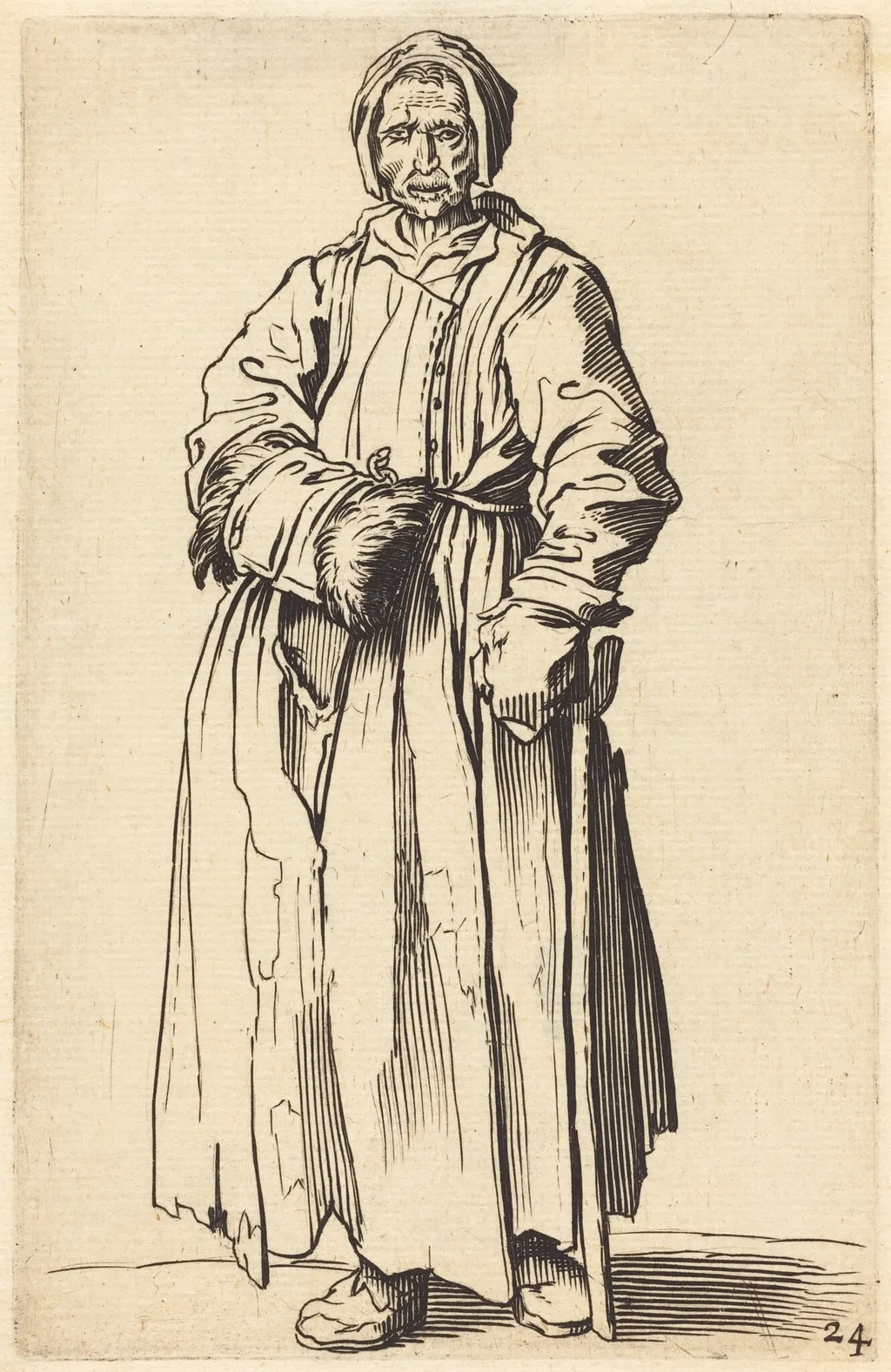
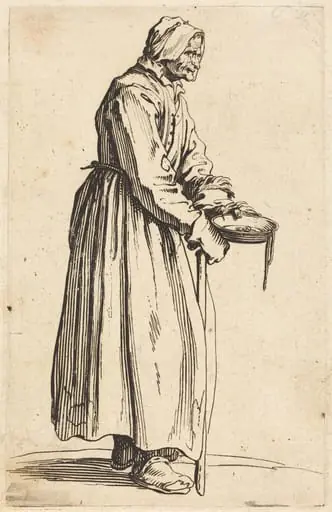
One-Eyed Woman is an ink print by the Baroque artist French 17th Century. It dates from 1622 and is held in the collection of the National Gallery of Art.
About this work
Overview
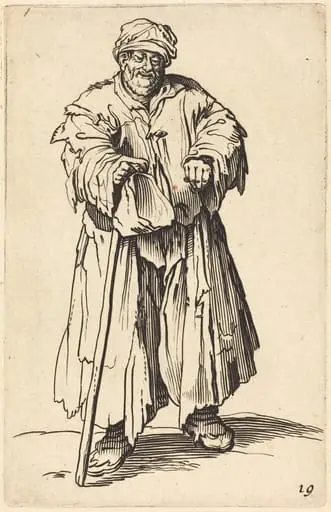
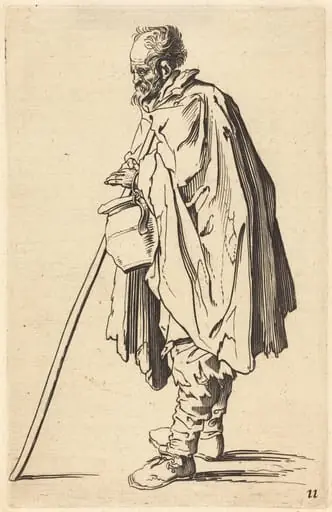
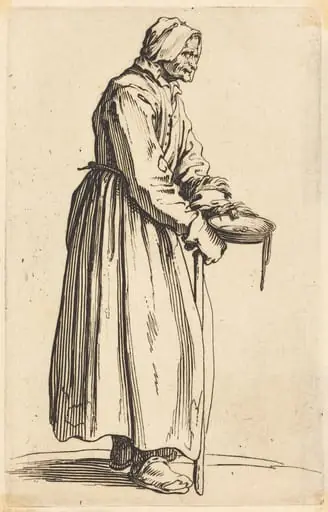
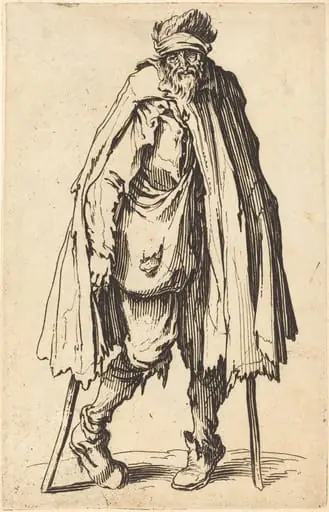
One-Eyed Woman is an etching executed on laid paper, depicting an elderly female figure whose gaze is limited to a single eye. She is dressed in a long coat and head covering, stands with crossed arms, and holds a walking stick in her left hand, presenting a solemn demeanor.
Subject & Meaning
The portrait captures a solitary, aged woman, emphasizing themes of vulnerability and resilience through her singular eye and austere posture. Her worn clothing and serious expression suggest a narrative of hardship or marginality within a historical context.
Technique & Style
The work demonstrates fine etching technique, evident in the meticulous rendering of fabric folds and the subtle gradations of line. The use of laid paper contributes to a textured surface, while the overall composition reflects the detailed realism characteristic of 17th‑century European printmaking.
History & Provenance
The print is part of the collection of the National Gallery of Art in Washington, D.C., where it is catalogued as an example of the artist’s proficiency in the etching medium. Its acquisition details are recorded in the museum’s holdings.
Own this work as a print
Artist & collection

Artist
Seventeenth-century French printmakers turned ink into story. Their tools were burin and acid, paper their stage. Look at the Beggar Woman with Rosary (1622), etched on laid paper, her hands folded around faith, or The…