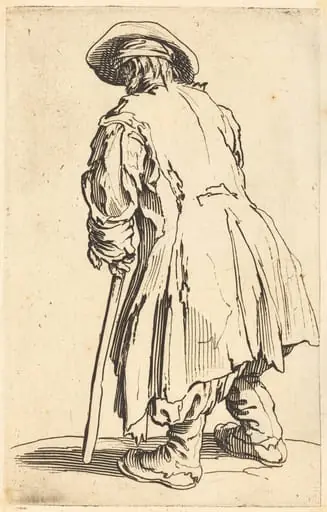
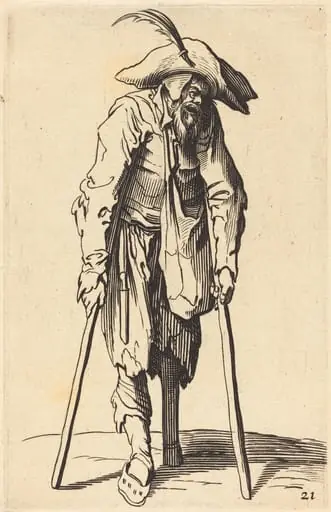
Artwork
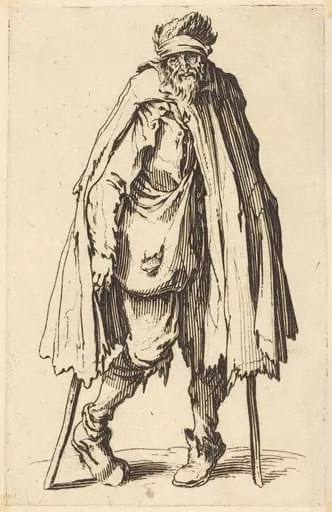
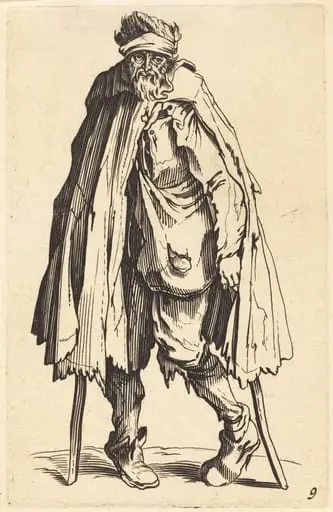
Beggar with Crutches and Sack
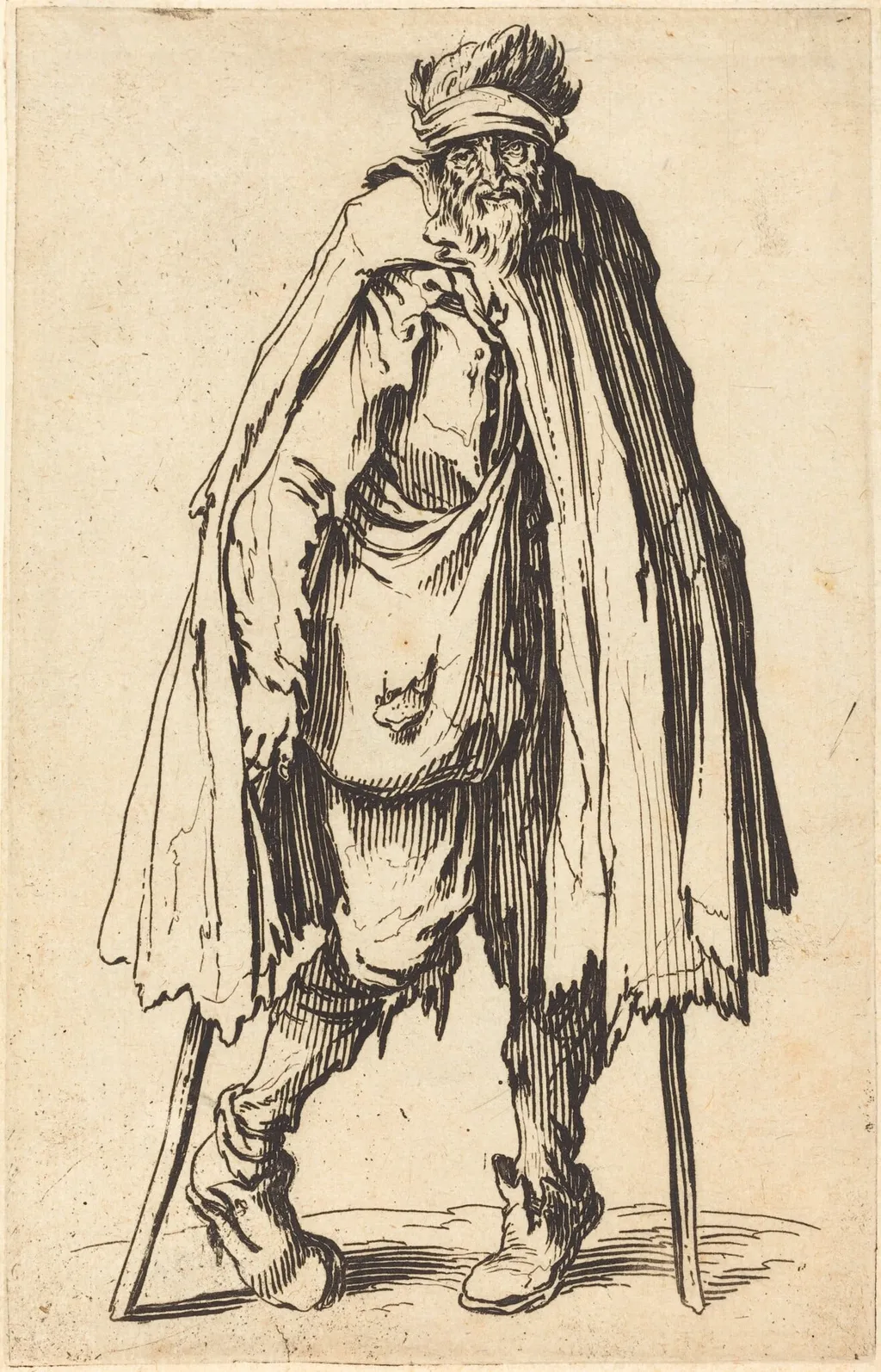
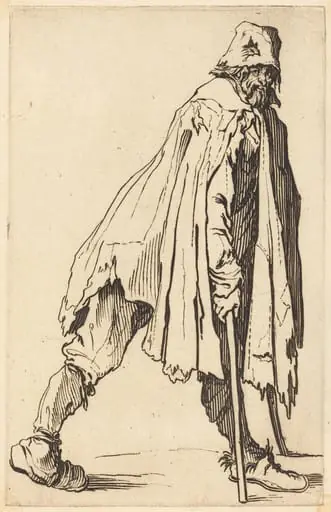
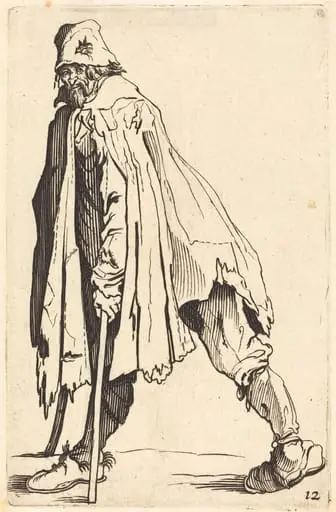
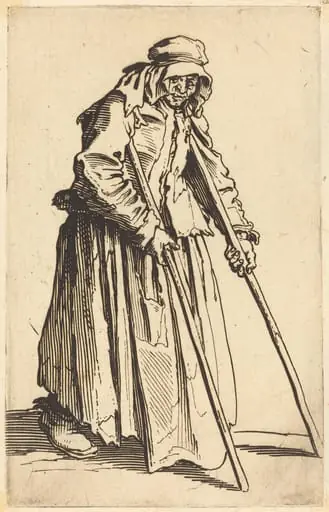
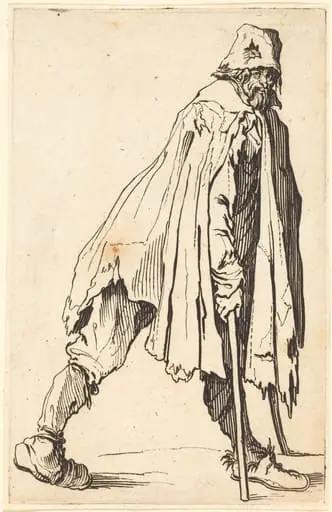
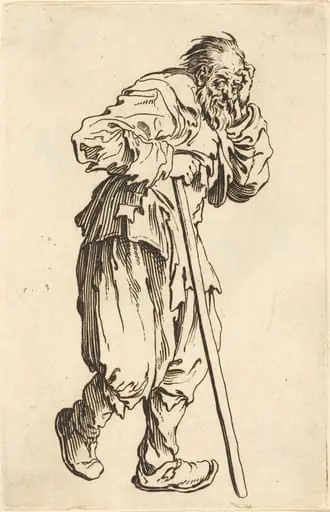
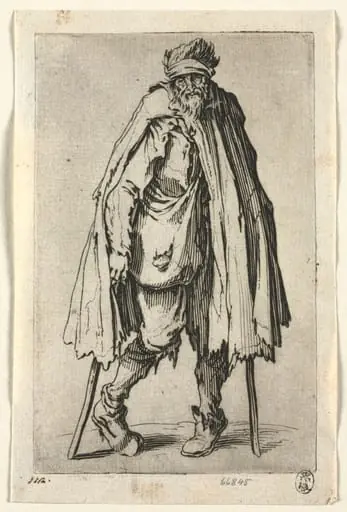
Beggar with Crutches and Sack is an ink print by the Baroque artist Jacques Callot. It dates from 1622 and is held in the collection of the National Gallery of Art.
About this work
Overview
Beggar with Crutches and Sack is an etching on laid paper created by Jacques Callot around 1622. This work exemplifies the artist's documentary approach to 17th-century life, focusing on a solitary figure within a meticulously rendered landscape.
Subject & Meaning
The print depicts an elderly beggar, conveyed through worn, huddled posture, and weathered facial features. The subject's realism underscores Callot's interest in capturing the everyday struggles of marginalized individuals during his time.
Technique & Style
Callot employed quick, scratchy etching lines to achieve textured details, evident in the beggar's wrinkled skin, clothing folds, and the landscape background. This technique lends the figure a sense of authenticity and wear.
History & Provenance
Part of Callot's prolific output of over 1,400 etchings, this piece is characteristic of his Baroque period work. Originating from the Duchy of Lorraine, it reflects the artist's French roots.
Context
Created in 1622, the print is set against the backdrop of 17th-century European society, where poverty and military presence (often depicted in Callot's other works) were prevalent. This piece highlights the artist's ability to balance individual portraits with broader social commentary.
Legacy
While specific legacy details of *Beggar with Crutches and Sack* are not highlighted, it contributes to Callot's overall influence on baroque printmaking, known for its detailed, realistic depictions of everyday and marginalized life.
Artist & collection
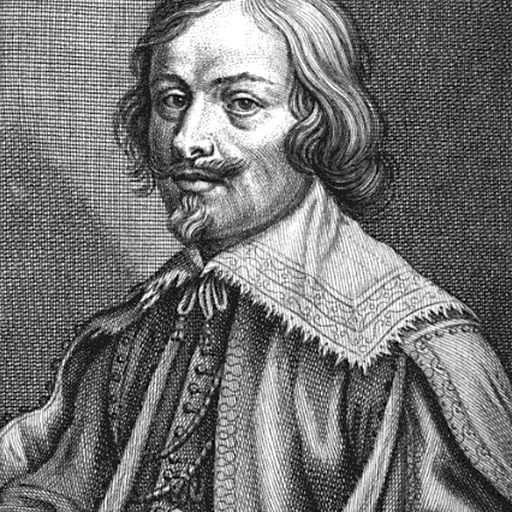
Artist
Jacques Callot was a baroque printmaker and draftsman from the Duchy of Lorraine.

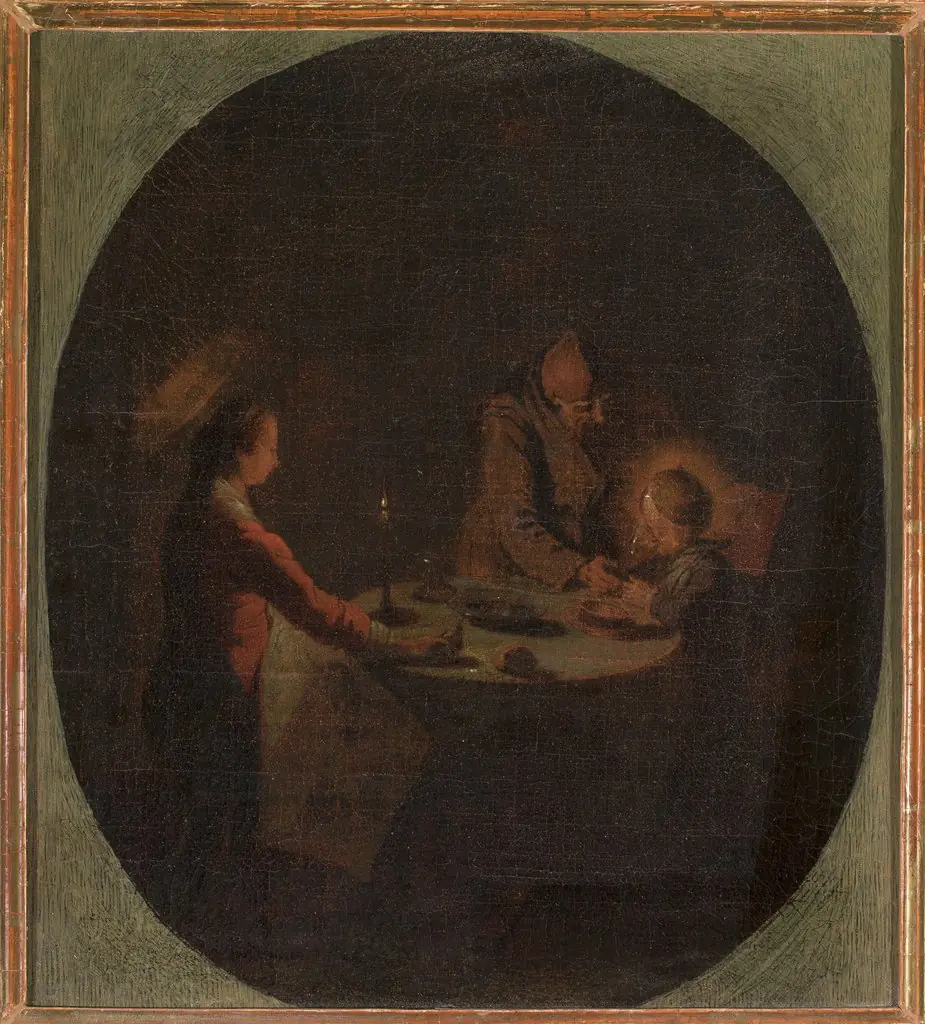 Holy Family at supper
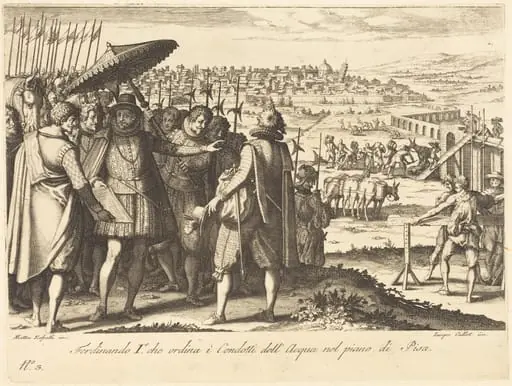 Restoration of the Aqueduct at Pisa
 Restoration of the Aqueduct at Pisa
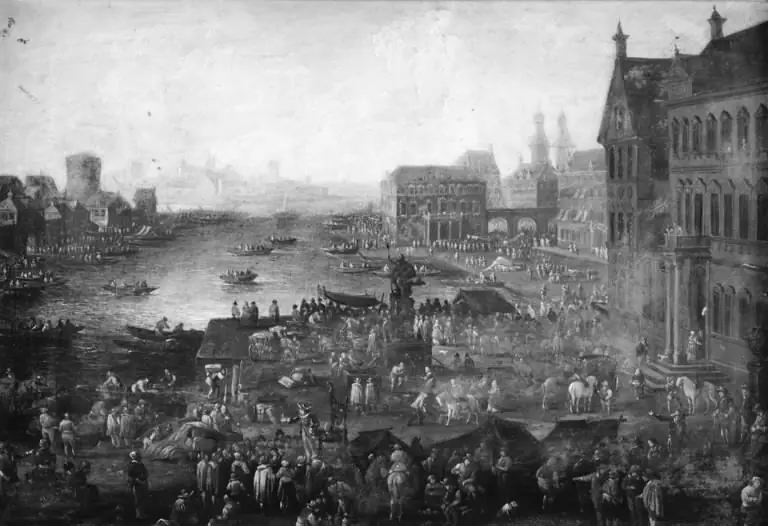 Square in Paris with Many Figures
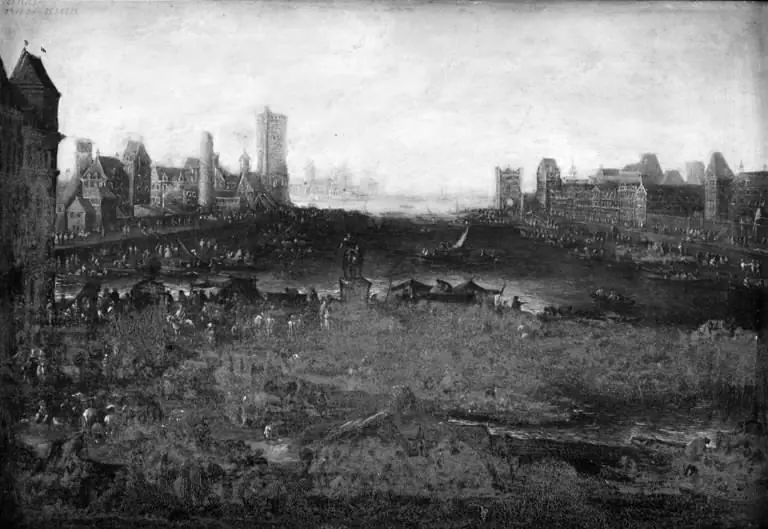 Square in Paris with Many Figures
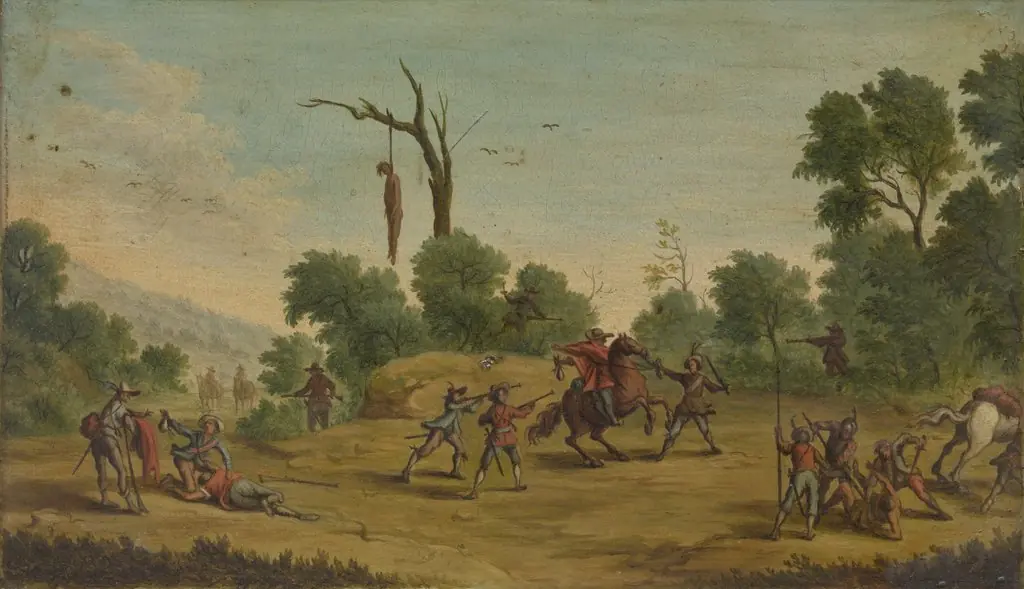 Horsemen Attacked by Robbers
 HOW WILL A COVERED PART BE CORRECTED?HOW WIKA A COVERED HEART DEED CORRECTED?
![Christ Walking on the Water [second plate], by Jacques Callot](https://artifactworldgallery.com/img/jacques-callot--christ-walking-on-the-water-second-plate--2069f3bfe4cb2126-w320.webp) Christ Walking on the Water [second plate]
Christ Walking on the Water [second plate]