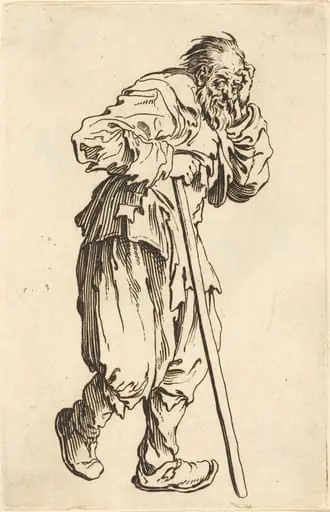
Artwork
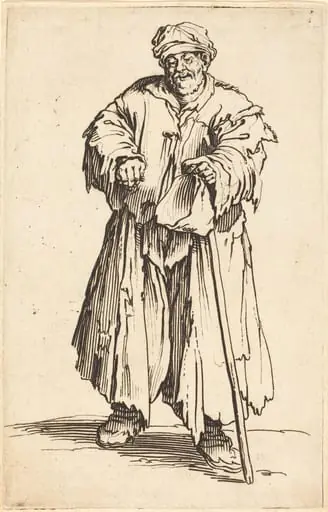
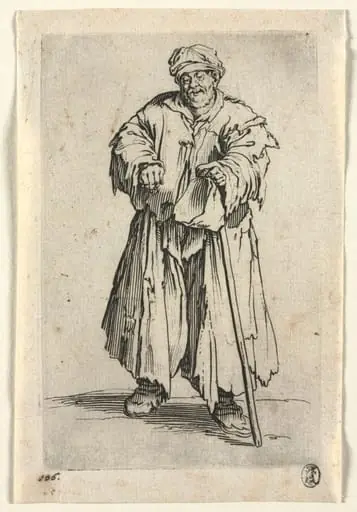
Fat Beggar with Eyes Cast Down
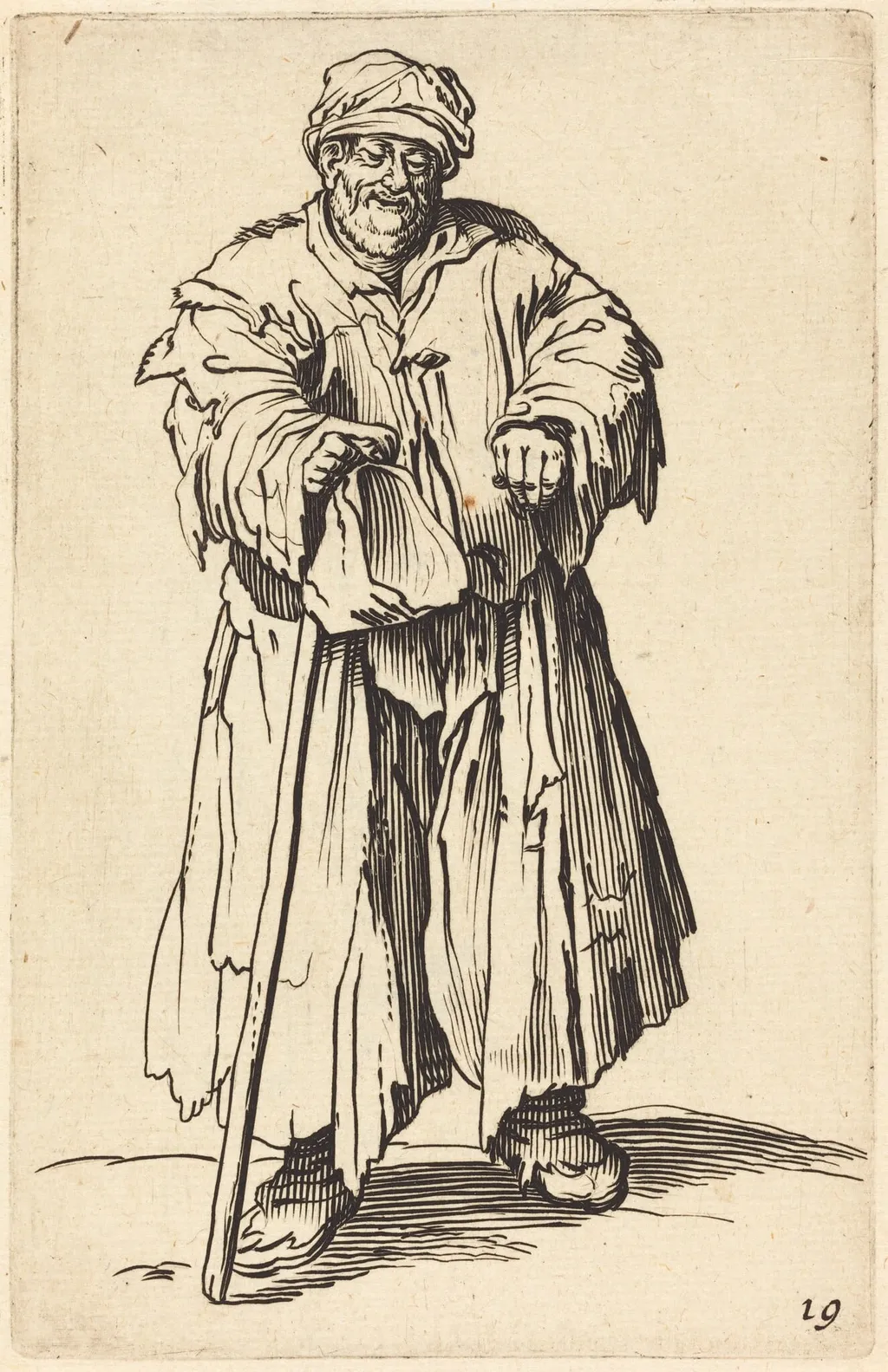
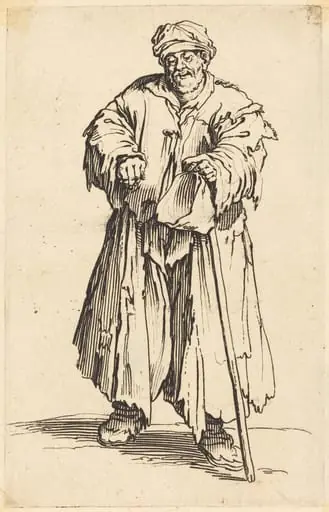
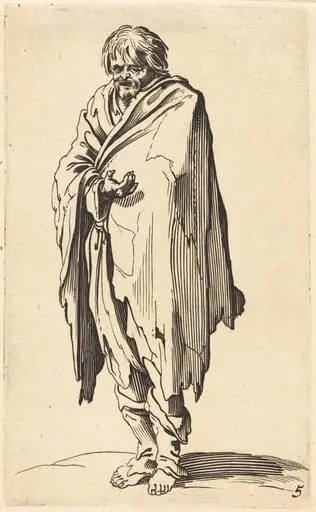
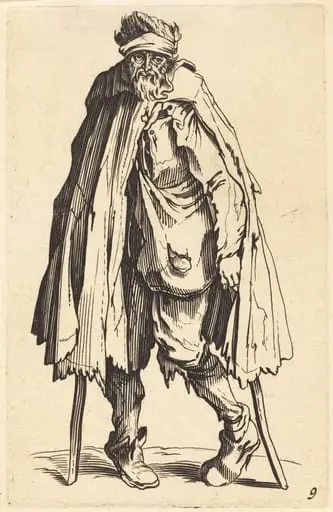
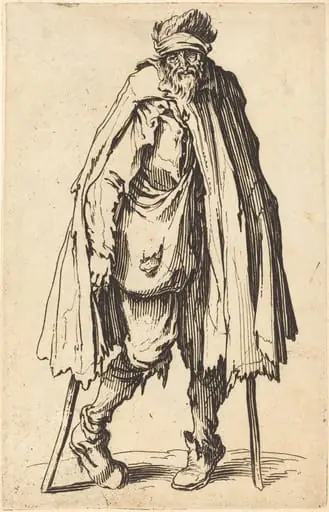
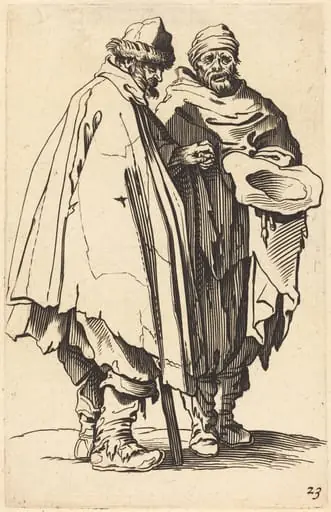
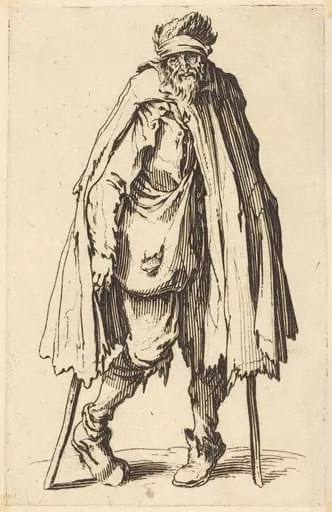
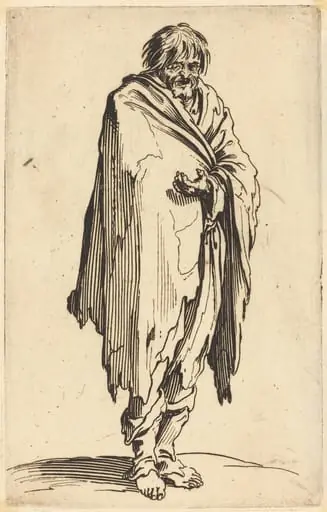
Fat Beggar with Eyes Cast Down is an ink print by the Baroque artist French 17th Century. It dates from 1622 and is held in the collection of the National Gallery of Art. This etching portrays a destitute figure standing alone on a plain surface, rendered in fine linear strokes on laid paper.
About this work
Overview
The composition avoids embellishment, focusing solely on the figure’s worn clothing and modest possessions: a staff, a bag, and a broad-brimmed hat.
This etching portrays a destitute figure standing alone on a plain surface, rendered in fine linear strokes on laid paper. The subject, identified as a beggar, is depicted with a hunched posture and downcast gaze, emphasizing withdrawal and resignation. The composition avoids embellishment, focusing solely on the figure’s worn clothing and modest possessions: a staff, a bag, and a broad-brimmed hat. The somber tone is achieved through restrained shading and minimal background detail.
Subject & Meaning
The figure represents societal marginalization, his swollen belly and tattered garments suggesting both physical hardship and economic deprivation. His downward gaze implies avoidance of scrutiny, perhaps reflecting shame or resignation to his condition. The absence of interaction with the viewer reinforces isolation, positioning the beggar not as a spectacle but as a quiet witness to his own suffering. The image resists moralizing, instead inviting contemplation of invisibility in urban life.
Technique & Style
The artist employs drypoint and etching techniques to create soft, uneven lines that mimic the texture of worn fabric and rough skin. Shading is subtle, built through cross-hatching rather than heavy ink, lending a muted, atmospheric quality. The lack of architectural or environmental context directs focus entirely to the figure’s form and expression. The style aligns with 17th-century Northern European printmaking traditions that favored observational realism over idealization.
History & Provenance
The work is attributed to a Baroque-era printmaker active in the Low Countries or Germany, though the artist’s identity remains unconfirmed. Similar subjects appear in the oeuvres of contemporaries like Rembrandt and Adriaen van Ostade, who documented the lives of the poor with unflinching detail. The paper type and watermark suggest production between 1620 and 1670. Its survival in private collections indicates it was likely collected by connoisseurs interested in social realism rather than religious or mythological themes.
Context
During the 17th century, rising urban populations and economic disparity led to increased visibility of poverty in Northern Europe. Printmaking became a medium through which artists documented everyday life, including the marginalized. While religious imagery dominated public art, etchings like this one circulated among private collectors, offering a counter-narrative to idealized depictions of society. This work reflects a growing interest in human dignity amid hardship.
Legacy
Though not widely exhibited, this etching contributes to a broader tradition of empathetic portraiture in early modern printmaking. Its unadorned realism influenced later generations of artists who sought to represent the working poor without sentimentality. It stands as a quiet testament to the role of prints in preserving the visibility of those often excluded from official histories.
Artist & collection

Artist
Seventeenth-century French printmakers turned ink into story. Their tools were burin and acid, paper their stage. Look at the Beggar Woman with Rosary (1622), etched on laid paper, her hands folded around faith, or The…