Artwork
The Body of Christ being Covered with Flowersand Perfume
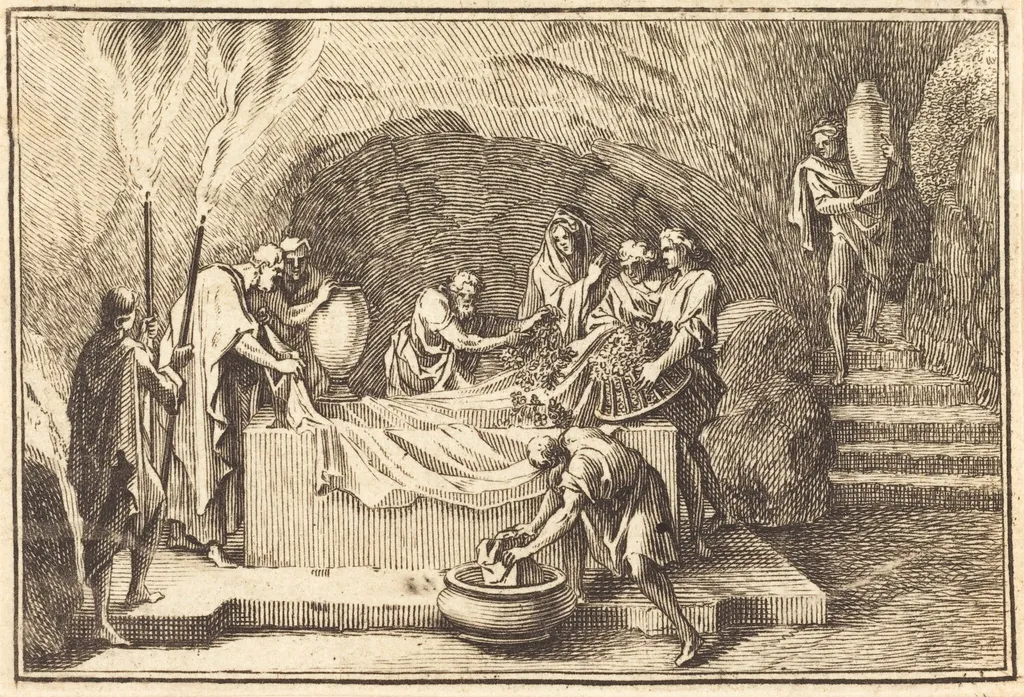
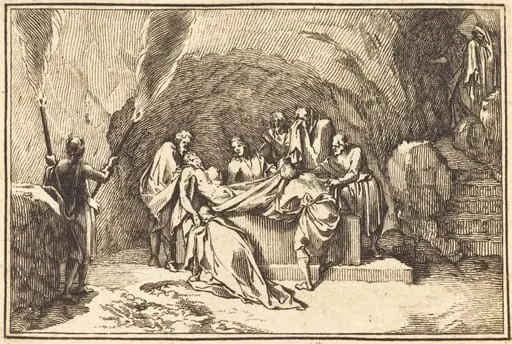
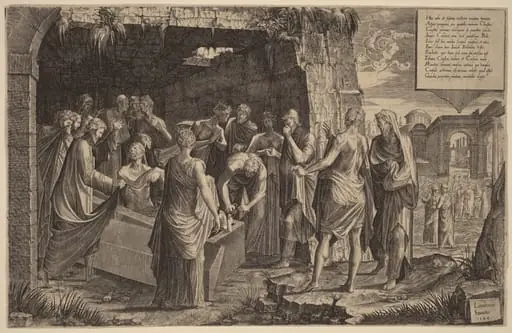
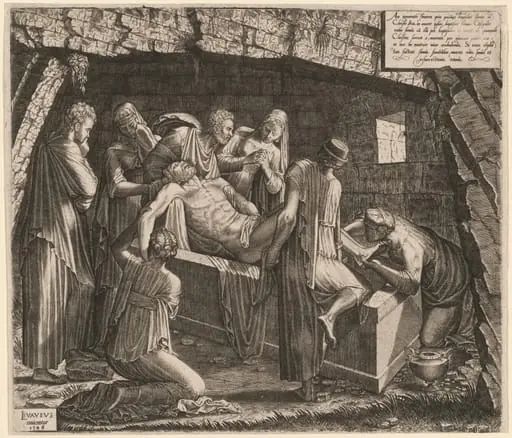
The Body of Christ being Covered with Flowersand Perfume is an ink print by the Baroque artist French 17th Century. It dates from 1650 and is held in the collection of the National Gallery of Art. An engraving depicting a solemn ritual surrounding a draped body, this print captures a moment of quiet devotion.
About this work
Overview
An engraving depicting a solemn ritual surrounding a draped body, this print captures a moment of quiet devotion.
An engraving depicting a solemn ritual surrounding a draped body, this print captures a moment of quiet devotion. Figures in flowing robes gather around the deceased, carefully placing flowers and perfumed oils upon the shroud. The dim, stone-walled setting suggests an enclosed or subterranean space, with steps ascending into shadow. Cross-hatching defines form and depth, emphasizing the gravity of the act.
Subject & Meaning
The scene illustrates a traditional act of burial preparation, likely referencing Christian or ancient funerary customs. The careful anointing of the body with perfume and floral offerings reflects reverence for the dead, aligning with practices described in religious texts. The absence of overt symbolism invites contemplation of mortality and ritualized care, rather than narrative specificity.
Technique & Style
The artist employs fine, layered cross-hatching to model light and volume, characteristic of Baroque printmaking. Shading is precise, creating texture in fabrics and stone without relying on tone or wash. The composition directs attention to the central form through controlled contrasts, while the figures’ postures convey stillness and solemnity, reinforcing the ritual’s dignity.
History & Provenance
The work originates from the 17th century, a period when religious themes dominated print production in Europe. Though the artist’s identity remains unconfirmed, the style aligns with Northern European engravers active in devotional print cycles. Its survival suggests it was circulated among private collectors or used in liturgical contexts, though no documented provenance is currently established.
Context
Created during the Baroque era, the image reflects a cultural emphasis on emotional intensity and tactile piety. Similar scenes appear in altarpieces and illustrated Bibles, where burial rites served as meditative subjects. The underground setting may allude to the tomb of Christ or early Christian catacombs, linking personal devotion to sacred precedent.
Legacy
This engraving contributes to a broader tradition of religious printmaking that made sacred narratives accessible beyond church walls. Its restrained composition and technical precision influenced later artists working in devotional themes. Though not widely reproduced today, it remains a quiet example of how print media sustained spiritual reflection in early modern Europe.
Artist & collection

Artist
Seventeenth-century French printmakers turned ink into story. Their tools were burin and acid, paper their stage. Look at the Beggar Woman with Rosary (1622), etched on laid paper, her hands folded around faith, or The…