Artwork
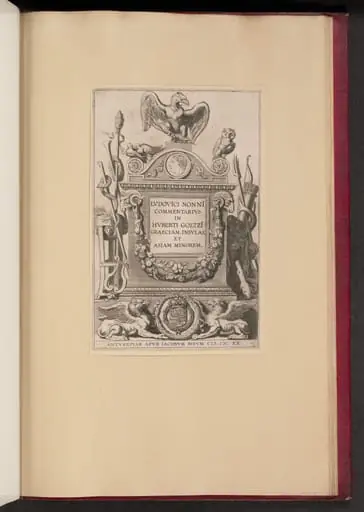
Title Page for Hubert Goltzius, Graeciae Vniversae Asiaeq. Minoris et Insularum Nomismata
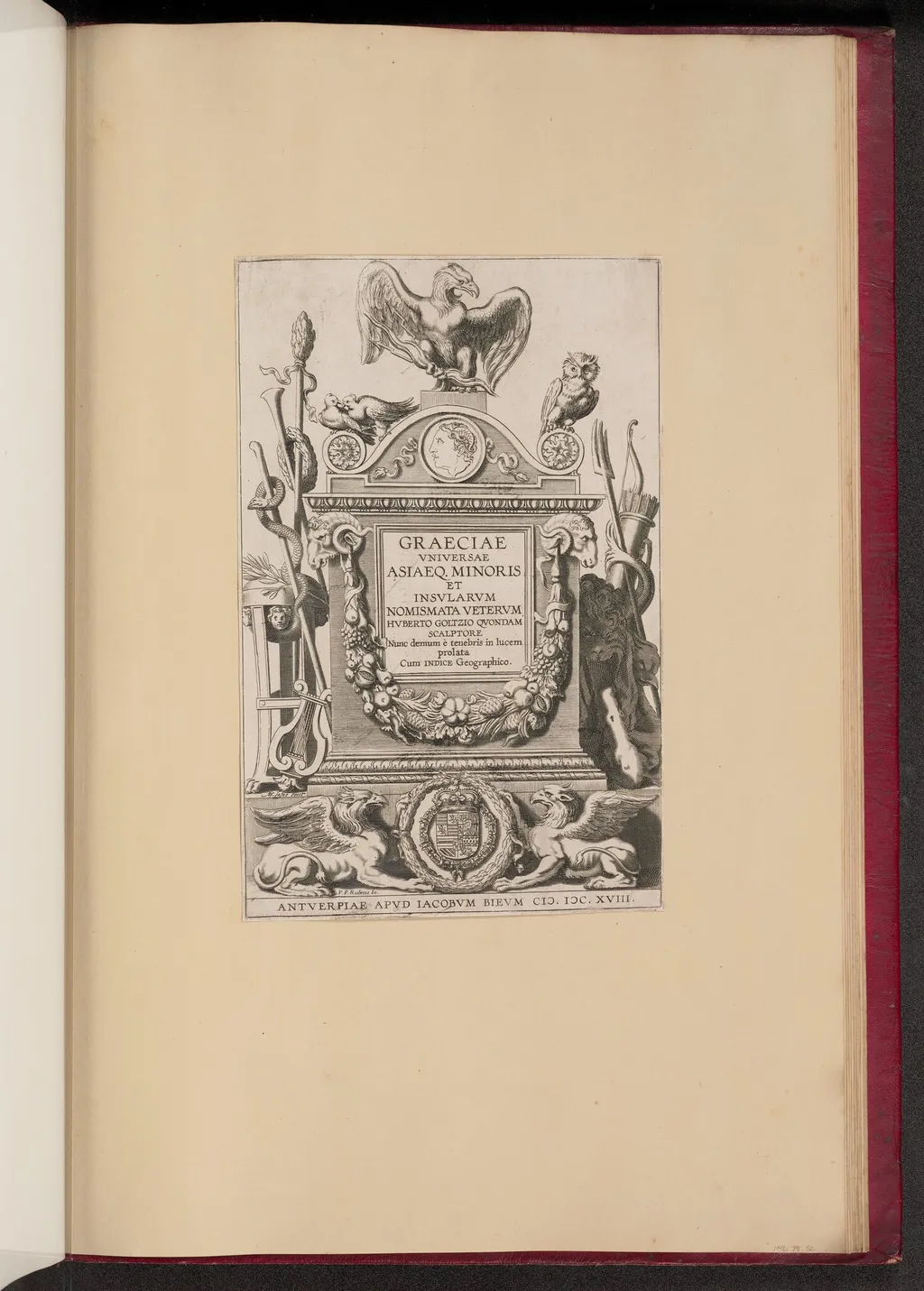
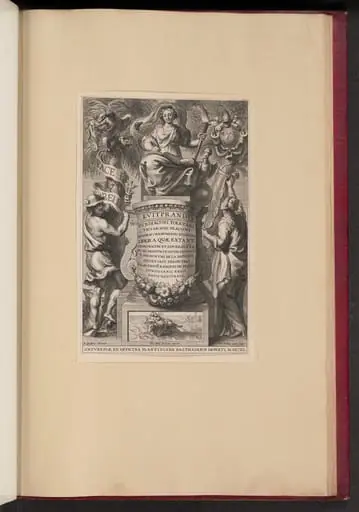
Title Page for Hubert Goltzius, Graeciae Vniversae Asiaeq. Minoris et Insularum Nomismata is an ink print by the Baroque artist Michel Lasne. It dates from 1618 and is held in the collection of the National Gallery of Art. The title page is an early‑17th‑century engraving executed on laid paper.
About this work
Overview
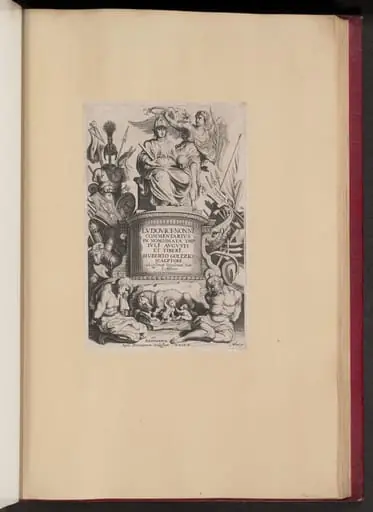
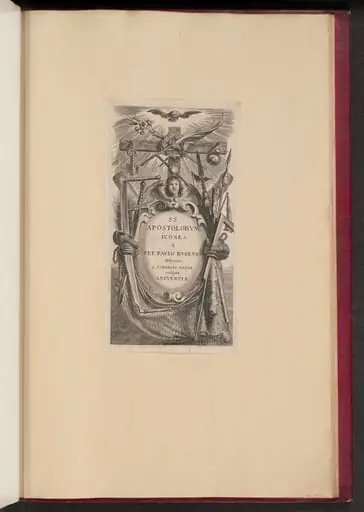
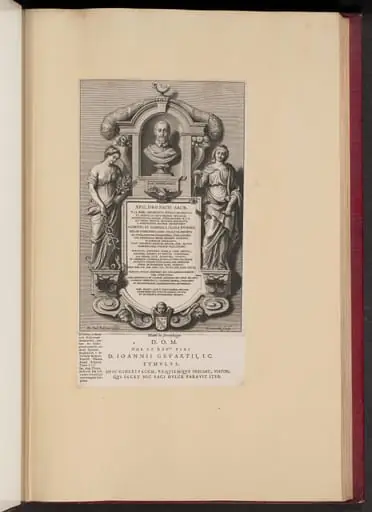
The title page is an early‑17th‑century engraving executed on laid paper. Produced in 1618, it introduces Hubert Goltzius’s scholarly volume on ancient Greek and Asian Minor coinage. The composition combines allegorical figures, heraldic devices, and tools of the trade, arranged around a central Latin inscription that identifies the work’s subject.
Subject & Meaning
Central to the image is an eagle with outstretched wings, a traditional emblem of authority, positioned above a shield and two smaller birds.
Central to the image is an eagle with outstretched wings, a traditional emblem of authority, positioned above a shield and two smaller birds. Surrounding this are symbols of craftsmanship—a hammer, anvil, and quill—suggesting the scholarly and artisanal labor involved in studying and reproducing ancient numismatics. Additional motifs such as lions and a winged horse reinforce themes of power and knowledge.
Technique & Style
The print was cut by Michel Lasne, a French engraver active in Antwerp, using fine line work characteristic of the period’s copperplate engraving. The laid‑paper substrate provides a subtle texture that enhances the intricate detailing of scrollwork, heraldic elements, and the delicate lettering of the Latin title. Lasne’s hand reflects the influence of the city’s leading painters, evident in the balanced composition and dynamic rendering of the eagle’s feathers.
History & Provenance
Created while Lasne was a member of Antwerp’s Guild of Saint Luke, the engraving likely emerged from his workshop connections with Peter Paul Rubens and Anthony van Dyck. It served as the frontispiece for Goltzius’s numismatic treatise, a work that circulated among scholars and collectors of antiquities in the early modern Republic of the Seven United Netherlands.
Context
The early 1600s saw a surge of interest in classical antiquity and the systematic study of ancient coins. Goltzius’s publication contributed to this intellectual movement, and Lasne’s decorative title page reflects the period’s penchant for merging scholarly content with elaborate visual rhetoric, a practice common in humanist publishing across Europe.
Artist & collection
Artist
Michel Lasne (Caen, ca. 1590–4 December 1667, Paris), was a French engraver, draughtsman and collector. Lasne was born in Caen and was the son of a goldsmith. He was a member of the Guild of Saint Luke in Antwerp for…