Artwork
Siena Cathedral, Entrance to Library
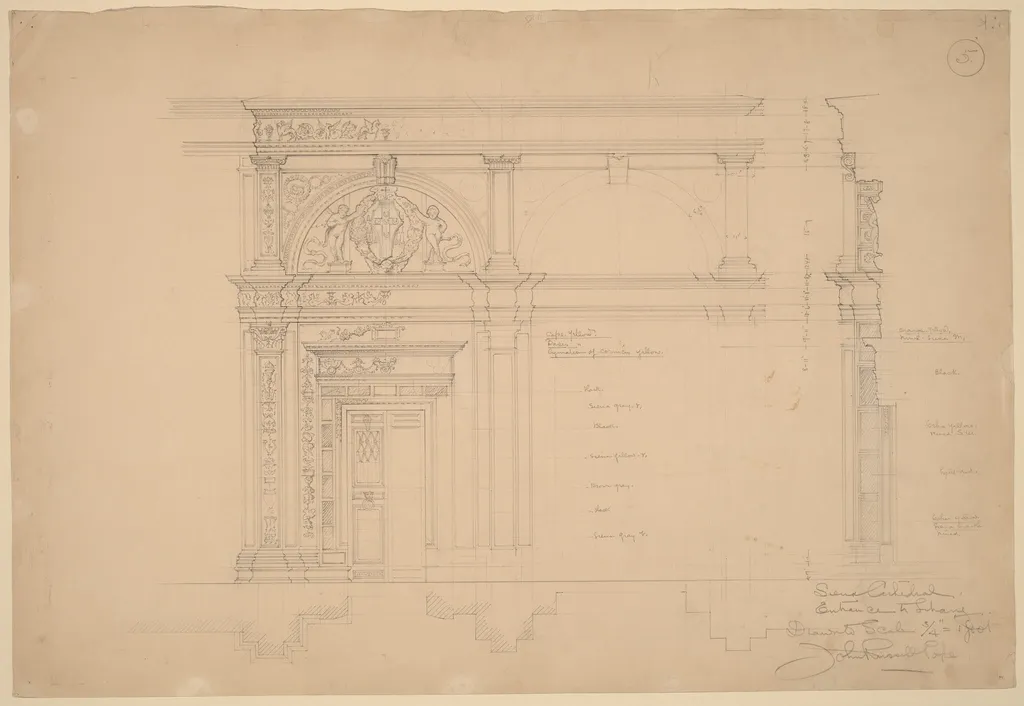
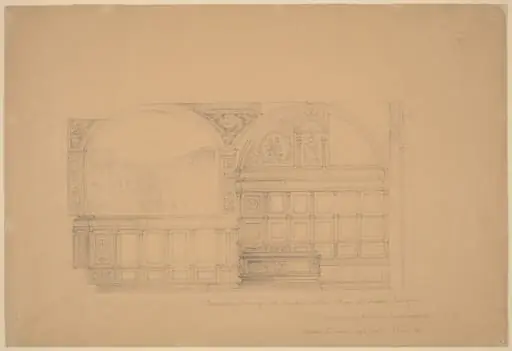
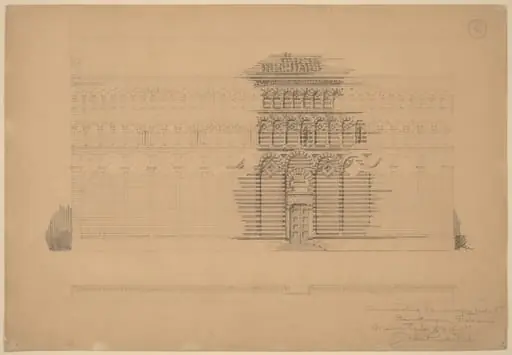
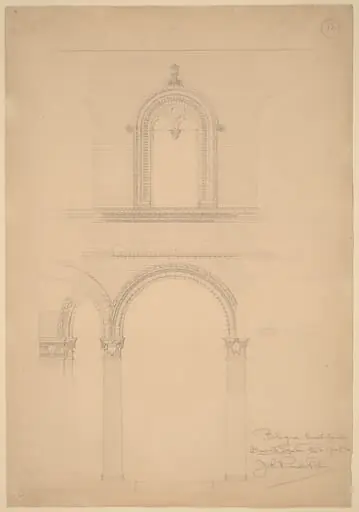
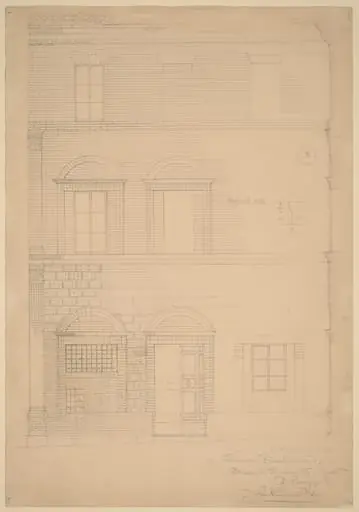
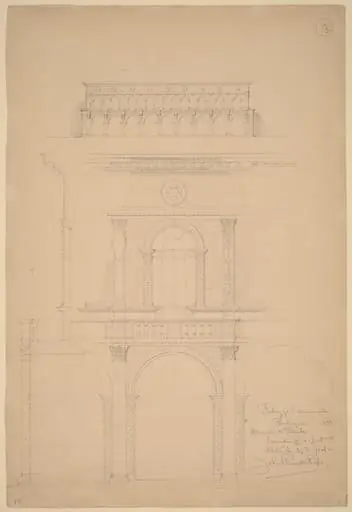
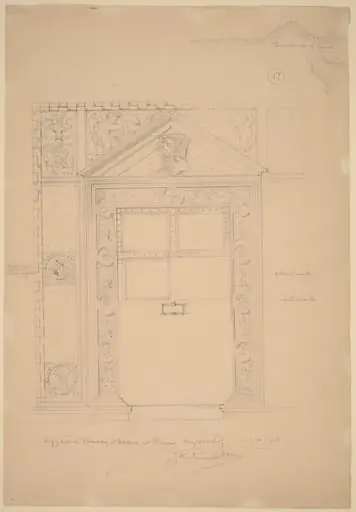
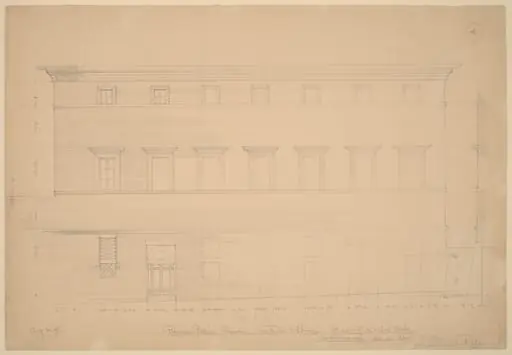
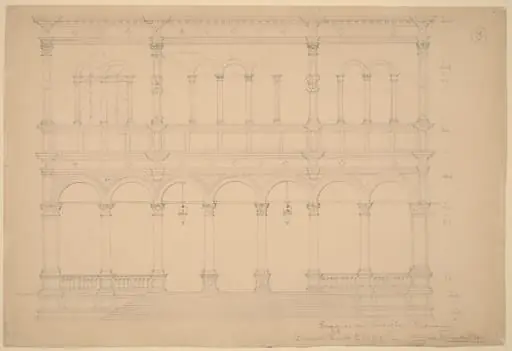
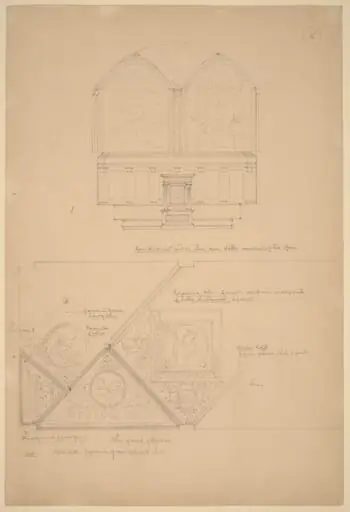
Siena Cathedral, Entrance to Library is a graphite drawing by the Impressionist artist John Russell Pope. It dates from 1896 and is held in the collection of the National Gallery of Art. This graphite drawing, dated around 1896, depicts the entrance to the library at Siena Cathedral.
About this work
Overview
The work captures structural details with precision, emphasizing form and spatial relationships rather than decorative flourish.
This graphite drawing, dated around 1896, depicts the entrance to the library at Siena Cathedral. Executed by American architect John Russell Pope, it serves as a preparatory study for architectural documentation. The work captures structural details with precision, emphasizing form and spatial relationships rather than decorative flourish. Marginal annotations suggest practical considerations for materials and scale, typical of architectural practice at the time.
Subject & Meaning
The drawing focuses on the cathedral’s library entrance, a portal blending Romanesque and Gothic elements. Tall columns and a rounded arch frame the doorway, while carved ornamentation above suggests religious or scholarly themes. The small semicircular relief with figures may reference biblical or classical narratives, common in ecclesiastical architecture. The study’s purpose was not symbolic expression but accurate recording of an existing structure for potential replication or restoration.
Technique & Style
Rendered in graphite, the drawing uses tonal gradations to suggest the texture and weight of stone. Light and shadow are carefully modeled to convey how sunlight would interact with the architecture at different times of day. Lines are precise and controlled, with no embellishment. Marginal notes in ink indicate measurements and color intentions, reflecting a methodical, utilitarian approach common among architects training in the Beaux-Arts tradition.
History & Provenance
Created during Pope’s early career, likely while studying European architecture, the drawing is part of a series of site studies he made in Italy. It reflects his immersion in historic buildings before returning to the United States to design major public buildings. The work remained in his personal archive and later entered institutional collections, where it now serves as evidence of his formative research into classical and medieval design.
Context
In the late 19th century, American architects frequently traveled to Europe to document historic structures as part of their training. Pope’s drawing aligns with this practice, where precise measured sketches were essential for understanding proportion, ornament, and construction. Such studies informed the revivalist styles popular in U.S. civic architecture, particularly in projects funded by institutions seeking to evoke tradition and permanence.
Legacy
This drawing exemplifies the disciplined observational methods that underpinned Pope’s later work on federal buildings and monuments. Though not a finished design, it reveals the foundation of his architectural philosophy: respect for historical precedent and attention to materiality. It remains a valuable record of 19th-century architectural pedagogy and the transmission of European design principles to American practice.
Artist & collection


![The Erectheum, West Elevation [left half], by John Russell Pope](https://artifactworldgallery.com/img/john-russell-pope--the-erectheum-west-elevation-left-half--10b9b48e87f30a0f-w320.webp)