Artwork
Amandier de la Georgie
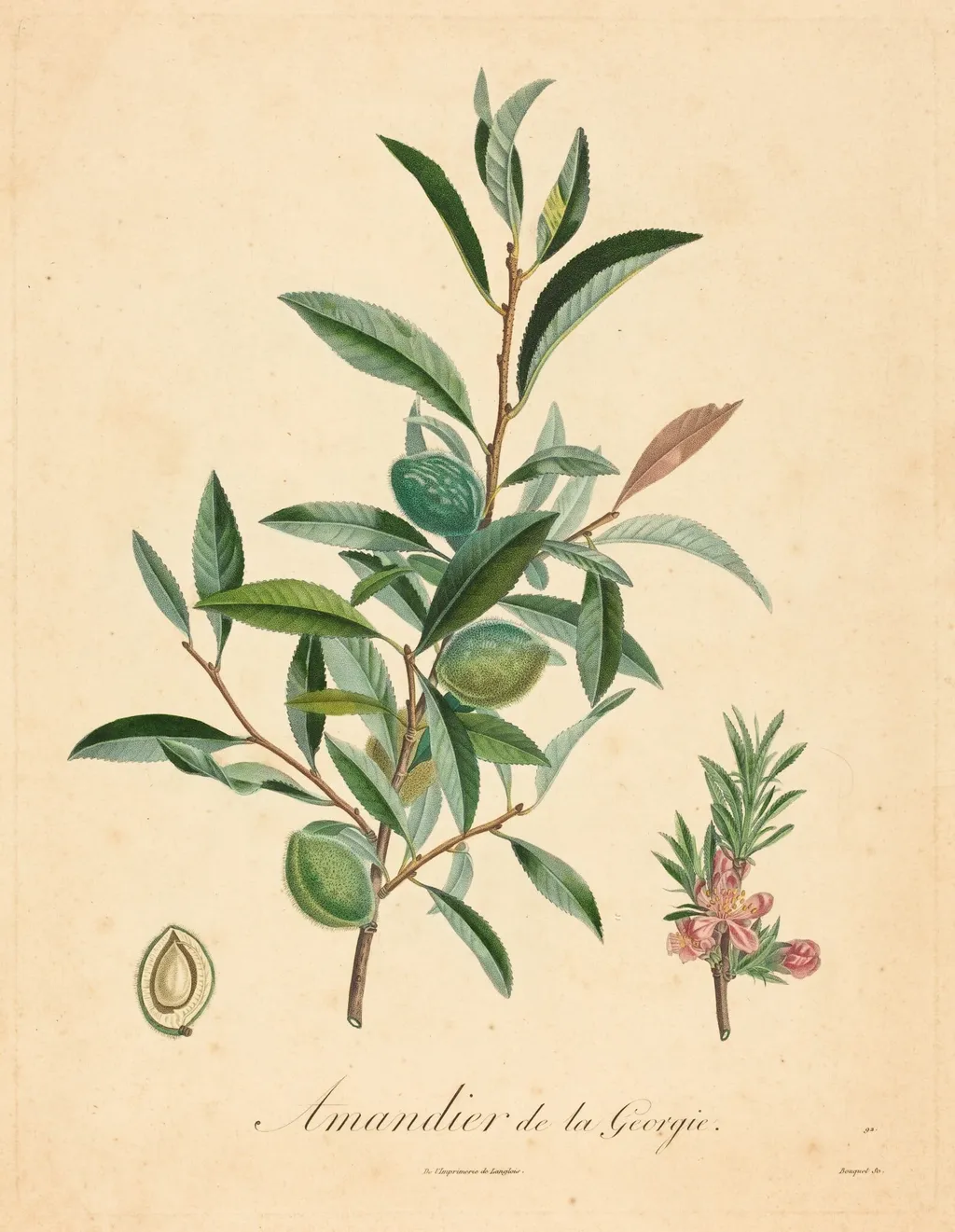
Amandier de la Georgie is an ink print by the Romanticist artist French 19th Century. It dates from 1850 and is held in the collection of the National Gallery of Art.
About this work
Overview
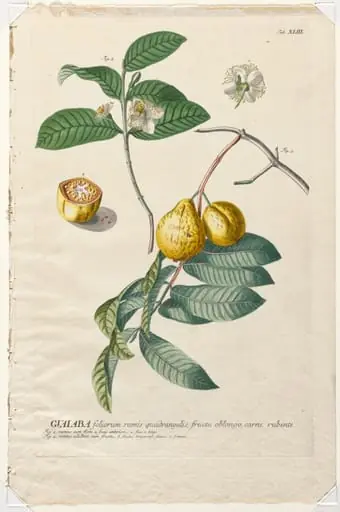
Amandier de la Georgie is a color stipple etching that has been manually enhanced after printing. The work presents a close‑up study of a young almond branch, rendered in soft greens and browns against a pale yellow field. Fine stippling conveys the delicate texture of leaves, while two immature fruits, a seed pod and a modest cluster of pink blossoms complete the botanical composition.
Subject & Meaning
The image functions as a scientific illustration, documenting the morphology of an almond tree (Prunus dulcis) from the Georgian region.
The image functions as a scientific illustration, documenting the morphology of an almond tree (Prunus dulcis) from the Georgian region. By isolating a single branch and emphasizing minute details—such as leaf venation, fruit development, and flower structure—the artist provides a visual reference useful for identification and study, reflecting the Enlightenment‑era interest in cataloguing nature.
Technique & Style
Created through color stipple etching, the print employs a series of tiny dots punched into the copper plate to build tonal variation. After the initial impression, the artist applied hand‑touches of watercolor, enriching the subtle palette and sharpening specific textures. This combination of printmaking precision and painterly intervention mirrors the meticulous approach common to 18th‑century natural history publications.
History & Provenance
The work originates from a period when botanical prints were routinely produced for scientific manuals and private collections. Though specific ownership records are scarce, the piece aligns with the output of European printmakers who supplied illustrated volumes for scholars and aristocrats interested in horticulture and exotic flora.
Artist & collection

Artist
This sculptor liked to keep sharp tools in the studio and blunt ones in his pocket—his niece recalled finding him absentmindedly whittling a stick while talking philosophy.