Artwork
Veteran român din 1877
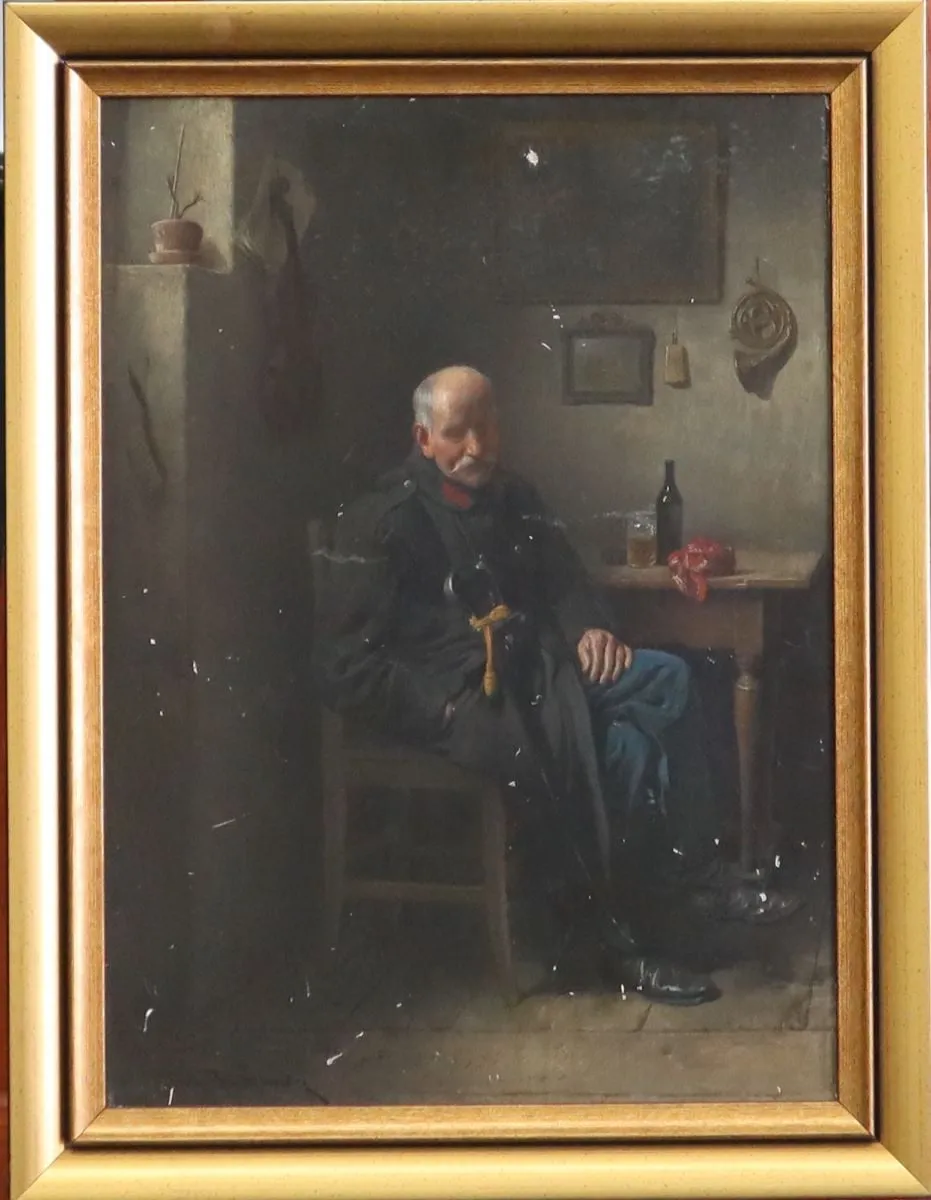
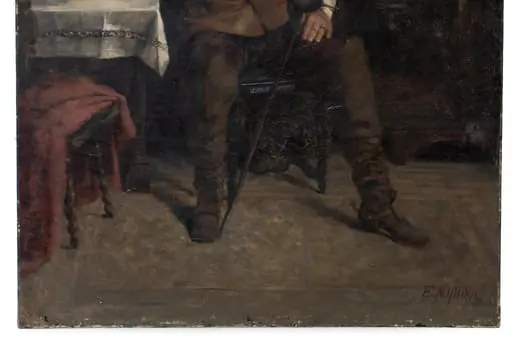
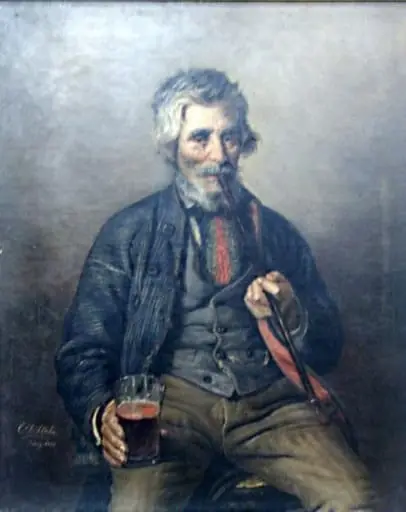
Veteran român din 1877 is an unspecified painting by Frederik Friedländer. It is held in the collection of the King Ferdinand I National Military Museum. This 1877 portrait captures a Romanian veteran seated in a modest interior.
About this work
Overview
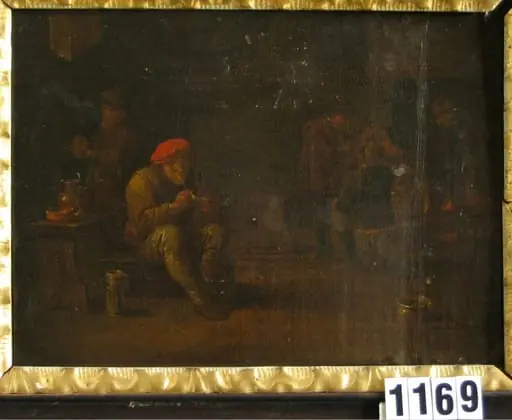
This 1877 portrait captures a Romanian veteran seated in a modest interior. The figure, dressed in dark clothing and marked by age, is rendered with quiet dignity. The composition centers on his stillness, framed by sparse furnishings and subdued lighting. The scene avoids theatricality, focusing instead on the quiet presence of a man who has lived through hardship.
Subject & Meaning
The man is identified as a veteran, likely of the 1877 War of Independence. His posture—calm, composed, with hands resting naturally—suggests reflection rather than triumph. The bottle and glass on the table hint at solitude or ritual, while the hat and framed image on the wall imply personal history. The portrait conveys resilience through restraint, not heroism.
Technique & Style
The artist employs chiaroscuro to model the figure and interior with subtle gradations of light and shadow. The dim room enhances the focus on the man’s face and hands, where texture and age are rendered with precision. The red cloth adds a muted accent against the earth tones of the room, guiding the eye without distracting from the subject’s introspective demeanor.
History & Provenance
Painted in 1877, the work emerged during a period of national consolidation in Romania following independence from Ottoman rule. It likely belonged to a private collection before entering public hands. Its survival reflects a growing interest in documenting civilian and military figures from the recent conflict, preserving individual stories amid national narratives.
Context
In post-independence Romania, portraiture became a means of honoring ordinary citizens who contributed to the nation’s formation. This painting aligns with a broader trend of depicting veterans not as symbols, but as individuals—marked by time, silence, and lived experience. The domestic setting underscores the return to civilian life after war.
Legacy
The portrait remains a quiet testament to the generation that lived through Romania’s transition to sovereignty. Its understated realism distinguishes it from grand historical paintings of the era. It continues to be studied for its psychological depth and its role in shaping a visual language of national identity rooted in personal dignity rather than spectacle.
Artist & collection
Artist
This painter's brush brought to life scenes from the late 19th-century Romanian War of Independence.
Museum
King Ferdinand I National Military Museum
Continue through works from the same source collection.