Artwork
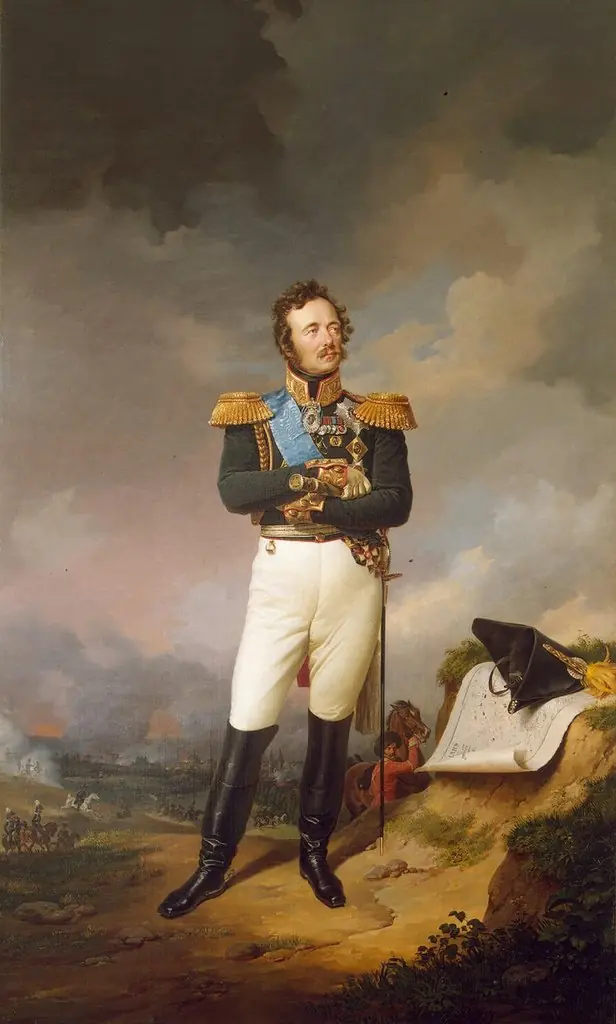
Portrait of Ivan Paskevich
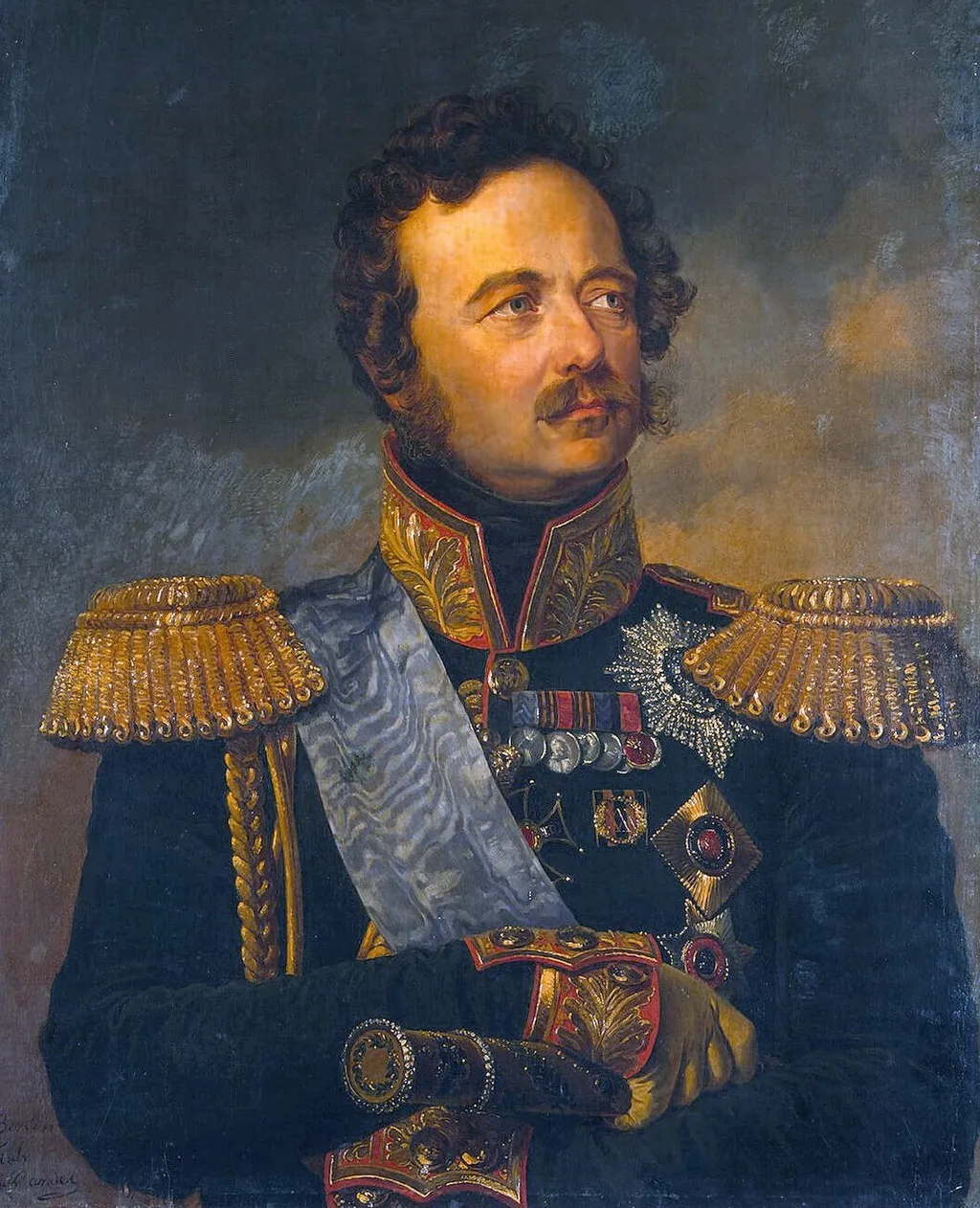
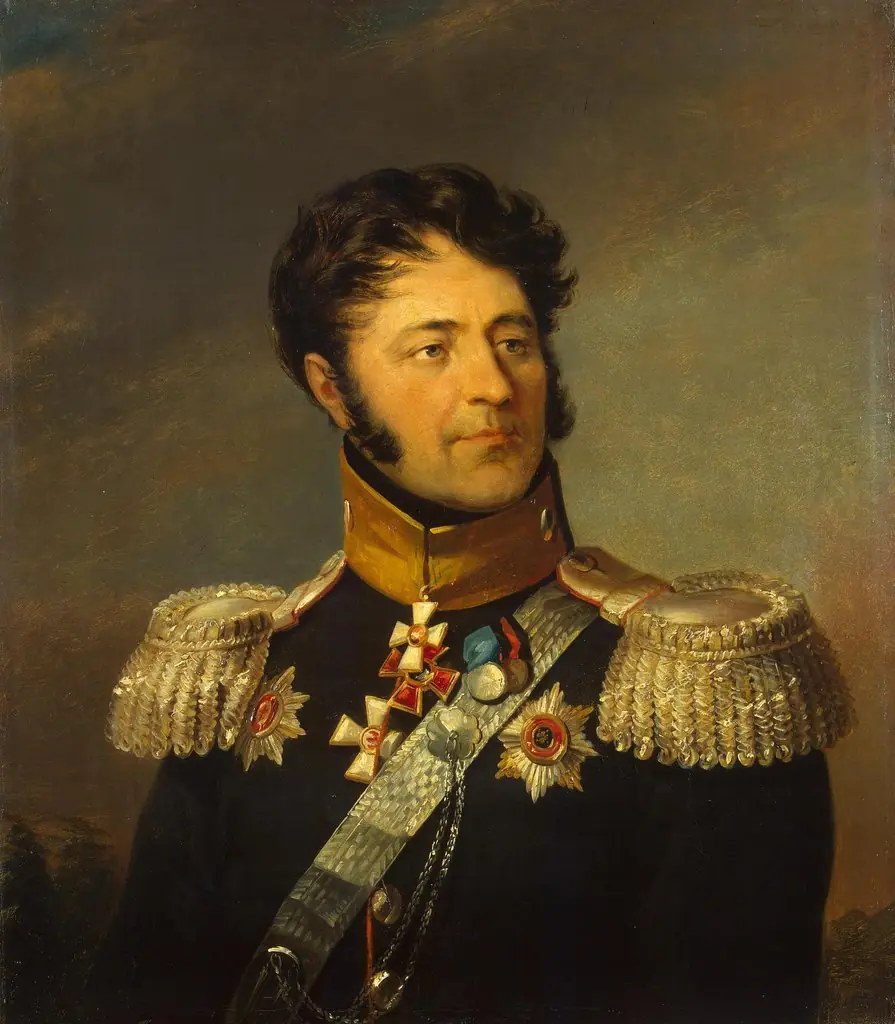
Portrait of Ivan Paskevich is an oil painting by the Realist artist Friedrich Randel. It is held in the collection of the Hermitage Museum.
About this work
Overview
Painted in 1894 by Friedrich Randel, this oil portrait depicts Ivan Paskevich, a prominent Russian military leader. The work is part of the State Hermitage Museum’s collection and exemplifies late 19th-century academic portraiture. Randel’s approach emphasizes formal dignity, aligning with the conventions of state-sponsored imagery during the Russian Empire’s later years.
Subject & Meaning
Ivan Paskevich is portrayed in full military regalia, his uniform adorned with numerous decorations that signify his high rank and service.
Ivan Paskevich is portrayed in full military regalia, his uniform adorned with numerous decorations that signify his high rank and service. The stern, composed expression and precise grooming convey authority and discipline. The absence of contextual elements directs attention to his status as a symbol of imperial military power, reflecting the values of hierarchy and honor central to his public identity.
Technique & Style
Randel employs chiaroscuro to model Paskevich’s face, using directional light to define the contours of his features with subtle gradations. The dark, neutral background isolates the figure, enhancing the three-dimensionality of the uniform and facial structure. Brushwork is precise, particularly in rendering metallic embroidery and medal details, reflecting academic training and attention to material realism.
History & Provenance
Commissioned after Paskevich’s death, the portrait was likely intended to honor his legacy within state institutions. It entered the Hermitage’s collection in the late 19th century, consistent with the museum’s practice of acquiring portraits of significant imperial figures. Its preservation reflects its role as a historical document rather than a personal commemoration.
Context
Created during a period of imperial consolidation under Tsar Nicholas II, the portrait aligns with state efforts to visually reinforce military tradition and loyalty. Portraits like this were displayed in official spaces to cultivate reverence for the empire’s leadership. Randel’s style, though rooted in realism, adheres to the formalized aesthetic expected in state commissions of the era.
Legacy
The portrait remains a representative example of imperial Russian portraiture, valued for its documentation of military iconography and stylistic continuity within academic traditions. It contributes to scholarly understanding of how visual culture reinforced political authority in the late Russian Empire, without overtly dramatizing its subject.
Artist & collection

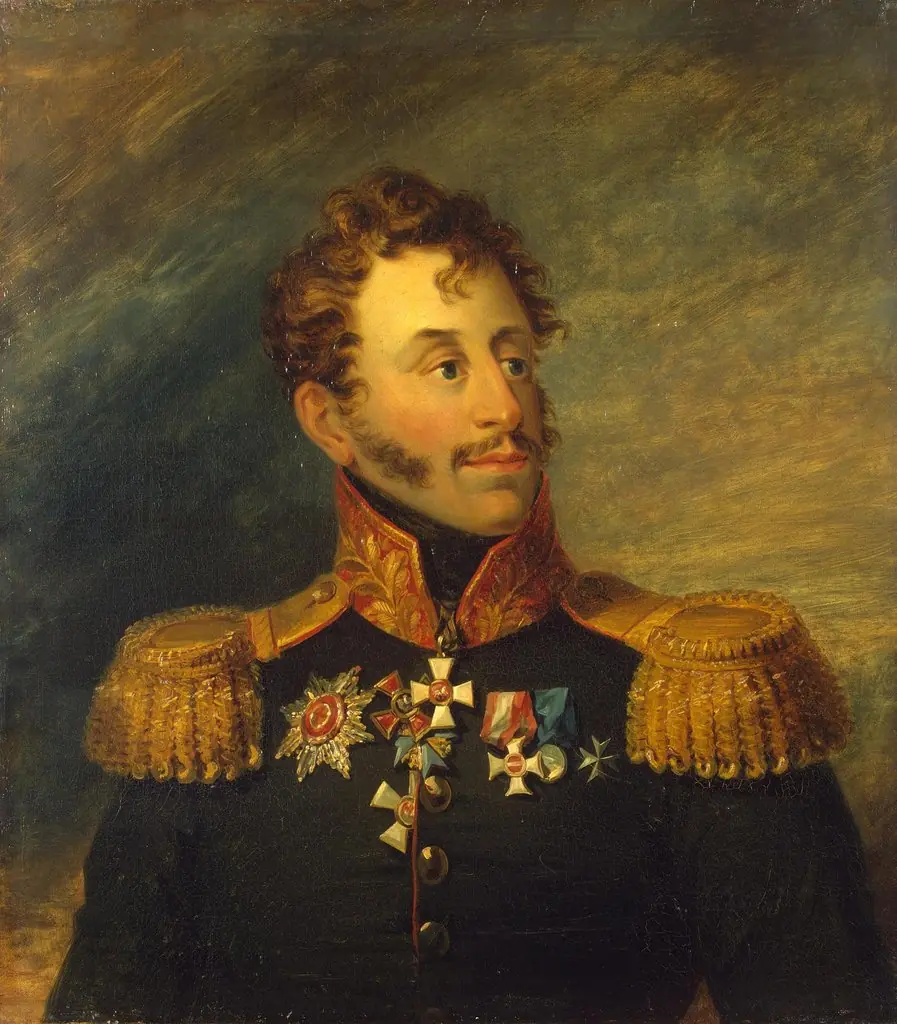 Portrait of Karl B. von Knorring (1774-1817) (3rd)
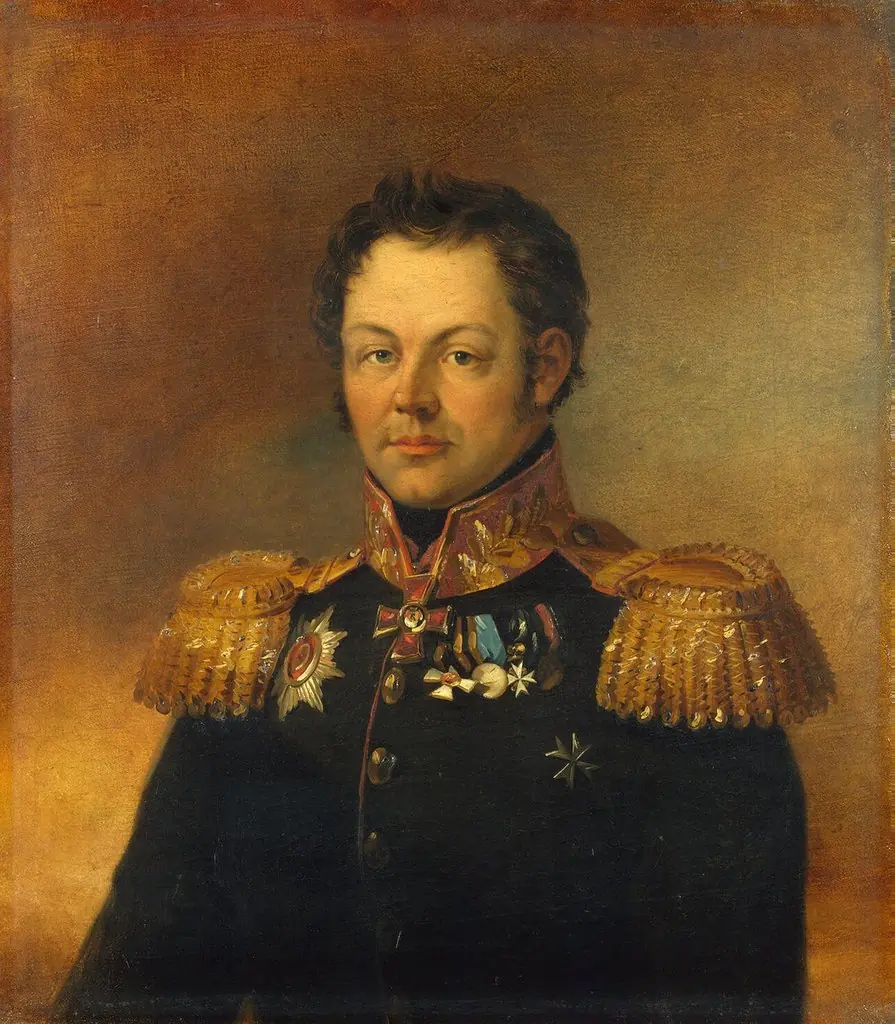 Portrait of Alexander E. Pyker (1776-1834)
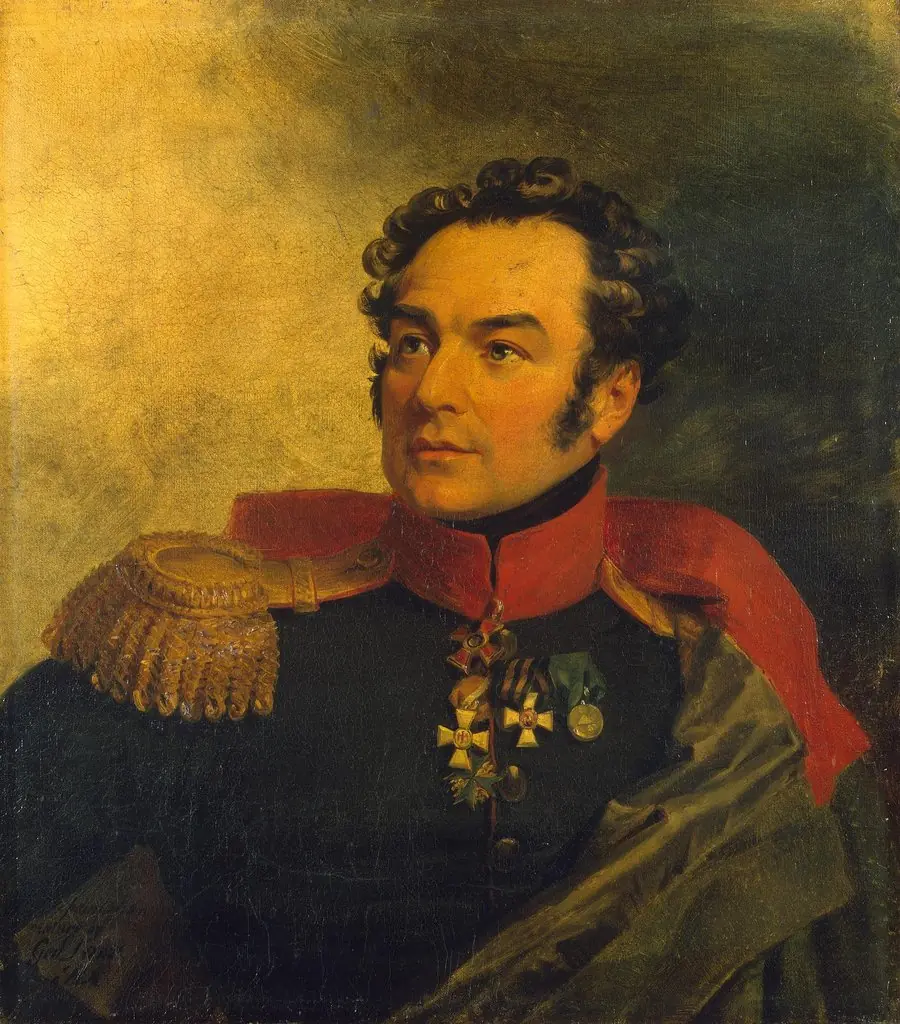 Portrait of Pyotr I. Balabin (1776-1856)
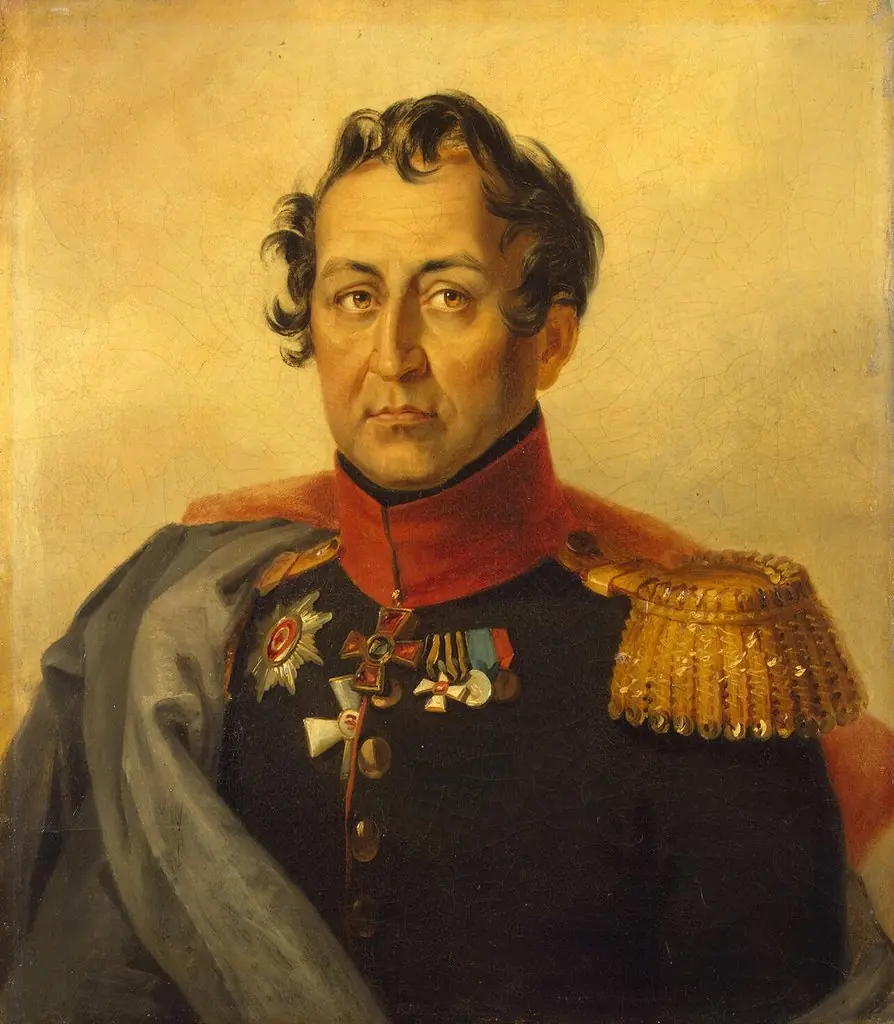 Portrait of Alexander I. Talyzin (1777-1849) (2nd)
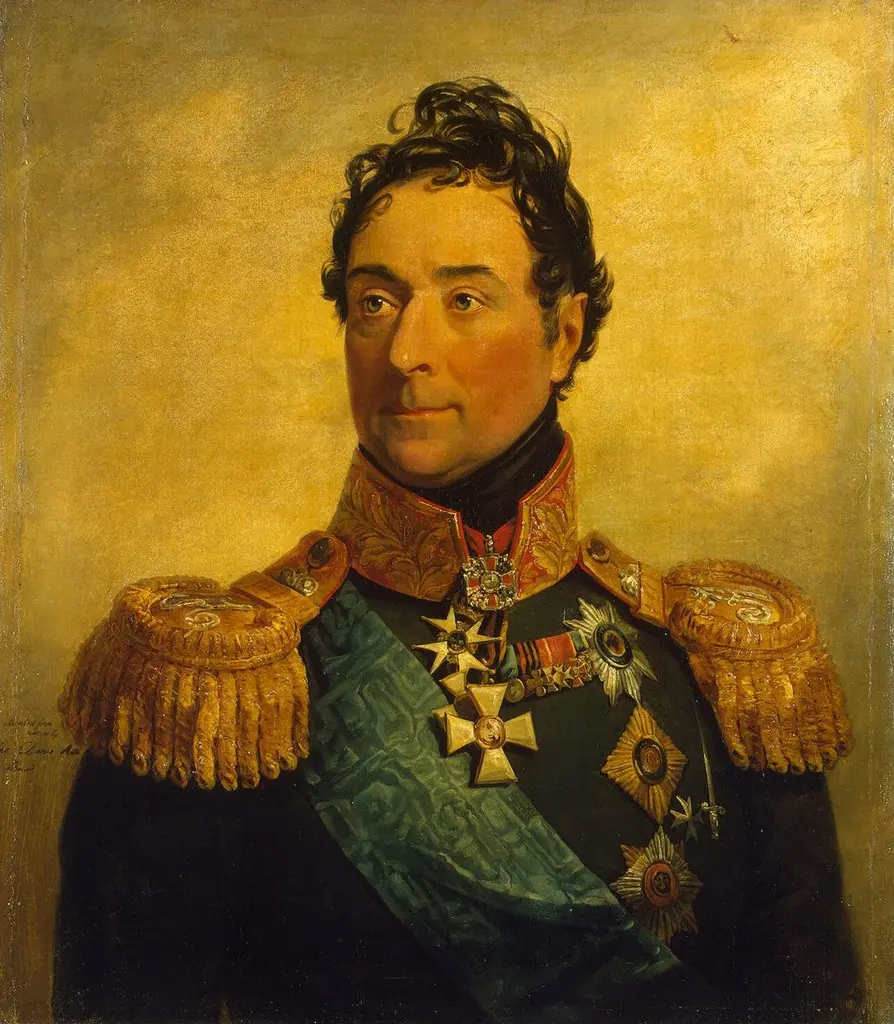 Portrait of Alexander F. Langeron (1763-1831)
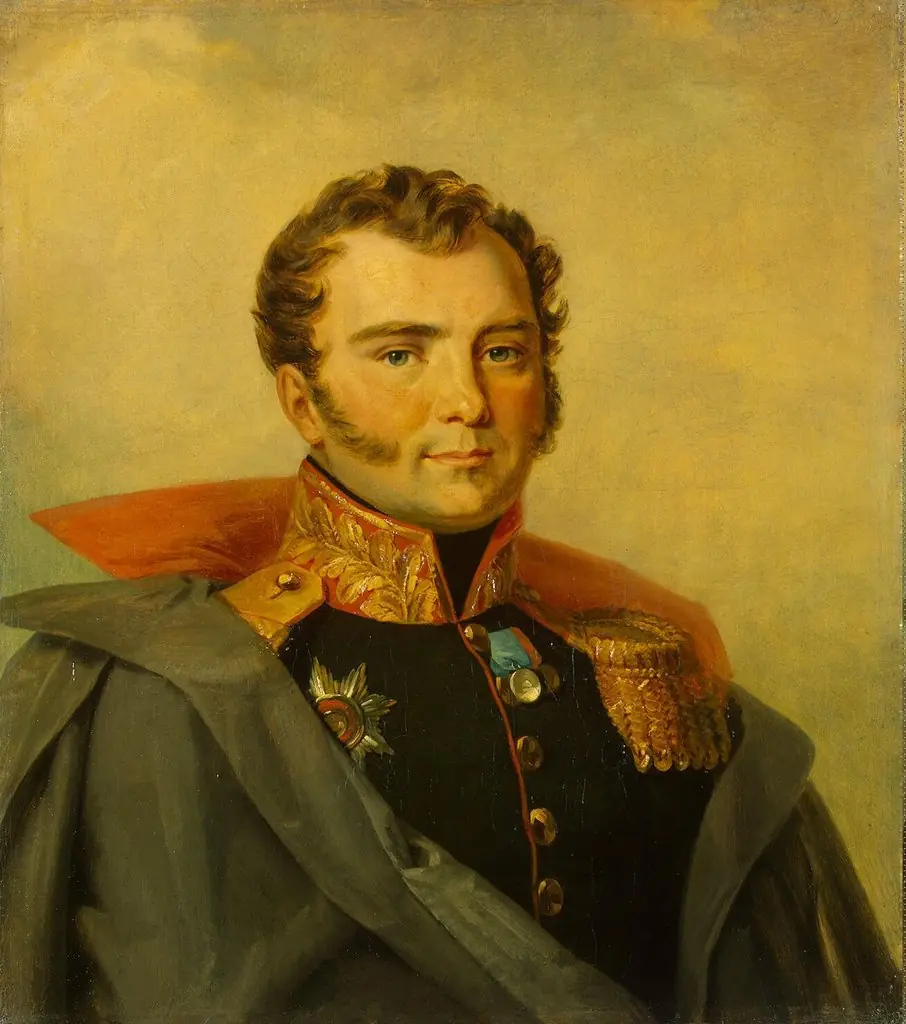 Portrait of Andrey A. Yefimovich (1773-1823)
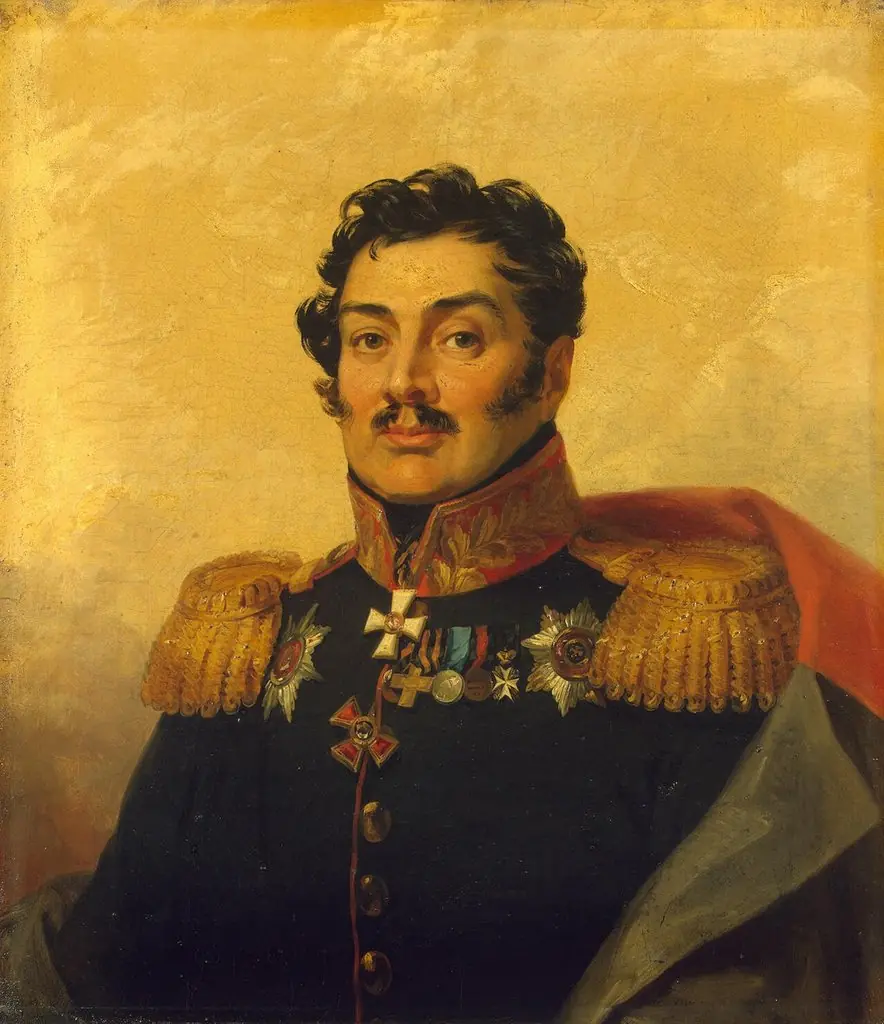 Portrait of Dmitry D. Shepelev (1771-1841)
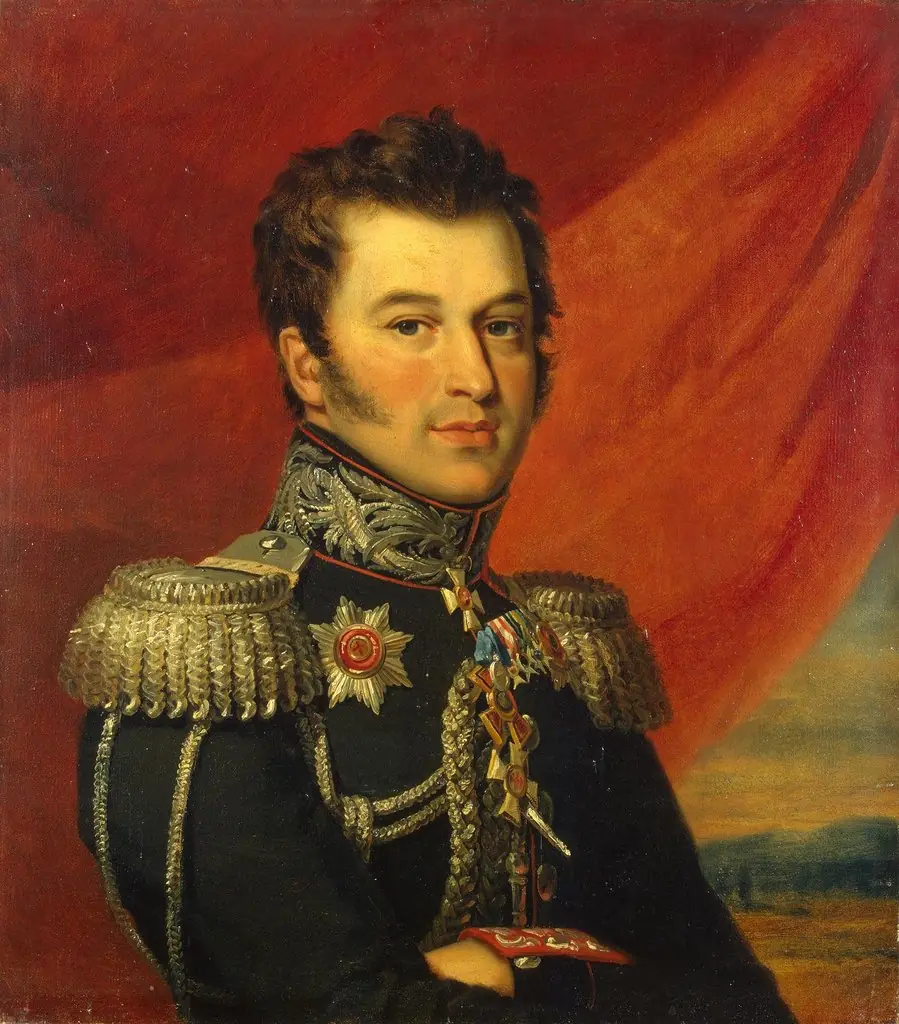 Portrait of Paisy S. Kaisarov (1783-1844)
 Portrait of Luka A. Denisyev (1762-1846)