Artwork
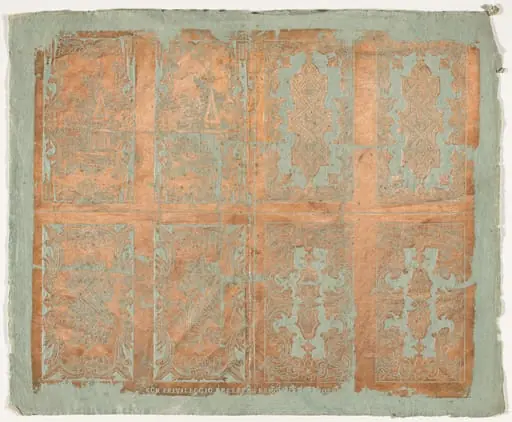
copper printing plate
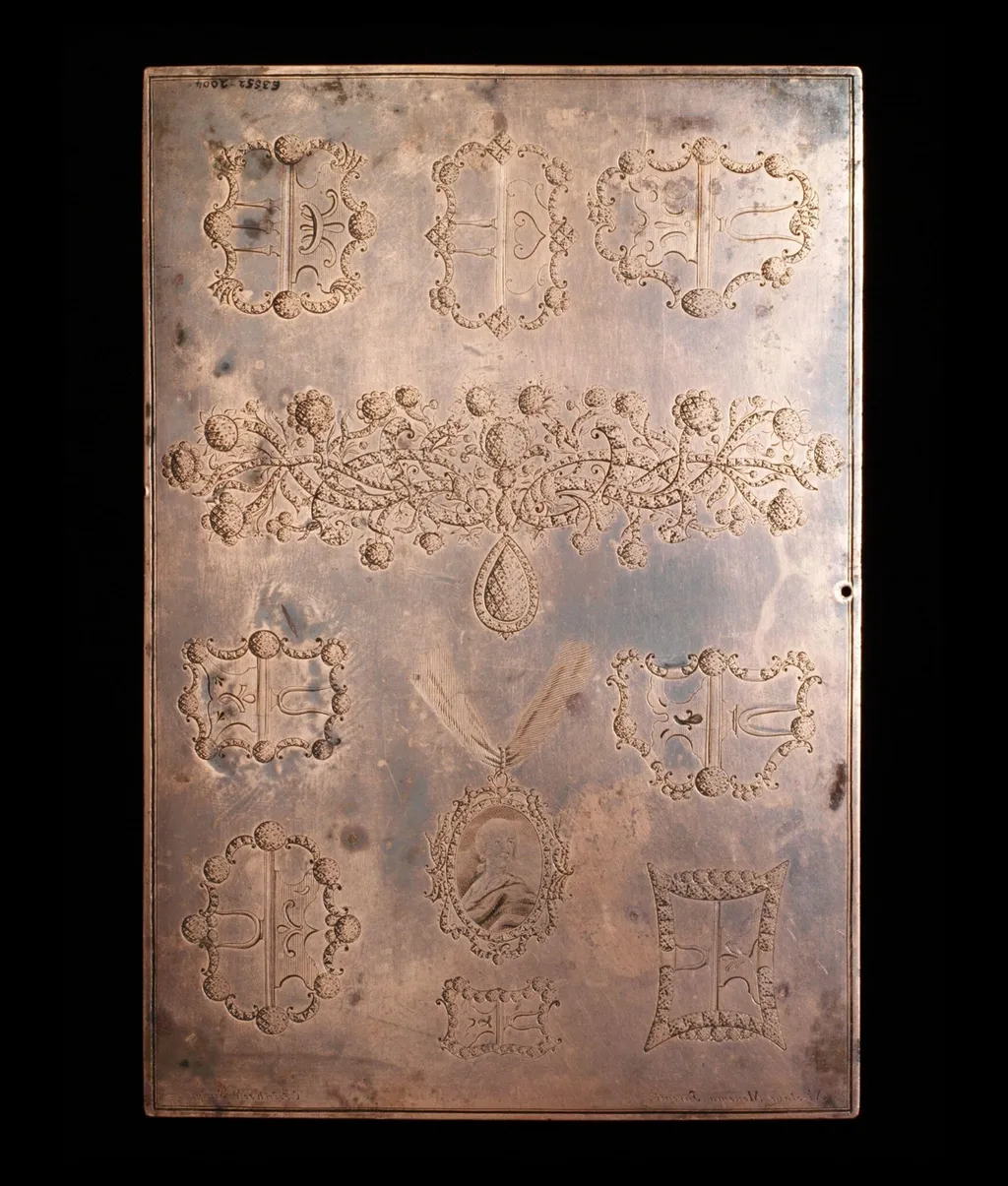
copper printing plate is a print by the Baroque artist Frihsch, C.F.. It dates from 1747 and is held in the collection of the Victoria and Albert Museum.
About this work
The names of designer Nicolas Mensma and engraver Frihsch are etched backward along the bottom, meant to print correctly later.
This copper plate from 1747 holds designs for fancy buckles and jewelry. The artist, C.F. Frihsch, engraved eight shoe or knee buckles, a bodice ornament, and a miniature frame—all set with diamonds. The names of designer Nicolas Mensma and engraver Frihsch are etched backward along the bottom, meant to print correctly later.
Diamond jewelry was a big deal in mid-1700s court life. Wearing fine jewels showed off your high status as an aristocrat.
Check out the Victoria and Albert Museum for more Baroque metalwork.
Overview
A copper printing plate from 1747, created for reproductive engraving, contains engraved designs of ten ornamental objects: eight buckles for shoes or knees, a bodice decoration, and a frame for a portrait miniature. All are adorned with diamond motifs, reflecting the decorative preferences of elite European fashion. The plate was intended to transfer these intricate patterns onto paper for use by jewelers and tailors.
Subject & Meaning
The designs depict luxury accessories associated with aristocratic dress in mid-eighteenth-century Europe. Diamonds, though rendered as engraved dots rather than actual gemstones, symbolized wealth and social standing. These objects were not merely decorative but served as visible markers of status, integral to the performance of courtly identity where appearance was tightly regulated by social hierarchy.
Technique & Style
The plate was engraved in reverse by C.F. Frihsch to ensure correct orientation when printed. Fine lines and stippling mimic the sparkle of diamonds, demonstrating technical precision typical of reproductive engraving. The composition arranges each motif with symmetry and spacing suitable for mass reproduction, balancing detail with clarity for practical use by artisans.
History & Provenance
The plate bears the names of designer Nicolas Mensma and engraver C.F. Frihsch, etched in mirror script along its lower edge—a standard practice to ensure legible printing. Its survival suggests it was used in a workshop producing fashion templates, likely in a center of luxury goods such as Paris or London. The Victoria and Albert Museum holds this object as part of its collection of decorative arts.
Context
In the 1740s, diamond-adorned accessories were standard in aristocratic attire, especially at royal courts. Fashion plates like this one circulated among craftsmen to standardize designs across regions. The demand for such items reflected broader trends in consumer culture, where elite aesthetics were increasingly disseminated through printed media and artisanal networks.
Legacy
This plate exemplifies the intersection of art, commerce, and social display in the eighteenth century. It reveals how luxury was mechanically reproduced and distributed, democratizing elite styles without altering their symbolic weight. Such objects remain valuable for understanding the material culture of status and the role of print in shaping fashion before industrialization.
Artist & collection
Artist

 Double-Leaf Door
 Double-Leaf Door
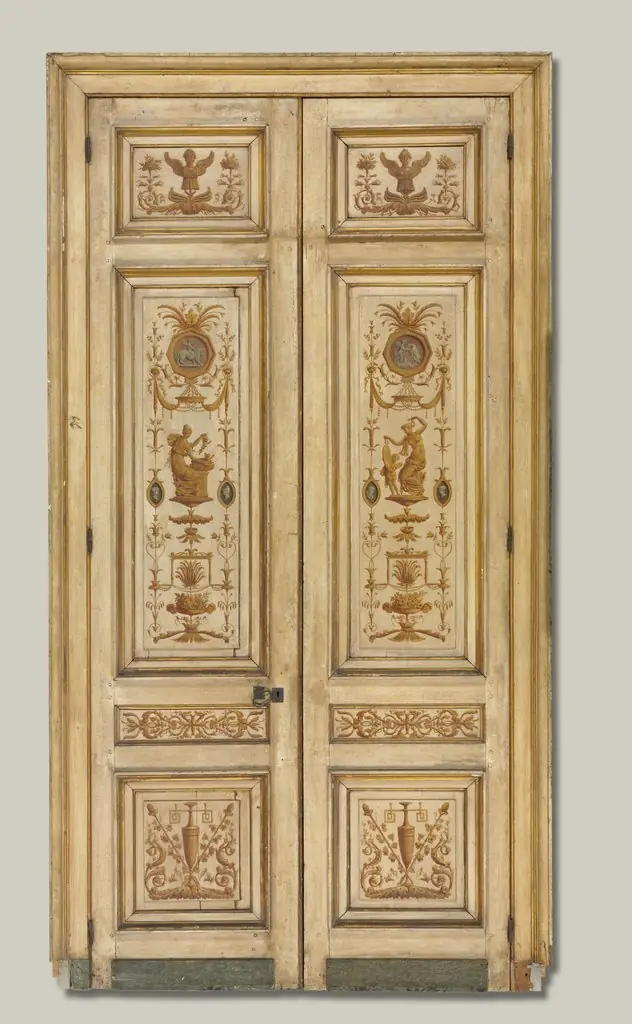
 Double-Leaf Doors
 Fecioara cu Pruncul (Eleusa)
 Overdoor Painting
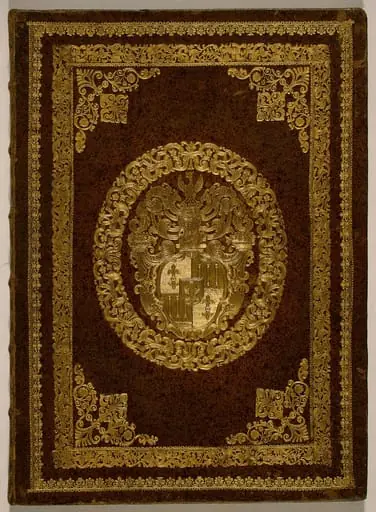 Title Page
 Endpaper
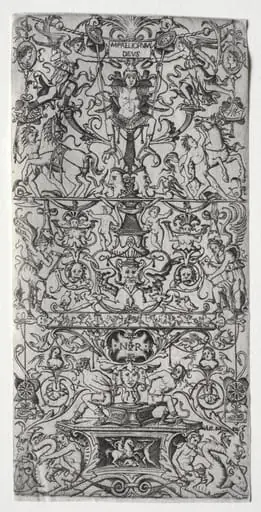 Ornament Panel: Mars, God of Battles
 Icoana este un prăznicar, cu patru scene, fiind împărțită de o cruce, asemenea unei ferestre. Icoana are pictura deteriorată, fiind mari pierderi de culoare, astfel scenele iconografice nefiind foarte clar dezvăluite. În registrul superior, pornindu-se prezentarea în ordinea acelor de ceasornic, prima este Acoperământul Maicii Domnului, minune săvârșită în Biserica din Vlaherne, unde toți sfinții și oamenii sunt luați sub Acoperământul omoforului Maicii Domnului. Următoarea scenă îi reprezintă pe Sfinții Apostoli Petru și Pavel, întemeietorii Bisericii sobornicești și apostolicești. În registrul inferior sunt Sfinții Mari Mucenici Dimitrie Izvorâtor de Mir și Gheorghe Purtător de Biruință. Trăsăturile chipurilor sfinților sunt expresive. Cromatica este armonioasă, chiar dacă este sumară și mai săracă, prin deteriorare: brun, cafeniu, bej, crem, alb, negru.
 Icoana este segmentată în patru ferestre, icoană cruce, reprezentându-i pe Sfântul Mare Mucenic Gheorghe purtător de biruință, de două ori, pe diagonală, pe Sfântul Mare Ierarh Nicolae făcător de minuni și vindecător de boli, pe Sfânta Mare Cuvioasă Parascheva, de la Iași. Au veșminte roșii vermillon, epitrahilul Sfântului Nicolae este verde smarald, fondul Sfintei Parascheva este orange, fondul Sfântului Gheorghe din dreapta registrul inferior este verde. Întreaga tematică iconografică este încadrată de un chenar decorativ geometrizant, dantelat, din foiță aurie. Registrul superior are fondul albastru ultramarin, iar registrul inferior fondul este rozaliu pal. Interiorul crucii este un rotund verde-absint. Icoana excelează prin combinațiile cromatice luminoase și foarte vii. Inedită este și prezența dublă, în ipostasuri diferite, pe diagonală, a Sfântului Mare Mucenic Gheorghe. Icoana este de Țara Oltului. Are rama colorată în cafeniu și roșu, în interior. Inscripția din româno-chirilică se traduce SF Gheorghe Sf Nicolae Sf Parascheva Sf Gheorghe.
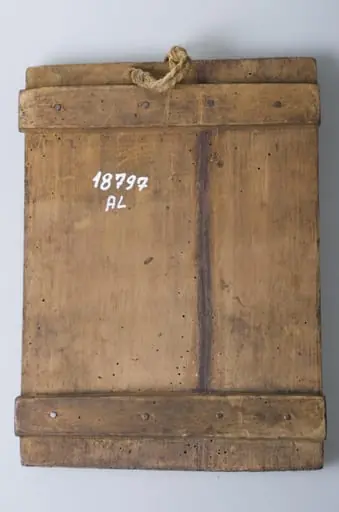 Icoană de formă rectangulară, pictată pe lemn în ulei, reprezentând tema „Izvorul tămăduirii”; Maica Domnului este redată în registrul superior, deasupra unei fântâni; în registrul inferior sunt redate două personaje care o venerează; imaginea este încadrată într-o ramă de culoare aurie înspre interior și albastră înspre exterior; pe verso-ul icoanei sunt prinși doi lați, bătuți în cuie; la partea superioară prezintă sistem de agățare cu funie.
 Designs for Necklaces, Pendants and Earrings of the Highest Skill