Artwork
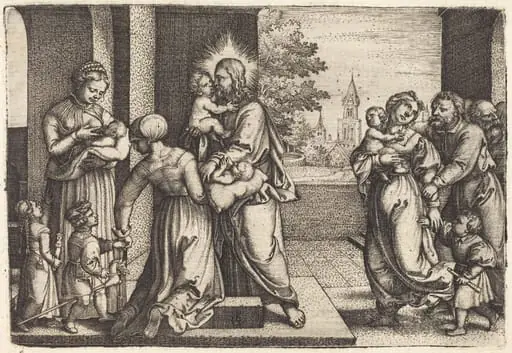
The Virgin Mary Taking Leave of Christ
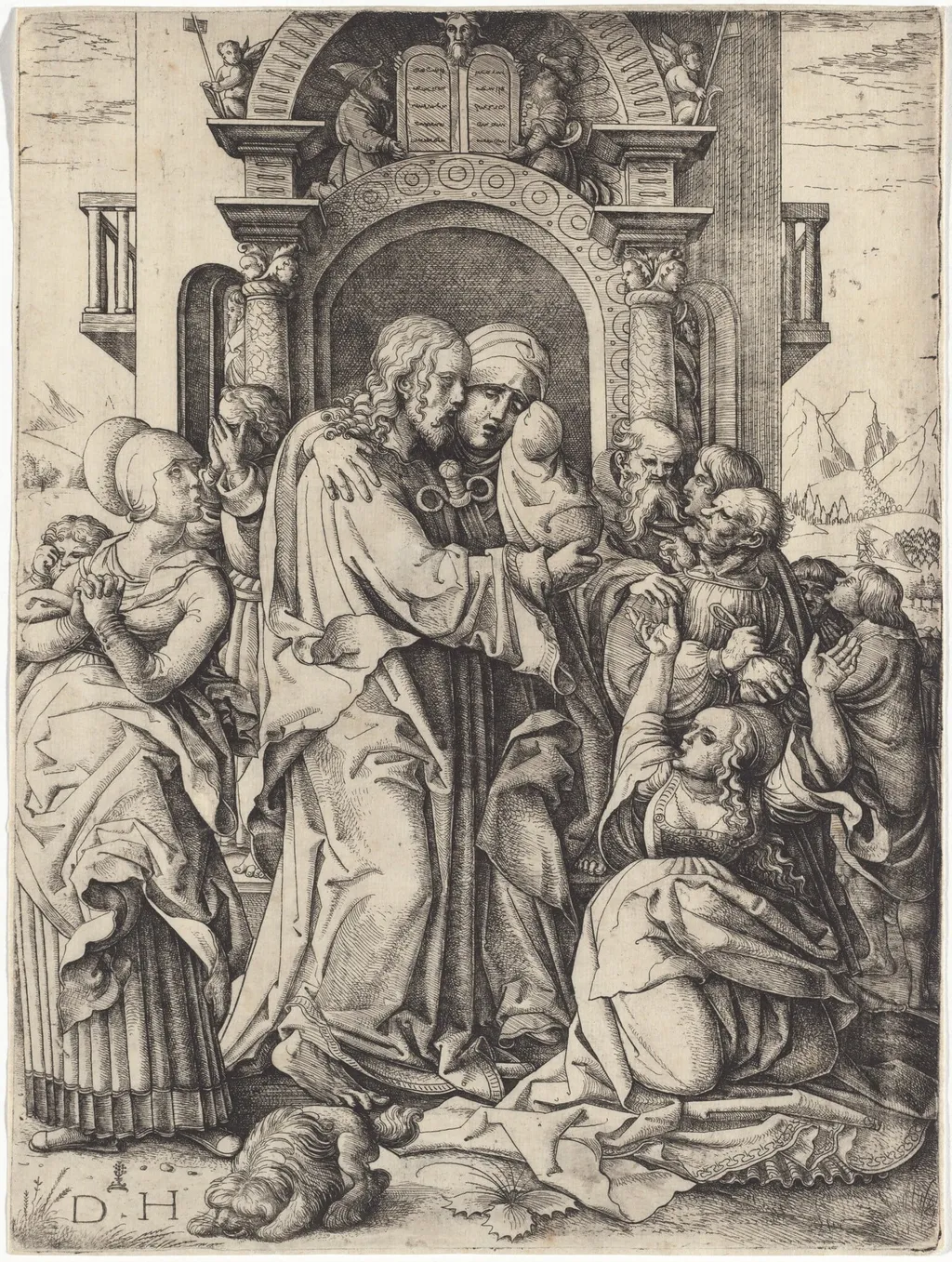
The Virgin Mary Taking Leave of Christ is an ink print by the Renaissance artist Daniel Hopfer. It dates from 1520 and is held in the collection of the National Gallery of Art.
About this work
Overview
The Virgin Mary Taking Leave of Christ, created around 1520, is an iron etching on laid paper, exemplifying Daniel Hopfer's early experimentation with the medium.
Subject & Meaning
The etching depicts a poignant scene of the Virgin Mary bidding farewell to Christ, set against a somber backdrop with a distant, faintly illuminated city. The calm yet sorrowful expressions of the figures embody the devotional themes prevalent in early 16th-century German religious art.
Technique & Style
Hopfer, leveraging his background in armor-making, innovatively used iron plates for etching. The piece features his signature double-biting technique, achieving nuanced tonal depths and soft shadows through two acid bath processes.
History & Provenance
Produced in Augsburg, Germany, this work was part of Hopfer's pioneering efforts in etching, though his contributions were not fully recognized until later scholarship. The exact provenance details are not specified in the provided information.
Context
Emerging in the 1500s, etchings like this were novel. Hopfer's work, including this piece, contributed to establishing etching as a viable commercial print medium, distinct from its initial experimental phase.
Legacy
Despite being overlooked in his lifetime, Hopfer's role in the development of etching is now acknowledged. This etching, along with his other iron works, demonstrates his lasting impact on the medium.
Artist & collection

Artist
Daniel Hopfer (c. 1470 – 1536) was a German artist who is widely believed to have been the first to use etching in printmaking, at the end of the 15th century. He also worked in woodcut. Although his etchings were…

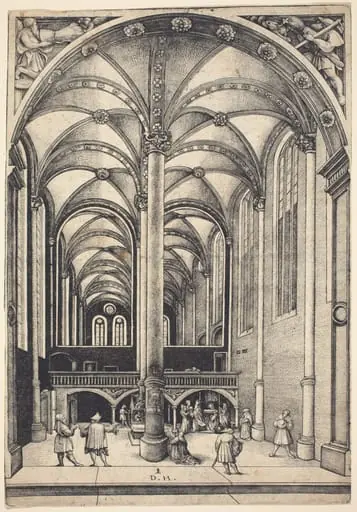 Interior of the Church of Saint Maria Magdalena with the Parable of the Offering of the Widow
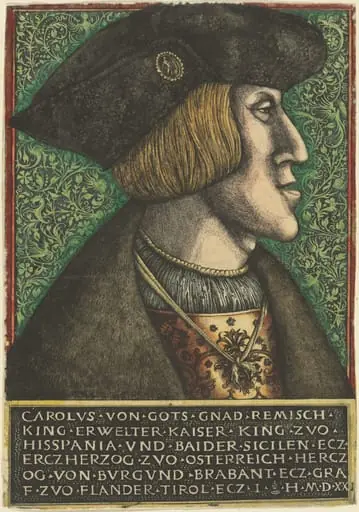 Emperor Charles V
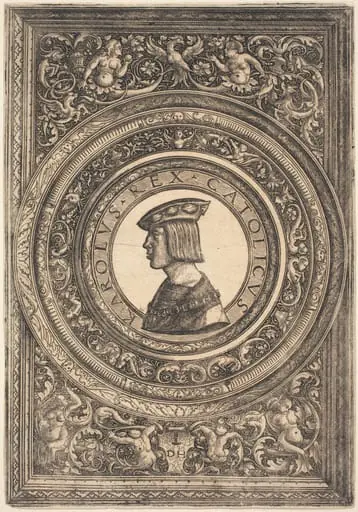 Emperor Charles V
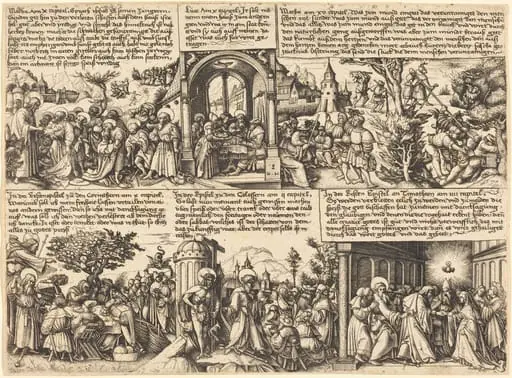 Jesus Christ Giving the Mission to the Apostles and Other New Testament Scenes
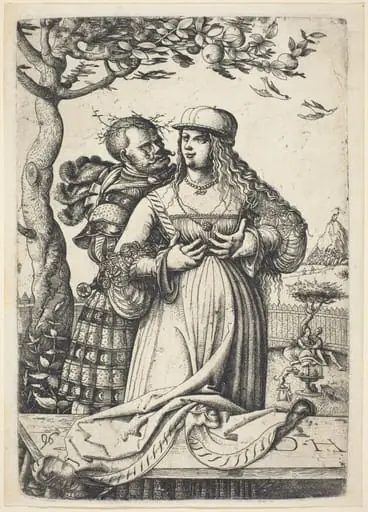 Soldier Embracing a Woman
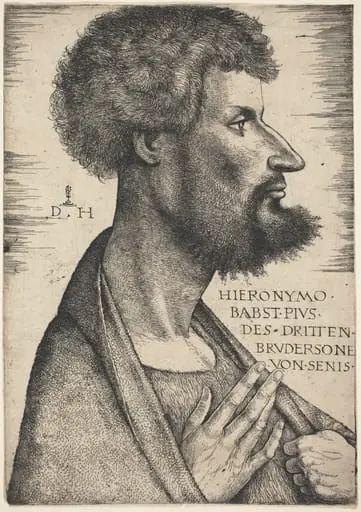 Girolamo da Siena
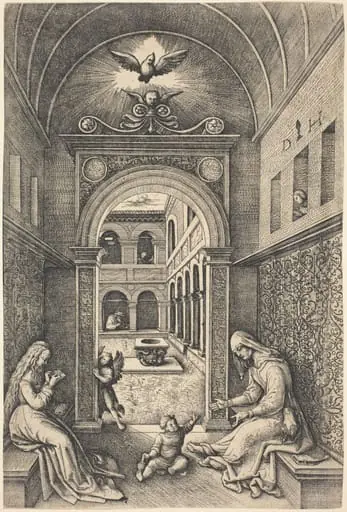 The Virgin and Child with Saint Anne by a Portal
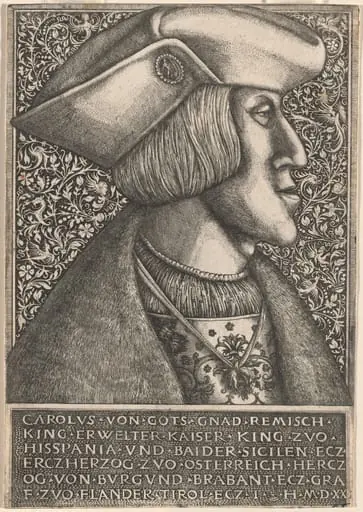 Emperor Charles V