Artwork
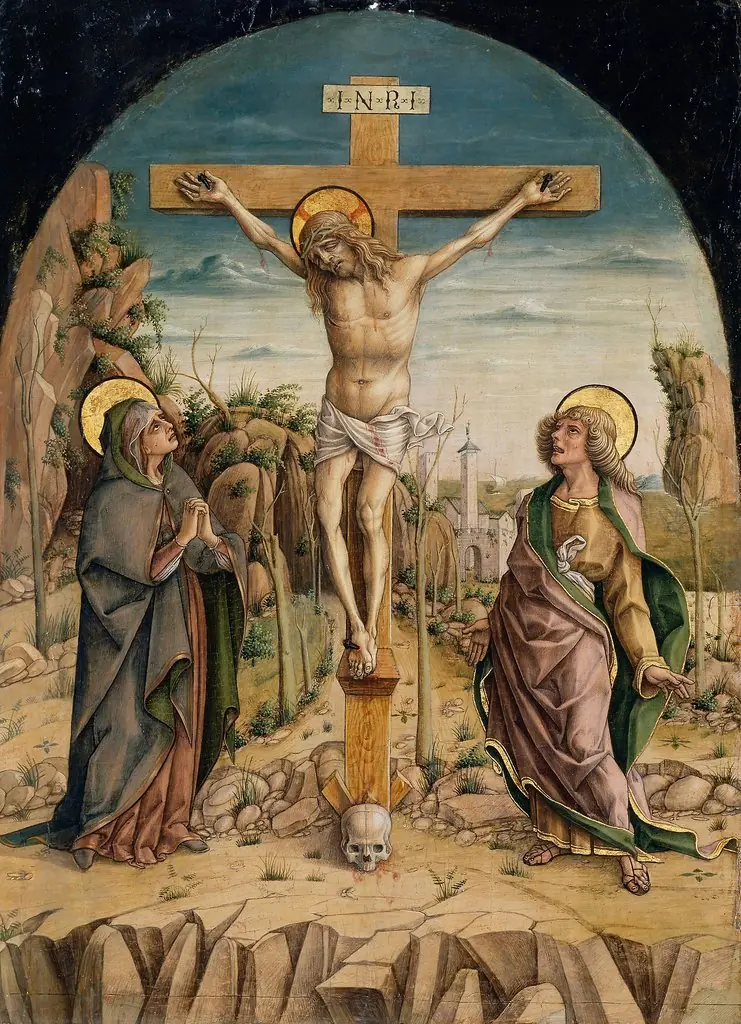
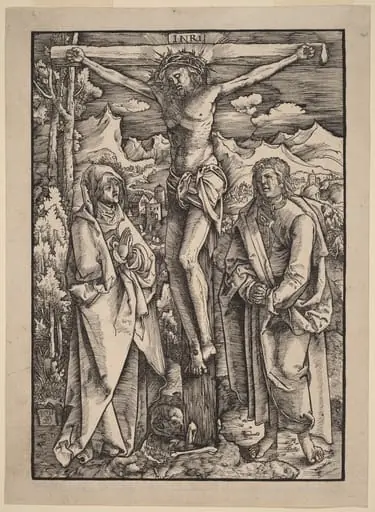
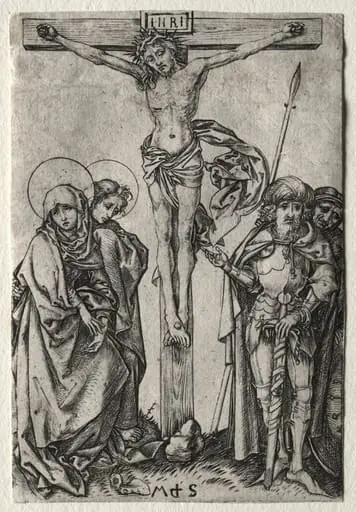
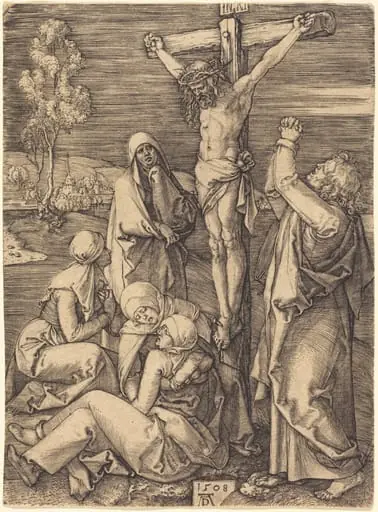
The Crucifixion
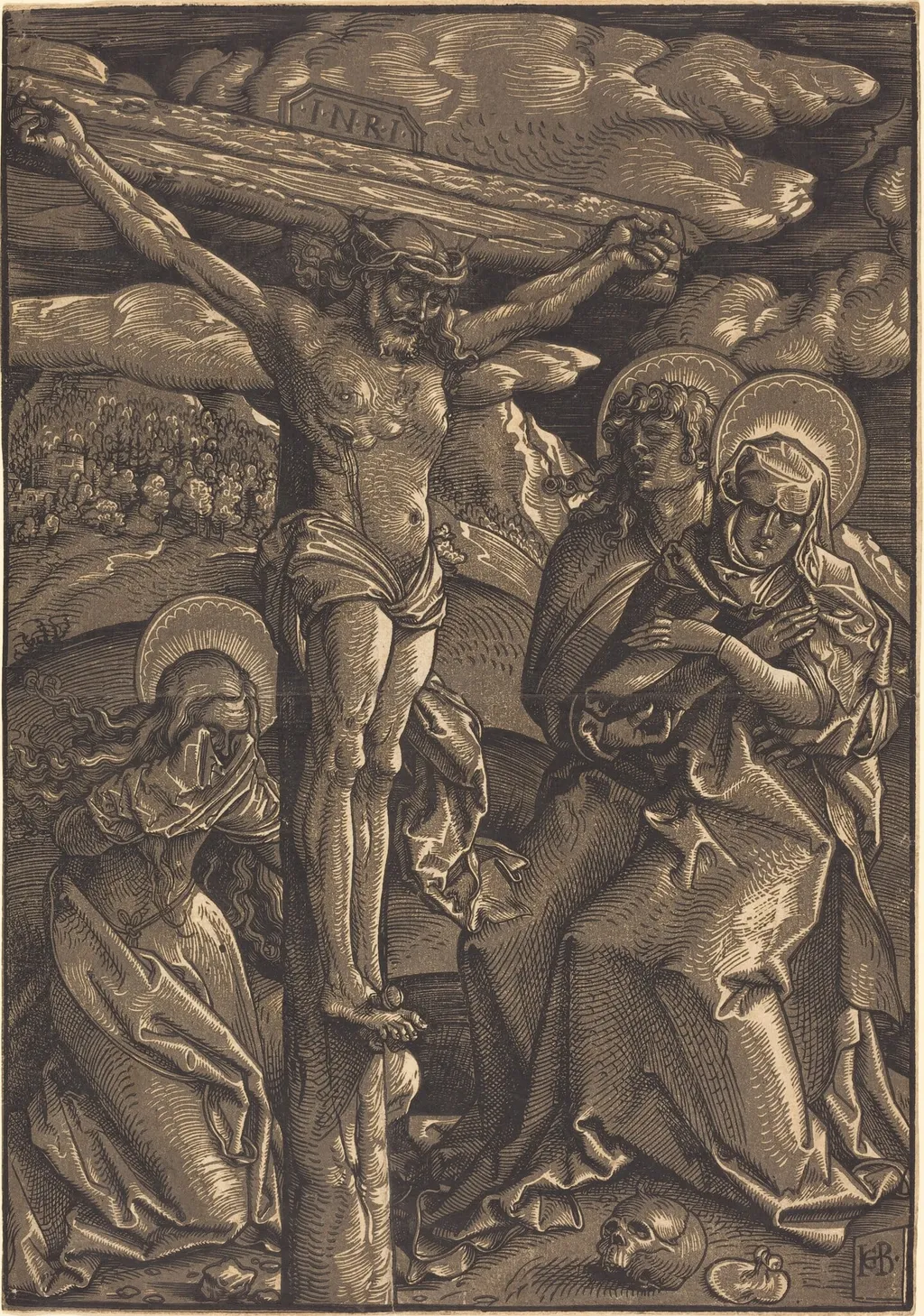
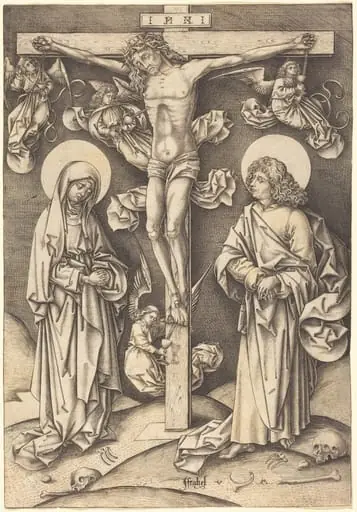
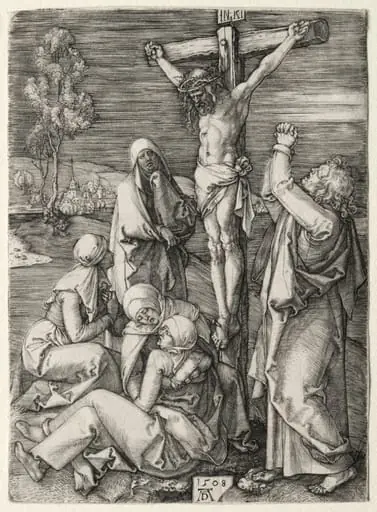
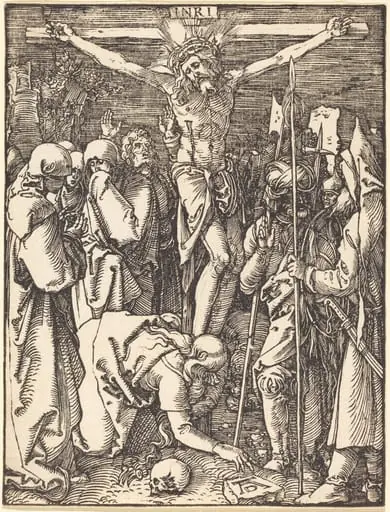
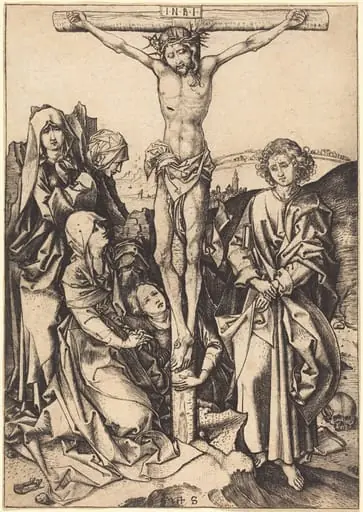
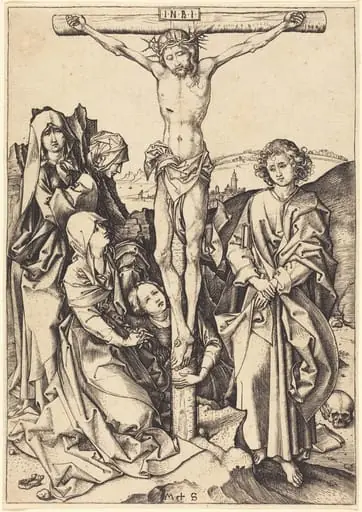
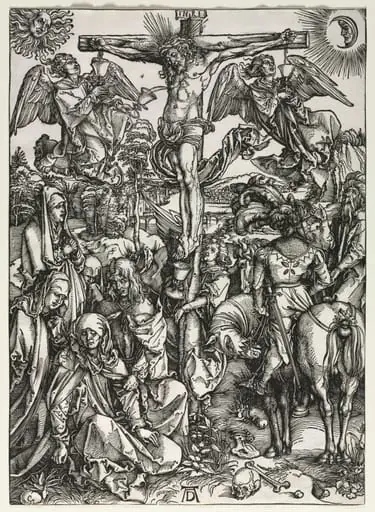
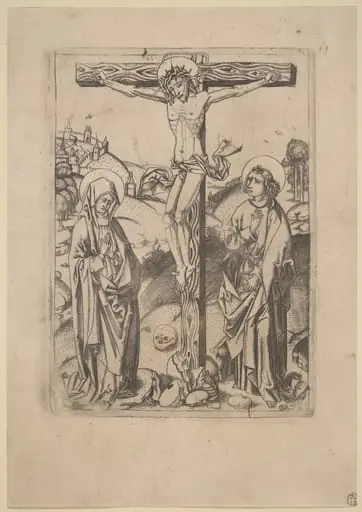
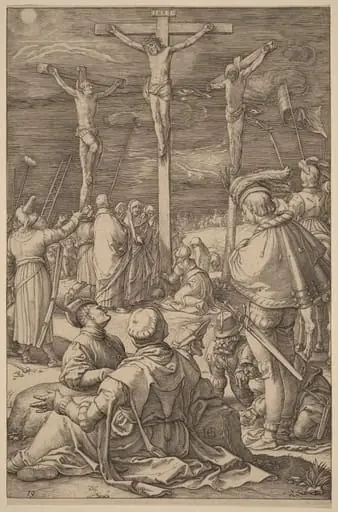
The Crucifixion is an ink print by the Renaissance artist Hans Baldung Grien. It dates from 1514 and is held in the collection of the National Gallery of Art.
About this work
Overview
Hans Baldung Grien’s *The Crucifixion* is a chiaroscuro woodcut executed in 1514. The print presents the crucified Christ against a stark, darkened backdrop, rendered in black and brown tones. As a single‑sheet work, it exemplifies the artist’s skill in manipulating light and shadow through the woodcut medium, creating a stark visual contrast that emphasizes the figure’s solemnity.
Subject & Meaning
The image depicts Jesus suspended on the cross, his limbs bound and his torso rendered with a linear precision that underscores the physicality of the moment. The composition’s minimal background and the pooling of dark ink serve to isolate the central figure, inviting contemplation of the theological significance of the crucifixion within a devotional context.
Technique & Style
Baldung employed the chiaroscuro woodcut process, carving separate blocks for the light and dark areas and printing them in layered inks of black and brown. This method produces a pronounced tonal depth, allowing the carved lines to convey both volume and texture. The resulting surface bears a tactile quality, with the ink’s absorption into the paper enhancing the impression of flesh and rope.
History & Provenance
Created shortly after Baldung’s apprenticeship with Albrecht Dürer, the print reflects the technical innovations Dürer introduced to German printmaking. Although specific ownership records are scarce, the work circulated among devotional prints of the early sixteenth century and is now held in several major museum collections that specialize in Renaissance graphic arts.
Context
The piece belongs to the German Renaissance, a period marked by the fusion of Northern realism with emerging Mannerist tendencies. Baldung’s broader oeuvre includes paintings, stained glass, and altarpieces, yet his reputation rests largely on his woodcuts, which often combine expressive imagination with rigorous draftsmanship, as seen in this starkly lit crucifixion scene.
Artist & collection
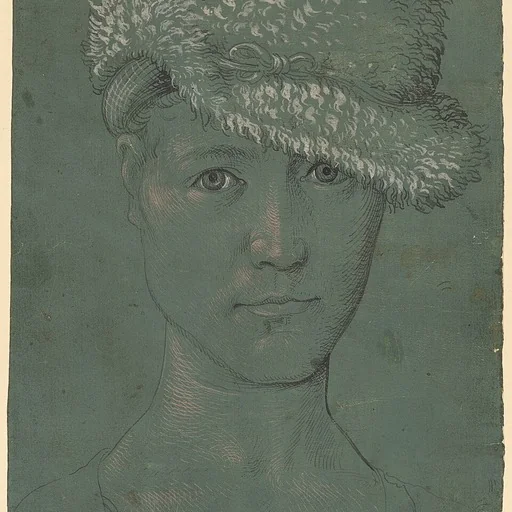
Artist
Hans Baldung (1484 or 1485 – September 1545), called Hans Baldung Grien, (being an early nickname, because of his predilection for the colour green), was a painter, printer, engraver, draftsman, and stained glass…