Artwork
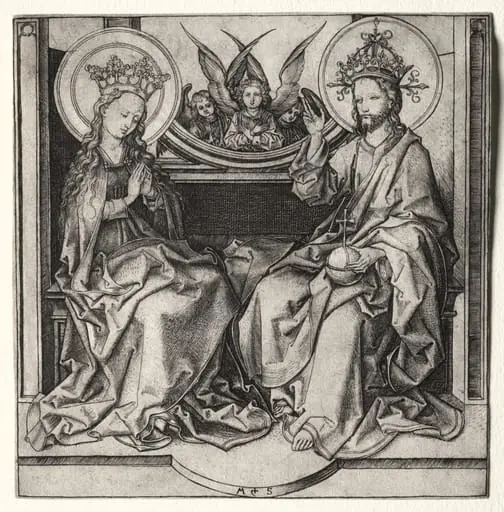
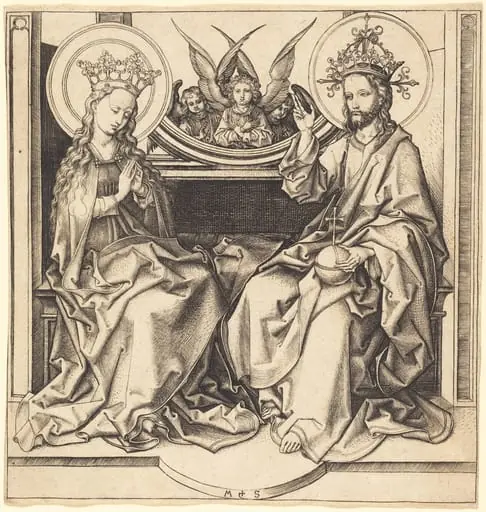
Christ Blessing the Virgin
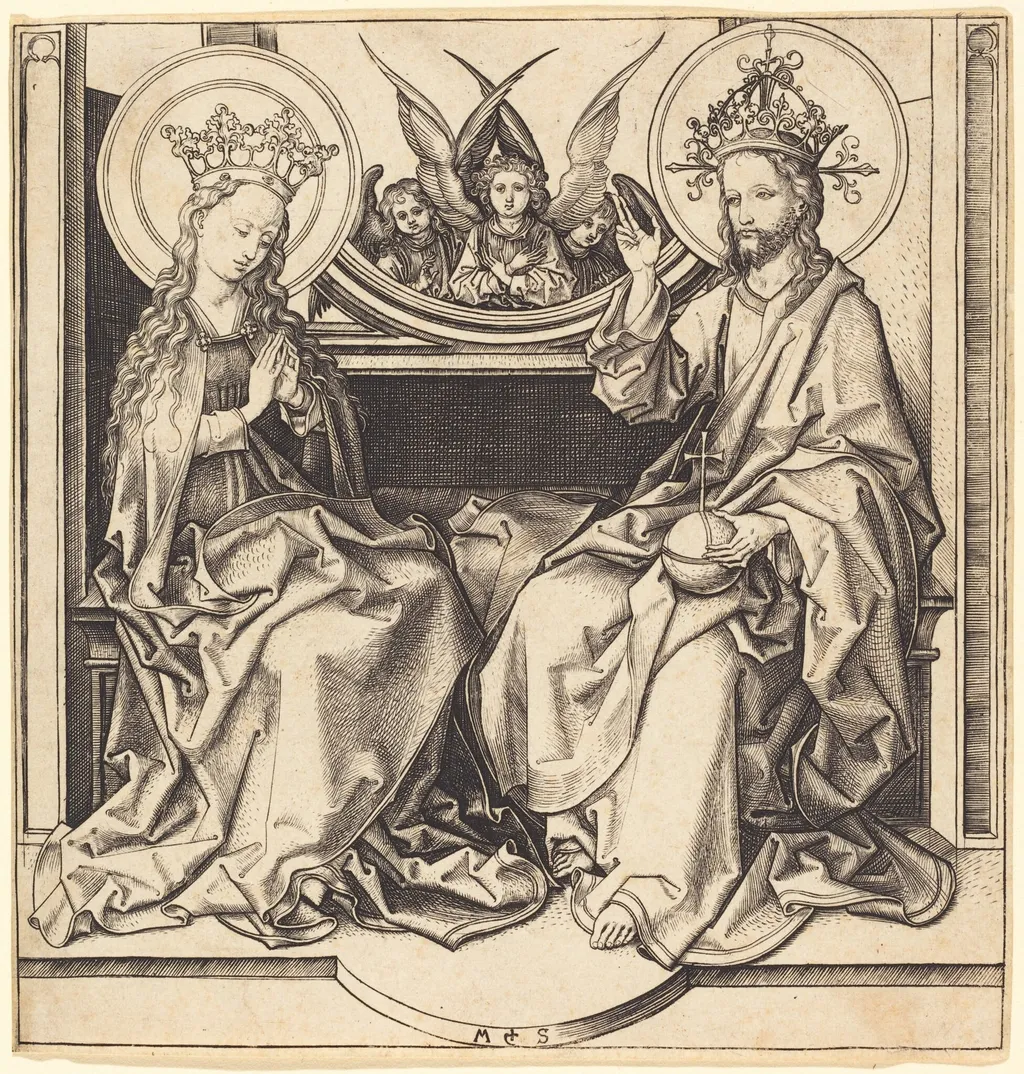
Christ Blessing the Virgin is an ink print by the Renaissance artist Martin Schongauer. It dates from 1485 and is held in the collection of the National Gallery of Art.
About this work
Overview
His background in metalwork informed his precision, allowing intricate textures and spatial depth to emerge in black-and-white ink impressions.
Created around 1485, this engraving by Martin Schongauer presents a devotional scene of Christ bestowing a blessing upon the Virgin Mary. Executed in fine linear detail on metal, the work exemplifies Schongauer’s mastery of the engraving technique during a period when printmaking was emerging as a serious artistic medium in northern Europe. His background in metalwork informed his precision, allowing intricate textures and spatial depth to emerge in black-and-white ink impressions.
Subject & Meaning
The composition centers on Christ seated on a throne, crowned and haloed, with his right hand raised in blessing over the kneeling Virgin, who holds an open book—likely a sign of her devotion or scriptural contemplation. Above them, three angels hover, two bearing instruments, suggesting celestial harmony. The intimate grouping and hierarchical arrangement reinforce theological themes of divine grace, intercession, and the Virgin’s unique role in salvation history.
Technique & Style
Schongauer employed fine, controlled lines to model form and depth, using cross-hatching and varied line density to render fabric folds, facial features, and the texture of wings. Unlike earlier engravings that relied on flat outlines, this work achieves a sculptural quality through subtle gradations of tone. The metal plate was incised with a burin, allowing for remarkable precision and a sense of volume that was innovative for its time in printmaking.
History & Provenance
Schongauer, active in Colmar and later Breisach, produced this engraving during the height of his career, before Albrecht Dürer’s rise. Though no early ownership records are documented, the print circulated widely across Europe, influencing generations of printmakers. Its survival in multiple impressions suggests it was in demand among religious patrons and collectors seeking devotional imagery with high artistic quality.
Context
In late 15th-century Alsace, religious imagery was central to both public worship and private devotion. Schongauer’s engravings responded to a growing market for portable, reproducible sacred scenes, bridging the gap between painted altarpieces and mass-produced prints. His work emerged alongside the spread of humanist piety and the early printing press, making religious themes accessible beyond monastic or aristocratic circles.
Legacy
Schongauer’s technical innovations in engraving set a new standard for northern European printmaking. His ability to convey emotional depth and spatial realism through line directly influenced Dürer and others who followed. Though few of his paintings survive, his engravings endured as models of craftsmanship, ensuring his reputation as a pivotal figure in the transition from medieval to Renaissance visual culture.
Artist & collection

Artist
Martin Schongauer, also known as Martin Schön or Hübsch Martin by his contemporaries, was an Alsatian engraver and painter.

 God the Father and the Blessed Virgin Enthroned Attended by Angels
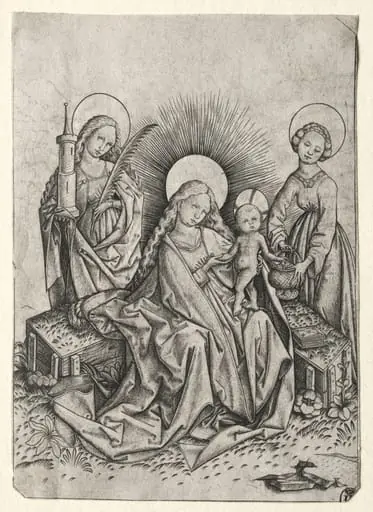 Madonna and Child in a Garden between St. Barbara and st. Dorothy
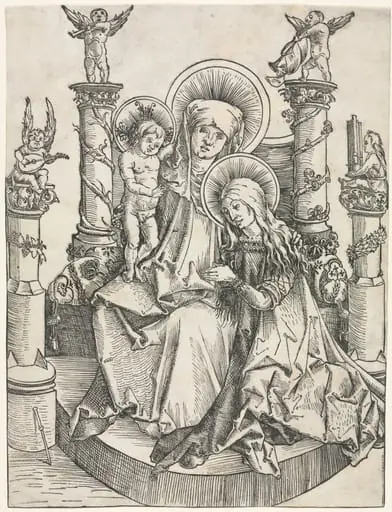 St. Anne, the Virgin and Christ Child
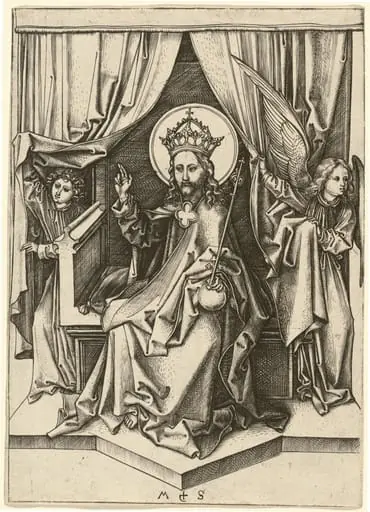 Christ Enthroned, with Two Angels
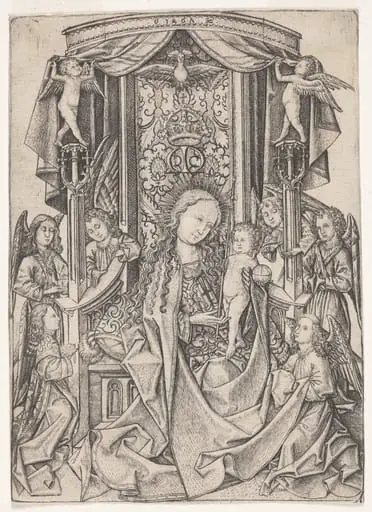 Madonna Enthroned with Eight Angels
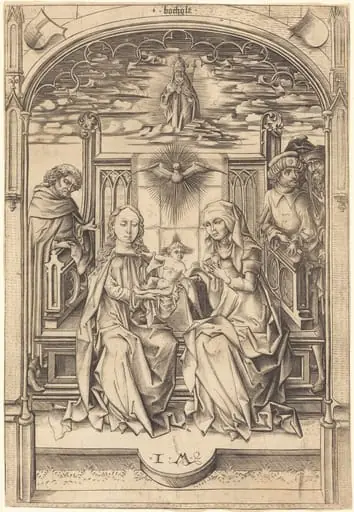 The Holy Family
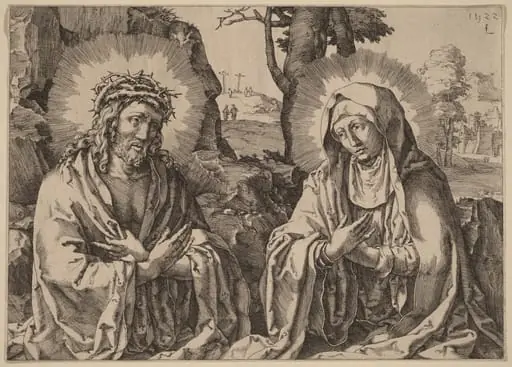 The Savior and the Virgin
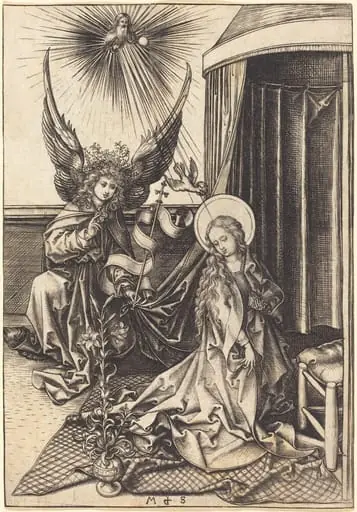 The Annunciation
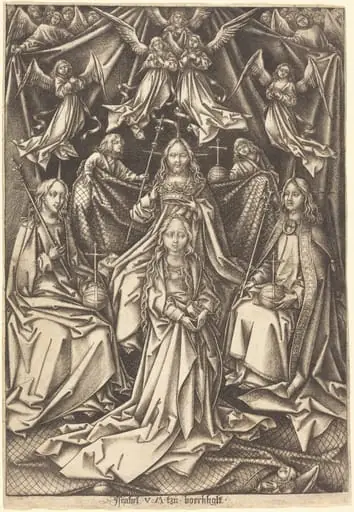 The Coronation of the Virgin
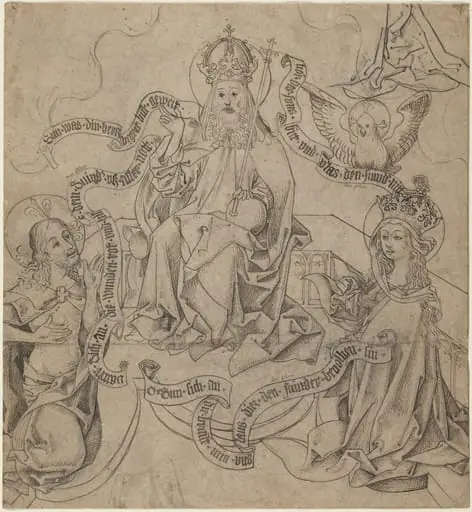 Christ and Mary Interceding with God the Father
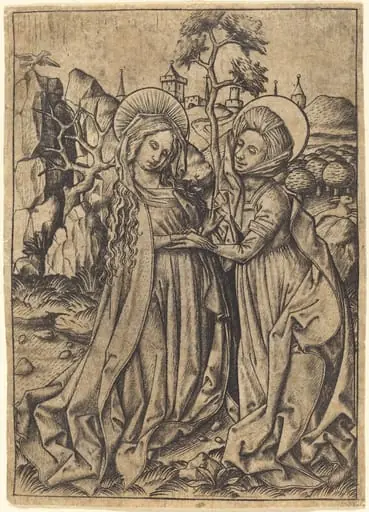 The Visitation
 Christ Blessing the Virgin