Artwork
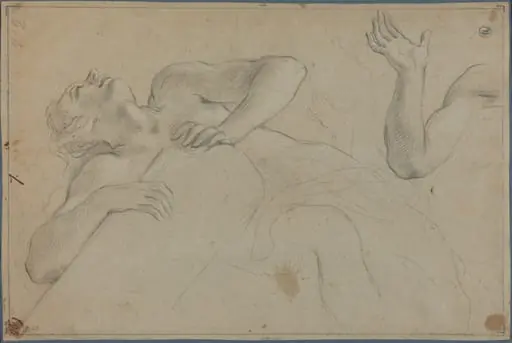
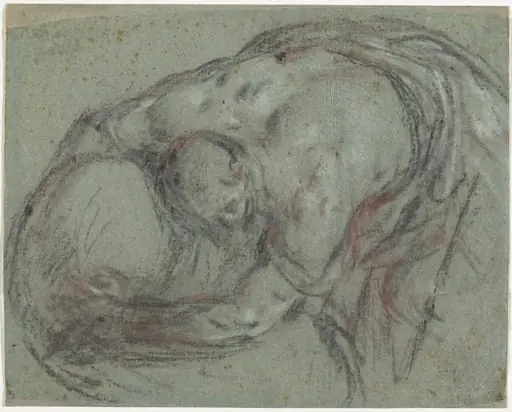
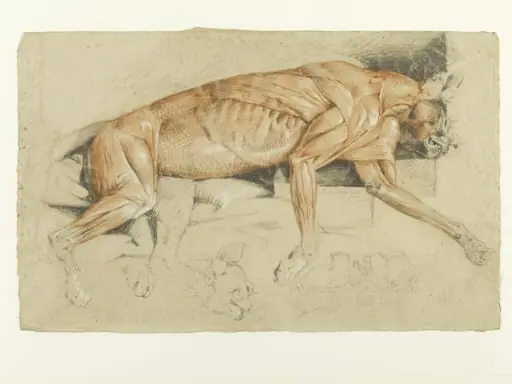
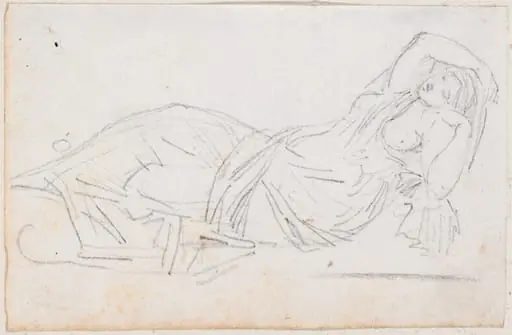
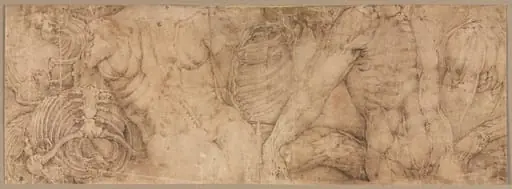
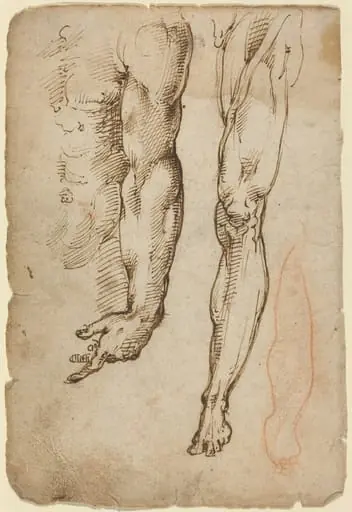
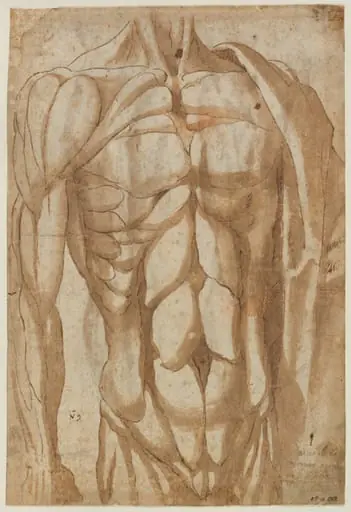
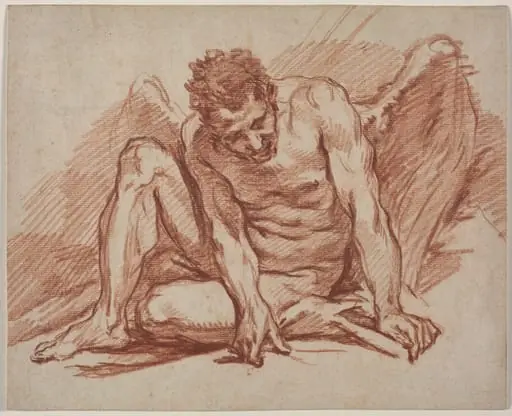
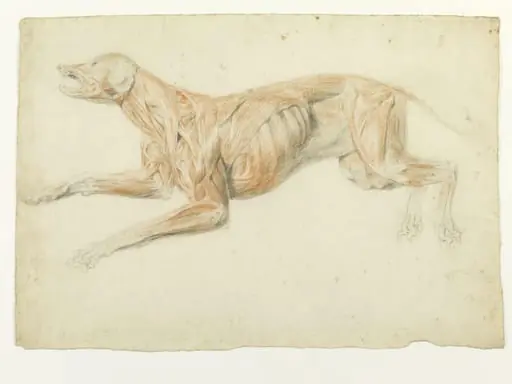
Half-length anatomical study of a man, drawn from a dissected corpse
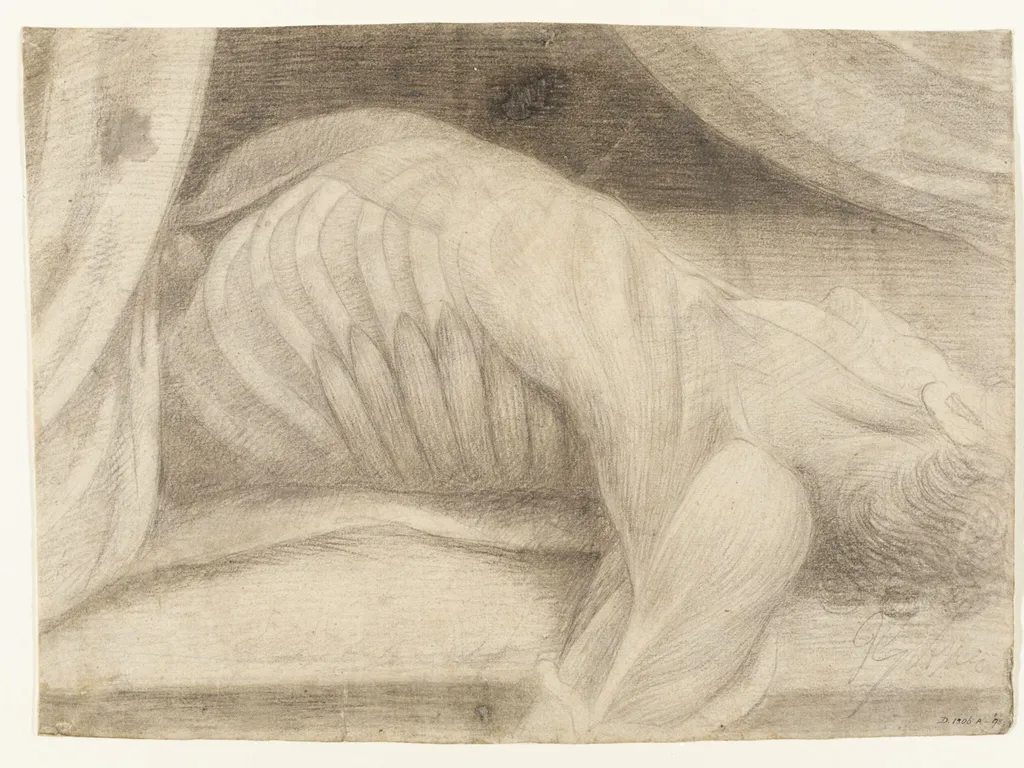
Half-length anatomical study of a man, drawn from a dissected corpse is a drawing by the Romanticist artist John Gibson. It dates from 1815 and is held in the collection of the Victoria and Albert Museum. This half‑length drawing, executed circa 1815, depicts the upper torso of a male figure rendered directly from a dissected body.
About this work
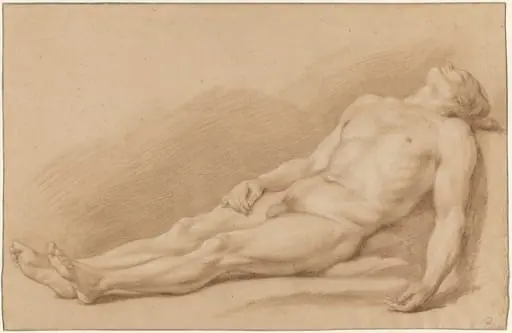
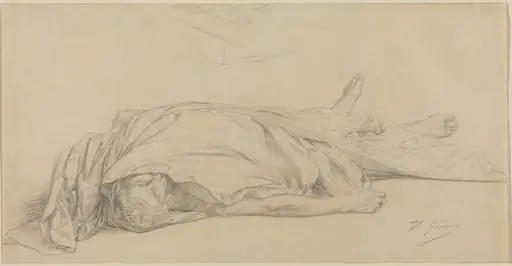
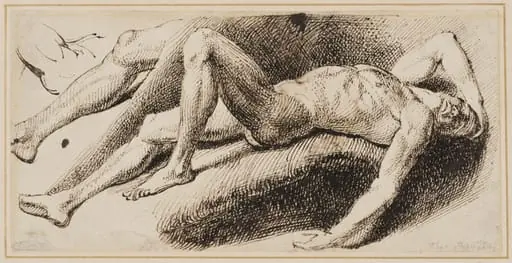
This is a drawing from around 1815. It shows a man’s upper body, drawn after a dissection. The artist used this to study anatomy up close.
At the time, private anatomy schools in London opened their doors to art students. They could draw from real corpses, which helped them learn human form better.
Look up the Victoria and Albert Museum.
Overview
This half‑length drawing, executed circa 1815, depicts the upper torso of a male figure rendered directly from a dissected body. Intended as a study rather than a finished artwork, it records the musculature and skeletal structure with meticulous observation, serving as a reference for artists seeking an accurate understanding of human anatomy.
Subject & Meaning
The work presents a realistic portrayal of a male torso, stripped of clothing to reveal the underlying anatomical features. By focusing on the physical details of a real corpse, the drawing emphasizes the educational purpose of anatomical study, illustrating the human form as a subject of scientific and artistic inquiry.
Technique & Style
Executed in fine pen and wash, the artist employs precise line work to delineate bone, muscle, and vascular structures, while subtle shading conveys depth and volume. The rendering balances scientific exactitude with a careful aesthetic sensibility, characteristic of early 19th‑century anatomical illustration.
History & Provenance
Created in the early nineteenth century, the drawing reflects the period’s expanding access to anatomical instruction for artists. Private anatomy schools in London opened their facilities to art students, allowing them to draw from actual cadavers. Such opportunities were taken up by aspiring artists, including the future sculptor John Gibson, who honed their skills through these direct studies.
Context
During this era, the rise of private anatomy schools in London and other urban centres provided a new educational model that combined medical lecture with practical demonstration. The integration of anatomical drawing into artistic curricula responded to a growing demand for accurate human representation in sculpture and painting, bridging scientific observation and artistic practice.
Artist & collection
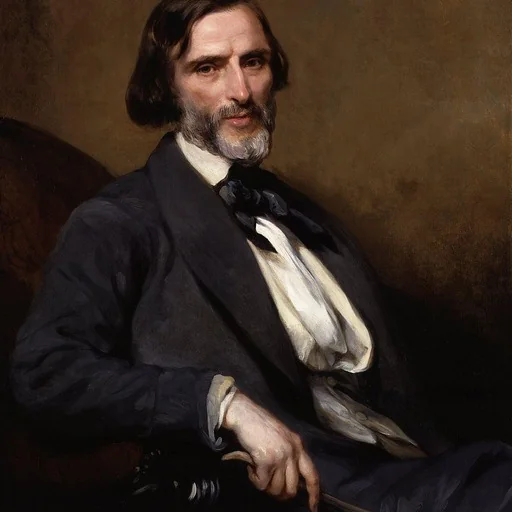
Artist
John Gibson (19 June 1790 – 27 January 1866) was a Welsh neoclassical sculptor who studied in Rome under Canova.