Artwork
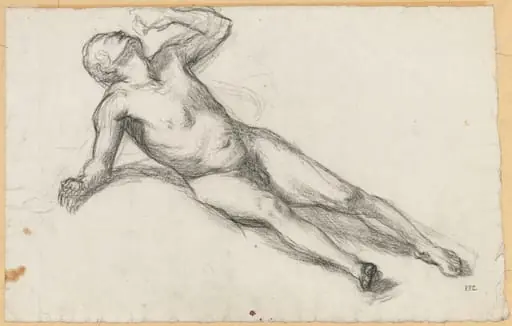
Sketch of the Dead Christ Lying by the Sepulchre
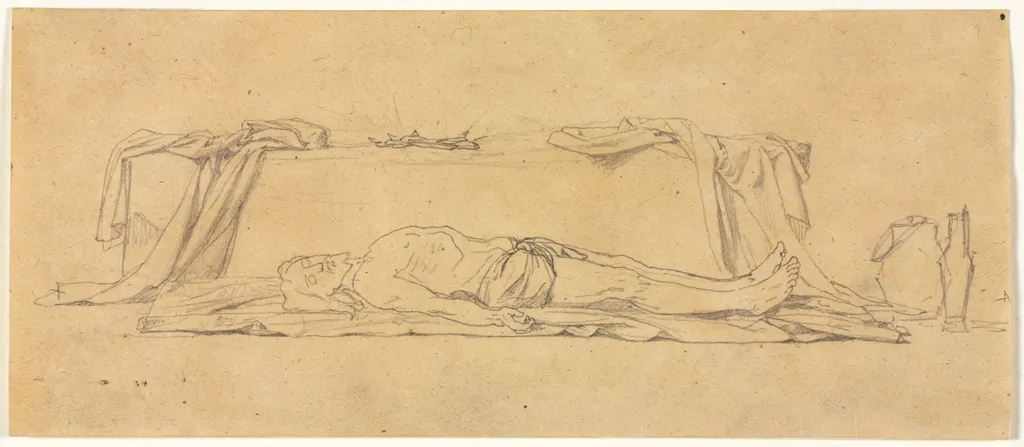
Sketch of the Dead Christ Lying by the Sepulchre is a drawing by the Romanticist artist Eugène Lenepveu. It dates from 1804 and is held in the collection of the Cleveland Museum of Art.
About this work
Overview
This small drawing by Jules Eugène Lenepveu depicts the body of Christ resting on a stone slab near an empty tomb. Created around 1804, it stands apart from the artist’s large-scale public murals, offering instead an intimate, contemplative moment. Rendered in pencil or chalk, the work conveys quietude rather than theatricality, emphasizing stillness over narrative drama.
Subject & Meaning
The figure of Christ, wrapped in white linen and lying motionless, is framed by the shadowed interior of a sepulcher. There is no angel, no mourners, no sign of resurrection—only the weight of death and solitude. The absence of dramatic elements invites reflection on loss and reverence, transforming the scene into a private meditation on mortality.
Technique & Style
Lenepveu employed subtle tonal contrasts to model the body’s form, using soft shading to suggest the pallor of skin beneath the cloth. A single light source casts a gentle glow across the figure, deepening the surrounding shadows and enhancing the sense of enclosure. The restrained handling of medium underscores the drawing’s introspective mood.
History & Provenance
The drawing entered the collection of The Cleveland Museum of Art through documented acquisition, though its earlier ownership remains unclear. Created during the early 19th century, it reflects a period when religious imagery in France often balanced devotional tradition with emerging personal expression. Its survival as a private study highlights its significance beyond public commissions.
Context
In early 19th-century France, religious art was frequently monumental, commissioned for churches or state projects. Lenepveu’s sketch diverges from this norm, suggesting a personal engagement with sacred themes. Its quiet composition aligns with a broader trend among artists seeking emotional depth in intimate formats, away from public spectacle.
Legacy
Though not widely reproduced or exhibited, the drawing endures as a quiet counterpoint to Lenepveu’s grander works. It reveals an artist’s private response to a familiar biblical moment, offering insight into how religious subjects were internalized beyond ceremonial representation. Its presence in a major museum affirms its value as a study in restraint and emotional nuance.
Artist & collection

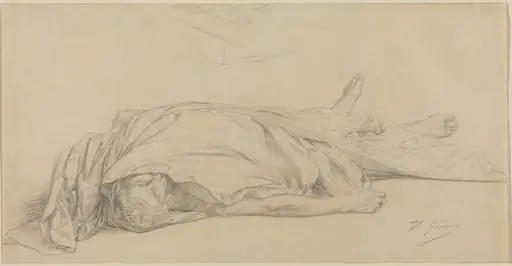 The Dead Caesar
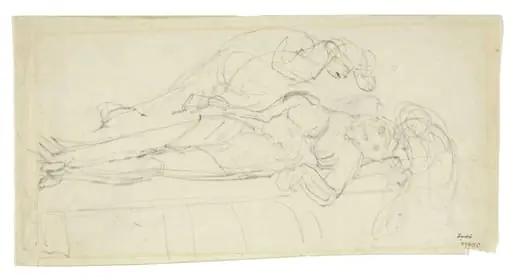 The death of the strong, wicked man
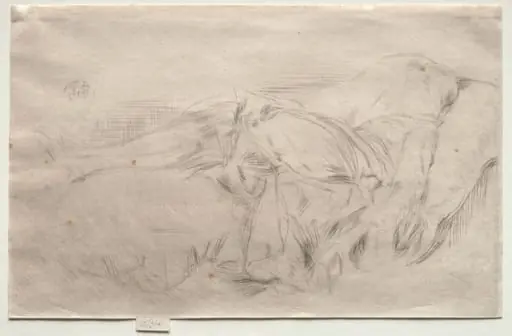 A Child on a Couch, No. 2
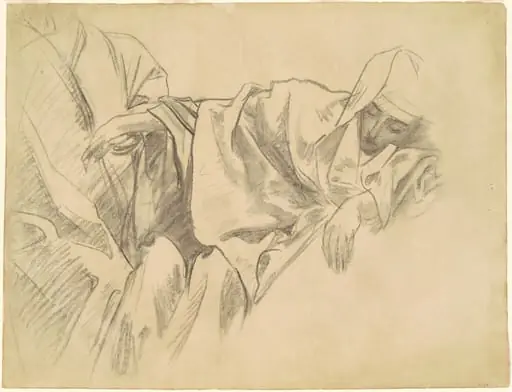 Study of the Crucifixion for "Fifteen Mysteries of the Rosary"
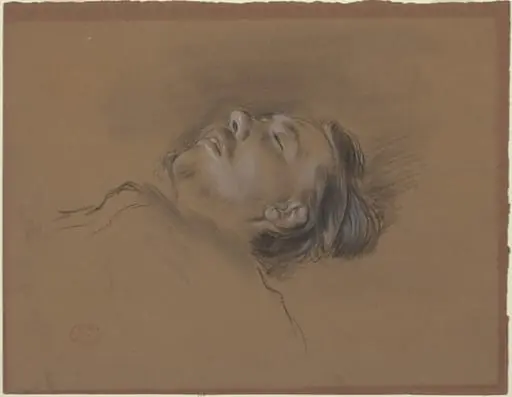 Head of the Fallen Jockey (study for "Scene from the Steeplechase: The Fallen Jockey")
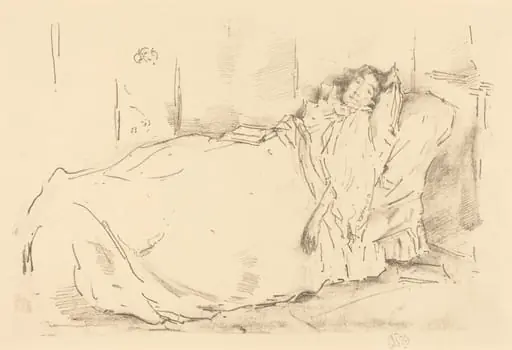 The Siesta
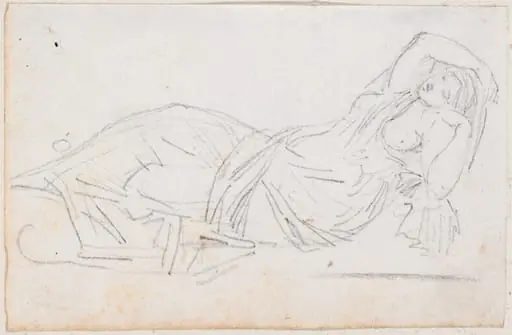 Statue of Cleopatra
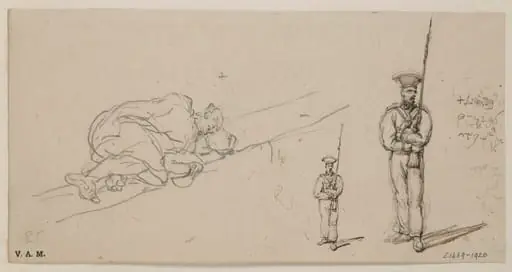 A sleeping Chinese man and a Portuguese soldier
 Study for The War
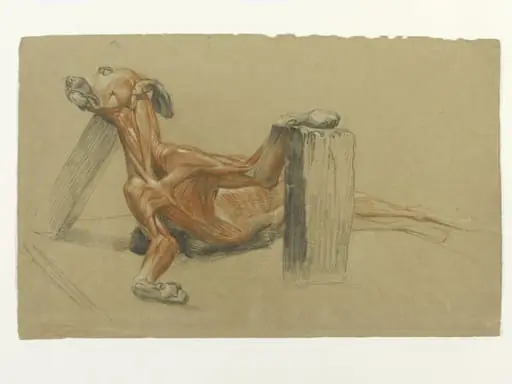 Ecorche drawing of a greyhound supported by planks