Artwork
A Rake's Progress: pl.5
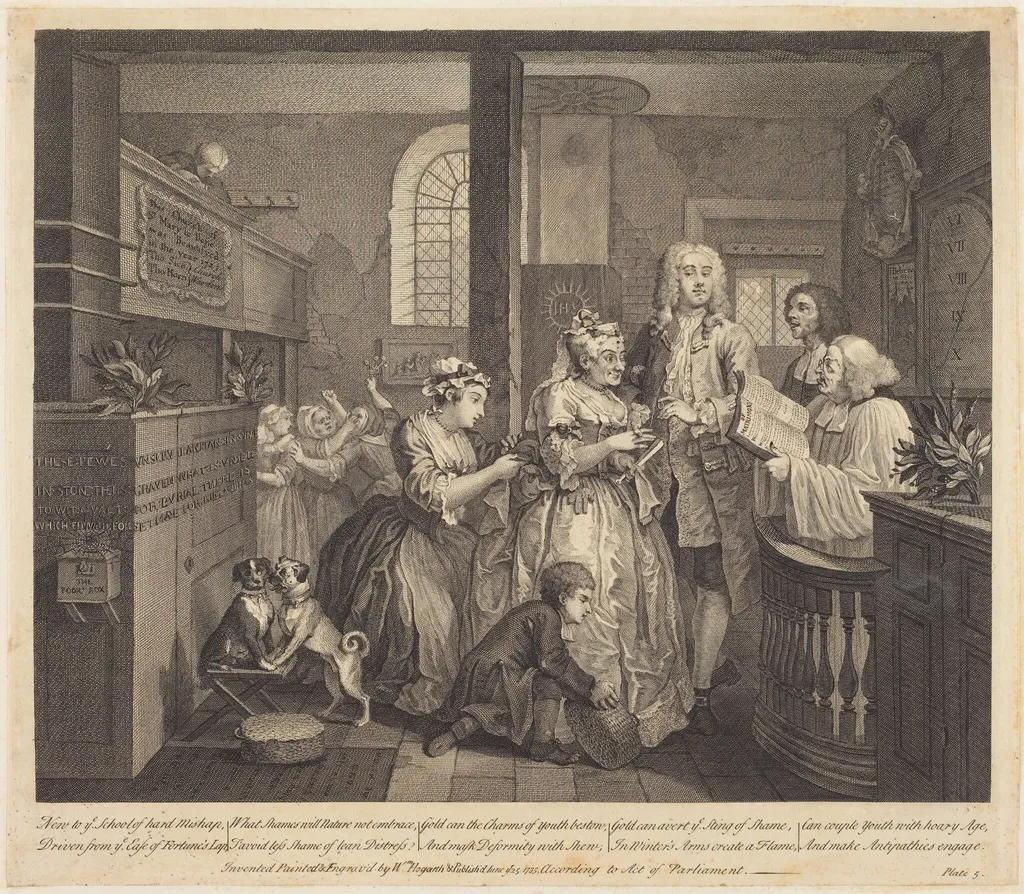
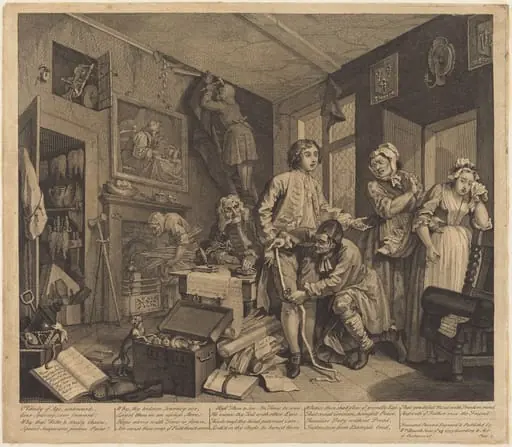
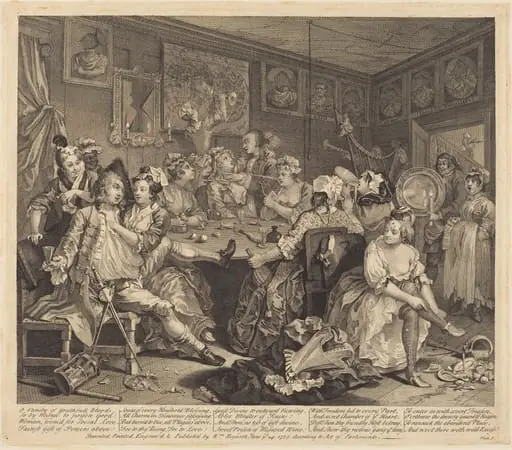
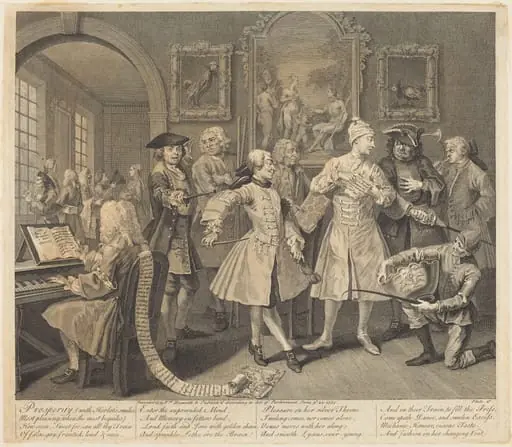
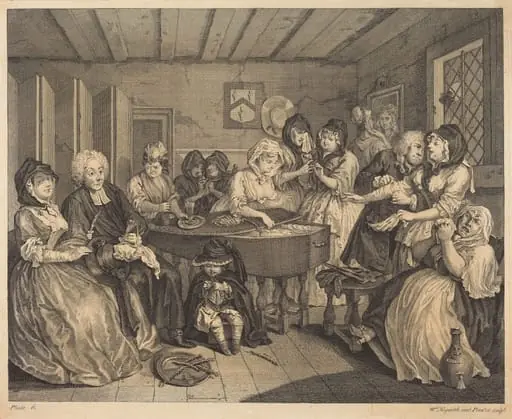
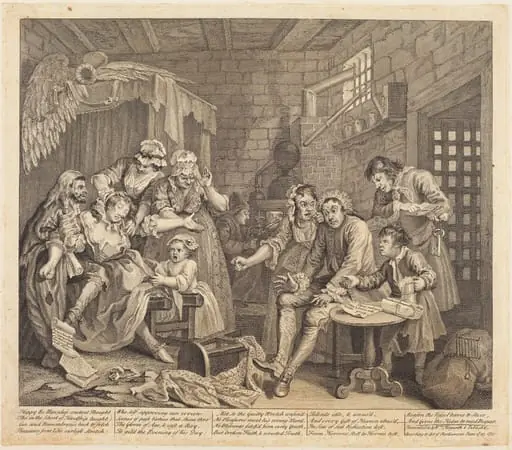
A Rake's Progress: pl.5 is an ink print by the Baroque artist William Hogarth. It dates from 1735 and is held in the collection of the National Gallery of Art.
About this work
Overview
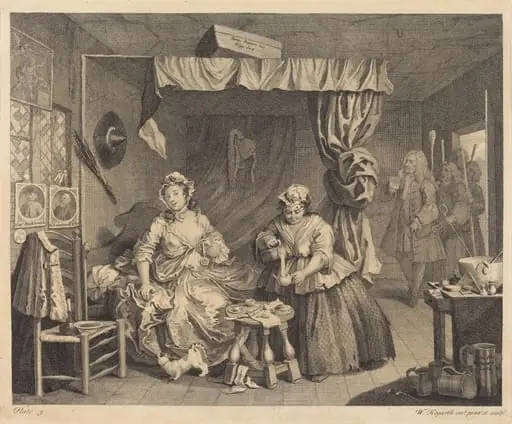
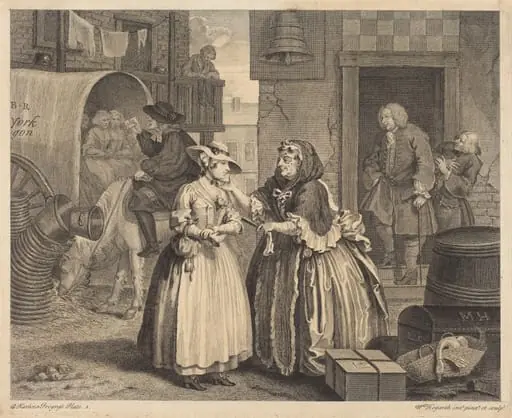
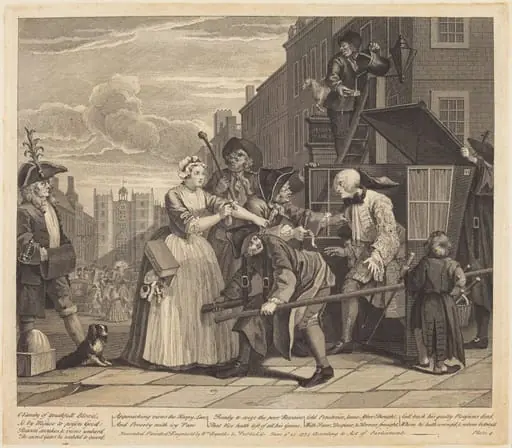
Plate five of William Hogarth’s *A Rake’s Progress* is an etching and engraving from a series of eight prints published in 1735.
Plate five of William Hogarth’s *A Rake’s Progress* is an etching and engraving from a series of eight prints published in 1735. It depicts a moment of intellectual pretension amid decay, continuing the narrative of a young heir’s moral collapse. Hogarth used printmaking to reach a broad audience, turning sequential imagery into a tool for social commentary. The work belongs to a tradition of moral allegory, rendered with precise detail and ironic realism.
Subject & Meaning
The scene portrays a disordered study where a man in a wig reads aloud, another in a robe listens passively, and a woman stands near a child holding a birdcage. Books clutter the shelves, yet their presence feels performative rather than scholarly. The restless dogs and scattered volumes suggest neglect beneath a veneer of learning. The image critiques the hollow performance of culture among the idle rich, revealing how education becomes a prop for vanity rather than growth.
Technique & Style
Hogarth employed etching and engraving to achieve fine linear detail and tonal variation, allowing him to render textures—from fabric to fur to book spines—with clarity. His use of dense, controlled lines creates a sense of claustrophobia, mirroring the psychological confinement of the characters. The black-and-white medium enhances the moral starkness of the scene, while the precision of execution contrasts with the chaos of the environment, reinforcing the work’s satirical intent.
History & Provenance
Created in 1735, this print was part of a series sold as sets to the London middle class, often framed and displayed in homes as moral lessons. Hogarth retained control over reproduction, ensuring quality and preventing unauthorized copies. The series quickly gained popularity and was reprinted multiple times during his lifetime. Original impressions are now held in major collections, including the British Museum and the Victoria and Albert Museum.
Context
In early 18th-century England, rising literacy and print culture enabled new forms of public critique. Hogarth responded to the growing gap between appearance and reality among the wealthy, particularly those who inherited fortunes without virtue. His series drew from contemporary moralizing literature and theatrical satire, positioning print as a democratic medium for exposing hypocrisy in a society obsessed with status and superficial refinement.
Legacy
Hogarth’s narrative sequence influenced later artists and cartoonists who used sequential imagery to address social issues. His integration of visual storytelling with moral critique laid groundwork for political cartoons and illustrated journalism. While his style was rooted in the conventions of his time, his insistence on art as a vehicle for public discourse expanded the role of the artist beyond decoration into social commentary.
Artist & collection
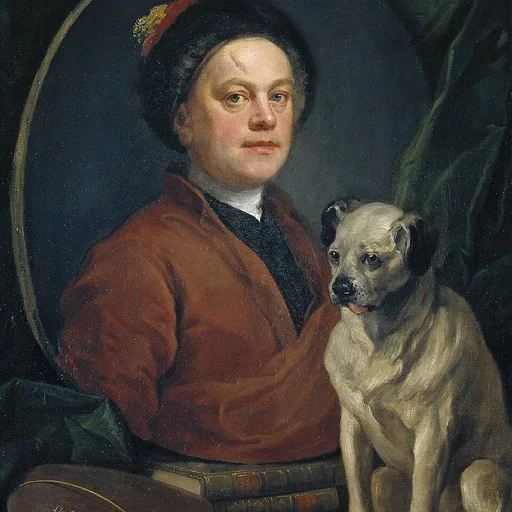
Artist
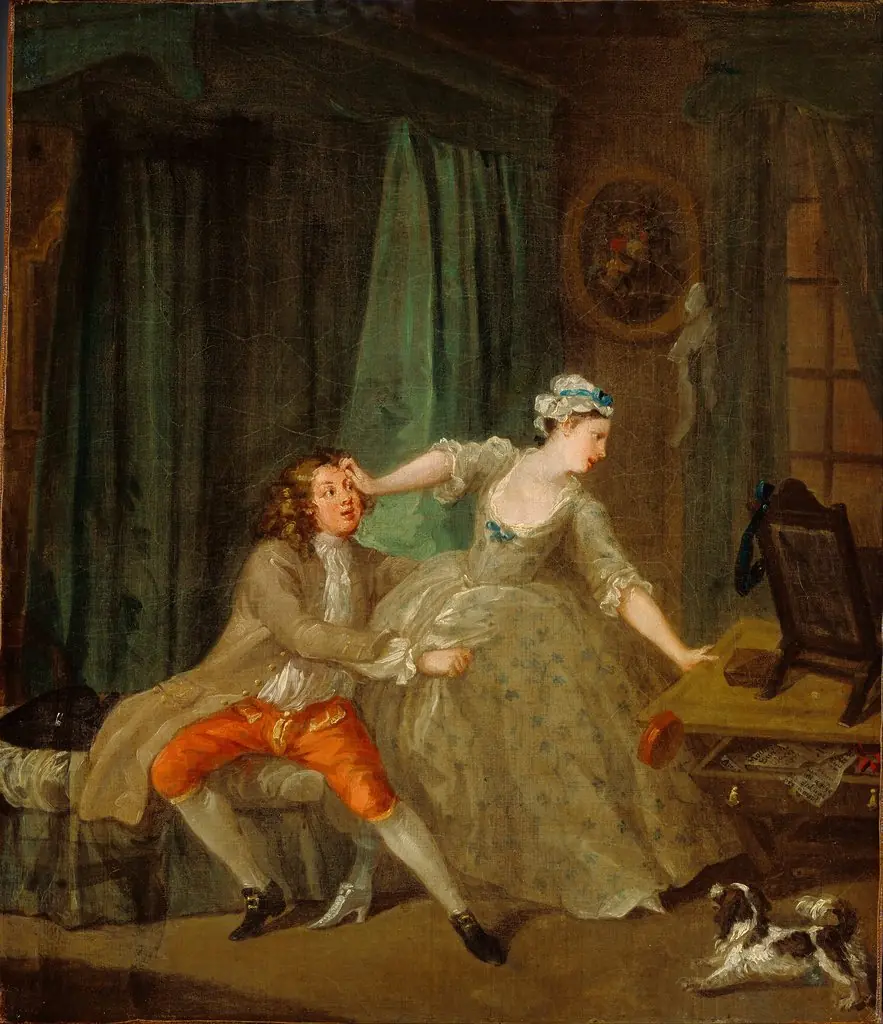
William Hogarth (; 10 November 1697 – 26 October 1764) was an English painter, engraver, satirist, cartoonist and writer.